English
 Português
 Español


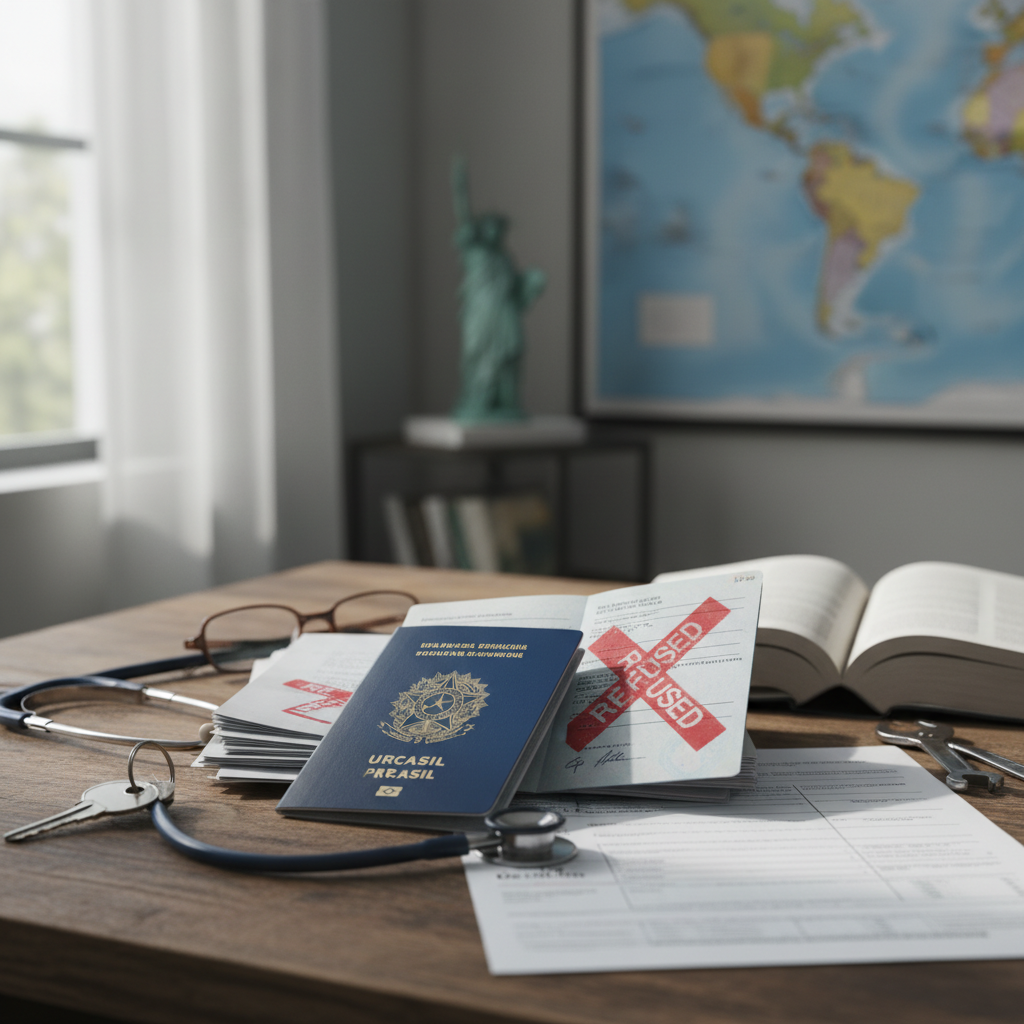
Having a US visa denied is one of the most frustrating experiences for international applicants who plan to travel, study, or work in the United States. Every year, thousands of applications are refused, often without the applicant fully understanding why. The good news is that understanding the most common reasons for denial allows you to prepare more effectively and significantly increase your chances of approval on a new attempt.
Most visa denials are grounded in Section 214(b) of the US Immigration and Nationality Act (INA). This section establishes that every nonimmigrant visa applicant is presumed to be a potential immigrant until they prove otherwise. The burden falls on the applicant to demonstrate sufficient ties to their country of residence and a genuine intention to return after the trip. When the consular officer is not convinced of these conditions, denial is virtually certain.
Lack of Ties to the Home Country
This is the most frequent reason for US visa denial for international applicants. The consulate must be satisfied that the applicant will return to their home country after the trip. When ties are weak or unclear, the risk of denial increases considerably.
The ties typically evaluated by the consular officer include formal employment or an owned business, income consistent with the proposed trip, family residing in the home country, and assets such as real estate or vehicles. The absence or weakness of these factors is frequently cited as grounds for denial under Section 214(b). Young single applicants without stable employment or assets in their name tend to face greater scrutiny during the interview.
Errors on the DS-160 Form
The DS-160 form is the foundation of every US visa application, and any error, omission, or contradiction can lead to denial. The document is reviewed by the consular officer even before the interview, meaning the officer arrives at the conversation already in possession of all the information provided.
The most common errors include declaring income inconsistent with the stated profession, presenting conflicting information about prior travel, and entering incorrect or incomplete data. It is essential to review every field of the form carefully before submission, as inconsistencies between the DS-160, supporting documents, and interview answers are frequent triggers for denial under Section 221(g).
Intent to Work or Remain
Even when applying for a B-1/B-2 tourist visa, many applicants end up denied for demonstrating, even unintentionally, an intent to work or remain in the United States. Mentions of informal work, plans to assist a relative with paid activities, studying without the appropriate visa, or staying indefinitely raise serious suspicions of irregular immigration status.
Such statements, even when made casually during the interview, can result in immediate denial. The consular officer is trained to identify signs that the applicant intends to engage in activities incompatible with the requested visa category. The rule is clear: each visa type has specific permitted purposes, and any perceived deviation compromises approval.
Lack of Preparation for the Consular Interview
The consular interview is brief, typically lasting between two and five minutes, but it is absolutely decisive. The officer evaluates clarity, coherence, and confidence in the applicant’s answers. Even with all documentation in order, poor interview preparation can result in denial.
The most common interview mistakes include lengthy and confusing answers, excessive nervousness that hampers communication, inability to clearly explain the purpose of the trip, and contradictions relative to what was declared on the DS-160. The recommendation is to practice concise and direct responses while maintaining consistency with all information previously provided to the Department of State.
Problematic Immigration History
Prior issues with US immigration can directly affect a new visa application. Situations such as overstay (remaining beyond the authorized period), unauthorized work, deportation, or a prior denied entry into the US are recorded in the system and may generate a new denial, frequently under Section 212(a).
Even older occurrences may surface during the background check and raise flags. It is important to be transparent about any immigration history when completing the DS-160, since omitting information about prior denials constitutes misrepresentation under INA Section 212(a)(6)(C) and can result in a permanent ban from the visa application process.
Incompatible Visa Category
Applying for a visa category incompatible with the true purpose of the trip is a surprisingly common mistake among international applicants. Frequent examples include attempting to study on a tourist visa, working on a B-1/B-2, or starting a business without the appropriate visa.
Each US visa category has specific rules and requirements defined by USCIS and the Department of State. A B-1/B-2 visa is intended for tourism and temporary business activities, while long-term study requires an F-1 visa and employment requires categories such as H-1B, L-1, or O-1, depending on the situation. Choosing the wrong category not only results in denial but can also complicate future applications.
Lying or Omitting Information
Lying or omitting data at any stage of the US visa application process can have serious consequences. Beyond immediate denial, the applicant may face difficulties in future applications and, in more serious cases, a permanent ban under INA Section 212(a)(6)(C).
The US immigration system continuously cross-references information across forms, interviews, international databases, and prior records. Any inconsistency identified can result in denial under various sections of immigration law, not just Section 214(b). Honesty is always the best strategy throughout the entire process.
After a Visa Denial
If your US visa has been denied, it is important to know that the refusal is not final. You may file a new application, and there is no mandatory minimum waiting period to reapply, though the MRV fee of USD $185 must be paid with each new attempt. However, reapplying without addressing the issues that caused the previous denial tends to result in another refusal.
The most important step is to understand the actual reason for the denial. If the denial was based on Section 214(b), the focus should be on strengthening ties to the home country and presenting more robust documentation. If there were inconsistencies in the DS-160, the form should be completed again with extreme care. In all cases, properly preparing for the consular interview is essential to demonstrate to the officer that circumstances have changed since the last attempt.
To increase the chances of approval, applicants are advised to complete the DS-160 with attention to every detail, demonstrate solid ties to their home country, select the correct visa category for the purpose of the trip, and prepare to answer interview questions with clarity and objectivity. US visa denial, in the vast majority of cases, results from inadequate preparation, inconsistent information, or insufficient ties to the country of residence — factors that can be addressed before a new attempt.
Learn more about B-1/B-2
- Duration
- Up to 6 months
- Extension
- Possible (up to 6 months)
- Work
- Not permitted
- Processing
- 2-8 weeks
About the author

Victoria Harper
Editor-in-Chief
As a journalist and lead editor at Visto n’ Visa, Victoria helps ensure that immigration topics are covered in a clear, trustworthy, and easy-to-understand way. Her focus is on delivering useful, human, and relevant content for people exploring new paths abroad.