
 English
 Português
 Español
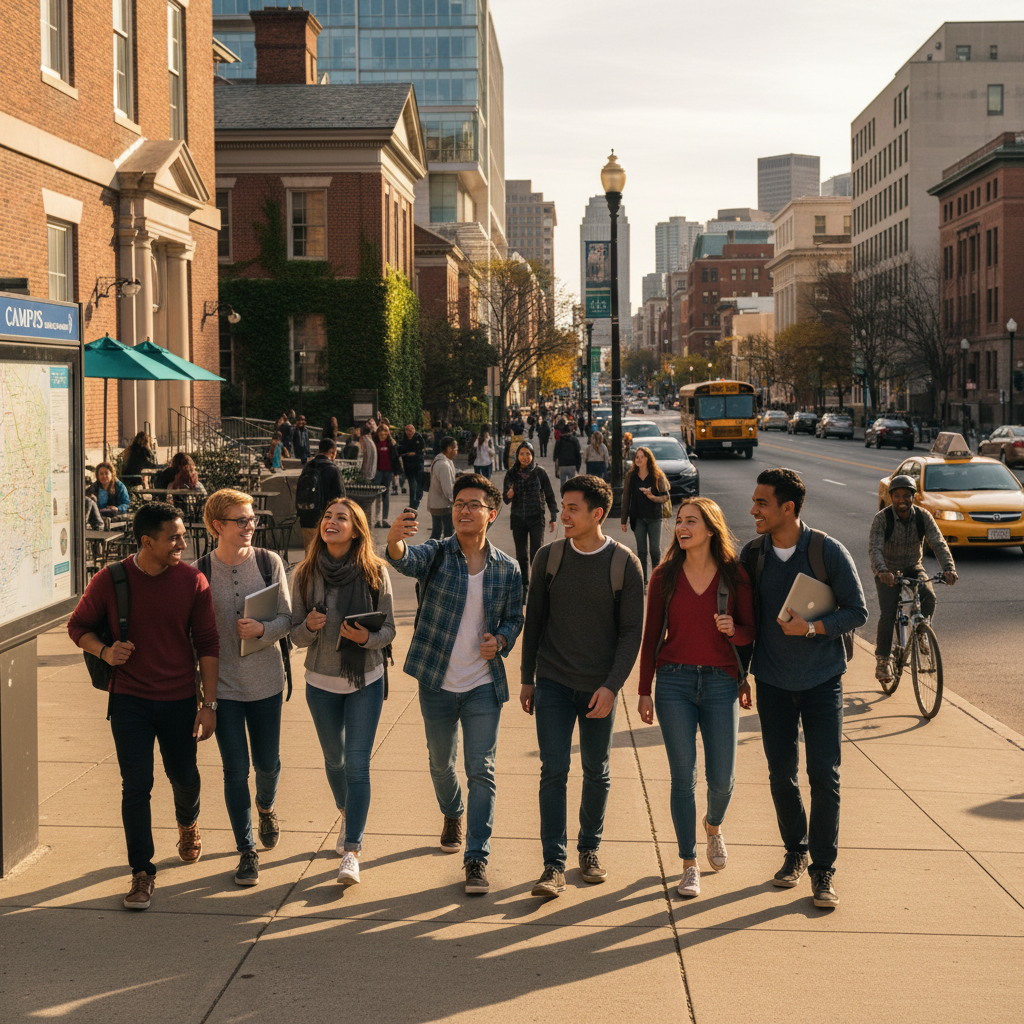
The F-1 visa is the category that authorizes international students to enroll in full-time academic programs in the United States, at institutions certified by the SEVP program of the Department of Homeland Security. In 2026, it remains the standard legal pathway for college, graduate school, long-term English-language courses, and technical programs tied to recognized schools. This guide covers the complete process flow, updated costs, required documents, and what to expect at the consular interview, written for students of any nationality planning to study in the U.S.
What the F-1 Visa Is and What It Covers
The F-1 visa is issued by the U.S. Department of State to foreign nationals admitted to educational institutions certified by the Student and Exchange Visitor Program (SEVP). It covers universities, community colleges, language schools, graduate programs, and seminaries, provided the school appears in the official Study in the States directory.
The F-1 is required whenever the course is full-time and follows a formal academic schedule. Short courses, purely recreational programs with fewer than 18 weekly contact hours and no academic credits, may in some cases be taken on a B-1/B-2 visa, but any program that grants a diploma, an academic certificate of completion, or requires full-time enrollment requires an F-1. Using a tourist visa to study full-time constitutes a status violation and can lead to visa cancellation, an inadmissibility record, and a bar on future entry.
The F-1 authorizes stay under the duration of status (D/S) regime, meaning as long as the student maintains active enrollment and complies with the conditions of the I-20. It also allows paid on-campus employment of up to 20 hours per week during the academic term and up to 40 hours during official breaks.
Who Can Apply for the F-1
To qualify for the F-1, the international applicant must meet requirements set out in 8 CFR 214.2(f) and consular instructions:
- Have been accepted to an SEVP-certified institution for a full-time program;
- Receive Form I-20 signed by the school’s Designated School Official (DSO);
- Demonstrate financial resources sufficient to cover tuition, fees, housing, and living expenses for the first full year, based on the amounts stated in the I-20;
- Show proficiency in the language of instruction, normally English, or be enrolled in a preparatory course offered by the institution itself;
- Demonstrate ties to the home country and the intent to return upon completion of the program, as required under Section 214(b) of the INA.
Applicants from India, Brazil, the Philippines, Nigeria, Vietnam, China, and other high-demand countries generally face more detailed scrutiny regarding economic and family ties, although the legal standard is identical for all nationalities.
Form I-20: The Central Document in the Process
The I-20 is the eligibility document issued by the institution after academic acceptance and financial verification. Without it, no step in the consular process can begin. The form contains information that will be verified at every stage:
- The SEVIS ID number, the student’s unique identifier in the U.S. government database;
- The name and SEVP code of the issuing institution;
- The program of study, with official start and end dates;
- The annual estimate of tuition, fees, materials, and living expenses;
- The funding sources declared by the student.
All information provided in the DS-160 and at the interview must be consistent with the I-20. Full name, date of birth, passport number, school code, and start date must be carefully reviewed before paying any fees.
F-1 Costs: Two Separate Government Fees
The F-1 involves two fees paid in separate systems and in a specific order. In 2026, the official amounts are:
SEVIS I-901 Fee: US$350, paid on the official portal fmjfee.com administered by ICE. It is required for all F-1 primary applicants and must be paid at least three business days before the consulate interview. F-2 dependents do not pay the SEVIS fee.
MRV (Machine Readable Visa) Fee: US$185 per applicant, paid through the consular scheduling system in the applicant’s home country. It is the same fee charged for tourist visas and covers processing of the application, regardless of the interview outcome. In October 2023, this amount increased from US$160 to US$185 and remains in effect.
Both fees are mandatory, non-transferable, and independent. Paying one does not replace the other, and neither is refunded in the event of a denial.
Step-by-Step Guide to Applying for the F-1
Step 1: Academic Acceptance and I-20 Issuance
After receiving the acceptance letter, the student submits the required financial documents to the institution. The DSO issues the I-20 and sends it in printed or digital format, in accordance with rules in place since the pandemic-era flexibilities were adopted. The document must be signed by the student and kept in original form for scheduling and entry into the U.S.
Step 2: Paying the SEVIS Fee
With the SEVIS ID in hand, the applicant accesses fmjfee.com, selects Form I-901, fills in personal and school information, pays by international credit card or wire transfer, and prints the receipt. The receipt is required at the interview and upon arrival at a U.S. port of entry.
Step 3: Completing the DS-160
The DS-160 is the nonimmigrant visa application form, completed on the portal ceac.state.gov. The applicant selects type F-1, enters the SEVIS ID, school code, and travel details. Inconsistencies between the DS-160, the I-20, and interview answers are one of the most common causes of denial, so every field should be reviewed carefully before submitting.
Step 4: Paying the MRV Fee and Scheduling
After generating the DS-160 barcode, the student creates an account in their country’s consular system and pays the MRV. Payment confirmation unlocks the scheduling calendar for the VAC (Visa Application Center) and the interview at the consulate or embassy.
Step 5: VAC Appointment and Consular Interview
The appointment takes place in two stages: biometric data collection at the VAC and the interview at the consulate on a separate day, except in applicable interview-waiver renewal programs. At the interview, the student presents the document package and answers the consular officer’s questions about academic plans, financing, and intent to return.
Documents for the F-1 Interview
- Valid passport with at least six months of validity beyond the intended period of stay in the U.S.;
- Original I-20 signed by the DSO and the student;
- Proof of payment of the SEVIS I-901 fee;
- DS-160 confirmation page;
- Interview appointment confirmation;
- Acceptance letter from the institution;
- Bank statements from the student or sponsor, typically from the past three months;
- Tax return or equivalent from the financial sponsor;
- Academic transcripts, diplomas, and standardized test scores (TOEFL, IELTS, SAT, GRE, GMAT) when required;
- Scholarship award letter, student loan documentation, or sponsorship letter, if applicable.
What the Consular Officer Evaluates
The officer’s focus is on confirming three points: the authenticity of the academic acceptance, the genuine ability to finance the studies, and the intent to return to the home country upon completion of the program. The most common questions center on the chosen program, the reasons for selecting the U.S. and the specific institution, the career plan in the home country, sources of funding, and family and professional ties. Short, factual answers that are consistent with the I-20 and the DS-160 reduce the risk of a 214(b) denial.
Working on an F-1 Visa
The F-1 permits on-campus employment of up to 20 hours per week during the academic semester and 40 hours during breaks, without requiring additional authorization. Off-campus work requires specific authorization under three main categories:
- CPT (Curricular Practical Training): internship integrated into the curriculum, authorized by the DSO after the first academic year;
- OPT (Optional Practical Training): a 12-month work authorization for employment related to the field of study, applied for via Form I-765 with USCIS;
- STEM OPT Extension: a 24-month extension granted to graduates in science, technology, engineering, or mathematics fields listed on the DHS STEM Designated Degree Program List.
F-2 Dependents
Spouses and unmarried children under 21 may accompany the student on an F-2 visa. Dependents pay only the MRV fee of US$185, with no additional SEVIS fee. The F-2 does not authorize paid employment under any circumstances and limits the spouse’s studies to recreational or part-time non-academic programs. Minor children may attend K-12 schools normally.
Timelines and the U.S. Entry Window
The interview may be scheduled up to 365 days before the program start date, but physical entry into the United States is only permitted within the 30 days preceding the course start date listed in the I-20. Arriving before that window results in denial of admission by CBP at the port of entry. After the official end of the program or OPT, the student has a 60-day grace period to leave the country, transfer to another program, or adjust status.
Renewal and Change of Institution
The visa stamp has its own validity period, determined by reciprocity with the applicant’s home country, and can be renewed through a standard consular interview while the student maintains active SEVIS status. Changes of institution require a SEVIS record transfer between schools, with a new I-20 issued by the receiving school, without necessarily requiring a new stamp if the next entry occurs with the same valid visa and the new I-20 in hand.
The Most Common Reasons for Denial
214(b) denials typically reflect failures on three fronts: weak financial documentation, an academic plan that does not align with the student’s prior trajectory, and answers that suggest an intent to immigrate permanently. Presenting bank statements consistent with the costs declared in the I-20, choosing courses compatible with prior education or a plausible career plan in the home country, and answering clearly about post-graduation plans are the most decisive adjustments. Buying a return ticket, securing housing, or resigning from a job before the visa is approved is unnecessary and can actually work against the applicant.
Learn more about F-1 Visa
- Duration
- Duration of studies
- OPT (STEM)
- Up to 3 years of work
- CPT
- Work during studies
- Processing
- 2-8 weeks
Tags


