English
 Português
 Español


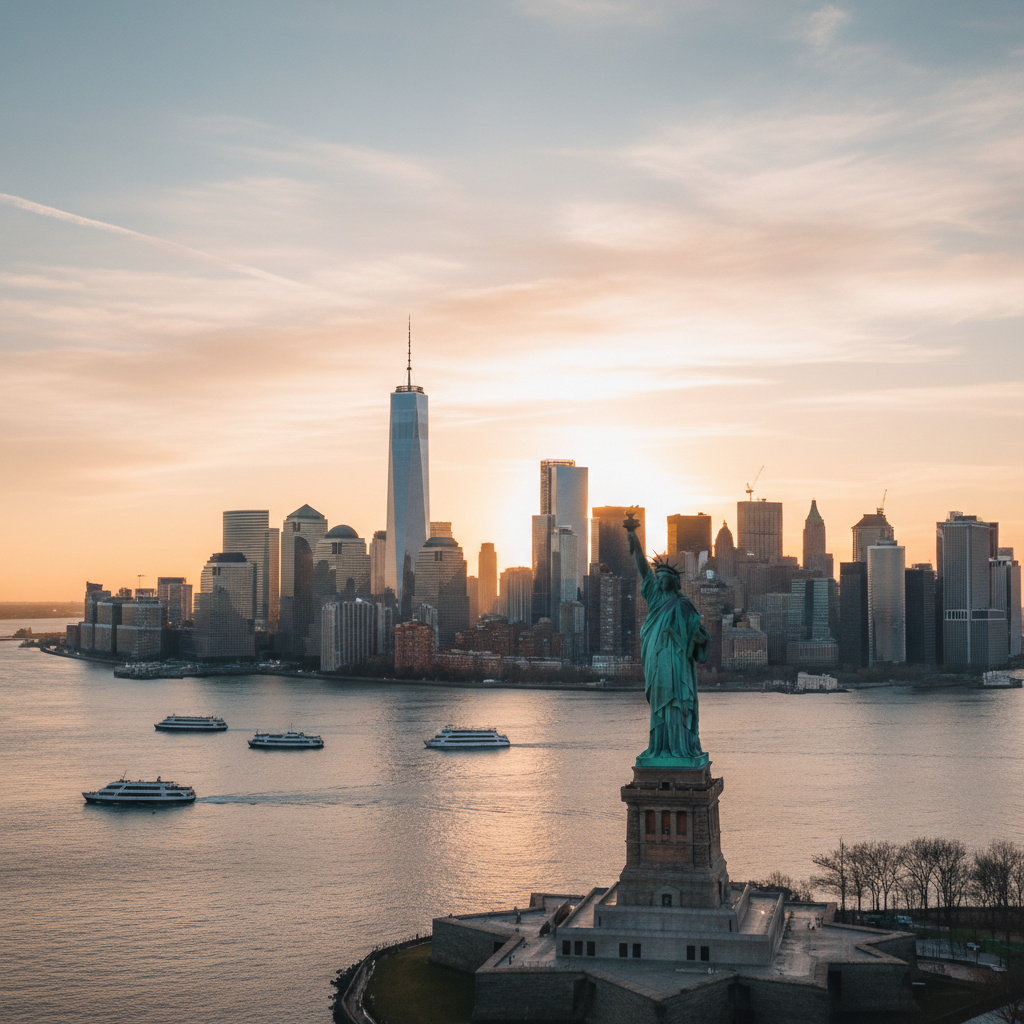
Obtaining a marriage-based green card through a U.S. citizen or lawful permanent resident spouse remains one of the most widely used paths to permanent residency in the United States, but the process has undergone a significant overhaul in recent months. The federal administration has tightened scrutiny, reinstated mandatory steps that had previously been relaxed, and rewrote Form I-485 with new questions about financial status, identity, and immigration history. This guide consolidates what applies today, in 2026, for couples planning to start the petition.
Who Qualifies
The petitioner must be a U.S. citizen or lawful permanent resident and be in a legitimate marriage, duly registered in a jurisdiction that recognizes civil or matrimonial unions. Spouses of citizens fall under the immediate relative category, with no visa bulletin queue: the immigrant number is considered always available. Spouses of permanent residents fall under the F2A preference category, subject to annual caps and the Department of State’s Visa Bulletin queue.
Marriages of less than two years’ duration at the time of approval result in conditional residence through the CR-1 visa. Marriages of more than two years result in full permanent residence through the IR-1 visa. Conditional status is removed through Form I-751, filed during the 90-day window preceding the second anniversary of the conditional residence.
The Two Paths of the Process
There are two structurally different routes to obtain a marriage-based green card, and the choice depends on where the foreign spouse resides at the time of the application.
Adjustment of Status in the U.S.
If the foreign spouse is already on U.S. soil in lawful status, the usual path is Adjustment of Status. For immediate relatives of citizens, the I-130 petition and the I-485 application can be filed concurrently, which significantly speeds up the timeline. The typical package includes the I-130 (Petition for Alien Relative), I-485 (Application to Register Permanent Residence or Adjust Status), I-864 (Affidavit of Support), I-693 (Medical Examination), and optionally the I-765 (Employment Authorization) and I-131 (Advance Parole) during the waiting period.
Consular Processing
If the foreign spouse is outside the United States, the process proceeds through the National Visa Center after the I-130 is approved. The applicant completes the DS-260, pays consular fees, submits civil and financial documentation, attends an interview at the U.S. consulate in their country, and if approved, receives the IR-1 or CR-1 visa stamped in their passport. Entry into the U.S. with that visa establishes permanent residence; the physical card arrives by mail within a few weeks, contingent on payment of the USCIS Immigrant Fee.
The New I-485 and What Changed
The updated version of Form I-485, in effect since early 2025, is mandatory for all applications filed today. Older versions are rejected upon receipt. The changes go far beyond the layout.
The form’s language has reverted to using the term Alien to refer to foreign nationals, terminology that had been softened under the previous administration. Gender identity options have been reduced to two binary categories. The public charge section has been expanded, requiring detailed disclosure of household income, assets, debts, and history of use of federal public benefits such as non-emergency Medicaid, SNAP, TANF, and housing assistance. The analysis is comprehensive: the officer evaluates the couple’s projected financial picture, considering age, health, education, professional skills, and family size.
In-Person Interviews Are Mandatory Again
For several years, some adjustment of status interviews for marriage-based cases were waived for cases deemed low risk. That flexibility is gone. Today, all couples applying for a marriage-based green card go through an in-person interview, either at the local USCIS field office (in adjustment of status cases) or at the competent U.S. consulate (in consular processing cases).
The interview is the moment when the officer evaluates the authenticity of the relationship. Typical questions cover the couple’s daily routine, shared finances, mutual knowledge of each other’s family and friends, future plans, and details of daily life together. In cases showing signs of fraud, USCIS may conduct what is known as a Stokes interview, in which each spouse is interviewed separately and their answers are compared. Robust documentation of shared life is essential: joint bank accounts, lease agreements or property deeds listing both names, insurance policies with the spouse as beneficiary, dated photographs, travel records, correspondence, and joint tax returns.
Financial Requirements Under the I-864
The petitioner must demonstrate the ability to support the foreign spouse at no less than 125% of the federal poverty line for the household size. For a couple without children in the continental United States, the annual income floor in 2026 is approximately $26,000, a figure adjusted annually by the Department of Health and Human Services. Active-duty military members may use the 100% threshold when sponsoring a spouse.
If the petitioner’s income is insufficient, it is possible to add liquid assets equal to five times the shortfall (three times for spouses of citizens), include a co-sponsor who takes on joint financial responsibility, or count the foreign spouse’s own income if they already reside legally in the United States. The contractual obligation under the I-864 lasts until the sponsored spouse becomes a U.S. citizen, completes 40 quarters of work, permanently leaves the U.S., passes away, or has their status terminated.
Medical Examination and Civil Documentation
Form I-693 must be completed by a civil surgeon designated by USCIS and submitted in a sealed envelope. The examination validates required vaccinations, the absence of communicable diseases listed by the CDC, the absence of mental disorders with a history of dangerous behavior, and the absence of substance abuse. Vaccines required in 2026 include MMR, Td/Tdap, varicella, seasonal influenza, hepatitis A and B, and others depending on age.
Civil documentation includes birth certificates for both spouses, a marriage certificate, divorce or death certificates from any previous marriages, criminal records from all countries where the foreign spouse resided for more than six months after age 16, and certified English translation of any document in another language.
Current Fees and Timelines
The 2026 fee schedule involves several independent charges: Form I-130 costs $675 on paper or $625 when submitted online; Form I-485 costs $1,440 (biometrics already included); Form I-765 costs $260 when filed alongside a pending I-485; and the USCIS Immigrant Fee of $235 applies to consular processing cases for the issuance of the physical card. Form I-864 has no filing fee for adjustment of status; in consular processing, an equivalent NVC fee is charged separately.
Average timelines vary by field office. Adjustment of status cases for immediate relatives take between 9 and 14 months at the fastest offices and can exceed 24 months at more congested ones. Total consular processing, from I-130 filing to the interview, ranges from 14 to 24 months, depending on the consulate and appointment availability.
Mistakes That Jeopardize the Case
Inconsistent documentation across forms is one of the most frequent triggers for a Request for Evidence. Conflicting dates, addresses that do not match residence history, unexplained gaps in employment history, missing legible copies of the passport or entry and exit stamp pages – all of these trigger supplemental requests that delay the case by months.
Underestimating the I-864 is also costly. Projected income based on a recently started job, without robust historical documentation, can lead to a co-sponsor requirement even in cases where current income would be sufficient. Another common mistake is traveling internationally while the I-485 is pending without a valid Advance Parole – a situation that is traditionally interpreted as abandonment of the application.
After Approval
When the application is approved for a marriage of less than two years, the spouse receives conditional residence for two years. Between months 21 and 24, the couple must jointly file Form I-751 with a new round of evidence of a bona fide relationship. Missing that deadline automatically terminates the residence. In cases of divorce, domestic abuse, or extreme hardship, it is possible to request a waiver of the joint filing requirement.
After Form I-751 is approved, the resident receives a ten-year green card and may begin the path to naturalization. The spouse of a U.S. citizen may apply for citizenship (N-400) after three years of permanent residence, provided the marriage remains intact and the petitioner continues to be a citizen. All other permanent residents follow the general five-year rule.
Learn more about CR-1
- Type
- Conditional Green Card
- Duration
- 2 years
- Remove conditions
- Form I-751
- Processing
- 12-24 months
About the author

Victoria Harper
Editor-in-Chief
As a journalist and lead editor at Visto n’ Visa, Victoria helps ensure that immigration topics are covered in a clear, trustworthy, and easy-to-understand way. Her focus is on delivering useful, human, and relevant content for people exploring new paths abroad.