English
 Português
 Español


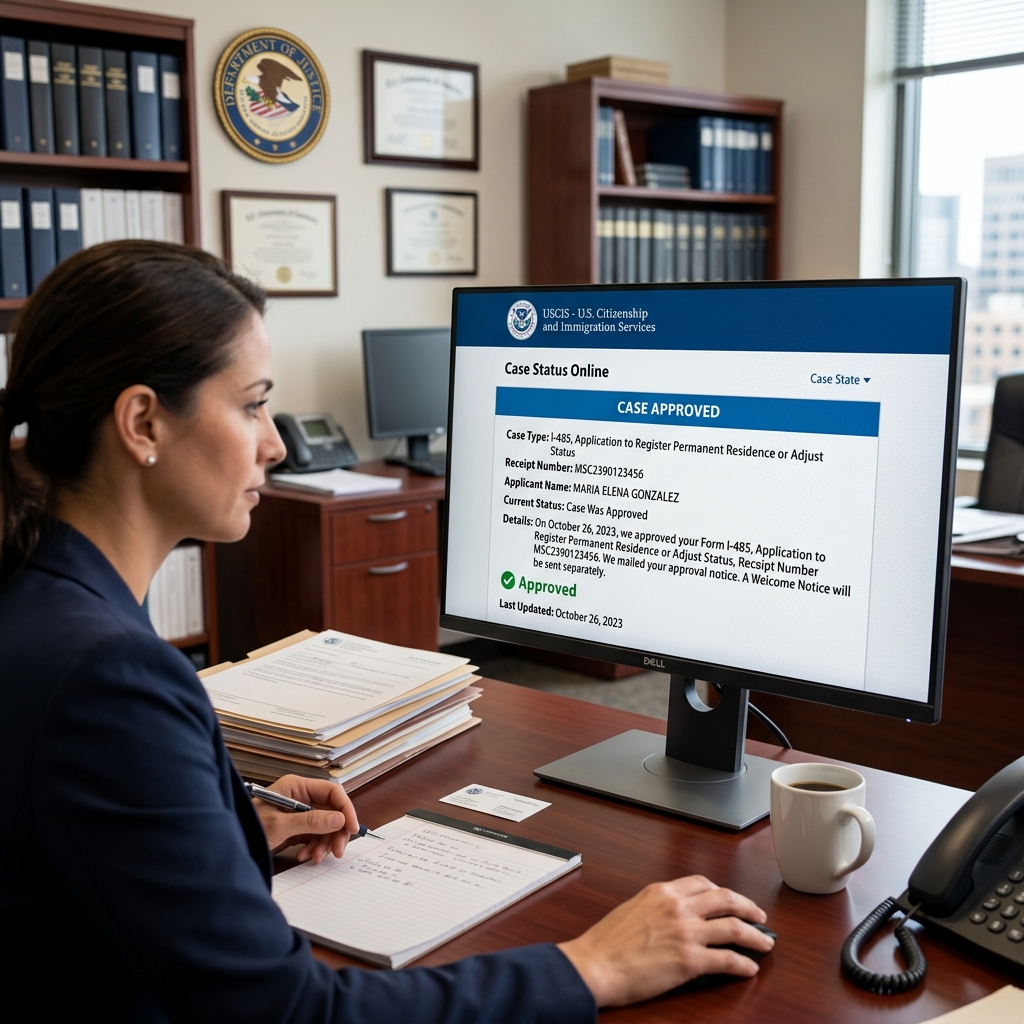
Approval of Form I-140 under the EB-2 NIW category is a major milestone on the path to a U.S. Green Card. It means USCIS has recognized that the applicant meets the category criteria, demonstrated substantial merit, and established that their work serves the national interest. However, I-140 approval does not automatically grant permanent residence. It qualifies the applicant to move forward to the next phase of the process, which ultimately results in obtaining the Green Card.
Understanding the available options after approval and planning the next steps in advance is essential to avoid delays and ensure a smooth transition. The two main paths are adjustment of status (for those already in the U.S.) and consular processing (for those abroad).
What Approval Means
I-140 approval confirms that USCIS recognized three fundamental elements of the case: that the applicant meets the educational and professional criteria of the EB-2 category, that they demonstrated national interest under the Matter of Dhanasar framework, and that they are eligible for the waiver of the job offer requirement.
After approval, the applicant receives an official approval notice containing the receipt number and the priority date. The priority date is critical. It determines the applicant’s place in the visa queue and can be checked monthly in the Visa Bulletin published by the Department of State. For most applicants in the EB-2 category, the priority date has been current, allowing them to proceed immediately.
Adjustment of Status via I-485
Adjustment of status is the option for applicants who are already lawfully present in the United States with a valid visa. The process is completed through Form I-485 (Application to Register Permanent Residence or Adjust Status), filed with USCIS.
To be eligible for adjustment of status, the applicant must be physically present in the U.S. with valid immigration status, have a current priority date per the Visa Bulletin, and have no bars such as serious immigration violations, certain criminal history, or health-related grounds of inadmissibility.
I-485 Documentation
- Copy of the approved I-140 (approval notice)
- Completed Form I-485
- Form I-693 (Report of Medical Examination and Vaccination Record) completed by a USCIS-designated civil surgeon
- Birth certificate with certified translation
- Valid passport and copies of all prior visas
- Two U.S.-format passport photos
- Evidence of current immigration status
- Criminal history records (if applicable)
- Proof of vaccinations
A significant advantage of adjustment of status is the ability to simultaneously file for an EAD (Employment Authorization Document, Form I-765) and Advance Parole (Form I-131), which allow the applicant to work for any employer and travel abroad, respectively, while the I-485 is pending.
Consular Processing
For applicants who are outside the United States, the path is consular processing. After the I-140 is approved, the case is transferred to the National Visa Center (NVC), which manages the pre-consular phase.
The NVC will contact the applicant to request fee payments, completion of Form DS-260 (Immigrant Visa Application), and submission of civil documents. After NVC processing, the applicant is scheduled for an interview at a U.S. embassy or consulate in their country of residence.
Consular Processing Steps
- Receive the NVC notice with instructions and case number
- Pay the immigrant visa processing fees
- Complete and submit Form DS-260 online
- Send required civil documents to the NVC (birth certificates, police clearances, financial evidence)
- Wait for the consular interview appointment
- Complete the required medical examination with an embassy-authorized physician
- Attend the consular interview with all original documentation
- Receive the immigrant visa in the passport
After approval at the interview, the applicant receives a sealed packet that must be presented to the immigration officer upon entry into the United States. The physical Green Card is mailed to the U.S. address provided, generally within a few weeks of arrival.
Financial Planning
The costs involved in the post-I-140 approval phase can be significant and should be planned in advance. Fees include the I-485 and its associated components, or the NVC processing fees for consular processing. In addition to government fees, there are costs for the medical examination, certified translations, photos, and any travel expenses.
Always consult the official USCIS and Department of State websites for current fee amounts, as they are reviewed periodically. The medical examination with a USCIS-designated civil surgeon (for adjustment of status) or an embassy-authorized physician (for consular processing) is an additional expense that varies by location.
Interview Preparation
Whether pursuing adjustment of status or consular processing, the interview is a critical step that requires careful preparation. The officer will assess the applicant’s eligibility and may ask questions about academic background, professional experience, plans in the United States, and details of the EB-2 NIW case.
Organize all original documentation in a logical order and bring additional copies. Be prepared to explain your proposed endeavor, your qualifications, and how you intend to contribute to the United States. Answer all questions clearly, directly, and honestly. If there are any inconsistencies between documents, prepare a well-grounded explanation before the interview.
Important Precautions During the Waiting Period
During the period between I-140 approval and obtaining the Green Card, certain precautions are essential to avoid jeopardizing the process.
- If you are in the U.S. with a pending I-485, do not travel abroad without an approved Advance Parole. Departing without this authorization may result in automatic abandonment of the adjustment of status application.
- Maintain valid immigration status until you receive the EAD or I-485 approval.
- Update your address with USCIS within ten days of any change (Form AR-11).
- Regularly monitor your case status on the USCIS website using the receipt number.
- Keep all documents organized and accessible in case of additional requests.
Frequently Asked Questions
Can I change jobs?
With an approved I-140 and an I-485 pending for more than 180 days, the applicant may change jobs as long as the new position is in the same or a similar occupational category as described in the EB-2 NIW petition. Because the EB-2 NIW is a self-petition, the flexibility is naturally greater than in employer-sponsored categories.
How long until the Green Card?
The timeline varies depending on the chosen path and visa availability. For applicants in the EB-2 category with a current priority date, adjustment of status may take eight to fourteen months. Consular processing generally takes six to twelve months after transfer to the NVC, but can vary by embassy.
What if the I-485 is denied?
In the event of a denial, it is possible to file a motion to reopen or reconsider the case, or in some contexts, to appeal the decision. The approved I-140 remains valid even if the I-485 is denied, allowing the applicant to reapply or pursue consular processing as an alternative.
Learn more about EB-2
- Category
- EB-2 Green Card (2nd priority)
- PERM
- Generally required
- Requirement
- Advanced degree or equivalent
- Processing
- 1-5 years
Tags
About the author

Victoria Harper
Editor-in-Chief
As a journalist and lead editor at Visto n’ Visa, Victoria helps ensure that immigration topics are covered in a clear, trustworthy, and easy-to-understand way. Her focus is on delivering useful, human, and relevant content for people exploring new paths abroad.