English
 Português
 Español


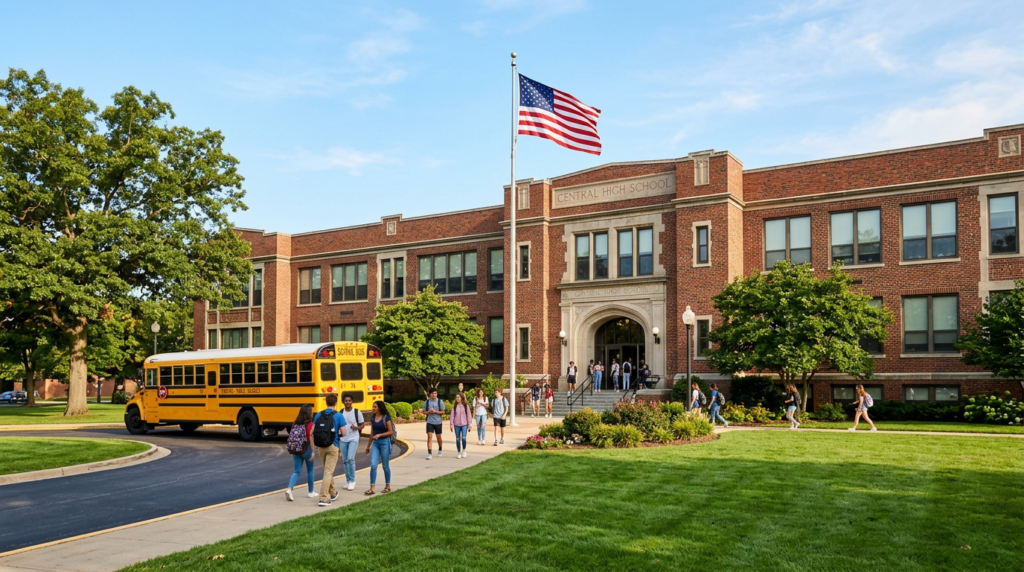
For many foreign families planning to move to the United States, access to quality education is one of the most important criteria. Deciding on the best region involves carefully analyzing the educational system, which has characteristics quite distinct from those of other countries. In addition, investing in children’s education can be decisive in ensuring future opportunities and better integration into the new community.
The American educational system is recognized for its diversity, offering alternatives that cater to different student profiles. Structures vary significantly between public and private schools, allowing parents and guardians to choose the option that best fits their family’s reality. In a scenario of global mobility and constant changes in public policies, it is essential to pay attention to current rules and legal requirements.
This article aims to provide a detailed overview of how the educational system works in the United States, covering everything from the division between public and private institutions to enrollment processes and selection criteria. Although some data, such as old rankings, may need updating, the information presented serves as a basis for understanding the various educational possibilities in the country.
Public and Private Schools
In the American educational system, educational institutions are basically divided into two categories: public and private. Public schools are funded by the government and serve students from kindergarten through high school, without charging tuition fees. However, the quality and resources available can vary depending on local investment and the management of the school district.
On the other hand, private schools operate with their own funding and usually require tuition fees, which can be significantly high. These institutions generally offer modern infrastructure, equipped laboratories, advanced technological resources, and a variety of extracurricular activities. For many families, this option represents an alternative that, even with additional costs, can bring benefits by offering more personalized learning and a competitive environment.
It is worth noting that even in private institutions, scholarship programs or financial aid may be available, expanding opportunities for students with diverse profiles, although access is generally selective.
Enrollment Process
Admission to American schools follows a set of procedures that vary according to the school district. In general, to complete enrollment it is necessary to present supporting documents, such as a birth certificate, proof of address, updated vaccination card, and in some cases, health certificates. This documentation serves to confirm the child’s identity and validate residence within the institution’s coverage area.
Another crucial aspect concerns age range. Most states require children between the ages of 5 and 16 to be enrolled in an educational institution, and failure to comply with this requirement may result in legal sanctions, such as fines and other penalties for guardians. Therefore, it is essential that parents inform themselves about the specific requirements of the school district and observe the deadlines and procedures established by local authorities.
Legal Aspects and Restrictions for Immigrants
For immigrant families, the legal aspects related to school enrollment require special attention. Holders of permanent residency, such as Green Card holders, have the same rights as citizens when registering their children in public schools. In addition, children of holders of certain types of temporary visas, such as work or study visas, may also have access to public education, provided they meet the district’s residency requirements.
However, for immigrants who are still in the process of regularization or awaiting status adjustment, there may be restrictions regarding access to public education. This benefit, funded by taxes, is often conditioned on proof of contributions to the local tax system. Thus, it is essential that guardians check the specific conditions of their place of residence and stay informed about the legal implications, avoiding future complications.
Location and Selection Criteria
Choosing a school is one of the most important steps for any family transitioning to the United States, as it directly impacts students’ academic and professional opportunities. The location of the institution has a decisive influence, not only on the quality of education but also on the cost of living in the region. In areas where well-rated schools are available, it is common for housing costs to be higher, reflecting local investments and the standard of living.
When selecting a school, guardians should consider various criteria, such as the institution’s reputation, the quality of the teaching staff, the facilities offered, and student performance rates. Rankings and evaluations published by specialized sources can help form a general overview, although it is important to recognize that data from previous years, such as those from 2019, may not reflect the current reality.
Previous studies and analyses indicated that states such as Massachusetts, New Jersey, Florida, Washington, and New Hampshire were home to some of the best schools in the country. However, considering that the educational landscape is constantly evolving, it is recommended that families consult updated sources, visit institutions, and talk to local residents to obtain a realistic and current view of school performance.
Considerations on Data Currency
Although many aspects of the American educational system remain stable over time, some specific data, such as school rankings and infrastructure investment policies, are subject to change. Information collected up to 2019 may have already undergone significant changes, and the conditions of each district may evolve according to local demands and new government policies.
Given this, it is prudent for parents and guardians to stay up to date by consulting official sources and recent studies that can offer a more accurate view of school quality. This approach not only helps avoid discrepancies between old data and current reality but also allows the choice of institution to be made based on reliable information compatible with the family’s needs.
Guidance for Families
To make an informed decision, it is recommended that parents thoroughly research the available options and, whenever possible, visit educational institutions. Interaction with the local community and consulting school performance data can provide valuable insights into the quality of education and the school environment.
In addition, it is important to consider that adapting to the American educational system may require a period of adjustment. The complexity of the enrollment process and the variations between the evaluation criteria of public and private schools highlight the need for careful planning. By dedicating time to understanding the rules and analyzing the options, guardians can minimize surprises and ensure that their children’s educational interests are satisfactorily met.
Final Thoughts
The United States educational system offers a wide range of possibilities that can suit different family profiles. Whether through public schools that provide comprehensive education at no direct cost, or private institutions that invest in infrastructure and specialized programs, the choice should weigh both financial aspects and the potential for academic and social development of the students.
Choosing the ideal school requires research, visits, and consulting reliable sources, ensuring that the information evaluated matches the current reality. Although previous rankings and analyses can provide a general idea, it is essential that data be constantly reviewed to reflect any changes in the educational landscape.
Ultimately, the combination of well-informed planning, in-person visits, and interaction with the local community can help families choose the best option for their children’s education. Thus, even in a constantly changing scenario, it is possible to ensure that needs and expectations are met, contributing to successful integration and a promising future for the children.
About the author

Victoria Harper
Editor-in-Chief
As a journalist and lead editor at Visto n’ Visa, Victoria helps ensure that immigration topics are covered in a clear, trustworthy, and easy-to-understand way. Her focus is on delivering useful, human, and relevant content for people exploring new paths abroad.