English
 Português
 Español


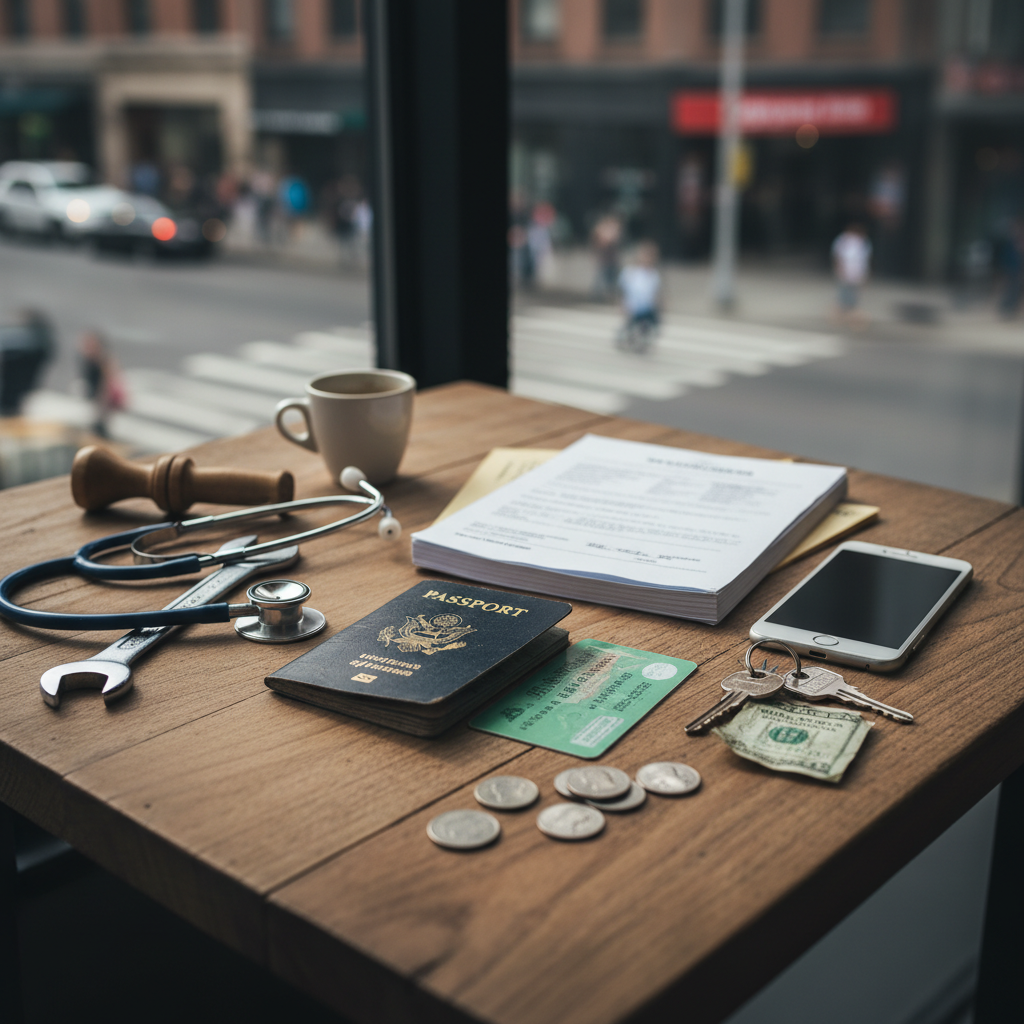
After months dealing with consular bureaucracy, documentation, and logistical planning, many immigrants believe that the hardest part is behind them when they land in the United States. In practice, however, it is in the first months of living together that a silent and often underestimated challenge appears: culture shock. It’s the small differences in pace, social expectations, and daily behaviors that require constant adaptation and can generate frustration, loneliness, or strangeness even in those who already mastered English before arriving.
Direct Communication and Small Talk
Brazilians are used to contextual, warm, and often indirect communication, where tone of voice and what’s between the lines carry as much meaning as the words themselves. In the United States, especially in professional settings, communication is direct, objective, and literal. Emails are short and straight to the point. When an American says “yes,” they usually mean exactly that, with no implicit layers. Frankness is not rudeness; it’s the cultural standard.
At the same time, small talk is an omnipresent and expected practice in everyday situations. In the elevator, in the supermarket line, at the doctor’s office: questions like “How are you?” or comments about the weather are not invitations for a deep conversation, but rather social rituals of courtesy. For Brazilians, it may seem superficial, but participating in these micro-dialogues is fundamental for daily integration and demonstrates social openness.
Work Relationships
In Brazil, the boundary between professional and personal life is porous. Coworkers often become close friends, lunches are long and shared, and physical touch (hugs, pats on the back) is natural. In the US, the separation between professional and personal is much more rigid. Relationships with colleagues and managers tend to be cordial and respectful, but clearly focused on work. Conversations about family or personal life happen, but in measured doses and usually initiated by the other party.
Punctuality is taken extremely seriously in all contexts. Arriving “on time” means being ready at the scheduled time or even five minutes early. Being late, even by a few minutes, is interpreted as a lack of respect for others’ time, something that drastically differs from the more flexible “Brazilian time.” After-work happy hour exists, but tends to be more contained and brief, without the length of Brazilian gatherings. And discussing salary with colleagues, although legally protected, is still considered a social taboo in many workplaces.
Planned Social Life
One of the differences that most surprises Brazilian immigrants is the degree of planning in American social life. While in Brazil a barbecue can arise from a spontaneous invitation at the last minute, in the US social gatherings are scheduled in advance, often through formal invitations that include RSVP (confirmation of attendance). The concept of “dropping by” someone’s house without prior notice is considered invasive and disrespectful.
There is also a strong respect for individual space and time. Americans value their privacy and routine. This does not mean coldness or lack of interest, but rather a cultural structure where personal boundaries are clear and respected. Building deep friendships with Americans takes longer than in Brazil: the transition from “acquaintance” to “close friend” is a gradual process that requires mutual initiative. Participating in groups with common interests, such as amateur sports leagues, book clubs, religious communities, or group classes, is one of the most effective ways to speed up this process.
Tipping Culture
Tipping in the United States is not an optional gesture of generosity. It is a structural part of service workers’ compensation. In restaurants, servers receive a base salary significantly lower than the federal minimum: in several states, only $2.13 per hour (the so-called tipped minimum wage). These professionals depend on tips to make up their real income. Not leaving a tip is considered extremely rude and directly harms the person who served you.
The standard tip in full-service restaurants is 15% to 20% of the bill before taxes. In 2026, industry data indicates that the average tip in digital transactions hovers around 18% to 19%. Besides restaurants, tips are expected for rideshare drivers (15% to 20%), hairdressers (15% to 20%), delivery people ($2 to $5 per delivery), and hotel staff ($2 to $5 per night for housekeepers). Payment apps often present pre-selected options of 15%, 18%, 20%, or 25%, which can surprise those unfamiliar with the system.
Do-It-Yourself Mentality
American culture deeply values independence and self-sufficiency. The concept of DIY (Do-It-Yourself) is present in practically every aspect of daily life: assembling furniture, painting walls, doing small electrical or plumbing repairs, gardening, and even building decks and fences. Specialized stores offer tools, materials, and tutorials so anyone can carry out home projects on their own.
For Brazilians, used to hiring professionals for tasks like furniture assembly, weekly cleaning, and small maintenance at affordable costs, the shock is twofold: equivalent services in the US cost significantly more, and the social expectation is that each person solves as much as possible on their own. A house cleaner who costs R$ 150 to R$ 200 in Brazil may cost $150 to $250 per session in the US. A plumber for a simple repair may charge $100 to $300. This reality leads most immigrants to develop domestic skills they never imagined needing, and video tutorials become essential everyday tools.
The Four Stages of Adaptation
Culture shock is not a single event, but a process that generally goes through four stages recognized by intercultural psychologists. The honeymoon phase, when everything is new and exciting, can last from a few weeks to a few months. The frustration phase comes next, when cultural differences start to irritate and homesickness intensifies. The adjustment phase marks the turning point, when adaptation strategies consolidate and the workings of the new culture begin to make sense. Finally, the acceptance phase represents natural coexistence with the new culture without giving up one’s own identity. Keeping in touch with immigrant communities, seeking local social activities, and practicing patience with oneself are attitudes that make this journey less arduous and more enriching.
About the author

Victoria Harper
Editor-in-Chief
As a journalist and lead editor at Visto n’ Visa, Victoria helps ensure that immigration topics are covered in a clear, trustworthy, and easy-to-understand way. Her focus is on delivering useful, human, and relevant content for people exploring new paths abroad.