English
 Português
 Español


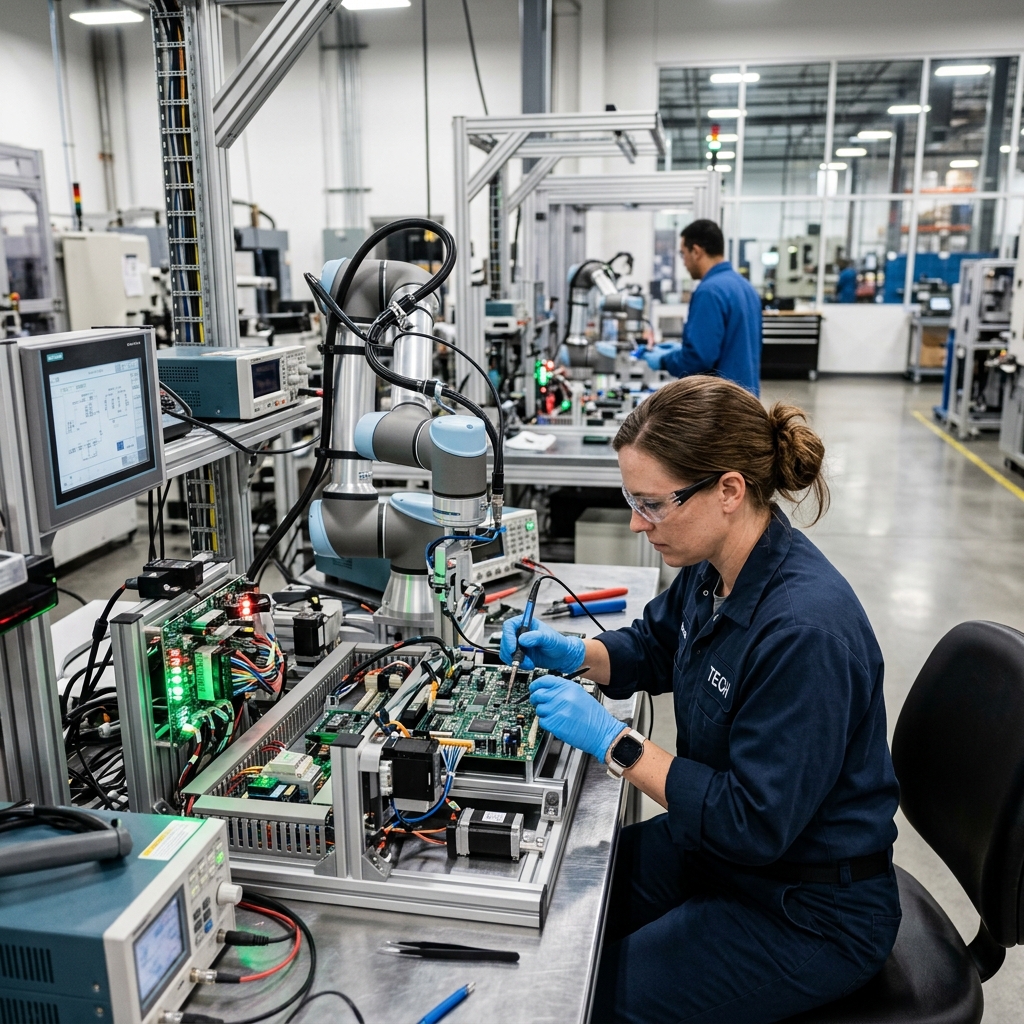
The United States job market is facing one of the largest skilled labor shortages in its recent history. Strategic sectors such as information technology, healthcare, engineering, and construction are demanding professionals that the domestic market cannot supply, creating concrete opportunities for foreign workers. For those with technical training and professional experience, the EB-3 visa represents one of the most accessible paths to permanent residency in the U.S., granting a green card to the principal applicant and their dependents.
Unlike categories that require extraordinary abilities or million-dollar investments, the EB-3 was designed to meet the real needs of the market: professionals who fill essential positions for which there are no available Americans. In 2026, with projections from the Bureau of Labor Statistics indicating robust growth in key sectors, this category gains special relevance for those planning to build a career in the United States.
What Is the EB-3 Visa
The EB-3 is an employment-based immigration category, administered by the USCIS (U.S. Citizenship and Immigration Services). The category is divided into three distinct subcategories, each with specific qualification requirements as defined in Section 203(b)(3) of the Immigration and Nationality Act.
The first subcategory covers skilled workers, who must demonstrate at least two years of experience or training in the field of the offered position. The second is aimed at professionals with a university degree, who have a bachelor’s degree or equivalent required for the position. The third covers other workers (other workers or EW), who perform jobs that require less than two years of experience.
The United States allocates about 40,040 EB-3 visas annually, of which a maximum of 10,000 are reserved for the other workers subcategory. Approval grants the principal applicant and their dependents (spouse and children under 21) permanent resident status, with the right to live, work, and study in any U.S. state. In the April 2026 Visa Bulletin, the EB-3 category for Rest of World is current in the Dates for Filing chart.
Sectors with Highest Demand
Projections from the Bureau of Labor Statistics (BLS) for the 2024-2034 period confirm the accelerated expansion of sectors that typically employ professionals eligible for the EB-3. These trends reflect structural changes in the American economy that are expected to persist for at least a decade.
Information Technology
The information sector is expected to grow 6.5% by 2034, driven by demand for artificial intelligence systems, data processing, and software development. Data scientists are among the fastest-growing occupations in the entire economy. Programmers, cybersecurity analysts, and network technicians consistently rank among the most sought-after positions by American employers willing to sponsor work visas.
Healthcare
The healthcare and social assistance sector leads employment growth projections, with an expansion of 8.4% between 2024 and 2034, nearly three times the national average of 3.1%. Approximately 2 million new jobs are expected to be created during this period. Nursing technicians, medical assistants, radiologists, and physical therapy assistants are among the most in-demand occupations, many of which fit into the skilled workers subcategory of the EB-3.
Engineering and Construction
Electrical, mechanical, and production engineers remain in high demand, especially with the advancement of industrial automation and infrastructure projects. In construction, electricians, plumbers, and carpenters face a chronic labor shortage, with demand outpacing the supply of qualified workers for over a decade. These occupations fall under the skilled workers and other workers subcategories of the EB-3.
Eligibility Requirements
The fundamental requirement for the EB-3 is a formal job offer from a U.S. employer willing to sponsor the immigration process. The employer must demonstrate, through labor certification, that they could not find qualified and available American workers for the offered position at the wage levels defined by the Department of Labor.
In addition to the job offer, the applicant must meet the requirements of their subcategory: two or more years of experience for skilled workers, a bachelor’s degree for professionals, or the ability to perform the job for other workers. Documentation includes diplomas and certificates translated by a sworn translator, proof of professional experience with letters from previous employers, job offer letter, medical exam on form I-693, and a criminal background certificate.
Process Steps
The EB-3 process involves three main steps, each with its own timelines and costs. Proper planning of these phases is essential to avoid delays that could jeopardize eligibility along the way.
The first step is the PERM labor certification (Program Electronic Review Management), submitted to the Department of Labor (DOL). The employer must conduct active recruitment for at least 30 days and demonstrate that there are no available American workers for the position. In April 2026, the DOL is processing PERM applications submitted in November 2024, with an average processing time of approximately 16 months from submission to approval.
With PERM approved, the employer submits the I-140 petition (Immigrant Petition for Alien Workers) to USCIS. Regular processing takes between 5 and 22 months, depending on the service center. Premium processing, available for an additional fee, guarantees a response within 15 business days.
The final step is adjustment of status (form I-485, for those already in the U.S.) or consular processing (for those applying from abroad). Visa availability is controlled by the monthly Visa Bulletin from the Department of State, and the applicant’s priority date determines when they can proceed to this phase.
Updated Costs in 2026
The costs of the EB-3 process involve government fees at multiple stages. The filing fee for form I-140 is $715, plus the Asylum Program Fee of $600 for employers with more than 25 employees ($300 for small employers with 25 or fewer). Nonprofit organizations are exempt from the asylum fee.
Premium processing for the I-140 costs $2,965 as of March 2026, adjusted for inflation. The I-485 form (adjustment of status) has a fee of $1,440 for adults. Additional costs include document translation, credential evaluation by agencies such as WES or ECE, medical exam, and possible attorney fees.
The total process time, combining PERM, I-140, and adjustment of status or consular processing, is around 48 months for most applicants in 2026. This timeframe can vary significantly depending on the applicant’s country of birth, as candidates from high-demand countries like India and China face additional backlogs in the Visa Bulletin. For applicants from the rest of the world, including Brazilians, timelines tend to be more favorable, with the category currently current in the Dates for Filing chart.
For technical professionals seeking stability and a legal path to permanent residency in the United States, the EB-3 remains one of the most accessible categories in the American immigration system. The key is early planning: identifying employers willing to sponsor, preparing complete documentation, and keeping up with regulatory changes that affect timelines and costs each fiscal year.
Learn more about EB-3
- Category
- EB-3 Green Card (3rd priority)
- PERM
- Required
- Requirement
- Skilled worker
- Processing
- 1-10 years
About the author

Victoria Harper
Editor-in-Chief
As a journalist and lead editor at Visto n’ Visa, Victoria helps ensure that immigration topics are covered in a clear, trustworthy, and easy-to-understand way. Her focus is on delivering useful, human, and relevant content for people exploring new paths abroad.