English
 Português
 Español


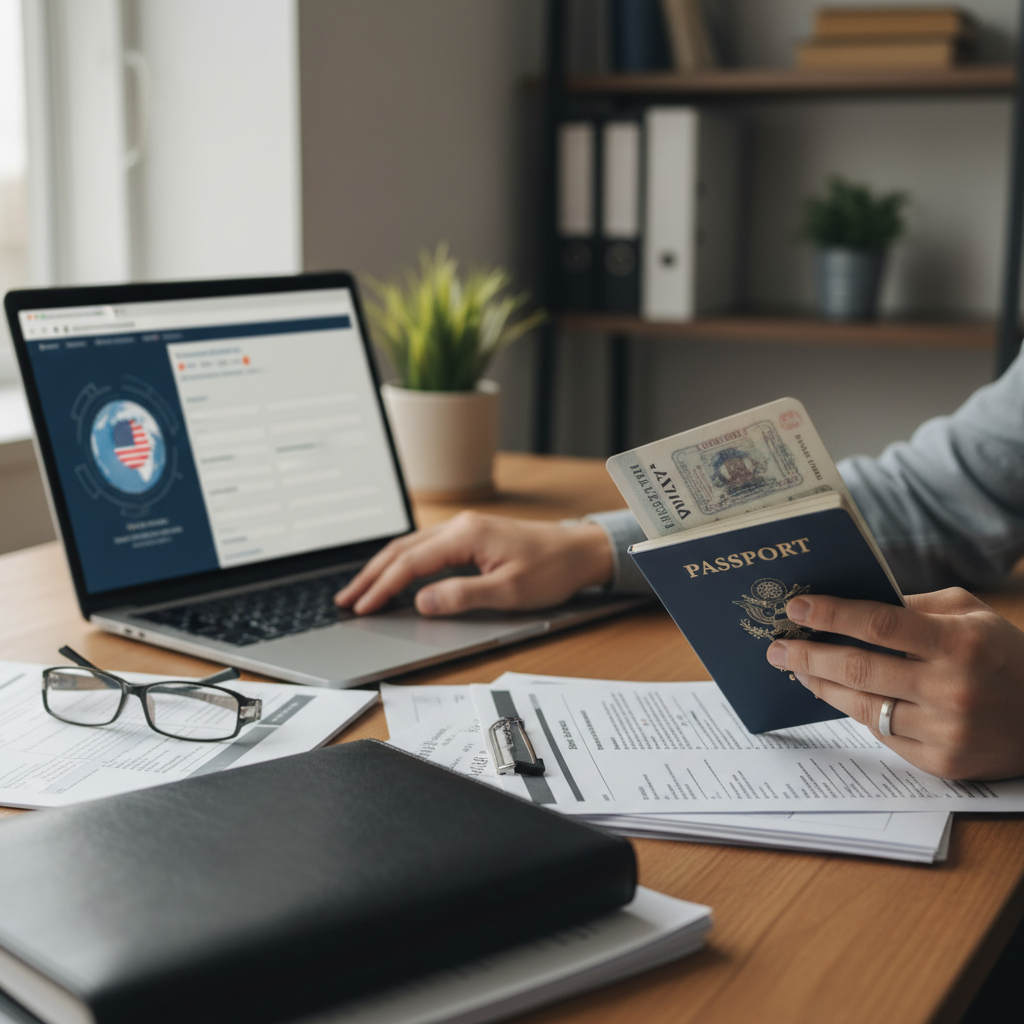
Renewing a U.S. visa is generally simpler than applying for the first time, but it does not happen automatically and is not available to everyone. Before starting the process, it is essential to check whether the applicant meets the current criteria for the interview waiver program, because those who proceed without meeting the requirements will end up having to appear at the consulate anyway, with more red tape than necessary. Below is a clear overview of who qualifies for the simplified renewal process, who must go through the full procedure, and what changes in each scenario in 2026.
What a Visa Renewal Is and What It Is Not
Technically, a U.S. visa renewal is a new application within the same category, filed by someone who has previously been approved for a visa. The consulate uses the applicant’s history to streamline the review and, in many cases, waives the in-person interview through the Interview Waiver program (also known as the Dropbox).
Renewal is not guaranteed. Each application is evaluated individually, and a consular officer may still require an interview even when all apparent criteria are met. Meeting the requirements significantly increases the likelihood of approval without an interview, but it does not eliminate the consulate’s discretionary authority.
Another important point: renewal is always within the same visa category. Holders of a B-1/B-2 tourist and business visa renew to B-1/B-2. You cannot change visa categories through a renewal; anyone who needs a different visa type, such as an F-1 student visa or an H-1B work visa, must file a brand-new application.
Interview Waiver Criteria for 2026
To qualify for the Interview Waiver, all of the following criteria must be met simultaneously, in accordance with rules in effect since September 2025:
Age at Time of Previous Issuance
The applicant must have been 18 years of age or older on the date the previous visa was issued. This criterion refers to the issuance date, not the applicant’s current age. Those who obtained their first visa as minors, even if they are adults today, do not qualify for the waiver.
Expiration Period
The previous visa must either still be valid or have expired no more than 12 months ago. This window was reduced in September 2025; previously, the State Department accepted renewals for visas expired up to 48 months. Anyone whose visa expired more than one year ago must complete the full process, including biometrics and an interview.
Country of Issuance and Application
The previous visa must have been issued by the consulate in the country where the applicant holds nationality or legal residence, and the renewal must be submitted in that same country. Those who obtained their visa at a consulate in another country while traveling are not eligible for the Interview Waiver when renewing. For applicants who have since relocated, the country of official legal residence applies.
Same Visa Category
The Interview Waiver applies only to renewals within the same visa category. B-1/B-2 renews to B-1/B-2; F-1 to F-1; H-1B to H-1B. Different categories require a new application.
Intact Physical Document
The passport containing the previous visa must be in good condition, with no tears, markings, or significant damage. A lost, stolen, canceled, or revoked visa disqualifies the applicant from the simplified renewal.
No Subsequent Visa Denials
If the applicant has had a visa denied after the issuance of the visa being renewed, the waiver does not apply.
No Negative Immigration History
Any record of deportation, inadmissibility, overstay, or other immigration violations requires an in-person interview.
Profile Table: Who Qualifies and Who Does Not
| Situation | Interview Waiver? |
|---|---|
| B-1/B-2 expired 8 months ago, issued at age 25 | Yes |
| B-1/B-2 expired 14 months ago | No, interview required |
| First visa obtained at age 16, applicant now 28 | No, interview required |
| Visa issued at a U.S. consulate abroad while traveling | No, interview required in country of residence |
| Passport with visa lost or stolen | No, full new application required |
| Visa denied after the issuance of the current visa | No, interview required |
| Valid B-1/B-2, applicant wants to change to F-1 | No, renewal does not allow category change |
| Child who obtained visa at age 10, now 20 | No, interview required |
Special Cases That Raise Questions
Families with Different Profiles
When a couple applies together and only one spouse qualifies for the waiver, each follows the process corresponding to their own profile. Eligibility is not transferable between family members. When both qualify, appointments can be grouped together, which often speeds up the joint review.
Children and Elderly Applicants
Applicants under 14 and those 80 years or older generally do not need to appear in person at the biometric collection center. A legal guardian or representative may submit the documents on their behalf, in accordance with local consulate policy.
Older Visas
Visas issued before January 1, 2008, have specific particularities, as they were not linked to current biometric systems. In practice, these cases are treated as new applications, with mandatory biometric collection and an interview.
New Passport, Visa in Old Passport
Getting a new passport does not prevent renewal. The process proceeds normally, and the old passport containing the valid visa must be presented alongside the new one at the biometric center and on any future travel. There is no need to transfer the visa to the new passport; both documents travel together.
Lost or Stolen Visa
When the passport containing the U.S. visa is lost or stolen, renewal is not an option. The applicant must file a police report, notify the issuing consulate, and submit a full new application, including the DS-160 form, MRV fee, biometrics, and an interview.
When an Interview Is Required: What to Expect
Not qualifying for the waiver is not a problem in itself. A prior visa approval on record counts positively in the consular review, even when an interview is required. In this scenario, the process involves the same steps as a first-time application:
- Completing a new DS-160 form with current information.
- Paying the MRV fee of US$ 185, the rate applicable to B, F, J, C, and D categories since June 2023.
- Scheduling and attending a biometric collection appointment.
- Scheduling and attending the consulate interview.
Step-by-Step Guide to Renewal with the Interview Waiver
- Complete a new DS-160: the form must be refilled with current employment, income, address, and travel plan information. Outdated or inconsistent information will cause delays.
- Create an account on the official portal and pay the MRV fee: the US$ 185 payment is processed at ais.usvisa-info.com (or the equivalent portal for your country of application). The system automatically indicates whether your profile is eligible for the waiver.
- Schedule the document drop-off at the biometric center: wait times for renewal appointments can stretch for weeks during peak periods. It is recommended to start the process at least 2 to 3 months in advance.
- Attend the center with all required documents: current valid passport, previous passport containing the visa, printed DS-160 confirmation page, appointment confirmation page, and a U.S.-standard photo (5×5 cm, white background). After submission, the passport is retained and the new visa is typically issued within 10 to 35 business days, which may be longer during peak periods.
When to Start the Process
The renewal process can be started before the current visa expires. The recommendation is to begin at least 3 to 6 months in advance, especially for those with upcoming travel plans who depend on having the document. Waiting until the visa expires increases the risk of being without a valid visa during the process, which can take several months during periods of high demand.
Frequently Asked Questions
Do I Need an Interview to Renew?
It depends on your profile. Applicants who were 18 or older when their previous visa was issued, whose visa expired no more than 12 months ago, who are renewing in the same country where the visa was issued, and who have no disqualifying history may be eligible for the waiver. The scheduling system will automatically indicate whether you qualify.
I Got My Visa Before Age 18. Can I Renew Without an Interview Now?
No. The 18-year age requirement refers to the applicant’s age at the time the previous visa was issued, not their current age. Those who obtained their first visa as minors must attend an interview at renewal, even if they are now adults.
My Visa Expired 14 Months Ago. Can I Still Use the Waiver?
No. Since September 2025, the eligibility window was reduced to 12 months after expiration. With 14 months elapsed, you must go through the full new application process.
Can I Renew if the Passport with My Visa Was Lost?
No. Losing or having your passport with the visa stolen disqualifies you from the simplified renewal. You must file a police report, notify the consulate, and submit a full new application, including all in-person steps.
My Spouse and I Have Different Situations. Do We Need to Apply Separately?
Each applicant follows the process that corresponds to their own profile. If one qualifies for the waiver and the other does not, one goes only to the biometric center while the other proceeds to the consulate. Eligibility is not transferable between family members.
Checking Your Profile Is the First Step
The most common mistake in the renewal process is starting without confirming eligibility for the waiver. Going down the wrong path leads to rework, lost appointments, and delays. Before accessing the system, take the time to review each criterion: age at issuance, expiration window, country of application, visa category, passport integrity, and immigration history. With a clear picture of your profile, the process unfolds in a much more predictable way.
Learn more about B-1/B-2
- Duration
- Up to 6 months
- Extension
- Possible (up to 6 months)
- Work
- Not permitted
- Processing
- 2-8 weeks
About the author

Victoria Harper
Editor-in-Chief
As a journalist and lead editor at Visto n’ Visa, Victoria helps ensure that immigration topics are covered in a clear, trustworthy, and easy-to-understand way. Her focus is on delivering useful, human, and relevant content for people exploring new paths abroad.
See all articles by Victoria Harper