English
 Português
 Español


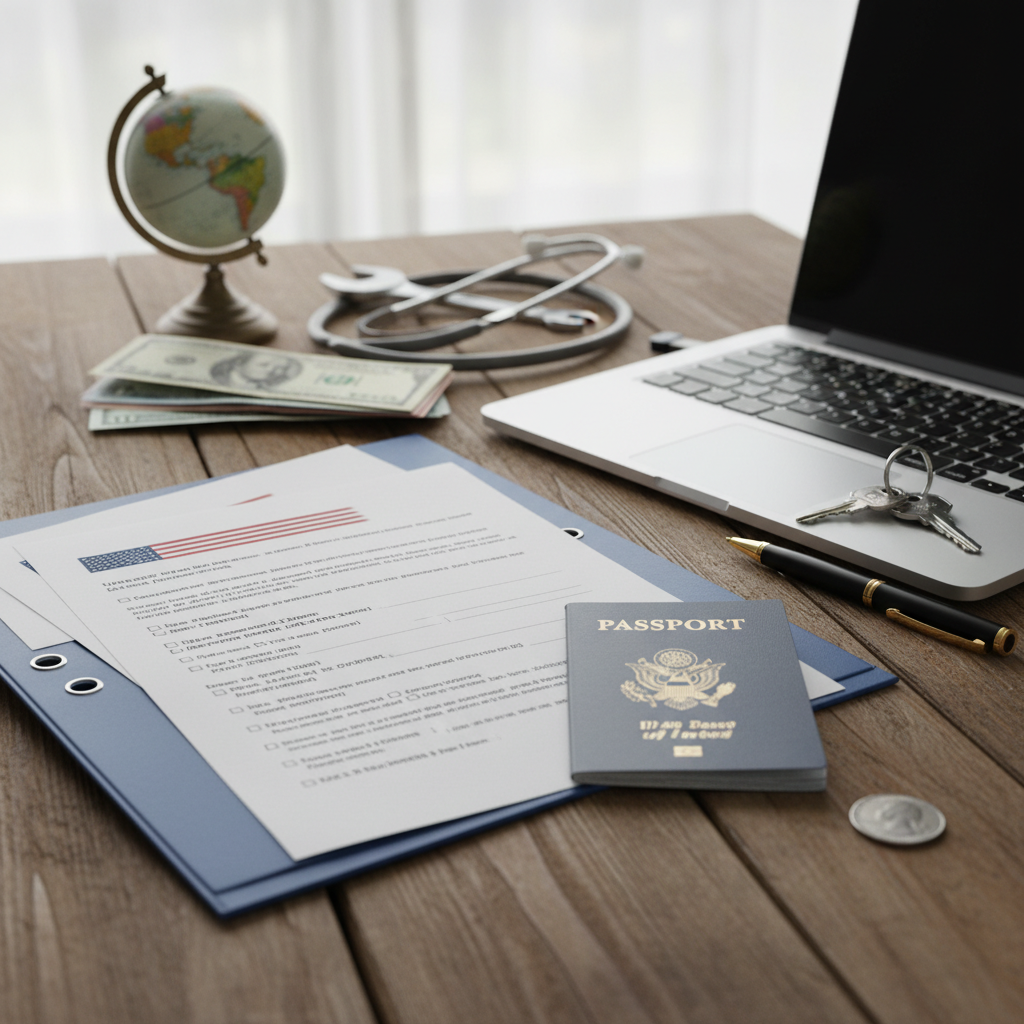
The DS-260, formally the Online Immigrant Visa Application, is the form the U.S. Department of State requires from every person applying for an immigrant visa from outside the United States. It is the centerpiece of consular processing — the path that leads to a green card through a U.S. embassy or consulate — as opposed to adjustment of status via Form I-485, which is available to those already lawfully present in the U.S.
Spouses of U.S. citizens living abroad, Diversity Visa Lottery selectees, beneficiaries of approved family petitions with a current priority date who are outside the U.S., and beneficiaries of employment-based petitions who chose consular processing: all go through the DS-260. The form is processed by the National Visa Center (NVC), not USCIS — a distinction with real practical implications throughout the pipeline.
Who Needs to Submit the DS-260
The DS-260 is for individuals seeking permanent residence in the U.S. — not for travelers on temporary visas. Typical cases include:
- Spouse of a U.S. citizen (IR-1/CR-1 category) residing outside the U.S.
- Spouse of a lawful permanent resident (F2A) with a current priority date
- DV Lottery selectees who completed the initial registration
- Beneficiaries of parental, sibling, and child petitions (IR-2, IR-5, F1, F3, F4) with a current priority date
- Beneficiaries of employment-based petitions (EB-1, EB-2, EB-2 NIW, EB-3) who elected consular processing
Those in the U.S. in valid nonimmigrant status generally follow a different route: Form I-485 filed with USCIS. The DS-260 only applies to those outside the U.S. when their category becomes current in the Visa Bulletin.
Current Fees
The immigrant visa application processing fee paid to the Department of State is $325 per applicant — not per household. Each beneficiary (spouse, each dependent child) pays their own fee.
Additional costs that make up the full price of consular processing:
- Affidavit of Support Processing Fee: $120 (paid once per case, tied to the sponsor’s I-864)
- USCIS Immigrant Fee: $235 (paid online after visa issuance and before the physical green card is mailed to the U.S. address)
- Medical exam: varies by consulate and authorized physician, typically $150–$500 per adult
- Required vaccinations not covered by the applicant’s medical history
- Certified translation and legalization of civil documents
- Police certificates from each relevant jurisdiction
DOS fees are paid through CEAC (Consular Electronic Application Center) using the case number assigned by the NVC. The USCIS Immigrant Fee is paid on a separate USCIS portal after the consulate issues the visa.
Typical NVC Pipeline Timelines
The standard NVC workflow has well-documented average timeframes, though they vary based on backlog and the capacity of the responsible consulate:
- USCIS-to-NVC transfer: approximately two weeks after I-130 or I-140 approval
- NVC welcome letter: one to two weeks after case receipt
- Civil and financial document submission: depends entirely on how quickly the petitioner and beneficiary gather and upload documents
- NVC document review: approximately two weeks, with the possibility of an RFE for illegible, poorly translated, or missing documents
- Interview scheduling: depends on the consulate’s calendar; can range from a few weeks at low-demand posts to several months at high-volume consulates
On average, the combined steps typically place a complete case between five and eight months from start to finish — but the real inflection point is almost always the consular interview scheduling date.
Step-by-Step Filing Guide
Before accessing the DS-260, the case must be in the right state:
- I-130 (family-based) or I-140 (employment-based) approved by USCIS
- Case transferred to the NVC with a case number assigned
- DS-261 submitted — the short form designating the case’s designated agent
- DOS fees paid ($325 IV fee and $120 Affidavit of Support fee)
With those steps complete, the DS-260 is accessed through CEAC. Key practical points:
- Have the case number, beneficiary ID, and invoice number from the welcome letter ready
- Include all children — biological, adopted, and stepchildren — regardless of age or whether they will immigrate. Omitting children is a frequent source of downstream problems
- List every address where you have lived since age 16, including informal residences when they were your permanent home
- Provide an accurate, current U.S. mailing address: the physical green card will be sent to that address after the USCIS Immigrant Fee is paid
- Review the form completely before submitting — it locks upon submission, and post-submit corrections require a manual request to the consulate
- Print the confirmation page: it is required at the interview
If an error is found after submission, contact the consulate handling the case. At many consulates, the interviewing officer will correct minor inconsistencies on the day of the interview. At others, a formal request to reopen the form is required.
Civil and Financial Documents
For most cases, the NVC requires copies (not originals) of the following documents before the interview:
From the Beneficiary
- Birth certificate
- Biographical page of the passport
- Marriage certificate, if married
- Divorce or death certificates for prior spouses, if applicable
- Military records, if applicable
- Police certificates from every jurisdiction where you lived for more than six months after age 16, and from any jurisdiction where you were arrested or committed a crime, regardless of length of stay
From the Petitioner (Sponsor)
- Signed I-864 Affidavit of Support demonstrating financial capacity
- Recent pay stubs or proof of self-employment income
- IRS tax returns or transcripts for the last three tax years — if no return was filed, an explanatory letter
- Proof of U.S. domicile: state ID, lease agreement, property deed, or bank statements
- Divorce or death certificates for prior spouses, when applicable
The Consular Interview
After the NVC releases the case as documentarily qualified, the interview is scheduled at the designated consulate. Before the interview, the applicant undergoes a medical exam with a consulate-approved physician and assembles the final document package.
Required items for the interview:
- Passport valid for more than six months
- Interview appointment letter issued by the NVC
- Two color photos in U.S. visa format
- Proof of the underlying relationship: original marriage certificate for marriage-based cases, birth certificates for family-based petitions
- Medical exam results in a sealed envelope from the authorized physician (some consulates accept digital submission)
- Originals of all documents whose copies were submitted to the NVC
Interview results typically come within days to a few weeks. Once the visa is approved, the passport with the immigrant stamp is returned to the applicant. That stamp serves as a temporary green card for approximately one year. The physical card arrives after the USCIS Immigrant Fee is paid and the applicant enters the U.S.
The Five Most Common Mistakes
- Omitting children — biological, adopted, or stepchildren — who are not immigrating at the same time
- Using non-Roman characters in names or addresses
- Mistyping the case number or invoice number
- Forgetting to print the confirmation page
- Submitting an address history that is inconsistent with other forms filed in the same case
DS-260 in the Diversity Visa Lottery
DV Lottery selectees complete the DS-260 using the case number assigned by the program. Information originally provided during the initial registration can be updated in the form, particularly facts that arose afterward, such as marriage or the birth of children.
The concept of family member is narrow here: spouse and unmarried children under 21 at the time of program entry. Adding dependents requires documentation proving the family relationship. Cases where the selectee had a spouse or child at the time of registration but did not declare them in the initial entry may become ineligible. The rule is simple: never misrepresent anything on an immigration form, under any circumstances.
Frequently Asked Questions
Must the form be completed in English?
Yes. All answers must be in English, with names and addresses converted to the Roman alphabet. Submissions in other languages are rejected.
Can I leave fields blank?
Only fields marked as optional. All other fields are required, and the form cannot be submitted while any mandatory field is incomplete.
Do I need to bring a printed DS-260 to the interview?
The consular officer has access to the form in the system. You only need to bring the confirmation page. All other documents on the official checklist must be presented as originals.
How do I track my case status?
Through the CEAC portal, logging in with your case number. The status updates as the NVC confirms documents, marks the case as documentarily qualified, and the consulate schedules the interview.
What is the DS-261 for?
The DS-261 is the short form that designates the case’s agent of record — typically the beneficiary, the petitioner, or legal counsel. It is submitted before the DS-260 and establishes the official point of contact with the NVC.
About the author

Victoria Harper
Editor-in-Chief
As a journalist and lead editor at Visto n’ Visa, Victoria helps ensure that immigration topics are covered in a clear, trustworthy, and easy-to-understand way. Her focus is on delivering useful, human, and relevant content for people exploring new paths abroad.