Visto n' Visa
Blog
Notícias e artigos
Destinations
Careers
Immigrants

Want to live and work in Saint John East?

Personalized immigration plan with eligible visas, costs, and next steps for your goal!

If you are not eligible, you will know exactly why and what to do to improve your approval chances.

Save up to 12 hours in meetings

No pointless assessments.

Save up to 90%

Save money on vague or unfocused consultations

Avoid Fraud and Mistakes

One mistake can cost you your visa

Total Impartiality

Zero commercial bias

Decide with peace of mind

No toxic urgency

Fast and Accurate

Answers in minutes, no guesswork

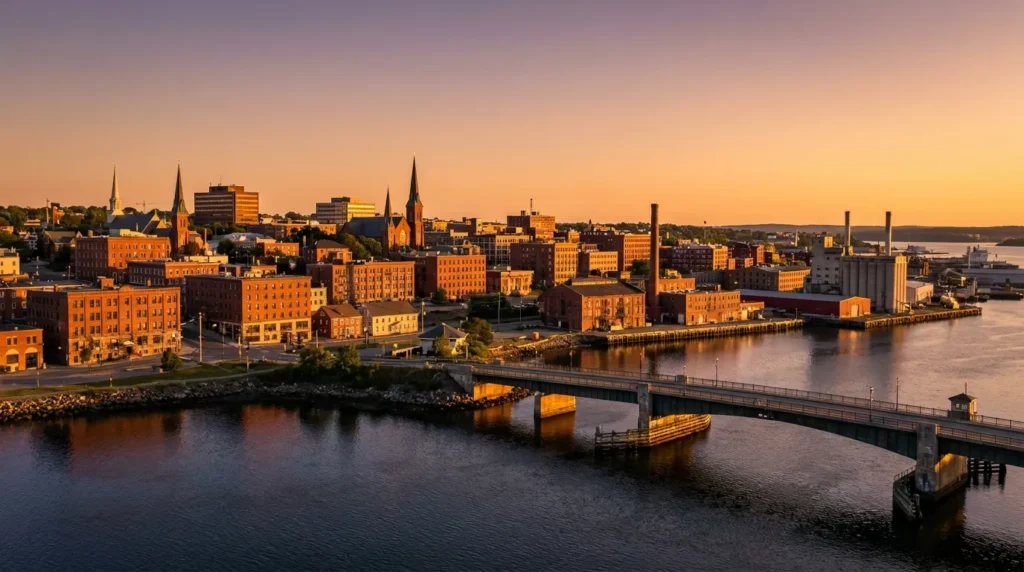
A predominantly English-speaking population with a growing immigrant presence

The region concentrates middle-class families from Saint John, with strong Irish and Scottish heritage and a growing number of immigrants from the Philippines, India, Syria, and other countries.

The eastern sector is historically English-speaking, heir to the waves of British and Irish settlement that shaped Saint John in the 19th century. Most residents speak English at home, but Francophone presence is visible in schools, public services, and bilingual signage, since New Brunswick is the only officially bilingual province in Canada.

In recent years, provincial immigration programs have brought new communities to the region: Filipinos in healthcare and caregiving, Indians in engineering and technology, Syrians and Ukrainians as refugees, plus smaller numbers of Chinese, Korean, and Nigerian residents. Many families settle in Saint John East because of more affordable prices and proximity to schools.

The age distribution is balanced, with a strong presence of families with children and also retirees who chose the region for its tranquility. Catholic, Anglican, and Baptist churches remain active, and Hindu, Muslim, and Orthodox places of worship have been emerging downtown to serve the new communities.

Languages spoken
  • English
  • French
  • Tagalog
  • Arabic
  • Mandarin
  • +1 more
Main religions
  • Roman Catholicism
  • Protestantism (Anglican, Baptist, United)
  • No religion
  • Islam
  • Hinduism

One of the lowest costs of living in Canada

Saint John East offers housing, food, and transportation significantly cheaper than Toronto, Vancouver, or Montreal, with lower wages but real breathing room in the family budget.

Saint John is frequently listed among Canada's most affordable large cities, and the eastern side follows that trend. Rent for a two-bedroom apartment in a recent building falls well below the national average, and financing a house is feasible for middle-class families, something increasingly rare in Ontario or British Columbia.

Supermarkets such as Sobeys, Superstore, and Costco serve the region with competitive prices, and McAllister Place concentrates retail, restaurants, and services. Electricity bills are paid to NB Power and tend to weigh on the budget in winter, when electric or oil heating runs for months on end. Internet, mobile phone, and insurance tend to be more expensive than the average in other countries.

The provincial tax (HST) is 15 percent and applies to most purchases. In return, gasoline, public school tuition, and basic medical care are covered by the Canadian system, which reduces the budget impact of unexpected costs for immigrant families.

Saint John East

Single-family homes with yards and new condos near the sea

Single-family homes with two or three bedrooms and a garage dominate, but there are modern condos in Champlain Heights and new buildings near McAllister Place.

The residential landscape is dominated by wood-framed homes with vinyl siding, two stories, and a backyard. Neighborhoods such as Champlain Heights, Forest Hills, Glen Falls, and Red Head concentrate this profile, with wide streets, ample sidewalks, and plenty of trees. Prices vary according to proximity to the sea and the age of the property.

Those who prefer to rent will find three to five-story buildings around McAllister Place and Rothesay Avenue, with elevators, included parking, and heating built into the rent in many cases. Newer condominiums have emerged in areas such as East Point Shopping Centre, aimed at young professionals and retirees who want to reduce maintenance.

Newcomers usually start in apartments near the shopping center and move to homeownership after one or two years, as a Canadian credit history develops. Local real estate firms such as Royal LePage and Re/Max dominate the market, and the Kijiji website remains a reference for rentals without an intermediary.

Recommended neighborhoods
  • Champlain Heights
  • Forest Hills
  • Glen Falls
  • Red Head
  • East Point
  • +1 more

Healthcare, refining, the port, and retail drive employment

The market revolves around Saint John Regional Hospital, the Irving Oil refinery, the port, and major retailers, with growing opportunities in IT and construction.

Saint John East sits adjacent to the city's two largest employment hubs: Saint John Regional Hospital, the main hospital in southern New Brunswick, and the Irving industrial complex, which includes the largest oil refinery in Canada. Engineers, technicians, nurses, and physicians are in constant demand, and provincial programs accelerate professional licensing for qualified immigrants.

The port of Saint John, expanded in recent years, generates jobs in logistics, customs, and terminal operations, especially for containers and cruise ships. The retail sector at McAllister Place and Rothesay Avenue absorbs entry-level labor in shops, restaurants, and services, serving as a typical entry point for those arriving without advanced English fluency.

Companies such as Cooke Aquaculture, J.D. Irving Limited, and Moosehead Breweries are headquartered or have large operations in the city. The technology ecosystem is still small, but Propel ICT, Venn Innovation, and startups from Brunswick House have been attracting developers through immigration programs via the Atlantic Immigration Program.

Dominant sectors
  • Healthcare
  • Refining and energy
  • Port and logistics
  • Retail
  • Construction
  • +1 more
Major employers
  • Saint John Regional Hospital (Horizon Health)
  • Irving Oil
  • J.D. Irving Limited
  • Port Saint John
  • Cooke Aquaculture
  • +2 more

A solid public network and a university campus just minutes away

Public schools in the Anglophone South School District serve the region, and the University of New Brunswick Saint John is nearby, offering undergraduate and graduate programs in several fields.

Families with children find in Saint John East a well-distributed public network, linked to the Anglophone South School District. Schools such as Glen Falls School, Forest Hills School, Hazen White-St. Francis, and Saint John High School cover K through grade 12. There are also Francophone schools run by the District Scolaire Francophone Sud for bilingual families.

For French immersion programs, several schools offer French Immersion from the earliest years, an option valued by immigrants who want to give their children the advantage of Canadian bilingualism. Catholic and Christian private schools also exist, though in smaller numbers than in larger cities.

For higher education, the University of New Brunswick Saint John (UNB Saint John) is in Tucker Park, just a few kilometers from the east, with programs in business, engineering, nursing, and sciences. The New Brunswick Community College maintains a campus focused on technical and vocational training, very popular among immigrants seeking quick requalification for the Canadian job market.

Notable universities
  • University of New Brunswick Saint John (UNBSJ)
  • New Brunswick Community College — Saint John Campus
  • Eastern College — Saint John

Direct access to the largest hospital in the southern province

Saint John Regional Hospital is located in the eastern region and concentrates emergency care, surgeries, and specialties for all of southern New Brunswick, with community clinics rounding out the service.

Saint John East has a rare advantage in mid-sized cities: the region's main hospital, Saint John Regional Hospital, is located within the area, in the Tucker Park neighborhood. It is a tertiary hospital with about 500 beds, 24-hour emergency, trauma center, maternity, and several specialties. Almost every east-side resident can reach it in 10 minutes by car.

The public system is the provincial Medicare, free at point of service for permanent residents and citizens. Recently arrived immigrants must wait up to three months to receive the Medicare Card, so it is common to purchase temporary private insurance (Blue Cross, GMS) for that initial period.

Family physicians are in short supply throughout New Brunswick, and Saint John is no exception. Newcomers register on the Patient Connect NB list and, while waiting, turn to walk-in clinics, the hospital emergency room, or the eVisitNB program for telehealth consultations. Dentists, physiotherapists, and pharmacies are concentrated at McAllister Place and around Westmorland Road.

Saint John East

A quiet, family-friendly region in a city that is safe by Canadian standards

Saint John East has low crime rates, with well-kept residential neighborhoods and few areas of concern, generally concentrated in older commercial corridors.

Saint John as a whole has moderate crime rates by Canadian standards, and the east side is considered one of the safest parts of the city. Home burglary is rare, and the Saint John Police Force maintains regular presence. Children walk or bike to school in several neighborhoods, and seniors move comfortably around McAllister Place.

The most residential areas, such as Champlain Heights, Forest Hills, and Glen Falls, are quiet at any hour. Extra care is warranted around the Rothesay Avenue area at night, where older motels, 24-hour stores, and some foot traffic linked to social vulnerability are concentrated. It is not a dangerous area, but it is less busy and well-lit than the rest.

Winter brings its own challenges: icy streets, driving in snowstorms, and extra caution when walking on slippery sidewalks. In emergencies, the universal Canadian number is 911, with dispatch for police, ambulance, and firefighters through the Saint John Fire Department.

Safer neighborhoods
  • Champlain Heights
  • Forest Hills
  • Glen Falls
  • Red Head
  • Tucker Park
Areas to avoid
  • Eastern stretch of Rothesay Avenue at night
  • Isolated industrial areas near Bayside Drive in the early hours

A car-dependent city, with basic bus service and a regional airport nearby

The region lives by the car along Route 1, with Saint John Transit bus lines connecting the east to downtown and the regional airport 15 minutes away.

Like almost every Canadian suburb, Saint John East was planned for the automobile. Route 1 cuts through the area from east to west, connecting downtown Saint John, Rothesay, and Quispamsis within minutes. Traffic is light outside rush hour, and parking at commercial establishments is plentiful and free.

Saint John Transit operates several lines linking the east to the central terminal, with stops at McAllister Place, the hospital, and the main residential corridors. Frequency is reasonable during business hours but drops considerably in the evening and on weekends, so most families end up buying a car within the first year.

Saint John Airport (YSJ) is about 15 minutes by car to the east, with direct flights to Toronto, Montreal, and Halifax via Air Canada and Porter. Separated bike lanes are still scarce, but the Harbour Passage trail and the paths in Rockwood Park serve recreational cyclists well.

Airports
  • YSJ — Saint John Airport
  • International airport

Climate

Saint John East

Irish-Scottish maritime heritage with pub culture and summer festivals

Local culture blends Celtic tradition, port-city identity, and summer waterfront festivals, with cuisine centered on Bay of Fundy seafood.

Saint John is the oldest incorporated city in Canada, and that heritage shows in the pubs, churches, and Victorian buildings of uptown, just a few minutes from the east. Irish culture is especially strong, celebrated at the annual Saint John Irish Festival and in pubs that fill up on St. Patrick's Day. Live music, from Celtic folk to Atlantic rock, is part of everyday life.

In summer, the region fills with events: the Area 506 Festival on the waterfront, Canada Day fireworks, producer markets, and the famous Reversing Falls, where the Bay of Fundy tide reverses the flow of the Saint John River. Restaurants in the east and downtown highlight lobster, scallops, mussels, and the traditional fish and chips served at spots such as Reggie's and Britt's Pub.

Cultural life is smaller than in metropolises such as Toronto or Halifax, but the Imperial Theatre, the New Brunswick Museum, and the Saint John Arts Centre maintain regular seasons. For immigrants, the Multicultural Association of Saint John hosts dinners, festivals, and events that bring new communities and longtime residents together.

Notable dishes
  • Bay of Fundy lobster
  • Digby scallops
  • Fish and chips
  • Seafood chowder
  • Donair
  • +1 more
Annual events
  • Area 506 Festival
  • Saint John Irish Festival
  • Canada Day at Long Wharf
  • Festival by the Sea
  • Buskers on the Bay
  • +1 more

Maritime nature, urban parks, and uptown heritage just minutes away

The region mixes Bay of Fundy beaches, the vast Rockwood Park, and easy access to uptown Saint John attractions such as the Reversing Falls and the New Brunswick Museum.

Even as the most residential side, Saint John East has plenty of nature. Rockwood Park, at more than 22 square kilometers, is one of the largest urban parks in Canada and begins just north of the region, with lakes, trails, golf, and even a small zoo. Heading toward the sea, Mispec Beach and Irving Nature Park offer coastal walks and birdwatching.

Historic uptown Saint John is 10 minutes away by car and concentrates the famous Reversing Falls, the New Brunswick Museum, the Imperial Theatre, the City Market (a public market operating since 1876), and the Harbour Passage walkway. On cruise days, the waterfront fills with international tourists, which energizes restaurants and galleries.

For day-to-day life, McAllister Place and East Point Shopping Centre cover cinema, bookstores, cafes, and restaurants. In summer, outdoor events take place at Long Wharf, and in winter the Hilton Belyea Arena and several public skating rinks serve east-side families.

  1. 1Rockwood Park
  2. 2Reversing Falls (Skywalk Saint John)
  3. 3New Brunswick Museum
  4. 4Saint John City Market
  5. 5Irving Nature Park
  6. 6Harbour Passage
Parks & green spaces
  • Rockwood Park
  • Irving Nature Park
  • Mispec Park
  • Lily Lake
  • Dominion Park
  • +1 more

A small, young immigrant community growing rapidly

Saint John receives immigrants mainly through the Atlantic Immigration Program, with growing communities of Filipinos, Indians, Syrians, Chinese, and Nigerians spread across the city.

New Brunswick is one of the provinces with the fastest proportional immigration growth, after decades of losing population. Saint John East is home to many of the recently arrived families, drawn by the low cost of living and access to Saint John Regional Hospital, a major employer in the healthcare sector. Filipinos, Indians, Syrians, Chinese, Nigerians, Ukrainians, and Iranians form the core of the new communities.

The Multicultural Association of Saint John (MAGMA) is the central support point, offering English classes, employment guidance, document assistance, and cultural events. Churches, temples, and mosques have been organizing downtown and in eastern neighborhoods, and specialty markets such as Asian and South Asian grocery stores are appearing along Rothesay Avenue and in the uptown area.

The most widely used immigration programs are the Atlantic Immigration Program (AIP), the New Brunswick Provincial Nominee Program (NBPNP), and the federal Express Entry. Those arriving through the AIP usually have a prior job offer in healthcare, hospitality, transportation, or construction. The Brazilian, Portuguese, Mexican, and Latin American communities are still modest but growing, especially among IT and engineering professionals.

9,500
Foreign-born residents
estimated
Top countries of origin
  • Philippines
  • India
  • Syria
  • China
  • United Kingdom
  • Nigeria
  • United States
  • Ukraine
Foreign consulates
  • Honorary Consulate of France — Saint John
  • Honorary Consulate of Italy — Saint John
  • Consulate General of the United States — Halifax (jurisdiction)
  • Consulate General of India — Toronto (jurisdiction)
  • Consulate General of the Philippines — Toronto (jurisdiction)
  • +1 more
Community organizations
  • Multicultural Association of Saint John (MAGMA)
  • YMCA of Greater Saint John — Newcomer Connections
  • Saint John Newcomers Centre
  • Catholic Charities Diocese of Saint John
  • PRUDE Inc. (Pride of Race, Unity and Dignity through Education)
  • Saint John Free Public Library — Newcomer Services

Latest posts

Straight from the blog

There are no posts specifically about Saint John East yet. In the meantime, check out our latest posts.