Visto n' Visa
Blog
Notícias e artigos
Destinations
Careers
Immigrants

Want to live and work in The Pas?

Personalized immigration plan with eligible visas, costs, and next steps for your goal!

If you are not eligible, you will know exactly why and what to do to improve your approval chances.

Save up to 12 hours in meetings

No pointless assessments.

Save up to 90%

Save money on vague or unfocused consultations

Avoid Fraud and Mistakes

One mistake can cost you your visa

Total Impartiality

Zero commercial bias

Decide with peace of mind

No toxic urgency

Fast and Accurate

Answers in minutes, no guesswork

Who lives in The Pas: strong Indigenous presence and a northern mosaic

Community with a majority Indigenous population (Cree and Métis), a small Anglo-Canadian base, and a growing arrival of immigrants from the Philippines and South Asia.

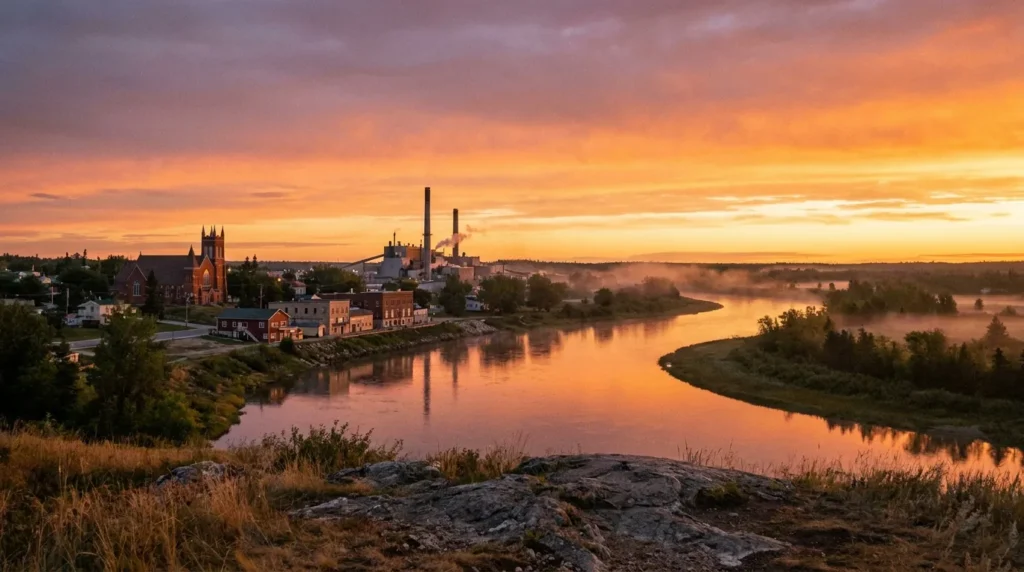
The Pas is one of the Canadian towns where the Indigenous presence is strongest. Together with the Opaskwayak Cree Nation, which sits right across the river from town, more than half of area residents identify as First Nations or Métis. This shapes everything: the schools, the events, the food, the way families organize themselves.

The non-Indigenous population is mostly of British, Ukrainian, German, and French descent, a legacy of the early waves of settlement in western Canada. Over the past two decades, the Manitoba Provincial Nominee Program has brought families from the Philippines, India, and Eastern Europe, generally to work in health care, transportation, and the paper mill.

It is a small community where almost everyone knows each other. Historical tensions between Indigenous and non-Indigenous populations are real and openly discussed, and newcomers are usually warmly received if they show respect for local culture. The languages most often heard day to day are English and Cree.

Languages spoken
  • English
  • Cree
  • Tagalog
  • French
  • Ukrainian
Main religions
  • Indigenous spirituality
  • Roman Catholicism
  • United Church of Canada
  • Anglicanism
  • Pentecostalism

Cost of living in The Pas: affordable rent, expensive food due to distance

Housing is far cheaper than in Winnipeg, but groceries, fuel, and imported goods are pricey because of the geographic isolation.

The Pas has one of the lowest housing costs in Canada. Three-bedroom homes in residential neighborhoods typically cost a fraction of what an equivalent house in Winnipeg or Brandon would. Rent for modest apartments runs well below the provincial average, and anyone with a stable job can manage to save.

The problem is everything else. Supermarket food, especially fresh fruits, vegetables, and dairy, arrives more expensive because it comes by truck from the south. Fuel also runs above the Manitoba average. Residents learn to buy in bulk during periodic trips to Winnipeg or online.

Winter heating weighs on the household budget, with temperatures dropping below minus thirty degrees Celsius for weeks at a time. Natural gas or electricity bills can double between November and March. On the other hand, wages in health care, mining, and paper are competitive, and there are several provincial incentives for those who settle in the north.

The Pas

Where to live in The Pas: from the quiet downtown to the riverside outskirts

Small, affordable market dominated by single-family homes, with few apartment buildings downtown.

Housing in The Pas is almost entirely single-story or two-story homes with a yard and garage. Residential neighborhoods sit just a few minutes by car from downtown, and most streets are tree-lined, with large backyards where families plant gardens during the short summer.

The small downtown, around Edwards Avenue, holds the few apartment buildings and some older homes. It is the preferred area for those working at the hospital or on the University College of the North campus who prefer to walk. There are also subsidized housing options through Manitoba Housing for lower-income families.

Buying a home in The Pas is feasible even for newcomers with modest incomes, but it is worth being careful with inspections: many homes are old and need work on insulation, roofing, and foundations because of the extreme climate. For renting, the market tightens during peak hiring months at the mill and hospital.

Recommended neighborhoods
  • Downtown (Edwards Avenue)
  • Crescentwood
  • Bignell Avenue residential
  • Devon Park
  • Neighborhoods near Otineka Mall

Job market in The Pas: paper, mining, health care, and rail

Local economy sustained by the paper mill, regional mining, the hospital, education, and rail logistics on the route to Churchill.

The town's largest employers center on Canadian Kraft Paper Industries, the kraft paper mill that took over operations from the former Tolko, and the Northern Regional Health Authority, which runs the regional hospital. These two employ hundreds of people and are a common entry point for newcomer immigrants.

Mining is another pillar: the region attracts shift workers who commute to zinc and copper mines in Flin Flon and Snow Lake, generally two or three hours away by car. The Hudson Bay Railway also employs operators, mechanics, and maintenance crews running up to Churchill.

There are also steady openings in education, with University College of the North offering technical and university programs, and in the downtown retail sector. For qualified professionals in health care, forestry engineering, or mining, The Pas is a frequent destination through the Manitoba Provincial Nominee Program, with wages above the provincial average.

Dominant sectors
  • Pulp and paper manufacturing
  • Mining
  • Public health care
  • Rail transport
  • Education
  • +1 more
Major employers
  • Canadian Kraft Paper Industries
  • Northern Regional Health Authority
  • University College of the North (UCN)
  • Hudson Bay Railway
  • Kelsey School Division
  • +1 more

Education in The Pas: from elementary school to the northern university campus

Network of public schools through the Kelsey School Division, an Opaskwayak Cree Nation school, and the main campus of University College of the North.

Elementary and secondary education is organized by the Kelsey School Division, with five schools serving early childhood through high school. Margaret Barbour Collegiate Institute is the central secondary school, with programs in sciences, arts, and technical training. There are also francophone schools and immersion courses for those wanting to keep French as a second language.

The Opaskwayak Cree Nation runs the Joe A. Ross School, with a strong Cree language and culture component from the early years. It is a reference in culturally oriented education and attracts families from across the region.

The major differentiator is University College of the North, whose main campus is in The Pas. It offers university programs in nursing, education, administration, social work, and technical programs in trades, mining, and information technology. For immigrants looking to revalidate or supplement their training, UCN is an accessible and well-regarded option in the Canadian north.

Notable universities
  • University College of the North (UCN) - main campus
  • Margaret Barbour Collegiate Institute
  • Joe A. Ross School (Opaskwayak Cree Nation)

Health care in The Pas: regional hospital covers all of northwestern Manitoba

The regional hospital serves a huge area and is a reference for emergencies, births, and outpatient care in the north of the province.

The Pas Health Complex is the main hospital in northwestern Manitoba and serves towns, reserves, and remote communities within a radius of hundreds of kilometers. It has a 24-hour emergency room, maternity ward, surgical center, dialysis, and specialty clinics. It is part of the Northern Regional Health Authority.

For routine medical visits, there are private clinics and a community health center. Dentists, optometrists, and pharmacies are concentrated downtown. For more complex procedures, oncology, and specialized surgeries, patients are transferred to Winnipeg, generally with transport coverage by Lifeflight or ground travel covered by the provincial health system.

Newcomers to Canada should apply for the Manitoba Health Card as soon as they arrive; coverage begins after three months for most immigrants. In the meantime, private travel insurance or an employer plan is essential. Openings for health professionals, especially nursing, are constant and well paid.

The Pas

Safety in The Pas: small community, attention to known social challenges

Violent crime is rare, but issues with alcohol, drugs, and theft do exist; most of the town is quiet and residents know each other.

The Pas is, overall, safe by Canadian small-town standards. Violent crimes are rare and most reported issues involve theft, vandalism, and incidents tied to alcohol use downtown at night. The Royal Canadian Mounted Police maintains an active detachment in town and in the Opaskwayak Cree Nation.

As in many northern Canadian communities, there are real social challenges with poverty, substance dependency, and historical inequality between Indigenous and non-Indigenous populations. Local organizations and the health system work on these fronts, but an attentive visitor will notice that these topics are part of public debate.

For everyday life as a resident, basic care is enough: do not leave a car unlocked, watch the river's edge in winter because of thin ice, and respect remote areas where wildlife such as bears, moose, and wolves may appear. Residential neighborhoods like Crescentwood and the area around the hospital are very quiet.

Safer neighborhoods
  • Crescentwood
  • Devon Park
  • Neighborhoods north of the hospital
  • Areas near UCN
Areas to avoid
  • Isolated downtown areas at night
  • Riverbanks on party weekends

Getting around The Pas and leaving town

Small town where almost everything is done by car; a regional airport and a Via Rail station connect to the rest of Canada.

Within town, having a car is practically mandatory. Distances are short, but the long winter makes relying on walking impractical for months at a time. There is no regular municipal public transit, only specific services for seniors and students. Parking is easy and free almost everywhere.

To leave town, Highway 10 runs south to Winnipeg, a journey of about six hundred kilometers. Via Rail operates the The Pas-Winnipeg-Churchill line, one of the few passenger rail connections in Canada and the most scenic way to travel through the region. The Hudson Bay Railway is the vital infrastructure of the north.

The Grace Lake regional airport sits a few kilometers from downtown, with Calm Air flights to Winnipeg and Churchill. There are no direct international flights. Dedicated bike lanes are few, but the low traffic density and some trails along the river allow for easy cycling in the summer.

Airports
  • YQD — The Pas/Grace Lake Airport

Climate

The Pas

Culture in The Pas: winter festival, Cree heritage, and riverside life

Cultural identity anchored in Cree tradition, the Northern Manitoba Trappers Festival, and life alongside nature.

The most striking cultural event is the Northern Manitoba Trappers Festival, held every February since 1916. For almost a week, the town comes alive with dog sled races, axe throwing, sawing competitions, square dancing, and outdoor music shows. It is the festival that defines the local calendar.

Cree heritage shows up in everyday cooking, with fresh bannock sold at bakeries and cafés, dishes featuring smoked freshwater fish, moose, and venison served at community dinners. Powwows organized by the Opaskwayak Cree Nation take place throughout the year and are open to the community.

Cultural life also runs through the Sam Waller Museum, which brings together natural and Indigenous history of the region, and the Aseneskak Casino, an entertainment and events hub on the neighboring reserve. The town does not have a large theater or an urban arts scene, but it has continuous programming in schools, at UCN, and in community clubs.

Notable dishes
  • Cree bannock
  • Smoked whitefish from Clearwater Lake
  • Roast moose meat
  • Mixed-meat tourtière
  • Grilled pickerel
  • +1 more
Annual events
  • Northern Manitoba Trappers Festival
  • Opaskwayak Indian Days
  • Treaty Day Powwow
  • Canada Day at Devon Park
  • Kelsey Agricultural Society Fall Fair

What to see in The Pas: museum, parks, and the vastness of the north

Attractions focused on nature, regional history, and outdoor life, with lakes, trails, and the Sam Waller Museum as highlights.

The Sam Waller Museum, housed in the former historic courthouse, is the most visited cultural stop in town. It holds an eclectic collection of natural history, Indigenous artifacts, pioneer pieces, and curiosities collected by Sam Waller himself throughout his life. It is small, but worth the visit.

Nature is the major attraction. Clearwater Lake Provincial Park, half an hour north of town, has water so clear that the bottom is visible, and offers beaches, trails, camping, and fishing. The Clearwater Caves are unique rock formations that can be explored on foot in the summer.

Within town, Devon Park and the Saskatchewan riverfront are popular spots for walking, picnicking, and fishing. The Aseneskak Casino, on the Opaskwayak Cree Nation, draws a regional crowd for games and shows. For those who enjoy the northern lights, the skies of northern Manitoba are among the best in the world between September and April.

  1. 1Sam Waller Museum
  2. 2Clearwater Lake Provincial Park
  3. 3Clearwater Lake Caves
  4. 4Devon Park
  5. 5Aseneskak Casino
  6. 6Saskatchewan riverfront
Parks & green spaces
  • Devon Park
  • Clearwater Lake Provincial Park
  • Rotary Trail along the river
  • Kelsey Trail
  • Big Eddy Park

Immigrant communities in The Pas: Filipinos lead, South Asians grow

Recent immigration driven by the Manitoba PNP, with Filipinos as the largest group, followed by Indians, Ukrainians, and Africans coming for health care and industry.

The Pas has a modest but steady flow of immigration, sustained by the Manitoba Provincial Nominee Program. The largest newcomer group is Filipino, present above all at the regional hospital, the paper mill, and in retail. There is an active association that organizes monthly dinners, religious celebrations, and commemorates Philippine Independence Day.

Indians and Nepalese form the second recent wave, generally in health care, transportation, and small business entrepreneurship. Ukrainians arrived in two waves, the historic one in the early twentieth century and a new one after 2022. There are also African immigrants from Nigeria, Ethiopia, and Eritrea, generally nursing professionals and technicians.

Because it is a small town, there are no consulates based in The Pas. The closest ones are in Winnipeg and serve all of Manitoba. Local organizations such as Regional Connections and Manitoba Start provide direct support to newcomers: English classes, help with documentation, job searches, and community integration.

450
Foreign-born residents
estimated
Top countries of origin
  • Philippines
  • India
  • Ukraine
  • Nepal
  • Nigeria
  • Eritrea
  • United Kingdom
Foreign consulates
  • Consulate General of the Philippines in Winnipeg
  • Consulate General of India in Winnipeg
  • Consulate of Ukraine in Winnipeg
  • Consulate of the United States in Winnipeg
  • Consulate of Mexico in Winnipeg
Community organizations
  • Regional Connections (Manitoba)
  • Manitoba Start
  • Filipino Association of The Pas
  • Opaskwayak Cree Nation Community Services
  • Northern Association of Community Councils

Latest posts

Straight from the blog

There are no posts specifically about The Pas yet. In the meantime, check out our latest posts.