Visto n' Visa
Blog
Notícias e artigos
Destinations
Careers
Immigrants

Want to live and work in Beulah?

Personalized immigration plan with eligible visas, costs, and next steps for your goal!

If you are not eligible, you will know exactly why and what to do to improve your approval chances.

Save up to 12 hours in meetings

No pointless assessments.

Save up to 90%

Save money on vague or unfocused consultations

Avoid Fraud and Mistakes

One mistake can cost you your visa

Total Impartiality

Zero commercial bias

Decide with peace of mind

No toxic urgency

Fast and Accurate

Answers in minutes, no guesswork

A small population, predominantly white with strong German heritage

Beulah has around three thousand residents, predominantly of Volga German and northern European descent, with a growing presence of Hispanic workers and Native Americans from nearby reservations.

Beulah's population is around 3,000 people. The dominant cultural heritage is German, mainly Volga Germans who arrived in the Dakotas in the late 19th century. Surnames like Schmidt, Bauer, and Wagner appear on business signs and local directories. Lutheran and Catholic churches shape the social calendar.

There is a significant Native American presence in the surrounding area, from the Fort Berthold Reservation (Mandan, Hidatsa, and Arikara peoples) and Standing Rock. Many work in the mines and power plants. In recent decades, Hispanics have arrived for positions in mining, agriculture, and services, forming a small but stable community of Mexican and Central American families.

English is overwhelmingly dominant. Spanish appears in some services and at the Catholic church. Dialectal German survives among older residents as a cultural heritage but rarely as a living language. Lutheran and Catholic religion organizes much of community life, with churches functioning as gathering places and support networks.

Languages spoken
  • English
  • Spanish
  • Siouan languages (Mandan, Hidatsa, Arikara)
  • German (heritage)
Main religions
  • Lutheranism
  • Roman Catholicism
  • Independent evangelical churches
  • Native American spirituality

Low cost of living sustained by industrial wages and affordable housing

Beulah offers housing well below the American average, affordable food, and moderate state taxes, but requires a car and heating expenses during the long winter.

Beulah is one of the most affordable cities in the United States. Three-bedroom homes can be purchased for far less than in any metropolitan area. Small apartment rent costs a fraction of what is paid in medium-sized cities. Those working at the mine or power plant earn competitive industrial wages, creating a favorable gap between income and expenses.

Local supermarkets (Cash Wise) and regional chains cover the essentials. For larger purchases, electronics, or clothing, residents travel to Bismarck or Minot. Fuel is cheap compared to major American cities. North Dakota charges low state income tax, and many essential items carry no local sales tax.

The hidden cost is winter. Natural gas or propane heating weighs heavily on the budget for six months of the year. Winter tires, car maintenance under severe conditions, and thermal clothing are mandatory expenses. Even so, the bottom line leaves money over for those who maintain stable employment.

Beulah

Spacious homes with land for the price of a small apartment in a big city

The real estate market is dominated by older but well-maintained single-family homes with generous lots. Inventory is limited and rentals are competitive among mining workers.

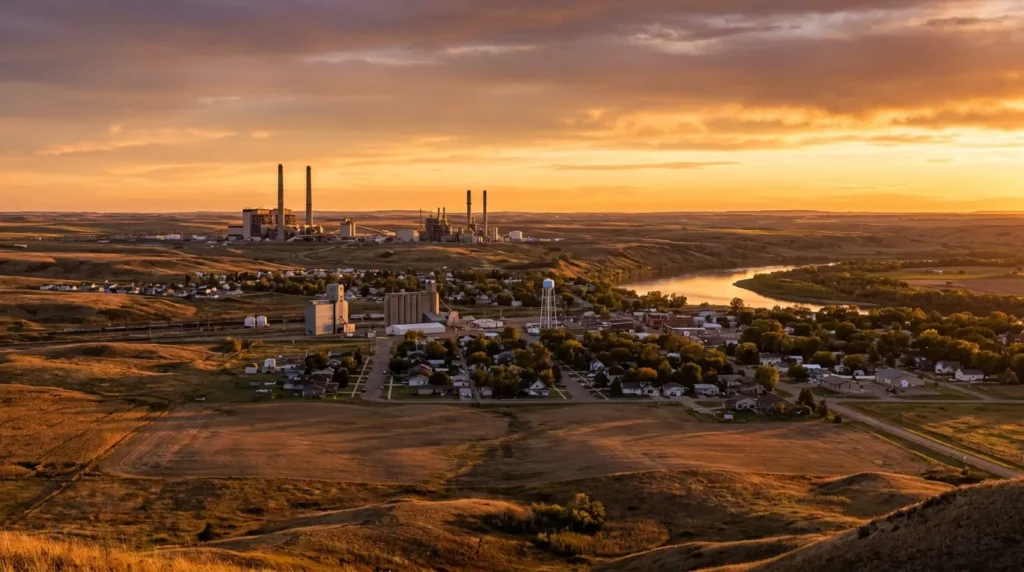
Beulah has the profile of a company town: an overwhelming majority of single-family homes, many built between the 1960s and 1980s during the lignite mining boom. Lots are large by urban standards, with double garages and backyards. Residential neighborhoods are to the north and west of downtown, on quiet streets with little traffic.

Inventory for sale is small but accessible. Three-bedroom homes in good condition appear regularly on the market. Rentals are harder to find because temporary mining and power plant workers compete for the few available units. Mobile homes in trailer parks are a common option for newcomers.

Those arriving to work at Freedom Mine or the power plants typically buy quickly if they plan to stay. The alternative is living in Hazen (a neighboring city about 8 miles to the east) or Stanton, both with similar inventory. It is advisable to contact the Beulah Area Chamber of Commerce and local real estate agents before signing a contract remotely.

Recommended neighborhoods
  • Downtown (around Central Avenue)
  • Residential neighborhoods north of Highway 49
  • Beulah Bay area (Lake Sakakawea, for lake homes)
  • Subdivisions to the west near the school

Lignite mining and power generation sustain almost all of the local economy

Jobs revolve around Freedom Mine, the Coal Creek and Antelope Valley power plants, and Dakota Gasification, with openings in operations, maintenance, transportation, and support services.

Beulah depends on the coal-energy complex. Freedom Mine, operated by Coteau Properties (a subsidiary of NACCO), is one of the largest open-pit lignite mines in the United States. Adjacent is Dakota Gasification Company, which converts lignite into synthetic gas, fertilizers, and CO2. Further east, near Underwood and Center, the Coal Creek and Antelope Valley power plants employ hundreds.

Typical positions include large mining shovel operator, heavy equipment mechanic, industrial electrician, instrumentation technician, off-road truck driver, mine engineer, and process chemist. Wages are high relative to the local cost of living, with substantial health and retirement benefits. Unions are present at some plants.

Outside the energy complex, there are positions in healthcare (Sakakawea Medical Center in Hazen), education (Beulah Public School District), local retail, restaurants, and services. Qualified rural healthcare professionals are in high demand. The long-term challenge is the energy transition: federal and state plans regarding coal directly influence the city's future.

Dominant sectors
  • Lignite mining
  • Electric power generation
  • Chemical processing (syngas and fertilizers)
  • Rural healthcare
  • Industrial construction and maintenance
  • +1 more
Major employers
  • Coteau Properties (Freedom Mine)
  • Dakota Gasification Company
  • Basin Electric Power Cooperative
  • Coal Creek Station
  • Antelope Valley Station
  • +2 more

Solid public school system for a small city, with a nearby regional technical college

Beulah has a K-12 public school with a good reputation. For higher education, residents turn to Bismarck State College, NDSU in Fargo, or UND in Grand Forks.

The Beulah Public School District serves children from kindergarten through high school in two schools: Beulah Elementary and Beulah High School. Class sizes are small, teachers know each student, and athletic facilities are surprisingly good for the city's size. Extracurricular activities include football, basketball, wrestling, band, and FFA (Future Farmers of America).

For technical education, Bismarck State College, about 80 miles away, offers strong programs in energy (power plant operations, instrumentation, welding) with direct partnerships with regional companies. Many young people from Beulah complete two years there and return employed at Freedom Mine or Dakota Gas. It is a real pipeline between technical education and local industry.

For full degree programs, North Dakota State University (Fargo) and University of North Dakota (Grand Forks) are the main choices. Both offer good value and competitive programs in engineering, nursing, agriculture, and business. Families of immigrants with school-age children tend to find the system welcoming and safe.

Notable universities
  • Bismarck State College (80 mi, energy and technical programs)
  • Dickinson State University (110 mi)
  • North Dakota State University - NDSU (Fargo)
  • University of North Dakota - UND (Grand Forks)
  • United Tribes Technical College (Bismarck)

Regional hospital in Hazen, specialists in Bismarck, telemedicine gaining ground

Primary and emergency care is covered by Sakakawea Medical Center in Hazen. Specialty care and complex surgeries require travel to Bismarck.

The regional hospital is Sakakawea Medical Center in Hazen, about 8 miles from Beulah. It is a small but functional hospital with 24-hour emergency care, general medicine, low-risk obstetrics, physical therapy, and visiting specialists. In Beulah itself there are outpatient clinics, dentists, and pharmacies that handle everyday needs.

For more complex cases (surgery, oncology, cardiology, neurology, high-risk obstetrics), patients are referred to Bismarck, where CHI St. Alexius Health and Sanford Health Bismarck are located. These are large, well-equipped hospitals but require a nearly two-hour trip. In serious emergencies, air medical transport is activated.

The American healthcare system functions here as elsewhere in the country: it depends on insurance, and the major mining and energy employers offer good coverage. Without insurance, even a basic consultation is expensive. Programs such as North Dakota Medicaid cover low-income populations; veterans have access to the Fargo VA Healthcare System via telemedicine.

Beulah

A quiet city with low crime rates and rarely locked doors

Beulah is safe by American standards: crime is nearly absent, police are known by name, and the main risks are severe weather, road accidents, and industrial accidents.

Beulah is one of those cities where many people still leave their cars unlocked in the garage. Violent crime is rare. Minor theft, teenage vandalism, and alcohol-related incidents appear in the statistics but in very low volumes. The Beulah Police Department is small, with support from the Mercer County Sheriff and the North Dakota Highway Patrol on the roads.

The real risks are different. Extreme winter (wind chills reaching -40°F) can be fatal for the unprepared. Snowstorms close roads. Nighttime accidents on rural highways, frequently involving deer or mining trucks, are a constant concern. Defensive driving training in adverse conditions is essential.

Industrial accidents in mining and power plants occur, though companies maintain strict occupational safety protocols. For newly arrived immigrants, the biggest shock is usually the isolation and cold, not urban violence. The community network tends to be supportive toward those who arrive from outside and show a willingness to integrate.

Safer neighborhoods
  • Downtown Beulah
  • Residential neighborhoods to the north and west
  • School area
  • Beulah Bay (seasonal)
Areas to avoid
  • Rural roads at night in winter (visibility and wildlife)
  • Areas near industrial operations without authorization
  • Lake Sakakawea without proper equipment in winter

A car-dependent city with no regular public transit and no local commercial airport

Beulah depends entirely on the automobile. State highways 200 and 49 connect to the regional network, and the nearest commercial airport is in Bismarck, about two hours away by car.

There is no urban public transit in Beulah. Those moving there need their own vehicle, ideally prepared for winter (four-wheel drive helps significantly). Distances within the city are short, but any major purchase, specialist medical appointment, or trip requires driving dozens of miles.

US Highway 200 crosses Beulah east-west, connecting to Hazen, Stanton, and further east to Bismarck. North Dakota Highway 49 heads south toward Glen Ullin. The pickup truck is the standard local vehicle given the terrain, climate, and work requirements. There is a small municipal airport (Beulah Municipal, Y19) for general aviation, with no commercial flights.

The most useful airport is Bismarck Municipal (BIS), about 80 miles to the southeast, with flights to Minneapolis, Denver, and Dallas. For international destinations, connections run through Minneapolis-St. Paul (MSP). Amtrak's Empire Builder route passes through Minot, approximately 80 miles to the north, connecting Chicago to Seattle/Portland.

Airports
  • Y19 - Beulah Municipal Airport (general aviation)
  • BIS - Bismarck Municipal Airport (80 mi, commercial flights)
  • MOT - Minot International Airport (125 mi)

Climate

Beulah

Rural culture with strong German heritage, hunting, fishing, and short summer festivals

Cultural life blends German and Scandinavian traditions with American small-town habits: church suppers, community events, fall hunting, and fishing on Lake Sakakawea in summer.

Beulah is a city of rural American identity. The social calendar revolves around churches, the school, and the short, intense summer. Events such as the Beulah Country Fair, church suppers with German dishes, and bingo at community clubs still anchor the schedule. Veterans and the American Legion carry significant social weight.

Local cuisine blends American comfort food with Volga German heritage. Knoephla soup (a potato and cream dumpling soup), kuchen (a traditional pastry, now North Dakota's official state dessert), fleischkuchle (a fried pastry filled with meat), and homemade sausages appear in homes and some restaurants. Hotdish, fried walleye from Lake Sakakawea, and steakhouses round out the menu.

Hunting (pheasant, deer, elk) and fishing on Lake Sakakawea structure family and social life. Snowmobiling, ice fishing, and skating occupy the winter. Youth hockey and school basketball mobilize the city. For those coming from an urban culture, it is a significant adjustment, but the personal hospitality compensates.

Notable dishes
  • Knoephla soup
  • Kuchen (traditional pastry)
  • Fleischkuchle
  • Hotdish
  • Fried walleye from Lake Sakakawea
  • +2 more
Annual events
  • Beulah Country Fair
  • Beulah Bay Music Festival
  • Kraut & Sausage Supper (church dinners)
  • Mercer County Fair (in Hazen)
  • Norsk Hostfest (in Minot, regional)

Lake Sakakawea, American frontier history, and prairie landscape

Attractions combine nature around Lake Sakakawea, historical sites about Native peoples and Lewis and Clark explorers, state parks, and local culture in small museums.

Lake Sakakawea, formed by Garrison Dam on the Missouri River, is Beulah's great backyard. Beulah Bay, within city limits, has a marina, camping area, and rental cabins. In summer, walleye fishing, water skiing, and family barbecues dominate the weekends. In winter, the lake becomes a venue for ice fishing and snowmobiling.

For history, Knife River Indian Villages National Historic Site in Stanton (about 12 miles away) is worth a visit, where the Mandan and Hidatsa lived and where Sacagawea joined the Lewis and Clark Expedition. Cross Ranch State Park and Fort Mandan Overlook complement the historical route. The Mercer County Historical Museum in Hazen tells the story of the Volga Germans in the region.

Lake Sakakawea State Park in Pick City offers a beach, trails, and camping. For pure nature, Theodore Roosevelt National Park, with spectacular badlands, is approximately 125 miles to the west. For those who enjoy stargazing without light pollution, any point outside the city serves as a natural observatory.

  1. 1Lake Sakakawea and Beulah Bay
  2. 2Knife River Indian Villages National Historic Site (Stanton)
  3. 3Cross Ranch State Park
  4. 4Mercer County Historical Museum (Hazen)
  5. 5Lake Sakakawea State Park (Pick City)
  6. 6Fort Mandan Overlook
Parks & green spaces
  • Beulah Bay Park
  • Riverside Park
  • Beulah City Park
  • Lake Sakakawea State Park (nearby)
  • Cross Ranch State Park (nearby)

Small, practical immigrant community tied to industrial work and rural healthcare

Beulah receives few immigrants in absolute numbers, but concentrates Mexican, Central American, and Filipino families linked to industrial and nursing positions. Support comes from churches and state organizations.

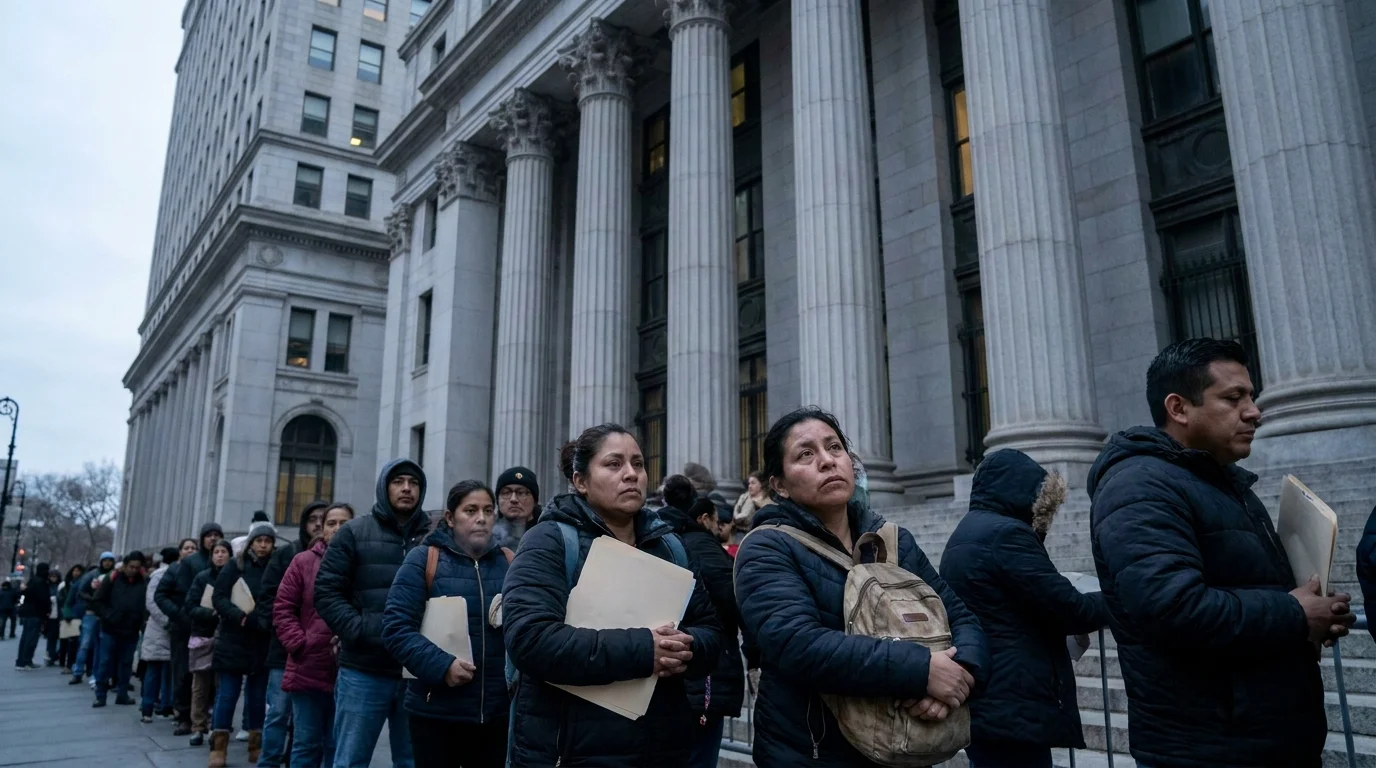
Beulah is not a traditional immigration destination, but has small, stable communities. Mexicans and Central Americans arrive for positions in mining, maintenance, agriculture, and services. Filipino and Indian families appear frequently in healthcare, especially nursing, at the hospital in Hazen and in care homes. Recently arrived Ukrainians, connected to the Uniting for Ukraine program, have joined the community since 2022.

Direct immigrant support within Beulah is limited, but the state network functions. Lutheran Social Services of North Dakota (with offices in Bismarck and Fargo) is a reference for refugee resettlement, ESL, and immigration regularization. Local Catholic and Lutheran churches serve as the first welcoming network, offering informal English classes and practical support.

For consular matters, nearly everything is handled at consulates in Minneapolis, Chicago, or Denver, depending on nationality. Beulah itself has no consular representation. The local community tends to be hospitable toward those who come to work seriously, and the low cost of living makes financial integration faster than in large metropolitan areas.

90
Foreign-born residents
estimated
Top countries of origin
  • Mexico
  • Philippines
  • Ukraine
  • India
  • El Salvador
  • Guatemala
  • Canada
Foreign consulates
  • Mexican Consulate General in Saint Paul, MN
  • Canadian Consulate General in Minneapolis, MN
  • Philippine Consulate General in Chicago, IL
  • Indian Consulate General in Chicago, IL
  • Ukrainian Consulate General in Chicago, IL
  • +1 more
Community organizations
  • Lutheran Social Services of North Dakota
  • Catholic Charities of North Dakota
  • Global Friends Coalition (Grand Forks)
  • New American Consortium for Wellness and Empowerment
  • Immigrant Development Center (Fargo)

Latest posts

Posts about North Dakota

Coverage and updates related to this destination.

Showing content from North Dakota, as there is no specific data for Beulah yet.