Visto n' Visa
Blog
Notícias e artigos
Destinations
Careers
Immigrants

Want to live and work in Livingston?

Personalized immigration plan with eligible visas, costs, and next steps for your goal!

If you are not eligible, you will know exactly why and what to do to improve your approval chances.

Save up to 12 hours in meetings

No pointless assessments.

Save up to 90%

Save money on vague or unfocused consultations

Avoid Fraud and Mistakes

One mistake can cost you your visa

Total Impartiality

Zero commercial bias

Decide with peace of mind

No toxic urgency

Fast and Accurate

Answers in minutes, no guesswork

Who lives in Livingston

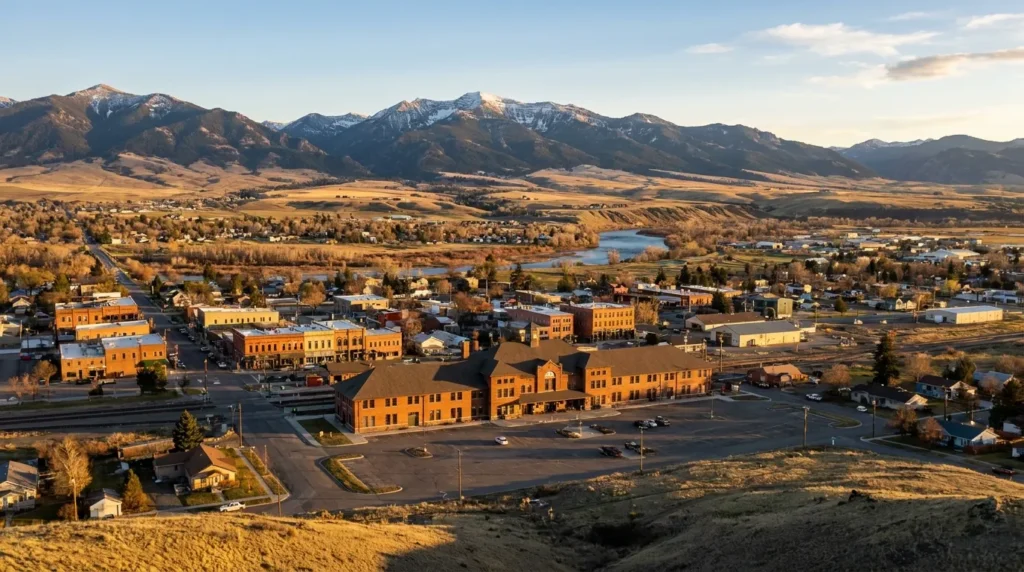
A small city of just over 8,000 residents, mostly of European descent, with a growing Hispanic American presence and a seasonal flow of Yellowstone tourism workers.

Livingston has around 8,000 permanent residents, a number that can double in the summer due to the Yellowstone season. The demographic profile follows the pattern of southern Montana: a majority of European ancestry, with German, Irish, Norwegian, and English roots that arrived with the railway expansion of the late 19th century.

The Hispanic American community is the largest visible minority, mainly tied to ranch work, construction, and hospitality services. There is also a Native American population with ties to the Crow and Northern Cheyenne reservations, though small within the city itself. Over the last two decades, Livingston has attracted artists, writers, filmmakers, and remote workers who came from Los Angeles, New York, and Seattle in search of space and landscape.

The dominant language is English. Spanish is spoken at home by some Hispanic American families and appears in some public services. Religion is predominantly Christian, with Catholic, Lutheran, Methodist, and several evangelical churches. The city has an older age profile than the national average, with retirees representing a significant share of the permanent population.

Languages spoken
  • English
  • Spanish
Main religions
  • Protestant Christianity
  • Catholicism
  • No religion declared
  • Lutheranism

Cost of living in Livingston

Cheaper than Bozeman and Montana resort towns, but rising rapidly since 2020 due to remote worker migration and short-term rental investors.

Livingston was considered an affordable refuge within the Yellowstone circuit until the pandemic, when the migration boom to Montana pushed rents and home prices to levels unusual for a town of this size. Today the cost of living is below Bozeman, but clearly above the average of other small towns in the state's interior.

Housing is the largest expense: rentals of two- or three-bedroom homes compete with short-term rentals geared toward Yellowstone tourism, which tightens supply for permanent residents. Food, fuel, and insurance follow the regional pattern of the American West, with Albertsons and Town & Country supermarkets serving the city. Those with remote income tied to larger markets live comfortably; those relying on local wages in hospitality or retail feel the squeeze.

There is no state sales tax in Montana, which helps day to day. Healthcare, private education, and daycare tuition are points of concern for young families. A personal car is practically mandatory, and winter maintenance costs (snow tires, antifreeze, batteries) enter the budget of anyone not coming from a cold climate.

Livingston

Where to live in Livingston

The historic downtown has small, charming homes; newer neighborhoods are to the north and west, and those wanting space look for lots in Paradise Valley.

Downtown Livingston, around Main and Park streets, holds historic wooden homes from the late 19th and early 20th centuries, many remodeled by the recent wave of new residents. It is the most walkable part of the city, near cafés, the supermarket, and the Yellowstone River. Properties here are in demand and usually sell quickly.

The northern neighborhoods, near I-90, are more residential and family-oriented, with single-story homes from the 1960s to 1990s and quiet streets. The west side, toward Bozeman, has newer developments and some condominiums. Those seeking larger lots, mountain views, and a ranch feel typically look toward Paradise Valley, south via US-89, although prices there have risen considerably.

Rentals are tight due to pressure from short-term rentals. Newcomers often start in apartments near downtown or in shared homes until they find something permanent. Buying requires patience: inventory is low, and cash buyers from out of state are common.

Recommended neighborhoods
  • Downtown Livingston
  • Northside
  • Westside
  • Paradise Valley (rural area)
  • Mission Field area

Job market in Livingston

The economy revolves around Yellowstone tourism, healthcare, the railway, ranching, and a growing share of remote work.

Yellowstone tourism supports much of the seasonal employment in Livingston: hotels, restaurants, outdoor gear shops, fly fishing guides, and rafting outfitters on the Yellowstone River. Summer is the peak, with abundant but low-paying openings. J-1 and H-2B workers show up during the season, mainly in Gardiner and at the lodges inside the park.

Outside tourism, the main stable employers are Livingston HealthCare (the hospital), the school district, the city government, and operations of Montana Rail Link (former BNSF), which keeps Livingston as a key point on the line. Small industries, mechanic shops specialized in diesel engines, and regional ranches offer technical and manual work.

For qualified professionals needing in-person office employment, the local supply is limited, and Bozeman is usually the destination for openings in technology, engineering, finance, or academia. Remote work exploded after 2020 and is today one of the main sources of income for new residents, especially in design, writing, software, and consulting.

Dominant sectors
  • Tourism and hospitality
  • Healthcare
  • Railway and logistics
  • Ranching and agriculture
  • Remote and creative work
  • +1 more
Major employers
  • Livingston HealthCare
  • Park County School District
  • Montana Rail Link
  • Park County government
  • Albertsons
  • +1 more

Education in Livingston

The local public system covers kindergarten through high school; college and university are in Bozeman, 40 minutes away.

Public education in Livingston is run by the Park County School District, with schools spanning preschool through high school. Park High School is the city's secondary school and has a good local reputation, with active sports programs, especially football, basketball, and wrestling, typical of small towns in the West.

For higher education, the regional reference is Montana State University in Bozeman, a large public university with a strong presence in engineering, agriculture, earth sciences, and environmental studies. Many Livingston students commute daily or move to Bozeman during their undergraduate years. Gallatin College, also in Bozeman, offers technical and vocational programs.

There are small private options and religious schools, as well as homeschooling, a common practice in Montana. For immigrants with school-age children, the local public system offers English as a second language support, although the offering is more limited than in larger cities. Private daycares exist, but spots and price are a challenge.

Notable universities
  • Montana State University (in Bozeman, 40 min)
  • Gallatin College MSU (in Bozeman)
  • Park High School (local public high school)

Healthcare in Livingston

The local hospital covers emergencies and general care; complex cases go to Bozeman or Billings.

Livingston HealthCare is the city's main medical center, a small community hospital that offers 24-hour emergency, elective surgeries, maternity, imaging, physical therapy, and specialty clinics. For most everyday needs and emergencies, it serves the local population and Yellowstone tourists well.

Complex cases, specialized surgeries, oncology, and advanced pediatric care are typically referred to Bozeman Health Deaconess Hospital in Bozeman, or to the Billings Clinic and SCL Health St. Vincent system in Billings. For immigrants accustomed to teaching hospitals in major centers, it is worth considering this logistics before moving.

There are private clinics, dentists, chiropractors, pharmacies, and mental health services, but the supply of specialists is limited and waiting lists can be long. Health insurance is expensive, as it is nationwide, and those working in seasonal tourism often go without coverage, turning to community clinics and the regional Bridgercare. Telemedicine has grown considerably and helps fill gaps.

Livingston

Safety in Livingston

A city considered safe by US standards, with violent crime rare and the greater concerns being seasonal break-ins and wildlife.

Livingston is a small city with low crime rates by US standards. Most recorded crime is minor: thefts from unlocked cars, vandalism, traffic violations, and alcohol-related incidents, especially in summer when the population fluctuates with tourism.

The historic downtown is safe day and night, with activity until late on weekends. Residential areas to the north and west are also quiet. Those living on rural properties in Paradise Valley should worry more about wildlife (bears, elk, mountain lions) than about crime, and bear-proof waste management practices are standard.

The Livingston police department is small but present, and the Park County sheriff covers the rural region. For emergencies in Yellowstone, there are park rangers. Immigrants without fluent English should know that police and emergency response may not have an interpreter on hand, although 911 offers phone-based translation service.

Safer neighborhoods
  • Downtown Livingston
  • Northside residential
  • Westside
  • Mission Field area
  • Paradise Valley
Areas to avoid
  • Isolated areas near the railway at night
  • Empty parking lots outside business hours

Getting around Livingston

A car-dependent city, with I-90 cutting across the north and US-89 heading toward Yellowstone; the airport is in Bozeman, 40 minutes away.

Livingston is a small city, easy to cross on foot within downtown, but for anything outside that area a car is practically mandatory. Interstate 90 runs north of the city and quickly connects to Bozeman to the west and Billings to the east. US-89 heads south through Paradise Valley to the northern entrance of Yellowstone in Gardiner.

There is no conventional public transit system. Windrider Transit is a community bus service run by the county, with limited routes and schedules geared toward seniors, workers, and students. For air travel, the airport is Bozeman Yellowstone International (BZN), about 40 minutes via I-90, with direct flights to major US cities and strong growth in recent years.

Bike lanes within the city are few, but the terrain is flat downtown and there are multi-use trails along the Yellowstone River. In winter, roads require proper tires, and crosswinds on I-90 between Livingston and Bozeman can be dangerous for trailers and tall trucks.

Airports
  • BZN, Bozeman Yellowstone International (40 min away)
  • MSO, Missoula Montana (regional, 4h)
  • BIL, Billings Logan International (2h)

Climate

Livingston

Culture and life in Livingston

An arts scene disproportionate to its size, with galleries, a historic opera house, resident writers, and a cowboy and rodeo tradition.

Livingston has a cultural identity that is rare for a town of eight thousand. Since the 1970s, it has attracted writers and filmmakers such as Thomas McGuane, Jim Harrison, Peter Fonda, and Margot Kidder, who helped create a bohemian scene that survives today in bookstores like Elk River Books and in historic bars like the Murray Bar.

The Livingston Depot Center, the former Northern Pacific railway station, has become a museum and cultural center. The Blue Slipper Theatre and the Shane Lalani Center for the Arts maintain year-round programming of theater, music, and independent film. Art galleries occupy several blocks downtown, and the monthly Art Walk is an important social event.

The cowboy tradition has not disappeared. The Livingston Roundup Rodeo, held over the Fourth of July weekend, is one of the oldest rodeos in the country and fills the town with visitors and competitors. Local food blends classic Western American dishes (steak, burgers, hearty breakfasts) with newer restaurants focused on regional ingredients and Yellowstone River trout.

Notable dishes
  • Grilled Yellowstone trout
  • Montana steak
  • Bison burger
  • Huckleberry pie
  • Chili con carne
  • +1 more
Annual events
  • Livingston Roundup Rodeo (July)
  • Livingston Art Walk (monthly, summer)
  • Yellowstone Boat Float
  • Winter Antiques Show
  • Summerfest
  • +1 more

What to see and do in Livingston

A base for Yellowstone, with fly fishing on the Yellowstone River, trails in the Absarokas, historic downtown, railway museums, and Paradise Valley just to the south.

Livingston's biggest attraction is the location: 85 km north of the Yellowstone entrance in Gardiner, along the Paradise Valley axis, one of the most beautiful valleys in the American West. The Yellowstone River, which cuts through the city, is one of the world's most famous destinations for fly fishing, with guides and specialty shops scattered through downtown.

The historic downtown itself is worth a walk: preserved architecture from 1880 to 1920, the Livingston Depot Center (the former Northern Pacific station, now a museum), the Yellowstone Gateway Museum with regional history, and the Murray Hotel, an early 20th-century landmark. Art galleries, independent bookstores, and the Shane Lalani Center for the Arts provide cultural programming year-round.

For the outdoors beyond Yellowstone, there are trails in Pine Creek and the Absaroka Mountains, hot springs (Chico Hot Springs is the local reference), rafting on the Yellowstone in summer, and skiing at Bridger Bowl or Big Sky, both about an hour away. In winter, the town becomes quieter, but it is the best moment to see Yellowstone without crowds.

  1. 1Historic downtown Livingston
  2. 2Livingston Depot Center
  3. 3Yellowstone Gateway Museum
  4. 4Yellowstone River (fly fishing)
  5. 5Paradise Valley
  6. 6Chico Hot Springs
Parks & green spaces
  • Sacajawea Park
  • Mayors Landing (Yellowstone River access)
  • Pine Creek Trail
  • Suce Creek Trailhead
  • Mission Field
  • +1 more

Immigrant communities in Livingston

A small city with a historic Hispanic American presence, a seasonal flow of J-1 and H-2B tourism workers, and a recent wave of internal migration from coastal Americans.

The most established immigrant community in Livingston is the Hispanic American one, mainly of Mexican and Central American origin, tied to ranch work, construction, and hospitality services. It is a discreet but constant presence, with some churches offering Mass in Spanish and markets that stock basic Latin products.

In summer, the city receives hundreds of seasonal workers on J-1 (cultural exchange) and H-2B (non-agricultural temporary workers) visas, coming from countries such as the Philippines, Thailand, Jamaica, Bulgaria, Poland, Romania, and several South American nations, to work in hotels, restaurants, and Yellowstone concessions. It is a seasonal movement, but it gives downtown an international feel during the high season.

The most recent and visible migration is that of Americans arriving from Los Angeles, New York, San Francisco, and Seattle, in search of quality of life and remote work. It has changed the profile of downtown with new restaurants, cafés, and galleries. For practical support for international immigrants, the main resources are in Bozeman, with regional organizations covering southwestern Montana.

250
Foreign-born residents
estimated
Top countries of origin
  • Mexico
  • Philippines
  • United Kingdom
  • Canada
  • Germany
  • Thailand
  • Jamaica
Foreign consulates
  • Consulate General of Mexico in Salt Lake City (jurisdiction)
  • Consulate of Canada in Denver (jurisdiction)
  • Honorary Consulate of Germany in Bozeman (regional)
Community organizations
  • Bridgercare (regional health)
  • Human Resource Development Council (HRDC) Bozeman
  • Catholic Social Services of Montana
  • Montana Migrant & Seasonal Farmworker Council
  • Park County Community Foundation

Latest posts

Posts about Montana

Coverage and updates related to this destination.

Showing content from Montana, as there is no specific data for Livingston yet.