Visto n' Visa
Blog
Notícias e artigos
Destinations
Careers
Immigrants

Want to live and work in Kansas City?

Personalized immigration plan with eligible visas, costs, and next steps for your goal!

If you are not eligible, you will know exactly why and what to do to improve your approval chances.

Save up to 12 hours in meetings

No pointless assessments.

Save up to 90%

Save money on vague or unfocused consultations

Avoid Fraud and Mistakes

One mistake can cost you your visa

Total Impartiality

Zero commercial bias

Decide with peace of mind

No toxic urgency

Fast and Accurate

Answers in minutes, no guesswork

Significant racial diversity and a growing Latino community

Kansas City has a historically strong Black population, a rapidly growing Latino community, and an established presence of immigrants from Southeast Asia and East Africa.

The city's demographic history is shaped by the Great Migration, which brought African American families from the rural South in the early 20th century. That legacy is visible in neighborhoods such as 18th and Vine, the birthplace of local jazz. Today, white, Black, and Latino residents form the three largest groups, with growing Asian and African communities.

The Latino community is expanding quickly, particularly in the Westside and North End neighborhoods. Mexicans make up the largest share, but Guatemalan, Honduran, and Salvadoran families are also well represented. Catholic churches offer Spanish-language masses, and authentic markets, bakeries, and taquerias are scattered throughout the city.

English dominates the public environment, but Spanish is the common second language in several neighborhoods and most services. Protestant and Catholic denominations are religiously predominant. The Jewish community is longstanding and active, particularly in Overland Park. Mosques serve Somali, Sudanese, and Bosnian communities that have settled in the area.

Languages spoken
  • English
  • Spanish
  • Vietnamese
  • Somali
  • Arabic
Main religions
  • Christianity (Protestant and Catholic)
  • Judaism
  • Islam
  • Buddhism
  • No religion

Cost of living well below major American cities

Kansas City offers housing, transportation, and food costs below the national average. Healthcare and insurance land near average. Taxes vary depending on whether one lives on the Missouri or Kansas side.

The main financial draw is housing prices. Even desirable neighborhoods such as Brookside, Waldo, and the Plaza still offer accessible properties compared to Chicago or Denver. One-bedroom apartment rents downtown cost considerably less than in coastal markets, though prices have risen in recent years with the arrival of technology companies.

Food and services fall below the national average. Well-known barbecue restaurants such as Joe's and Q39 are affordable for casual dining. Hy-Vee, Price Chopper, and Aldi cover everyday grocery needs, and Latin and Asian markets are scattered throughout the city, primarily around Independence Avenue.

Taxes deserve attention. Missouri levies a state income tax, and Kansas City itself adds a 1 percent earnings tax on those who work or live there. The Kansas side has its own income tax and different rules. Many newcomers consult an accountant in the first year to understand the structure.

86Cost index (US = 100)14% below US average
CategorySingleCoupleFamily (2 + 2)
iHousing$1,120$1,293$1,637
iFood$328$655$1,189
iTransport$431$732$948
iHealthcare$241$483$904
iChildcare$1,568
iOther$732$1,319$1,853
Monthly total$2,852$4,482$8,099

Source: U.S. BLS Consumer Expenditure Survey 2023 + BEA Regional Price Parities 2023 · Estimates in USD, monthly.

A diverse real estate market, from historic homes to new apartments

Kansas City offers charming older homes, 1920s bungalows, new suburbs, and renovated downtown buildings. The choice depends largely on lifestyle and budget.

Downtown and the Crossroads area have gained many new rental buildings in recent years, attracting young professionals. River Market is another hub with lofts and apartments above restaurants. Those seeking urban life without heavy driving tend to concentrate in these areas, where rents remain relatively accessible.

For families, neighborhoods such as Brookside, Waldo, Hyde Park, and Northland are popular. Brookside features Tudor and Craftsman homes from the 1920s, with small shops and cafes. Northland sits on the other side of the Missouri River and offers newer homes with larger yards, well suited for those who prioritize space.

Buyers entering the market find prices accessible by American standards, but rising interest rates have made financing more expensive. Renting is a common path in the first year, and platforms such as Zillow and Apartments.com show current inventory. Caution is warranted in vacant areas near downtown, where properties may be cheap but infrastructure is poor and crime rates are higher.

Recommended neighborhoods
  • Brookside
  • Waldo
  • Crossroads Arts District
  • River Market
  • Northland
  • +2 more

A diversified economy with strength in healthcare, logistics, and technology

Kansas City hosts major companies in healthcare, transportation, and engineering. The tech sector is growing quickly, and the city serves as a strategic logistics hub at the center of the United States.

The local economy does not depend on a single sector, which provides a degree of stability. Healthcare is a major employer through networks such as Saint Luke's Health System, Children's Mercy Hospital, and the University of Kansas Health System. Engineering and architecture carry significant weight, with firms such as Burns and McDonnell and Black and Veatch headquartered locally.

Logistics is a historic vocation. The city is a central rail and highway crossroads, with major players such as BNSF Railway and Union Pacific operating there. Technology is gaining momentum with Cerner (now part of Oracle Health), Garmin, and startups supported by local accelerators. H&R Block, the tax services giant, is also headquartered in Kansas City.

For immigrants, the Hispanic community has built a network of small businesses in construction, food, and services. Healthcare maintains constant demand for nurses and technicians, with established licensing pathways for foreign-trained professionals. Platforms such as Indeed and LinkedIn are effective, and job fairs at local universities are worth attending.

Dominant sectors
  • Healthcare
  • Logistics and transportation
  • Engineering
  • Technology
  • Financial services
Major employers
  • Saint Luke's Health System
  • Children's Mercy Hospital
  • Burns and McDonnell
  • Black and Veatch
  • H&R Block
  • +1 more

Solid regional universities and highly variable public school quality

Kansas City has respectable public and private universities. K-12 quality varies considerably, with major differences between city and suburban districts.

The main local university is the University of Missouri-Kansas City (UMKC), with strong programs in medicine, dentistry, law, and music. Rockhurst University, a Jesuit Catholic institution, is a respected choice for a humanistic education. The University of Kansas, in Lawrence, is about 45 minutes away and draws students from the Missouri side as well.

K-12 schooling warrants close attention. The Kansas City Public Schools district on the Missouri side has uneven quality and lost accreditation in the past. Families with children typically research carefully before purchasing a home, and many choose suburbs such as Lee's Summit, Liberty, and Blue Springs, or Shawnee Mission on the Kansas side, which has highly rated public schools.

Charter schools, Catholic private schools, and independent schools are also available for families willing to pay tuition. For short-term technical training, Metropolitan Community College has campuses across the area and offers programs in healthcare, manufacturing, and information technology, with solid connections to regional job openings.

Notable universities
  • University of Missouri-Kansas City
  • Rockhurst University
  • University of Kansas (Lawrence)
  • Metropolitan Community College
  • Kansas City Art Institute
  • Park University

A regional healthcare hub with renowned hospitals and clinical research

Kansas City serves as a medical reference point for the Midwest, with hospitals such as Saint Luke's, Children's Mercy, and the University of Kansas Health System concentrating specialized care.

The local healthcare system draws patients from Missouri, Kansas, and neighboring states. Saint Luke's Health System is one of the leading networks, with facilities in downtown and the suburbs. Children's Mercy is a nationally recognized pediatric hospital with advanced programs in transplantation, oncology, and pediatric cardiology.

The University of Kansas Health System, across the state line, operates an NCI-designated cancer center with a strong bone marrow transplant team. North Kansas City Hospital, Research Medical Center, and Truman Medical Centers complete the hospital landscape. For primary care, Community Care Network and church-affiliated clinics serve lower-income populations.

Health insurance is expensive in the United States. Legal residents can access the ACA marketplace, Medicaid in some cases, or employer-sponsored plans. Without coverage, a single emergency room visit can cost thousands of dollars. Comparing options, understanding deductibles and copays, and verifying that preferred providers are in-network before scheduling appointments are all essential steps.

Healthcare index72.0 / 100
  • Life expectancyyears at birth
    78.4yrs
  • Doctors per 1kpracticing physicians
    3.7
  • Health spendper capita, per year
    $13,473
  • Public systemoverall quality rating
    Good

Safety varies considerably by neighborhood, with a sharp contrast between downtown and suburbs

Kansas City has homicide rates above the national average, concentrated in certain East Side neighborhoods. Established neighborhoods such as Brookside and the Plaza are considered safe.

The safety picture here depends heavily on location. The East Side and parts of northern downtown have violent crime rates well above average, with longstanding issues involving homicides tied to drug trafficking and firearms. These problems rarely spread to other parts of the city but weigh on overall statistics.

Neighborhoods such as Brookside, Waldo, the Plaza, and Northland are considered safe for everyday life. Opportunistic crimes, such as car theft and garage break-ins, are the most common nuisance. The city has seen a rise in Kia and Hyundai thefts due to a technical vulnerability exploited by younger offenders, so additional security measures are recommended for owners of those vehicles.

Local police maintain a visible presence in commercial and tourist areas. For those researching neighborhoods, visiting the area at different times of day, speaking with residents, and consulting resources such as the KCPD Crime Map are all useful steps. As in any large American city, awareness of tornado season is also part of daily life, particularly between March and June.

5.8
Homicides per 100k
per year
Safety index
38.0
Crime index
62.0
Safer neighborhoods
  • Country Club Plaza
  • Westport (daytime)
  • Brookside
  • Waldo
  • Crossroads Arts District
  • River Market
  • Northland (north of the Missouri River)
Areas to avoid
  • Sections of the East Side around Prospect Avenue at night
  • Parts of Independence Plaza
  • Industrial areas around Truman Road late at night
  • Empty parking lots downtown in the early morning hours

A car-dependent city with a useful KC Streetcar downtown

Owning a car is practically essential in Kansas City. The downtown streetcar is free and convenient for short trips, but the bus network has limited coverage.

The road network is extensive, with interstates I-70, I-35, and I-29 crossing the city. Traffic exists during peak hours but is far from the congestion of larger cities. Parking is generally easy and inexpensive outside of downtown. Larger cars and SUVs are popular because of winter conditions and the longer distances to suburban areas.

The KC Streetcar is a welcome addition. It runs free of charge between River Market and Union Station, passing through the Crossroads. A planned southern extension toward Country Club Plaza is expected to improve connectivity for those who live or work in that area. RideKC buses cover the city but with limited frequency.

Kansas City International Airport (MCI), located to the north, recently completed a major renovation with a new terminal opened in 2023. It offers direct flights to major American hubs and some international connections. For regional travel, Amtrak operates from Union Station with routes to Chicago and St. Louis.

1
Metro lines
16
Metro stations
23 min
Avg commute
49
Walkability
Airports
  • MCI — Kansas City International Airport
  • International airport
  • Bike infrastructure

What the Climate Is Like in Kansas City

A major midwestern city with a humid continental climate: hot and humid summers around 32 degrees Celsius, and moderately cold winters with occasional snow.

Summers in Kansas City are hot and humid, with highs between 31 and 33 degrees Celsius in July (around 88 to 91°F). Severe thunderstorms and occasional tornadoes mark spring and summer, and air conditioning is standard in all homes.

Winters are cold but manageable, with lows between -7 and -3 degrees Celsius in January and seasonal snowfall totaling around 50 cm (20 inches). A mid-weight coat is sufficient, and natural gas heating is standard.

Spring is the most unpredictable season, with tornado risk, while autumn is the most pleasant. Annual rainfall totals around 1,000 mm (39 inches), peaking in summer.

Sunny days / year215 days
Avg high (°F)
  • 57°J
  • 64°F
  • 74°M
  • 81°A
  • 85°M
  • 94°J
  • 97°J
  • 97°A
  • 94°S
  • 88°O
  • 74°N
  • 65°D
Avg low (°F)
  • J
  • F
  • 14°M
  • 25°A
  • 38°M
  • 52°J
  • 61°J
  • 58°A
  • 48°S
  • 26°O
  • 19°N
  • 15°D
Rainfall (")
  • 2"J
  • 1"F
  • 4"M
  • 3"A
  • 6"M
  • 5"J
  • 5"J
  • 4"A
  • 3"S
  • 3"O
  • 2"N
  • 2"D

Jazz, barbecue, professional sports, and a growing arts scene

Kansas City has a strong cultural identity built around Black jazz heritage, slow-smoked barbecue, the Chiefs and Royals, and a growing arts scene centered in the Crossroads district.

The 18th and Vine district preserves the memory of jazz and Negro Leagues Baseball. The American Jazz Museum and the Negro Leagues Baseball Museum are essential stops for anyone who wants to understand the city's African American history. Clubs such as Green Lady Lounge maintain live jazz several nights a week, drawing locals and visitors alike.

Barbecue is practically a civic identity here. Joe's KC, Q39, Arthur Bryant's, Gates, and Jack Stack are names that inspire passionate debate among residents, each defending a favorite. The technique uses slow hickory or oak smoke, and ribs with a sweet, mildly spicy sauce are the defining dish.

Professional sports animate the city. The Chiefs at Arrowhead Stadium have one of the loudest fan bases in the NFL. The Royals play at Kauffman Stadium next door. Sporting KC, the soccer club, has a loyal following. For the arts, the Crossroads district holds monthly First Fridays events with open galleries and food trucks, drawing large crowds.

Kansas City

What to See and Do Living in Kansas City

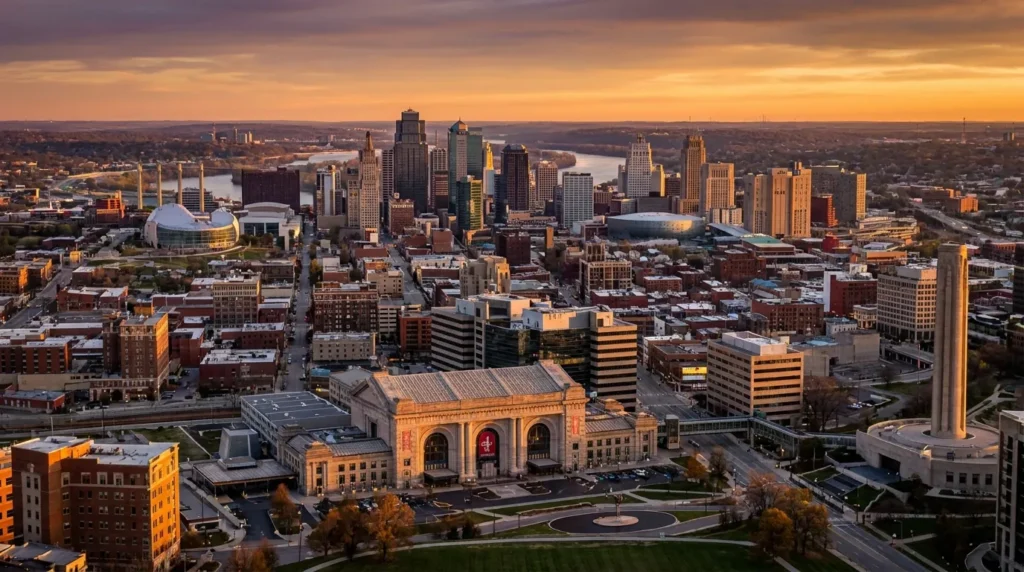
Kansas City, Missouri, is the American capital of jazz and barbecue, with an arts scene in the Crossroads district, European-inspired fountains at Country Club Plaza, and culturally diverse neighborhoods.

The American Jazz Museum, in the historic 18th & Vine district, shares space with the Negro Leagues Baseball Museum, chronicling the era of Charlie Parker and the Kansas City Monarchs. The Nelson-Atkins Museum of Art, with its Henry Moore sculpture garden and Oldenburg's famous giant shuttlecock, is free admission and a regional landmark.

The Crossroads Arts District, in the south-central area, comes alive on First Fridays with galleries and food trucks. Country Club Plaza, the first outdoor shopping center in the United States, features Seville-inspired fountains and spectacular holiday lights. Westport maintains a historic bar scene. The Kauffman Center for the Performing Arts, with its shell-shaped design, serves as the main stage for classical music.

The Power & Light District is home to clubs and bars. Arrowhead Stadium (Chiefs) and Kauffman Stadium (Royals) form the Truman Sports Complex. For barbecue, Joe's Kansas City and Arthur Bryant's are local institutions. Loose Park, Swope Park (with the zoo), and the Powell Gardens, 40 minutes away, round out the outdoor circuit.

  1. 1["Nelson-Atkins Museum of Art (with the famous shuttlecock garden)"
  2. 2"National WWI Museum and Memorial"
  3. 3"Country Club Plaza"
  4. 4"Union Station"
  5. 5"American Jazz Museum and Negro Leagues Baseball Museum (18th & Vine)"
  6. 6"Arrowhead Stadium (Kansas City Chiefs)"
Nightlife7.0 / 10
Parks & green spaces
  • ["Loose Park"
  • "Penn Valley Park"
  • "Swope Park (with the KC Zoo and Starlight Theatre)"
  • "Liberty Memorial Park"
  • "Mill Creek Park (Country Club Plaza)"
  • +1 more

Latest posts

Posts about Missouri

Coverage and updates related to this destination.

Showing content from Missouri, as there is no specific data for Kansas City yet.