Visto n' Visa
Blog
Notícias e artigos
Destinations
Careers
Immigrants

Want to live and work in Wyoming?

Personalized immigration plan with eligible visas, costs, and next steps for your goal!

If you are not eligible, you will know exactly why and what to do to improve your approval chances.

Save up to 12 hours in meetings

No pointless assessments.

Save up to 90%

Save money on vague or unfocused consultations

Avoid Fraud and Mistakes

One mistake can cost you your visa

Total Impartiality

Zero commercial bias

Decide with peace of mind

No toxic urgency

Fast and Accurate

Answers in minutes, no guesswork

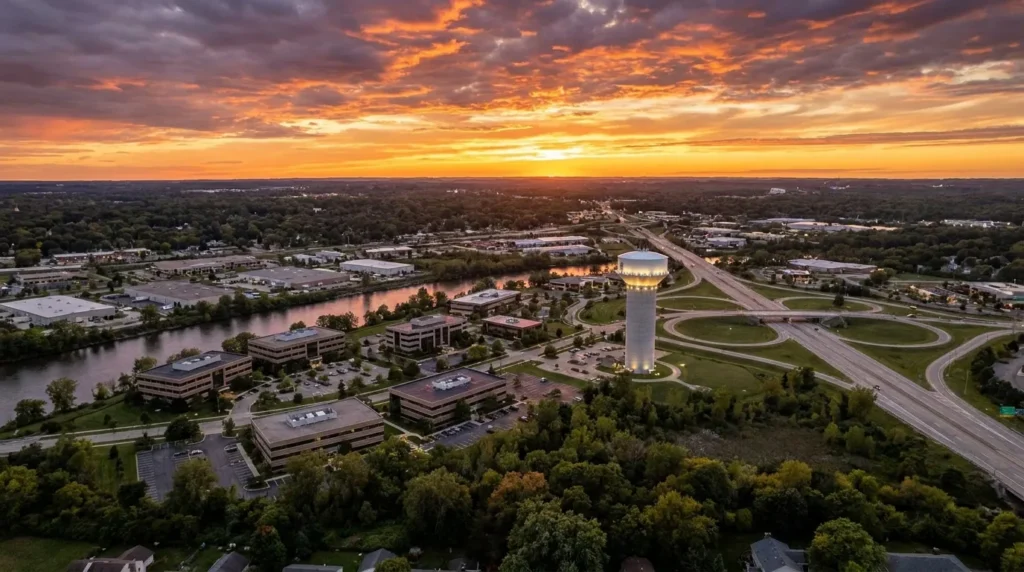
Diverse city shaped by Latin American and Southeast Asian immigration

Wyoming has around 77,000 residents and one of the highest shares of Hispanic population in the region, alongside Vietnamese, Bosnian, and African communities.

The city's demographic profile differs significantly from rural inland Michigan. The Hispanic population has grown strongly over recent decades, particularly in neighborhoods around Burlingame and Clyde Park, and now represents a substantial share of residents. There is also an established presence of Vietnamese, Bosnian, and, more recently, Congolese and Rwandan families resettled through refugee programs.

A large portion of the population is of working age, with young families and many children in Wyoming and Godfrey-Lee public schools. This is reflected in local churches, markets, and the bilingual services that have become common throughout local commerce.

Median income is lower than in neighboring communities like Forest Hills or Cascade, but homeownership rates are high for metropolitan standards, with many families purchasing modest homes on quiet streets. The city functions as a gateway for immigrants newly arrived in western Michigan.

Languages spoken
  • English
  • Spanish
  • Vietnamese
  • Bosnian
  • Swahili
  • +1 more
Main religions
  • Catholicism
  • Evangelical Protestantism
  • Reformed Christianity
  • Islam
  • Buddhism

One of the lowest costs of living in the Grand Rapids metro area

Wyoming is significantly more affordable than central Grand Rapids, East Grand Rapids, or eastern suburbs, particularly in rent and housing.

The primary financial draw in Wyoming is housing. Two-bedroom apartments and small houses are priced well below those found in neighborhoods like Eastown, Heritage Hill, or the eastern suburbs. For those arriving in western Michigan and seeking quick stability, it is one of the most logical options available.

Groceries, gas, and services follow standard Midwest patterns, with large supermarkets like Meijer, Aldi, and Family Fare keeping prices down. Ethnic markets like Saigon Market and various Latin supermarkets help reduce costs for those who cook at home with specific ingredients.

The main budget strain is the car: nearly everyone needs one, and the long winter increases spending on natural gas heating and vehicle maintenance. On balance, working families can live with considerably more financial breathing room than in comparable cities in other regions of the country.

90Cost index (US = 100)10% below US average
CategorySingleCoupleFamily (2 + 2)
iHousing$1,168$1,348$1,707
iFood$342$683$1,240
iTransport$449$764$989
iHealthcare$252$503$944
iChildcare$1,636
iOther$764$1,375$1,932
Monthly total$2,975$4,673$8,448

Source: U.S. BLS Consumer Expenditure Survey 2023 + BEA Regional Price Parities 2023 · Estimates in USD, monthly.

Modest homes, 1950s ranch houses, and apartment complexes

The housing stock is dominated by single-story postwar homes and apartment complexes along the commercial corridors.

Most of the residential inventory consists of ranch houses and bungalows built between 1945 and 1970, with basements, yards, and three bedrooms. These are practical, easy-to-maintain homes that form the core of the city's affordable real estate market. Neighborhoods like Godfrey-Lee, Marquette, and the area near Palmer Park concentrate this profile.

For renters, the Clyde Park, Burlingame, and 28th Street corridors have several low- to mid-density apartment complexes, some with pools and fitness rooms, others more basic. Supply is ample, which helps keep prices competitive relative to downtown Grand Rapids.

Buying a home in Wyoming remains viable for working-class families, especially compared to the rest of the metro area. The downside is that the housing stock is aging and requires attention to roofing, plumbing, and insulation, which is essential for Michigan's harsh winters.

Recommended neighborhoods
  • Godwin Heights
  • Marquette
  • Godfrey-Lee
  • Galewood
  • Palmer Park
  • +1 more

Manufacturing, logistics, and healthcare drive local employment

The economy revolves around furniture and auto parts manufacturing, distribution warehouses, regional hospitals, and retail along the 28th Street and Division corridors.

Wyoming is part of western Michigan's historic industrial core, with factories producing furniture, auto parts, packaging, and plastic products. Companies like Gordon Food Service and Lacks Enterprises maintain large operations in the city and immediate region, alongside distribution warehouses that have expanded around Gerald R. Ford Airport.

The healthcare sector draws many workers through hospitals and clinics operated by Corewell Health (formerly Spectrum Health) and Trinity Health, with openings ranging from nursing assistants to technicians and administrative staff. There is also strong demand for retail and food service jobs along 28th Street.

For newly arrived immigrants, factories and warehouses offer quick entry into the labor market, often through night shifts. Those with reasonable English find positions readily available in construction, building maintenance, logistics, and professional cleaning services.

Dominant sectors
  • Manufacturing
  • Logistics and Distribution
  • Healthcare
  • Retail
  • Food Service
  • +1 more
Major employers
  • Gordon Food Service
  • Lacks Enterprises
  • Corewell Health
  • Trinity Health
  • Meijer
  • +1 more

Working public schools and easy access to regional colleges

Wyoming Public Schools and Godfrey-Lee Public Schools serve the city, with Grand Valley State and Aquinas nearby for higher education.

Elementary and secondary education in Wyoming is served primarily by Wyoming Public Schools and Godfrey-Lee Public Schools, two districts with high proportions of Hispanic students and bilingual programs. Catholic schools and charter schools are also scattered throughout the city, offering alternatives for families seeking specific curricula.

For community college, Grand Rapids Community College is just a few minutes away and offers technical programs in healthcare, mechanics, welding, and technology. This is a well-traveled path for newly arrived immigrants looking to retrain and enter higher-paying careers in western Michigan.

For traditional four-year degrees, Grand Valley State University (in Allendale and downtown Grand Rapids), Aquinas College, Calvin University, and Cornerstone University are all within 15 to 25 minutes by car. The region offers robust academic options, which helps Wyoming attract young, skilled workers.

Notable universities
  • Grand Rapids Community College (regional campus)
  • Davenport University (in Caledonia, metro area)
  • Grand Valley State University (metro area)

Solid care through Corewell Health and Trinity Health

Though the city lacks a major hospital of its own, it has several clinics and easy access to large medical centers in Grand Rapids.

Wyoming is served primarily by Corewell Health (formerly Spectrum Health) and Trinity Health, both of which operate major hospitals in Grand Rapids just minutes away. Corewell Health Butterworth, in downtown Grand Rapids, is the region's trauma center, while Mercy Health Saint Mary's handles emergencies and specialty care.

Within the city, there are several primary care clinics, urgent care centers, and community health centers, including Cherry Street Health Services, which serves low-income families and undocumented immigrants. Bilingual Spanish services are available across a large portion of the network, and some facilities offer support in Vietnamese and Arabic.

For uninsured immigrants, programs such as Healthy Kids Dental, Medicaid, and federally qualified health centers (FQHCs) cover a broad range of basic needs. The region is reasonably well-served compared to other mid-size American cities, though specialists in private practice may have long wait lists.

Wyoming

Generally safe city, with commercial corridors requiring more attention

Crime rates are typical of an average American suburban city, with quiet residential neighborhoods and commercial corridors with occasional issues.

Most of Wyoming is safe by American standards, with quiet residential neighborhoods where families walk, ride bikes, and let children play in yards. Violent crime rates are moderate, and serious incidents are concentrated in specific areas, typically linked to nighttime commercial activity or sections of Division Avenue.

The 28th Street and Division Avenue corridors, especially at night, require the common-sense awareness expected of any urban commercial area. Car break-ins, vandalism, and incidents at gas stations occur but rarely affect residences in established neighborhoods like Marquette or Godfrey-Lee.

The Wyoming Police Department operates separately from Grand Rapids and maintains a visible presence, with community programs and Spanish-language services at some units. Compared to cities of similar size in other regions, Wyoming is below the national average for violent crime and within the average for property crime.

Safer neighborhoods
  • Marquette
  • Palmer Park
  • Galewood
  • Panhandle
  • Neighborhoods near Lamar Park
Areas to avoid
  • Sections of Division Avenue at night
  • Isolated commercial areas along 28th Street after closing time

Car-dependent city with basic bus service and a nearby regional airport

Wyoming is built for cars, with good access to US-131 and Gerald R. Ford Airport. The Rapid connects the city to Grand Rapids by bus.

Daily life in Wyoming assumes car ownership. Main commercial streets such as 28th Street, Division Avenue, Clyde Park, and Burlingame are wide, with long traffic light cycles and abundant parking. Highway US-131 runs north-south through the city and connects in minutes to downtown Grand Rapids and the airport.

The Rapid, the regional public transit authority, operates several bus routes through Wyoming, linking residents to Grand Rapids, Kentwood, and Wyoming Mall. It is not a system designed for long distances, but it serves daily commuters who live near the main corridors.

Gerald R. Ford International Airport, in Cascade Township, is 15 to 20 minutes by car and offers direct flights to hubs such as Detroit, Chicago, Atlanta, Dallas, and Minneapolis. There are no significant direct international flights, so international connections typically route through Detroit or Chicago.

Airports
  • GRR — Gerald R. Ford International (in Cascade Township, metro area)
  • Bike infrastructure

Climate

Wyoming

Suburban culture with a strong Latin and Southeast Asian layer

Cultural life is expressed through ethnic markets, community festivals, and a small-restaurant scene scattered throughout the city.

Wyoming lacks the cultural scene of a major downtown, but it has an authentic community life. Summer Hispanic festivals, Vietnamese community events, Spanish-language masses, and Orthodox and Protestant religious celebrations fill the city's calendar. Churches serve as central gathering points for many families.

Food is the most visible expression of this diversity. Wyoming concentrates some of the best Mexican and Central American restaurants in the region, authentic taquerias, Vietnamese restaurants serving pho and banh mi, Bosnian bakeries, and Latin markets carrying products from Mexico, Guatemala, and El Salvador.

For more formal cultural experiences, the city relies on Grand Rapids, with Frederik Meijer Gardens, the Grand Rapids Art Museum, and the annual ArtPrize just minutes away. Wyoming provides the everyday; Grand Rapids provides the larger events.

Notable dishes
  • Local taqueria tacos al pastor
  • Salvadoran pupusas
  • Vietnamese pho
  • Banh mi
  • Bosnian burek
  • +1 more
Annual events
  • Wyoming Concerts in the Park
  • Metro Cruise (classic car show on 28th Street)
  • Wyoming Independence Day Parade
  • Summer festivals at Lamar Park

Neighborhood parks, ethnic commerce, and metropolitan attractions

Wyoming is not a tourist destination, but it offers pleasant parks and easy access to Grand Rapids and western Michigan attractions.

Lamar Park is the local centerpiece, with lakes, trails, sports courts, picnic areas, and an amphitheater that hosts summer concerts. It is the city's main family gathering point, and weekends make Wyoming's diversity clearly visible.

Other parks such as Pinery Park, Battjes Park, and Ideal Park round out the green space offerings, all with playgrounds, sports fields, and bike paths connected to the regional network. Millennium Park, expansive and technically in Walker, is just a few minutes away and ranks among the main outdoor attractions in western Michigan.

For cultural attractions, Frederik Meijer Gardens and Sculpture Park, John Ball Zoo, the Grand Rapids Art Museum, the Grand Rapids Public Museum, and the annual ArtPrize are all 10 to 20 minutes away. Lake Michigan, with beaches in Holland and Grand Haven, is 45 minutes by car via I-196.

  1. 1Lamar Park
  2. 2Millennium Park (metro area)
  3. 3Frederik Meijer Gardens and Sculpture Park
  4. 4John Ball Zoo
  5. 5Grand Rapids Public Museum
  6. 6ArtPrize (annual festival in Grand Rapids)
Parks & green spaces
  • Lamar Park
  • Pinery Park
  • Battjes Park
  • Ideal Park
  • Marquette Park
  • +1 more

Strong Latin American and Southeast Asian presence, along with resettled refugees

Wyoming is home to one of the largest concentrations of immigrants in western Michigan, with established Hispanic, Vietnamese, Bosnian, and African communities.

Immigration has transformed Wyoming over the past three decades. The Hispanic community is the most visible, with families from Mexico, Guatemala, El Salvador, Honduras, and the Dominican Republic concentrated in neighborhoods such as Godfrey-Lee and along the Clyde Park corridor. Churches, bilingual schools, and dozens of businesses serve this population.

The Vietnamese community arrived in the 1980s through refugee programs and built a solid network of restaurants, markets, and community centers, some shared with Laotian and Cambodian families. More recently, refugees from Bosnia, Iraq, Syria, the Democratic Republic of the Congo, Rwanda, and Myanmar have been resettled in the city through agencies such as Bethany Christian Services and Samaritas.

There is also an established presence of Dutch, German, and Polish families with deep historical roots in western Michigan, along with a small but growing Brazilian community served by evangelical churches and service businesses. Together, this gives Wyoming a multicultural profile rare for a city of its size in the Midwest.

12,000
Foreign-born residents
estimated
Top countries of origin
  • Mexico
  • Vietnam
  • Guatemala
  • Bosnia and Herzegovina
  • Democratic Republic of the Congo
  • El Salvador
  • Iraq
  • Myanmar
Foreign consulates
  • Consulate General of Mexico in Detroit (jurisdiction)
  • Honorary Consulate of Guatemala in Grand Rapids
  • Honorary Consulate of Mexico in Grand Rapids
  • Consulate General of the Netherlands in Chicago (jurisdiction)
Community organizations
  • Hispanic Center of Western Michigan
  • Bethany Christian Services (refugee resettlement)
  • Samaritas (refugee resettlement)
  • West Michigan Hispanic Chamber of Commerce
  • Vietnamese American Community of West Michigan
  • Cherry Street Health Services

Latest posts

Posts about Michigan

Coverage and updates related to this destination.

Showing content from Michigan, as there is no specific data for Wyoming yet.