English
 Português
 Español


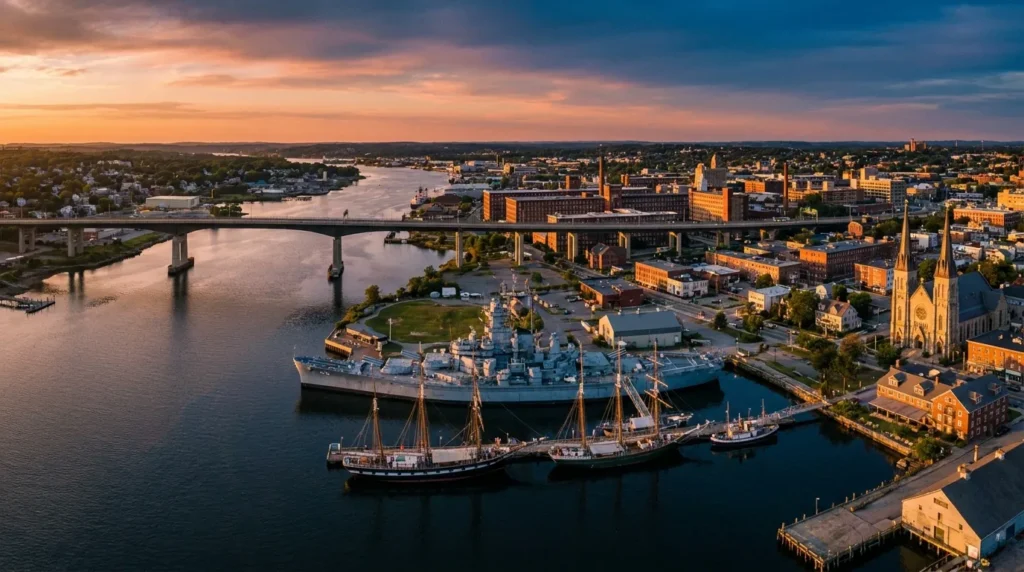
Fall River demographics with strong Portuguese presence and growing diversity
Fall River has about 94,000 residents, with one of the highest proportions of Portuguese descendants in the United States, alongside Hispanic, Brazilian, Cambodian, Syrian, Lebanese, and more recently African resettled communities.
The Portuguese community is Fall River's most defining demographic feature. Azoreans, primarily from São Miguel, Terceira, and Faial, formed the foundation of immigration in the 19th and 20th centuries, arriving to work in the textile mills. Madeiran and mainland Portuguese communities also have a strong presence. Neighborhoods such as Flint Village and parts of downtown concentrate commerce, bakeries, restaurants, and parishes with masses in Portuguese.
The Hispanic population has grown in recent decades, primarily Puerto Ricans, Dominicans, and Central Americans. Brazilians maintain an active community, with evangelical churches and markets. Cambodians, who arrived after the 1970s, maintain Buddhist temples and restaurants. Syrians and Lebanese formed a community in the early 20th century, with several Maronite and Orthodox churches still active.
Irish, French-Canadian, Polish, and Italian heritage persists in parishes and cultural clubs. More recently, African refugees have been resettled, primarily from Sudan and the Democratic Republic of Congo. Non-Hispanic whites remain the largest proportional group, but the city has become considerably more diverse since 2000. Public schools serve students in multiple languages, with a strong Portuguese-language program.
- English
- Portuguese
- Spanish
- Khmer
- Arabic
- +2 more
- Roman Catholic
- Evangelical Protestant
- Maronite
- Eastern Orthodox
- Buddhist
- +1 more