Visto n' Visa
Blog
Notícias e artigos
Destinations
Careers
Immigrants

Want to live and work in Hopkinsville?

Personalized immigration plan with eligible visas, costs, and next steps for your goal!

If you are not eligible, you will know exactly why and what to do to improve your approval chances.

Save up to 12 hours in meetings

No pointless assessments.

Save up to 90%

Save money on vague or unfocused consultations

Avoid Fraud and Mistakes

One mistake can cost you your visa

Total Impartiality

Zero commercial bias

Decide with peace of mind

No toxic urgency

Fast and Accurate

Answers in minutes, no guesswork

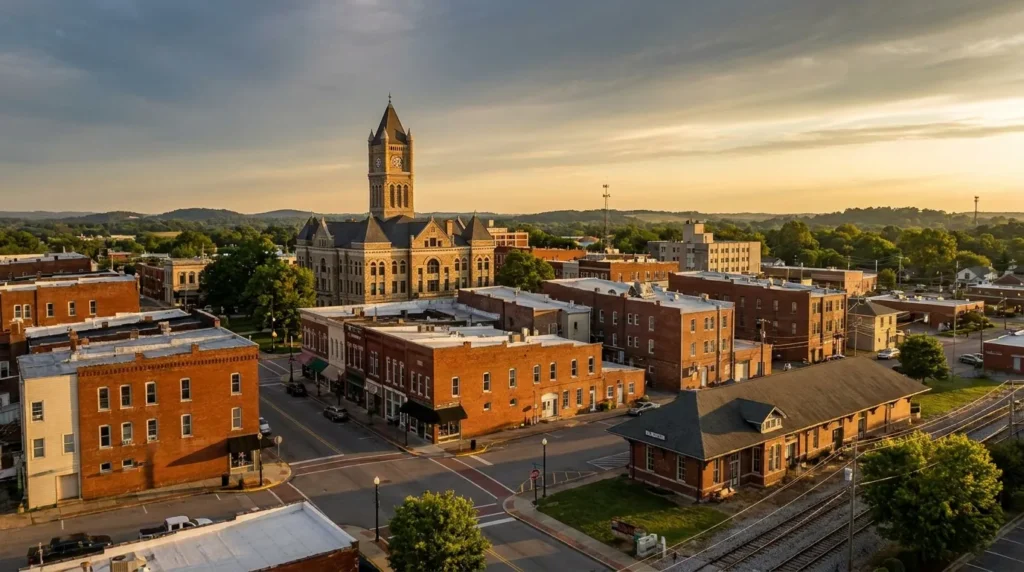
Modest and relatively diverse population for its size, with a strong military presence

Hopkinsville has around 31,000 residents, with a mix of white, African American, and a growing Hispanic community, along with military families connected to Fort Campbell.

Hopkinsville is a small city with just over 30,000 residents. By American standards, it is more diverse than one might expect from a city of this size in the rural South: roughly half the population is white, and there is a large, historically rooted African American community, with established churches and traditional neighborhoods.

The Hispanic population has been growing over the past two decades, driven by work in agriculture, meatpacking, and construction. There is also a significant presence of military families connected to Fort Campbell, located just to the south on the Tennessee border, which brings people from across the country and the world for a few years at a time.

The median age is similar to the state average, with young families in newer neighborhoods and older residents in the historic downtown. Educational attainment is below the national average, but the Hopkinsville Community College campus helps support technical and vocational training.

Languages spoken
  • English
  • Spanish
Main religions
  • Protestantism (Baptist, Methodist)
  • Catholicism
  • Other Christian denominations
  • No religion

One of the lowest costs of living in the United States

Hopkinsville falls well below the American average in nearly every category: housing, food, transportation, and services cost significantly less than in medium and large cities.

The cost of living in Hopkinsville is one of the city's strongest draws. Rents are well below the national average: a two-bedroom apartment in a decent neighborhood costs a fraction of what is paid in mid-sized American cities. Buying a home is also affordable, with family homes at the lower end of the American real estate market.

Groceries are affordable, with chains like Walmart, Kroger, and Aldi present in the city. Gas follows Kentucky's pattern, generally cheaper than coastal states. Local restaurants offer full meals at modest prices, and fast food chains are everywhere.

Basic utilities (electricity, water, internet) fit within a working-class family's budget. The main variable is health insurance, which can be costly for those without employer coverage, as is standard across the United States.

Hopkinsville

Spacious and affordable homes, quiet neighborhoods, and few apartment buildings

Almost everyone lives in a single-story or two-story house; rents and purchase prices are low, and new subdivisions are growing to the north and west of the city.

In Hopkinsville, living in a house is the norm. Apartment buildings exist but are a minority, generally two or three-story complexes scattered throughout the city. Most families live in single-story homes with a backyard, two-car garage, and some green space in front.

The most sought-after neighborhoods are to the west and north of the city, with new subdivisions, well-rated schools, and planned streets. Older neighborhoods near downtown feature historic Southern-style homes, some restored, others needing renovation, at even more affordable prices.

For rentals, Craigslist, Zillow, and local real estate agencies are the main options. Landlords typically require proof of income, credit history, and a co-signer or security deposit. Recent arrivals without a credit score may need to pay more upfront or find a less bureaucratic landlord.

Recommended neighborhoods
  • South Hopkinsville
  • Pembroke Road
  • Eagle Way / North Side
  • Cox Mill area
  • Lafayette Road corridor

Agribusiness, manufacturing, and jobs tied to the military base

The job market revolves around factories, agriculture, services for Fort Campbell, and local retail; wages are modest, but the low cost of living offsets this.

The job market in Hopkinsville is dominated by manufacturing, agribusiness, and services. Major employers include auto parts factories, food processing, and chemical industries in the area. Proximity to Fort Campbell also generates civilian jobs in logistics, construction, and services for military personnel and their families.

For newcomers, factory and construction jobs are often the fastest entry points, with hiring frequently done through temporary staffing agencies. There is also demand in healthcare, transportation (truckers, CDL), and retail, with national chains present in the city.

Wages are lower than in large cities, but the cost of living follows suit. Skilled positions (engineering, IT, healthcare) exist on a smaller scale and generally require commuting to Clarksville, Nashville, or larger cities. Functional English is practically required for most positions.

Dominant sectors
  • Manufacturing
  • Agribusiness
  • Military services and logistics
  • Healthcare
  • Retail and commerce
Major employers
  • Fort Campbell (civilian jobs)
  • Jennie Stuart Medical Center
  • Martinrea Heavy Stampings
  • Hendrickson
  • Ahresty Wilmington Corp
  • +1 more

Public schools and a community college as the foundation of local education

The city has a public school network, several religious private schools, and Hopkinsville Community College, with larger universities in neighboring cities.

The public education system in Hopkinsville is administered by Christian County Public Schools, with elementary schools, middle schools, and two main high schools (Hopkinsville High and Christian County High). Quality varies by neighborhood, as is standard across the United States, but some schools perform well, particularly in newer residential areas.

Private schools also exist, mostly affiliated with churches (Catholic, Baptist, independent Christian). Some families opt for homeschooling, a common practice in the region. For children who speak another language at home, ESL (English as a Second Language) programs are available through the public school system.

In higher education, Hopkinsville Community College offers associate degree programs and technical training in areas such as nursing, mechanics, IT, and business administration, at very affordable prices and with good job placement in the local market. For a bachelor's degree, the closest options are Murray State University, Austin Peay (in Clarksville, TN), and Western Kentucky University.

Notable universities
  • Hopkinsville Community College
  • Murray State University (regional campus)
  • Austin Peay State University (Clarksville, TN, nearby)
  • Western Kentucky University (Bowling Green, nearby)

Well-established regional hospital and basic care clinics

Jennie Stuart Medical Center is the main hospital in the region, with private clinics, urgent care centers, and community health centers covering basic care.

The primary healthcare reference is Jennie Stuart Medical Center, a regional hospital with a 24-hour emergency room, maternity ward, ICU, surgical center, and various specialties. For highly specialized procedures (transplants, complex oncology), patients are often referred to Nashville or Louisville.

In addition to the hospital, the city has private clinics, family practices, dentists, ophthalmologists, and urgent care centers for non-emergency cases. There are also subsidized community clinics that operate on a sliding scale fee, useful for those without health insurance.

As throughout the United States, having health insurance is essential to avoid very high hospital bills. Large employers typically offer coverage, and Medicaid covers low-income families. For recently arrived immigrants, the system can be confusing at first: consulting an insurance navigator or community clinic for guidance is recommended.

Hopkinsville

Reasonable safety for a small city, with quiet residential areas

Most of the city is safe, with crime rates comparable to the average for small American cities; some areas have a worse reputation and warrant extra attention.

Hopkinsville is, generally speaking, a safe city to live in. Most residential neighborhoods have quiet streets, neighbors who know each other, and low rates of violent crime. Children ride bikes in the street, and it is common to see people walking in parks.

Like any mid-sized American city, there are areas with higher rates of property crimes (theft, break-ins), generally concentrated in poorer or industrial zones. Consulting coworkers or real estate agents when choosing a neighborhood, and checking public online crime maps, is advisable.

At night, downtown empties out early, which reduces activity but can also increase a sense of isolation. Basic precautions include keeping homes and cars locked, not leaving valuables visible in vehicles, and staying alert at gas stations at night. Local police respond reasonably promptly and 911 functions normally.

Safer neighborhoods
  • South Hopkinsville residential
  • Cox Mill area
  • Eagle Way / North Side
  • Pembroke Road residential
  • Neighborhoods near Cox Mill Elementary
Areas to avoid
  • Industrial areas around E 9th Street at night
  • Isolated stretches of downtown after business hours
  • Areas near abandoned warehouses

A car-dependent city with limited public transportation options

Having a car is practically essential; local buses exist but are limited, and the nearest commercial airport is in Nashville.

Hopkinsville is a city designed for the car. Most residents travel by personal vehicle, and having an American driver's license and a reliable car is part of daily life. Parking is plentiful and free nearly everywhere, including downtown.

There is a small local public transit system, the Hopkinsville Transit System, with limited routes and reduced hours, primarily serving the elderly and those without other options. It cannot be relied upon for punctual commuting in most cases.

For commercial flights, the most commonly used airport is Nashville International (BNA), about 1.5 hours by car. Options also exist in Evansville and Louisville. The city has a small regional airport (HVC) used for general aviation and charters. Passenger rail does not serve the city.

Airports
  • HVC — Hopkinsville-Christian County Airport (general aviation)
  • BNA — Nashville International (nearest commercial airport, ~1h30)

Climate

Hopkinsville

Southern American culture with an agricultural touch and local traditions

Hopkinsville blends rural Southern traditions, African American heritage, military presence, and local curiosities such as the Little Black Pearl festival and the 2017 Solar Eclipse.

Local culture is typically Southern American: Baptist church on Sunday morning, backyard barbecue in the afternoon, football in the fall, and basketball (Kentucky is college basketball country) in the winter. Country and gospel music are ubiquitous on local radio stations and in bars.

African American heritage is strong, with historic churches, cultural events, and festivals celebrating the history of the Black community in the region. The military presence of Fort Campbell also brings influences from across the country, softening some of the isolation typical of small Southern cities.

Hopkinsville gained national recognition in 2017 as a point of maximum totality during the solar eclipse, drawing thousands of visitors. It is also known for figures such as Edgar Cayce, the well-known American mystic born in the area, and for annual festivals tied to agriculture and western Kentucky traditions.

Notable dishes
  • Kentucky-style rib and brisket barbecue
  • Hot brown (classic KY open-faced sandwich)
  • Southern fried chicken
  • Cornbread
  • Burgoo (traditional stew)
  • +1 more
Annual events
  • Little River Days (spring festival)
  • Western Kentucky State Fair
  • Summer Salute (July 4th)
  • Christian County Christmas Parade
  • Solar eclipse commemorative events

Attractions tied to local history, nature, and regional curiosities

Local museums, nearby state parks, the Edgar Cayce birthplace, and events connected to the 2017 eclipse are the main points of interest in the city and surroundings.

Hopkinsville is not a traditional tourist destination, but it has interesting attractions for residents. The Pennyroyal Area Museum covers the history of western Kentucky, including the region's agricultural, military, and cultural heritage. The Trail of Tears Commemorative Park commemorates the forced passage of the Cherokee people through the region in the 19th century.

In the surrounding area, state parks such as Pennyrile Forest State Resort Park offer trails, a lake, golf, and cabins for weekend getaways. Lake Barkley and Land Between the Lakes, about an hour's drive away, are popular destinations for fishing, camping, and outdoor activities in nature.

The city also gained recognition for its connection to Edgar Cayce, the most famous American mystic of the 20th century, who was born in the surrounding area. And in 2017, it was one of the prime points for observing the total solar eclipse, an event that still draws occasional astronomical tourism.

  1. 1Pennyroyal Area Museum
  2. 2Trail of Tears Commemorative Park
  3. 3Jeffers Bend Environmental Center
  4. 4Hopkinsville Brewing Company
  5. 5Edgar Cayce birthplace (vicinity)
  6. 6Downtown Historic District
Parks & green spaces
  • Ruff Park
  • Tie Breaker Park
  • Jeffers Bend Environmental Center
  • Founders Square
  • Pennyrile Forest State Resort Park (nearby)

Small but growing immigrant community, with Hispanics in the lead

The foreign-born population is small, with Hispanics (mainly from Mexico and Central America) as the largest group, followed by Filipino, Indian, and African immigrants.

Hopkinsville is not a city of large-scale international immigration, but it has a foreign-born community that has been growing slowly for two decades. The largest group is Hispanic, with Mexicans and Central Americans working in agriculture, meatpacking, construction, and services. There are churches with Spanish-language masses and Latin markets downtown.

The military presence of Fort Campbell also brings families of diverse origins: Filipino, Korean, German, Indian, Nigerian, and others. These immigrants often stay for a few years tied to the military cycle of an American spouse. There is also a small number of resettled refugees, depending on current federal policy.

For those arriving from outside the United States, community support comes primarily from churches, some ESL programs at Hopkinsville Community College, and regional organizations. Nashville, a 1.5-hour drive away, is the center for consular services and more structured immigrant communities for the region.

1,800
Foreign-born residents
estimated
Top countries of origin
  • Mexico
  • Philippines
  • Honduras
  • Guatemala
  • India
  • South Korea
  • Germany
  • Nigeria
Foreign consulates
  • Mexican Consulate General in Nashville
  • Brazilian Honorary Consulate in Nashville
  • Guatemalan Consulate General in Nashville
  • El Salvadoran Consulate General in Nashville
  • Philippine Honorary Consulate in Nashville
Community organizations
  • Catholic Charities of Tennessee (serves the region)
  • Hispanic Family Foundation (Nashville)
  • Conexión Américas (Nashville, serves regionally)
  • Hopkinsville Community College ESL Program
  • Local churches with Hispanic ministry

Latest posts

Posts about Kentucky

Coverage and updates related to this destination.

Showing content from Kentucky, as there is no specific data for Hopkinsville yet.