Visto n' Visa
Blog
Notícias e artigos
Destinations
Careers
Immigrants

Want to live and work in Garden City?

Personalized immigration plan with eligible visas, costs, and next steps for your goal!

If you are not eligible, you will know exactly why and what to do to improve your approval chances.

Save up to 12 hours in meetings

No pointless assessments.

Save up to 90%

Save money on vague or unfocused consultations

Avoid Fraud and Mistakes

One mistake can cost you your visa

Total Impartiality

Zero commercial bias

Decide with peace of mind

No toxic urgency

Fast and Accurate

Answers in minutes, no guesswork

Rare diversity for a small Midwestern city

Garden City has a Hispanic majority, significant Vietnamese, Somali, Burmese, and Laotian communities, and schools that provide instruction in more than a dozen languages.

The population is close to 28,000, with the majority identifying as Hispanic or Latino, the result of decades of Mexican and Central American immigration drawn by meatpacking jobs. The presence is so strong that many local services operate in Spanish as the default, not the exception.

After Hispanics, the most visible groups are Vietnamese (arrived in the 1980s fleeing the war), Somalis (arrived in the 2000s as resettled refugees), and more recently Burmese Karen and Ethiopians. The diversity has earned the city the informal nickname of the city of nations in Kansas.

The religious profile is mixed: Catholicism dominant among Hispanics, Spanish-language Protestant and evangelical churches, mosques used by the Somali community, Vietnamese Buddhist temples. The median age skews young because working families in the meatpacking industry tend to have young children.

Languages spoken
  • English
  • Spanish
  • Vietnamese
  • Somali
  • Karen (Burmese)
  • +1 more
Main religions
  • Catholicism
  • Evangelical Protestantism
  • Sunni Islam
  • Buddhism
  • No religion

Cost of living well below the US national average

Affordable rent, accessible grocery prices, and some of the cheapest gas in the country. The main expense is transportation: everything requires a car and regional distances are long.

Garden City is one of the most affordable cities in the United States to live in. A two-bedroom apartment typically rents well below the national average, and purchasing a modest home is feasible even on a factory worker's salary. Electricity and gas bills weigh heavily in winter due to heating costs.

Large supermarkets (Walmart, Dillons) cover the basics, and the strong Hispanic presence ensures Mexican markets with produce, fresh tortillas, and cheaper cuts of meat. Asian residents can find one or two Vietnamese markets with imported products, though variety is limited.

The major expense is the car. There is no real public transit, so every adult needs a vehicle, insurance, and gasoline. Specialist medical appointments require traveling to Wichita or Denver, which becomes a recurring expense for many families.

Garden City

Affordable homes and reasonable supply, though quality varies widely

Purchasing a modest home is within reach even on a meatpacking salary. Older neighborhoods near downtown offer cheaper houses, while newer developments in the north provide higher standards.

Garden City's real estate market is among the most affordable in the United States. Three-bedroom homes in older neighborhoods sell at prices that would be considered remarkable in larger cities. The inventory includes many properties built between the 1950s and 1970s, with varying levels of maintenance.

Newer subdivisions are located on the north and west sides, featuring larger homes, double garages, and quiet streets. This is where middle-class families, including dentists, teachers, and meatpacking managers, tend to move when finances allow.

Rentals are also abundant: small apartments, mobile home parks, and entire houses available for rent. Newly arrived immigrant families often start in apartments or shared houses near downtown and the packing plants, then move to more residential neighborhoods as they establish themselves.

Recommended neighborhoods
  • North Garden City
  • West Garden City
  • Stone Lake
  • Buffalo Ridge
  • Revitalized historic downtown

Meatpacking dominates, but healthcare and education are also significant employers

The two major meatpacking plants (Tyson and the former Cargill, now National Beef) are the largest employers, followed by the regional hospital, public schools, and Garden City Community College.

The economic engine is the beef processing industry. Tyson Fresh Meats operates a large plant in Holcomb, a small community adjacent to Garden City, and National Beef has facilities in Liberal/Dodge City also within reach. These jobs require no English proficiency, offer above-minimum-wage pay, benefits, and frequent overtime. In return, the work is physically exhausting and carries occupational hazards.

St. Catherine Hospital (part of the CommonSpirit Health system) is the second-largest employer and hires from physicians to housekeeping staff. The USD 457 school district employs hundreds of teachers, aides, and administrative staff, with bilingual programs that create openings for native Spanish and Vietnamese speakers.

Retail, construction, trucking, and agriculture round out the economy. For skilled engineering or IT work, opportunities are limited, and many qualified workers end up relocating to Wichita, Denver, or Kansas City.

Dominant sectors
  • Meat processing
  • Healthcare
  • Education
  • Agriculture and irrigation
  • Trucking
  • +1 more
Major employers
  • Tyson Fresh Meats (Holcomb)
  • National Beef Packing
  • St. Catherine Hospital
  • USD 457 Garden City Public Schools
  • Garden City Community College
  • +1 more

Bilingual school district and a community college as a gateway to higher education

USD 457 serves students in multiple languages, and Garden City Community College offers technical programs and the first two years of college at affordable prices.

The USD 457 public school district serves more than 7,000 students and has gained recognition for robust bilingual programs and support for newcomer students. It includes three high schools, several middle schools, and elementary schools spread across the city. Garden City High School is the flagship, with strong athletic traditions and a broad curriculum.

Garden City Community College (GCCC) is the local center of higher education. It offers two-year degree programs, technical courses in nursing, mechanics, and agriculture, and English as a Second Language programs. Many students later transfer to Wichita State University or Kansas State University.

Early childhood options include private daycare centers, free Head Start programs, and preschools affiliated with the district. Private schools are few, with St. Mary Catholic School being the most prominent.

Notable universities
  • Garden City Community College (GCCC)

Regional hospital handles the basics; specialists require travel

St. Catherine Hospital covers emergencies and routine surgeries. For complex cardiology, advanced oncology, and specialized treatments, Wichita or Denver is the destination.

St. Catherine Hospital, part of the CommonSpirit Health network, is the cornerstone of local healthcare. It offers a 24-hour emergency room, maternity, ICU, general surgery, orthopedics, and outpatient clinics in several specialties. For a city the size of Garden City, it is regarded as a solid regional hospital.

Subsidized community clinics such as Genesis Family Health serve uninsured patients on a sliding fee scale. Services are available in Spanish, with interpreters for other languages. There are also private practices in general medicine, pediatrics, and dentistry.

For advanced oncology, interventional cardiology, neurosurgery, or transplants, patients generally travel to Wichita (Ascension Via Christi) or Denver (UCHealth). Health insurance is obtained through employers or the ACA marketplace, and acceptance varies among clinics.

Garden City

Quiet city by American standards, with some localized urban issues

Violent crime is low across most of the city. Theft, vandalism, and drug activity are more concentrated near certain trailer parks and around downtown bars at night.

Garden City is considered safe by US standards. Most crime is non-violent: package theft, theft from unlocked vehicles, vandalism. Homicides are rare events, generally tied to domestic disputes or conflicts between acquaintances, not random violence.

Residential neighborhoods on the north and west sides are quiet, with houses without bars and calm streets. The historic downtown functions well during the day, with shops and restaurants, but empties out at night. Some mobile home parks on the southern edge have a rougher reputation and warrant attention.

The local police department is small but active, maintaining community policing programs in several languages to serve the city's diversity. Response times for serious emergencies are adequate within the urban grid.

Safer neighborhoods
  • North Garden City
  • Stone Lake
  • Buffalo Ridge
  • West Garden City
  • Residential neighborhoods near GCCC
Areas to avoid
  • Mobile home parks on the southern edge at night
  • Surroundings of downtown bars after closing
  • Isolated industrial areas near the meatpacking plants after dark

Car-dependent city: no real public transit and no long-haul flights

Everything revolves around the automobile. The local airport serves only regional flights to Denver. For international destinations, driving to Wichita or Denver is the practical option.

Garden City has no meaningful urban bus system. A dial-a-ride service exists for seniors and people with disabilities, but for daily routines everyone depends on a personal vehicle. Parking is easy and free in virtually every location.

Garden City Regional Airport (GCK) operates daily SkyWest/United flights to Denver, providing worldwide connections, but at high fares. To save money, many residents drive four hours to Wichita (ICT) or five hours to Denver (DEN), airports with far more options.

There are no dedicated bike lanes and no strong cycling culture. Walking is feasible only within neighborhoods, as distances between different parts of the city are considerable. Amtrak's Southwest Chief passes through Garden City once a day in each direction, linking to Los Angeles and Chicago.

Airports
  • GCK - Garden City Regional Airport
  • ICT - Wichita Dwight D. Eisenhower National (~4 hours by car)
  • DEN - Denver International (~5 hours by car)

Climate

Garden City

Hybrid culture shaped by waves of immigration

Festivals such as Beef Empire Days share the calendar with Vietnamese Tet celebrations, Cinco de Mayo festivities, and Somali community meals.

Despite its size, Garden City has a surprisingly diverse cultural scene. The official calendar blends traditional American events such as rodeos and Veterans Day parades with Mexican, Asian, and African festivities that have become part of the local fabric.

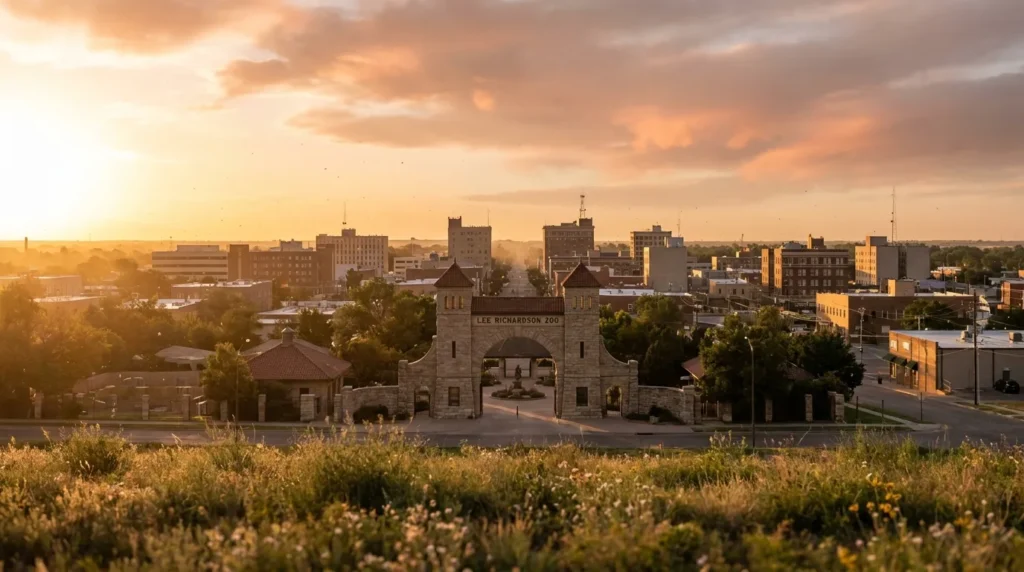
Food is the best indicator. Authentic Mexican taquerias, Vietnamese restaurants serving pho and banh mi, Somali shops selling sambusas, American steakhouses, and Chinese buffets all coexist. The Lee Richardson Zoo, inside Finnup Park, is one of the oldest public zoos in Kansas and draws visitors from across the state.

For entertainment, the Garden City Recreation Commission organizes sports leagues and community events throughout the year. The Clarion Inn and convention center host regional gatherings. A movie theater and mall exist, but for a richer cultural scene, including theater and national concerts, Wichita or Denver is the destination.

Notable dishes
  • Grilled meat northern Mexico style
  • Vietnamese pho and banh mi
  • Somali sambusas
  • Fresh corn tortillas from a local tortilleria
  • Kansas Beef Empire Angus steak
Annual events
  • Beef Empire Days (June)
  • Tumbleweed Festival
  • Fiestas Patrias (September)
  • Tet (Vietnamese Lunar New Year)
  • Mexican Fiesta in the municipal park

Historic zoo, giant pool, and a taste of the Old West

The must-see highlight is the Lee Richardson Zoo inside Finnup Park. The Big Pool is the largest municipal public pool in the United States, and the surrounding area has wildlife refuges and landmarks from Old West history.

The most famous attraction is the Lee Richardson Zoo, inside Finnup Park, home to more than 100 species and free admission for local residents. This is rare for a city of this size. Finnup Park itself is large, with picnic areas, playgrounds, and the iconic Big Pool, a massive municipal swimming pool open in summer.

For nature enthusiasts, the Sandsage Bison Range and Wildlife Area hosts a bison herd just outside the city. Further away but reachable as a day trip are Monument Rocks in Gove County and historic Dodge City with its Old West museum.

The Finney County Historical Museum chronicles the region's immigration history and cattle industry. For shopping and urban leisure, activity centers on the Garden City Plaza (a small mall), local movie theaters, and the Main Street corridor, which is undergoing revitalization.

  1. 1Lee Richardson Zoo
  2. 2The Big Pool at Finnup Park
  3. 3Sandsage Bison Range and Wildlife Area
  4. 4Finney County Historical Museum
  5. 5Garden City Plaza
  6. 6Stevens Park
Parks & green spaces
  • Finnup Park
  • Stevens Park
  • Buffalo Hill Park
  • Babe Ruth Park
  • Sandsage Bison Range

A small Babel on the plains: Mexicans, Vietnamese, Somalis, Burmese, and Ethiopians

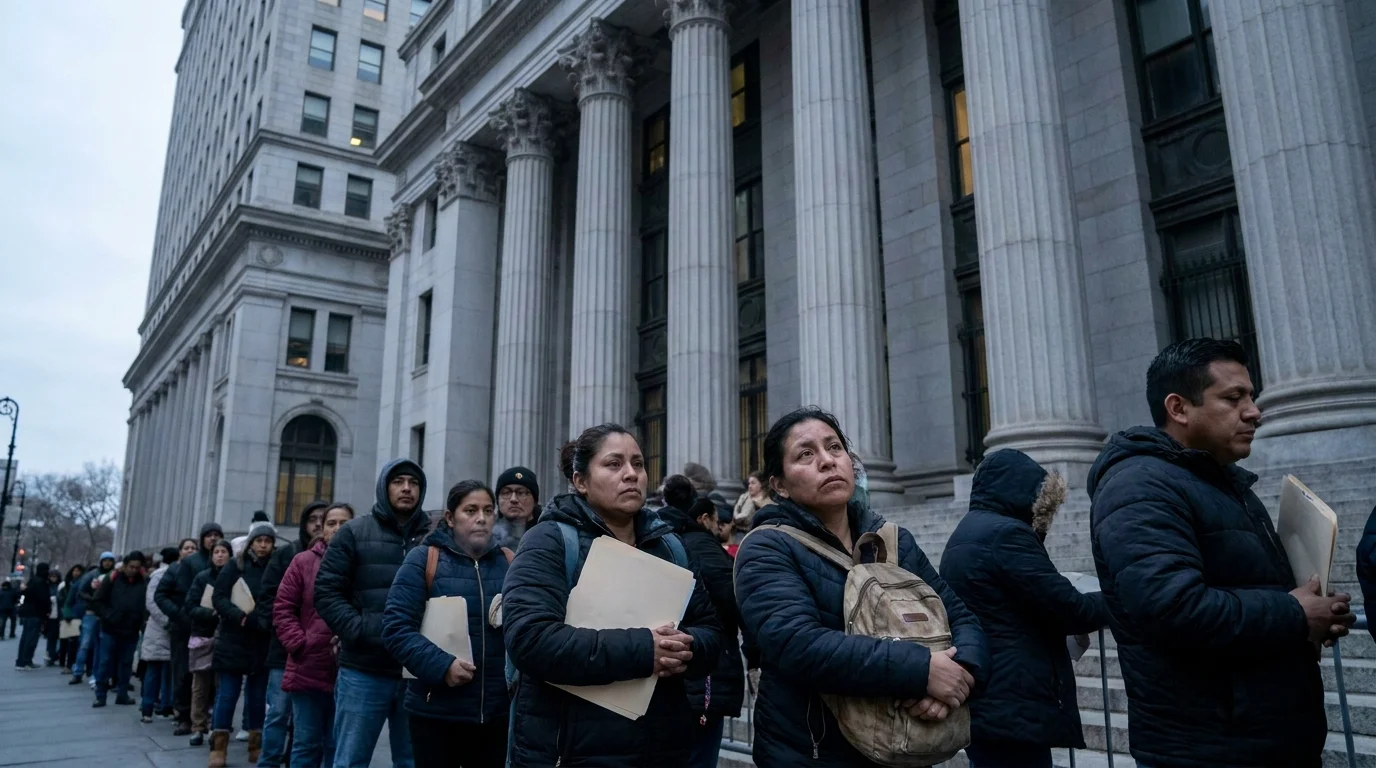
Garden City is one of the most ethnically diverse cities in Kansas. Meatpacking plants attracted decades of immigration, creating established communities with churches, markets, restaurants, and community organizations.

The migration flow began strongly with Mexicans in the 1970s and 1980s working in the meatpacking plants. Vietnamese refugees from the Vietnam War followed, resettled by the Catholic Church and federal programs. In the 2000s, Somali and Somali Bantu refugees arrived, along with Burmese Karen and Oromo Ethiopians.

More recently, the city has also received Guatemalans, Hondurans, Salvadorans, Eritreans, and South Sudanese, generally through refugee resettlement programs or family chain migration. There is also a smaller but growing Filipino presence in the healthcare sector.

The city is not a consular seat, so the nearest consulates are in Wichita, Kansas City, or Denver. Local organizations such as Catholic Charities of Southwest Kansas and Genesis Family Health provide direct support to immigrants in several languages.

7,500
Foreign-born residents
estimated
Top countries of origin
  • Mexico
  • Vietnam
  • Somalia
  • Myanmar (Burma)
  • Ethiopia
  • Guatemala
  • El Salvador
  • Eritrea
Foreign consulates
  • Mexican Consulate in Kansas City (jurisdiction includes Kansas)
  • Mexican Consulate General in Denver
  • Vietnamese Consulate General in Houston (nearest jurisdiction)
  • Guatemalan Consulate in Kansas City
  • Salvadoran Consulate in Kansas City
Community organizations
  • Catholic Charities of Southwest Kansas
  • Genesis Family Health
  • Garden City Community College Office of Diversity and Inclusion
  • United Methodist Mexican-American Ministries
  • Finney County Refugee Resettlement Network

Latest posts

Posts about Kansas

Coverage and updates related to this destination.

Showing content from Kansas, as there is no specific data for Garden City yet.