English
 Português
 Español


White, African American, and Hispanic mix in a university city
South Bend has a majority white population (around 60%), with approximately 26% African American and 14% Hispanic. Historical Polish and Belgian communities, a growing Latino community, and significant international university enrollment.
The ethnic composition reflects two layers: industrial heritage and university presence. The African American population has deep roots, especially in west-side neighborhoods such as Near West Side and Far West Side, with historic Baptist churches. The Hispanic community, predominantly Mexican, has grown rapidly over the past two decades, concentrated on the west side and along Western Avenue and Olive Street.
Polish heritage is strong. Neighborhoods like West Side and Westside Park concentrated Polish immigrants in the 20th century to work at Studebaker and Bendix. Active Polish Catholic parishes, bakeries, and the annual Dyngus Day festival (Easter Monday) remain, making it a major Polish-American celebration. The Belgian community also has a historical presence in Mishawaka.
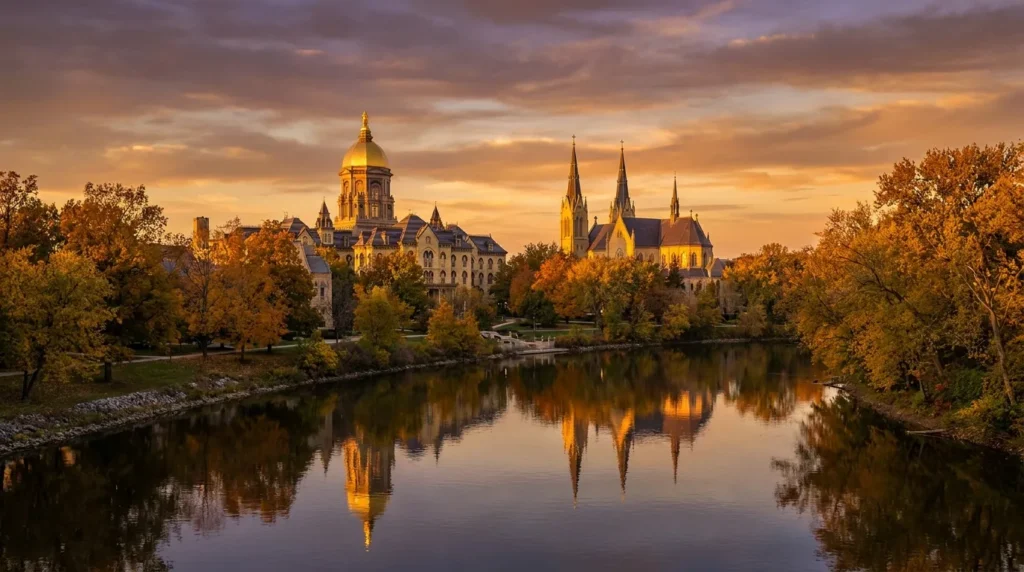
Notre Dame brings a significant floating international population, with students and researchers from around the world. The Brazilian community in South Bend is small but present, often connected to the university. Spanish is widely used in commerce, and several Catholic churches offer Spanish-language masses. For recent refugees, the Catholic Charities Notre Dame mission is a key support resource.
- English
- Spanish
- Polish (heritage)
- French (Notre Dame, Belgian heritage)
- Arabic
- Roman Catholicism
- African American Protestantism
- Lutheranism
- Evangelical Christianity
- No religion