Visto n' Visa
Blog
Notícias e artigos
Destinations
Careers
Immigrants

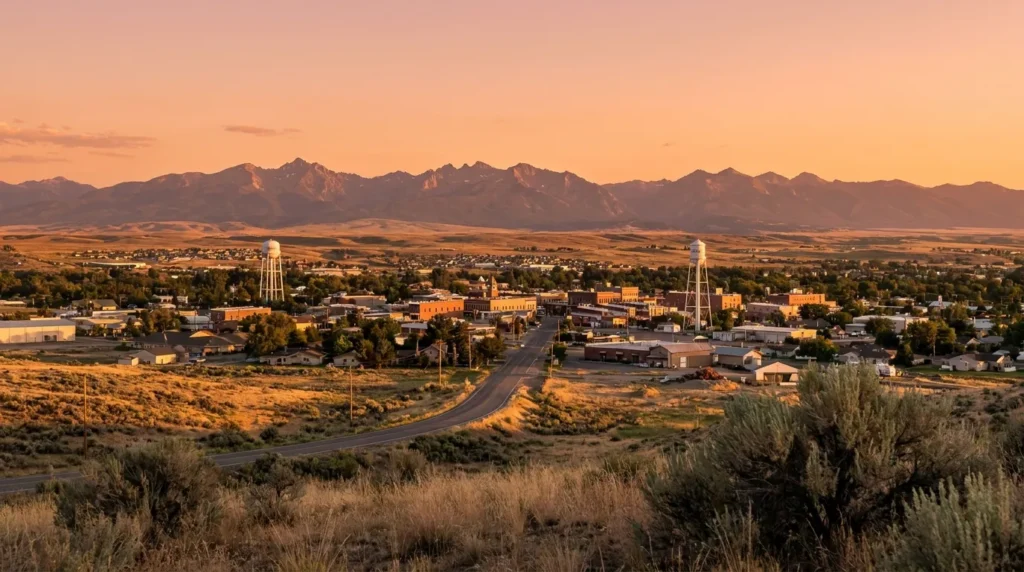
Want to live and work in Mountain Home?

Personalized immigration plan with eligible visas, costs, and next steps for your goal!

If you are not eligible, you will know exactly why and what to do to improve your approval chances.

Save up to 12 hours in meetings

No pointless assessments.

Save up to 90%

Save money on vague or unfocused consultations

Avoid Fraud and Mistakes

One mistake can cost you your visa

Total Impartiality

Zero commercial bias

Decide with peace of mind

No toxic urgency

Fast and Accurate

Answers in minutes, no guesswork

Population of around 16,000 with a strong military presence and above-average cultural diversity for the region

Mountain Home has a more diverse demographic profile than the rest of rural Idaho because of the air force base. Military families arrive and depart every few years, coming from across the country and from bases overseas.

The population is around 16,000 within city limits, with several thousand more living within the base perimeter. The majority is white of European descent, but the base brings Hispanic, Asian, Black, and multiracial families in proportions higher than those seen in neighboring Elmore County towns.

English dominates daily life, but Spanish appears frequently in commerce, churches, and schools, primarily among families working in surrounding agriculture and services. Tagalog is also heard in small groups connected to the base, from families with roots in the Philippines. Military turnover keeps the social fabric in constant motion, with new neighbors arriving every few months.

The predominant religion is Christianity, with a strong LDS, Evangelical, and Catholic presence. There are well-organized LDS congregations, Catholic parishes offering services in English and Spanish, and several Baptist and non-denominational congregations spread throughout the neighborhoods. Community life revolves around these churches, schools, and base-related events.

Languages spoken
  • English
  • Spanish
  • Tagalog
Main religions
  • Christianity (LDS)
  • Christianity (Evangelical)
  • Christianity (Catholic)
  • No religion

Cost of living well below the American average and cheaper than Boise

Living in Mountain Home costs significantly less than in Boise or Meridian. Rent, groceries, and gas are below the national average, attracting military families and remote workers.

The cost of living in Mountain Home is one of the city's main draws. A three-bedroom house typically rents for well below Boise prices, and homes are available for purchase at accessible price points by U.S. standards, particularly outside the peak season for incoming military personnel.

Groceries, gas, and basic services follow Idaho's pricing, which is lower than coastal states. Albertsons, Walmart, and Ridley's cover the essentials. Local restaurants charge modest prices, and most families cook at home. Utility bills rise in winter due to heating costs but remain manageable.

The main added expense is the car. The city is spread out, there is no real public transit, and any trip to Boise for specialized medical care, larger shopping, or the airport means over an hour on the road. Households with two adults typically have two vehicles, and the fuel budget adds up at the end of the month.

Mountain Home

Spacious single-story homes, lower rents than Boise, and new construction growing on the outskirts

The housing stock is dominated by single-family homes with yards and garages. Base families rent for short periods, keeping the rental market active year-round.

The central neighborhood near Main Street and American Legion Boulevard has older homes from the 1940s to 1970s, more modest with smaller lots. More sought-after areas are in the northern part of the city, near Highway 30 and Mountain Home Junior High School, featuring homes from the 1990s and 2000s on quiet streets.

New subdivisions have been growing to the north and west, with three- and four-bedroom homes targeting military families and those who commute to Boise. Mobile homes are still common on the outskirts and provide a more affordable option for those just starting out. Within the base, housing is available for active-duty military, which reduces some of the pressure on the local market.

Renting is easier than buying for newcomers, and 12-month leases are standard. Those staying for a short period can find furnished options near the base. The city has no high-rise buildings, and nearly everything is single-story or two-story, with yards and two-car garages.

Recommended neighborhoods
  • Northern part of the city (near Highway 30)
  • Foothills Estates
  • Sunset Heights
  • Area near Carl Miller Park
  • Bennett Hills

Job market dominated by the air force base, agriculture, and support services

Mountain Home Air Force Base is by far the largest employer in the region. Outside the base, agriculture, retail, healthcare, and public services sustain the local economy.

The base employs thousands of people, including active-duty military, Department of Defense civilians, and private contractors providing maintenance, food service, security, and technology services. Military spouses often find work on the base itself, in schools, hospitals, or local businesses.

Outside the base, the economy revolves around agriculture in Elmore County, with farms producing potatoes, sugar beets, alfalfa, and cattle. Agricultural processing companies, transportation, and logistics firms employ local and seasonal workers. Walmart, Albertsons, a regional Home Depot, and fast food chains are consistent retail employers.

For those seeking higher salaries and sectors such as technology, finance, or specialized healthcare, the alternative is commuting to Boise or Meridian, about an hour away. Many Mountain Home residents work in Boise, drawn by the lower cost of living here despite the commute time.

Dominant sectors
  • Defense and military
  • Agriculture
  • Retail
  • Healthcare
  • Public education
  • +1 more
Major employers
  • Mountain Home Air Force Base
  • Mountain Home School District
  • St. Luke's Elmore
  • Walmart
  • Simplot (agriculture)
  • +1 more

Solid public school system serving military and civilian families with schools dedicated to military children

Mountain Home School District 193 covers the entire city and serves many base families. For higher education, students look to the College of Western Idaho and universities in Boise.

The school district includes several elementary schools, a junior high, and Mountain Home High School, a local benchmark for sports and extracurricular activities. Because of military family turnover, schools have experience welcoming new students mid-year and helping with adjustment.

Inside the base, Hacker Middle School serves military children with a Department of Defense curriculum. Homeschooling is also used at rates higher than the national average, which is common in Idaho. Private schools are few, with some religious options maintained by local churches.

For higher education, there is no university in the city. The most common paths are the College of Western Idaho in Nampa and Boise State University in Boise, both offering in-person and online programs. Military personnel and their dependents use GI Bill benefits to study at these institutions.

Notable universities
  • Boise State University (in Boise, 70 km away)
  • College of Western Idaho (in Nampa)
  • College of Idaho (in Caldwell)

Basic care at the local hospital with referrals for complex cases to Boise

St. Luke's Elmore serves the city and county with emergency and general care. Specialized cases are referred to the large hospitals in Boise.

St. Luke's Elmore Medical Center is the city's hospital, with an emergency room, general practice, maternity ward, and some specialties. It is the primary healthcare gateway for residents of Mountain Home and small communities throughout the county.

For major surgeries, oncology, advanced cardiology, and specialized pediatrics, Boise is the destination, home to St. Luke's Boise and Saint Alphonsus Regional Medical Center. The one-hour drive along Interstate 84 is part of the routine for families requiring ongoing care.

Active-duty military and their dependents have access to the 366th Medical Group on base, with outpatient care covered by TRICARE. Civilian families use private insurance, Idaho Medicaid, or ACA marketplace plans. Dentists, ophthalmologists, and mental health clinics are present on a modest scale, and wait times can be long.

Mountain Home

Quiet city with low violent crime rates and a family-friendly atmosphere

Mountain Home is considered a safe city by American standards. Violent crimes are rare, and the military presence contributes to an orderly environment.

Daily life is peaceful. Most police calls involve petty theft, traffic violations, domestic disturbances, and drug-related issues, a pattern common to small interior U.S. cities. Violent crimes such as armed robbery and homicide are uncommon.

Residential neighborhoods in the northern and western parts of the city are considered the quietest, with young families and calm streets. The central commercial area is safe during the day, with normal small-town activity. Some streets near older trailer parks and the industrial stretch of American Legion Boulevard may see more incidents and warrant extra caution at night.

The municipal police work together with the Elmore County Sheriff and the base's military police, maintaining a rapid response capability. Families let children ride bikes in the neighborhood without concern, and the general feeling is that of a small community where neighbors recognize each other.

Safer neighborhoods
  • Northern part of the city
  • Foothills Estates
  • Neighborhoods near Carl Miller Park
  • Sunset Heights
Areas to avoid
  • Industrial stretch south of American Legion Boulevard at night
  • Isolated areas near Interstate 84 during low-traffic hours

Car-dependent city with Interstate 84 access and a nearby regional airport

Mountain Home is crossed by Interstate 84, linking it to Boise in one hour and Twin Falls in two. There is no real public transit, and the nearest commercial airport is in Boise.

Interstate 84 runs through the city and is the main artery for any trip. Boise is about 70 km to the west and Twin Falls 175 km to the east. US Highway 20 connects to the air force base and continues to Craters of the Moon. Salt Lake City is five hours away by car, and Portland is seven.

There is no urban bus service. The city is compact enough to walk between some central areas, but a car is essential for any regular family routine. Taxi service is limited, and Uber operates irregularly. The base provides internal transportation for military personnel.

The commercial airport is Boise Airport, an hour away by car, with direct flights to many U.S. cities. Mountain Home has a small municipal airport for general aviation. Formal urban bike lanes are few, but wide streets and light traffic allow careful cycling in the downtown area.

Airports
  • BOI — Boise Airport (70 km away)
  • U76 — Mountain Home Municipal Airport (general aviation)

Climate

Mountain Home

Western rural culture with strong military influence and a community events calendar

Cultural life blends American West traditions, rodeos, churches, air force base events, and seasonal festivals. It is a small town where nearly everyone knows each other.

The local identity combines Idaho's western small-town character with the base's influence. Boots, hats, pickup trucks, and country music coexist with families who have just arrived from bases in Germany, Japan, or South Korea. This blend shows up in restaurants, with places serving everything from classic American food to Korean, Mexican, and Thai dishes.

Air Force Appreciation Day, in September, is the biggest event of the year, with a parade, food trucks, shows, and family activities. The Elmore County Fair brings a rodeo, agricultural exhibition, and traditional rural Idaho attractions. Small Christmas fairs, Fourth of July parades, and church events fill the calendar.

Cultural life is family-oriented and simple. There are no large museums or sophisticated arts scene, but there are active libraries, community theater groups, and school activities. For greater cultural offerings, Boise provides theaters, museums, and concerts about an hour away.

Notable dishes
  • Finger steaks (breaded beef strips, an Idaho specialty)
  • Idaho potatoes (in all forms)
  • Huckleberry pie
  • Grilled trout
  • Chili and cornbread
Annual events
  • Air Force Appreciation Day (September)
  • Elmore County Fair (August)
  • Mountain Home Rodeo
  • 4th of July Parade
  • Christmas Light Parade

Outdoor attractions, local parks, and easy access to the desert and mountains

Mountain Home serves as a base for exploring the Snake River Plain, Bruneau Dunes State Park, and fishing reservoirs. Within the city, municipal parks and small museums fill leisure time.

Bruneau Dunes State Park, about an hour southeast, has the tallest sand dunes in North America and a public observatory. C.J. Strike Reservoir and Anderson Ranch Reservoir are destinations for fishing, camping, and water sports in summer. Access to the Owyhee Desert offers trails and cinematic landscapes.

Within the city, Carl Miller Park is the main public space, with a playground, courts, and lawn for picnics. Optimist Park and Railroad Park are also used by families. The Mountain Home Historical Museum tells the region's railroad and military history with a small but carefully curated collection.

For skiing and snowboarding, Bogus Basin is about two hours away via Boise. Natural hot springs such as Bonneville Hot Springs and Atlanta Hot Springs are a few hours away along Highway 21, in the middle of the Sawtooth Mountains. The region is a destination for those who enjoy nature, hunting, fishing, and hiking.

  1. 1Bruneau Dunes State Park
  2. 2C.J. Strike Reservoir
  3. 3Anderson Ranch Reservoir
  4. 4Mountain Home Historical Museum
  5. 5Carl Miller Park
  6. 6Snake River Canyon
Parks & green spaces
  • Carl Miller Park
  • Optimist Park
  • Railroad Park
  • Richard Aguirre Park
  • Legacy Park

Small but diverse immigrant community driven by the air force base and agriculture

Mountain Home has immigrant groups connected to the air force base (foreign spouses of military personnel) and to agriculture (Mexican and Central American workers). The community is small but varied.

The immigrant composition reflects two worlds. On one side, foreign spouses of military personnel arriving from bases overseas, with notable presence from the Philippines, South Korea, Japan, Germany, and Mexico. On the other, agricultural and service workers coming primarily from Mexico and Guatemala, who support part of Elmore County's agriculture.

There are no defined ethnic neighborhoods, but Spanish-language churches, small Latin markets, and Asian restaurants signal the presence of these communities. The school calendar and base events help integrate newly arrived families, and Mountain Home Air Force Base offers support groups for foreign spouses.

For consular services, residents of various nationalities must travel to Seattle, Portland, San Francisco, or Los Angeles, as Idaho has no broad foreign consular network. Some basic administrative matters can be handled online with consulates that cover Idaho jurisdictionally.

900
Foreign-born residents
estimated
Top countries of origin
  • Mexico
  • Philippines
  • South Korea
  • Germany
  • Japan
  • Guatemala
  • United Kingdom
Foreign consulates
  • Mexican Consulate General in Boise
  • Consulates in Seattle, Portland, and San Francisco cover Idaho for most countries
Community organizations
  • Idaho Office for Refugees (Boise)
  • Catholic Charities of Idaho
  • Hispanic Cultural Center of Idaho (Nampa)
  • Mountain Home Air Force Base Family Readiness Center
  • Community Council of Idaho

Latest posts

Straight from the blog

There are no posts specifically about Mountain Home yet. In the meantime, check out our latest posts.