English
 Português
 Español


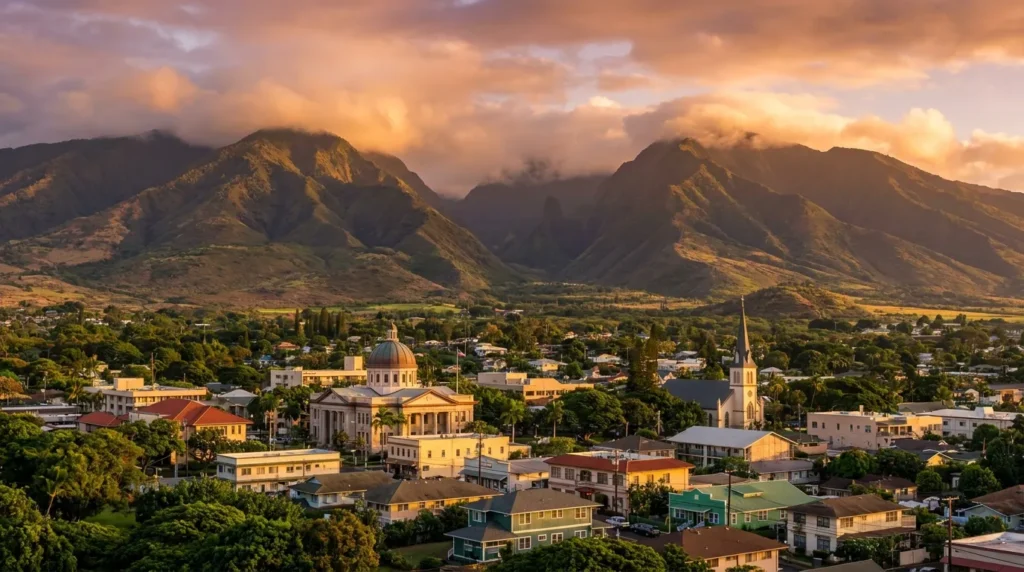
Multicultural population with a strong Asian and Pacific heritage
Wailuku reflects the classic Hawaiian mix: descendants of Asian plantation workers, Native Hawaiians, mainland whites, and a growing Hispanic community.
Wailuku's demographics tell the story of the sugar and pineapple plantations that dominated Maui in the 20th century. Filipinos form the largest Asian group, followed by Japanese, Chinese, and Portuguese, all originally brought to work in the cane fields. This legacy shows in surnames, neighborhood restaurants, Catholic churches with Tagalog masses, and Buddhist temples still in operation.
Native Hawaiians and their descendants represent a significant share of the population and maintain a strong cultural presence in Iao Valley and in community organizations. White mainlanders, many from California and the Pacific Northwest, arrived more recently drawn by the quality of life. The Hispanic community, predominantly Mexican, has grown over the past two decades with the expansion of construction and services.
The age distribution is balanced, with a strong presence of young families in neighborhoods such as Wailuku Heights and retirees who chose the island for a calmer lifestyle. English is the dominant language, but it is common to hear Tagalog, Ilocano, Japanese, Hawaiian, and Spanish in shops and at home. Hawaiian Pidgin, a local blend of English with Asian and Hawaiian words, is the informal speech that connects everyone.
- English
- Hawaiian Pidgin
- Tagalog
- Ilocano
- Hawaiian
- +2 more
- Christianity (Catholic and Protestant)
- Buddhism
- Traditional Hawaiian religion
- United Church of Christ
- Mormons