Visto n' Visa
Blog
Notícias e artigos
Destinations
Careers
Immigrants

Want to live and work in Wahiawa?

Personalized immigration plan with eligible visas, costs, and next steps for your goal!

If you are not eligible, you will know exactly why and what to do to improve your approval chances.

Save up to 12 hours in meetings

No pointless assessments.

Save up to 90%

Save money on vague or unfocused consultations

Avoid Fraud and Mistakes

One mistake can cost you your visa

Total Impartiality

Zero commercial bias

Decide with peace of mind

No toxic urgency

Fast and Accurate

Answers in minutes, no guesswork

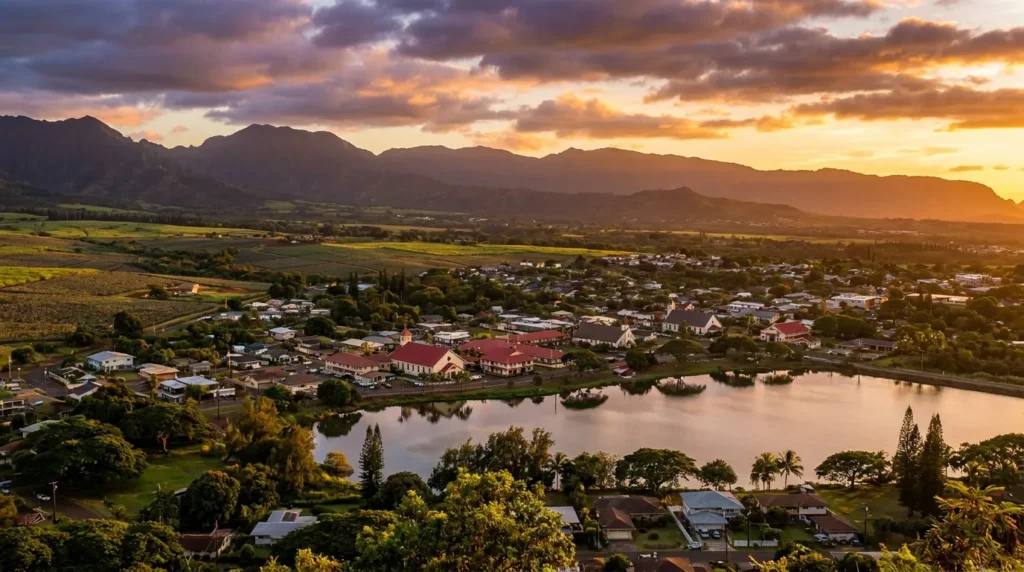
An Asian-Pacific mix with a strong military presence

Wahiawa has about 17,000 residents, with a strong presence of Filipino, Japanese, and Native Hawaiian descendants. The military population from Schofield Barracks shapes the region's demographics.

The ethnic makeup of Wahiawa reflects Hawaii's immigration history. Descendants of Filipinos came to work the pineapple plantations in the early 20th century and today form one of the largest local communities. Japanese, Chinese, Korean, and Portuguese immigrants also left their mark, and Native Hawaiians remain present in community life.

The military base adds an extra layer of diversity. Families of soldiers from across the United States pass through the city for short periods, creating constant turnover in commerce and schools. This mix makes Wahiawa feel more cosmopolitan than its size suggests.

English is the dominant language, but Tagalog, Japanese, and Hawaiian Pidgin can be heard on the streets and in restaurants. Most commercial signage is in English, with Tagalog signs appearing in Filipino bakeries and markets in the downtown area.

Languages spoken
  • English
  • Tagalog
  • Hawaiian Pidgin
  • Japanese
  • Ilocano
Main religions
  • Catholicism
  • Protestantism
  • Buddhism
  • Shintoism
  • Traditional Hawaiian religions

Cheaper than Honolulu, but still Hawaii

Wahiawa offers a more affordable cost of living than Honolulu, but still carries the weight of Hawaii's insularity. Rent, groceries, and fuel remain above the continental US average.

Hawaii is one of the most expensive states in the United States, and Wahiawa is no exception. The difference is that rent and services cost less here than in Honolulu or Waikiki. Military families often find the cost-benefit favorable because housing allowances are provided.

Groceries are the biggest shock for those arriving from the continental United States. Milk, eggs, produce, and meat arrive by ship or plane, and prices reflect that. Shopping at Don Quijote or Sack N Save instead of premium markets helps keep costs down. Eating at simple local restaurants is often cheaper than cooking with imported ingredients.

Fuel, electricity, and internet are clearly above the continental average. On the other hand, heating costs are zero, and winter clothing is not needed. For those coming from cold regions, this balance partially offsets the higher expenses.

Wahiawa

Plantation-era homes and condominiums for military families

Wahiawa's housing stock blends 1940s and 1950s homes tied to the plantation era, low-rise buildings downtown, and military housing inside and near Schofield Barracks.

The housing profile in Wahiawa tells the city's history. A large portion of the stock was built between the 1940s and 1960s, when pineapple was still the economic engine. These are wood-frame homes on low piers, with porches and small yards. Some have been renovated; others need work.

Downtown has low-rise buildings with one- and two-bedroom apartments, popular with single military personnel and older residents. The surrounding residential neighborhoods are home to middle-class families and descendants of former plantation workers. Whitmore Village, to the north, is a simpler and more affordable area.

Military families generally live inside Schofield Barracks or in army-approved communities. Civilians find lower rents than in Honolulu, but supply is limited and competition from military personnel pushes prices up. Searching well in advance makes a difference.

Recommended neighborhoods
  • Downtown Wahiawa
  • Whitmore Village
  • Schofield Barracks (military)
  • Wahiawa Heights
  • Kemoo

Military base, agriculture, and local commerce sustain the economy

Wahiawa's economy depends heavily on Schofield Barracks, the Tripler military hospital, and the commerce serving the base. Agriculture and small businesses round out the picture.

Schofield Barracks is the largest direct and indirect employer in the region. The base supports thousands of civilian jobs, from maintenance and administration to food services and logistics. Working as a civilian for the Department of Defense is one of the most common routes for newly arrived immigrants with English skills.

Downtown commerce employs many people in shops, restaurants, Filipino bakeries, and markets. Wages are modest, but demand is constant. Healthcare positions appear in local clinics and at Wahiawa General Hospital, along with opportunities in the public school system.

Agriculture still exists, though reduced. Some small farms maintain diversified production after the end of large-scale pineapple growing, and seasonal positions are available. Those seeking careers in technology, finance, or tourism need to look toward Honolulu, about 30 to 40 minutes by car.

Dominant sectors
  • Defense and military
  • Healthcare
  • Retail trade
  • Agriculture
  • Food services
  • +1 more
Major employers
  • Schofield Barracks
  • Wahiawa General Hospital
  • Wheeler Army Airfield
  • Hawaii Department of Education
  • Walmart Wahiawa

Public schools and access to Oahu campuses

Wahiawa has no university of its own, but offers K-12 public schools and is relatively close to University of Hawaii campuses in Manoa and West Oahu.

Wahiawa's school system is entirely public, administered by the Hawaii Department of Education. Wahiawa Elementary, Wheeler Middle School, and Leilehua High School serve most local and military families. The schools have a strong presence of students of Filipino and Japanese descent, with English as a Second Language programs for children of recent immigrants.

Quality varies. Leilehua High has robotics and sports programs recognized statewide, and the military ROTC program is strong. More demanding families sometimes opt for private schools in Mililani or Honolulu, but that requires considerable daily commuting.

For higher education, students generally attend the University of Hawaii at Manoa in Honolulu, the state's main public university, or the West Oahu campus in Kapolei. Leeward Community College in Pearl City is a common two-year option among children of immigrants looking to reduce tuition costs.

Notable universities
  • University of Hawaii at Manoa (Honolulu)
  • University of Hawaii — West Oahu (Kapolei)
  • Leeward Community College (Pearl City)
  • Hawaii Pacific University (Honolulu)

Small local hospital and nearby military reference center

Wahiawa has its own community hospital and is close to Tripler Army Medical Center, the main military medical center in the Pacific.

Wahiawa General Hospital is the city's main medical facility. It is a small unit with a 24-hour emergency room and basic care, sufficient for common emergencies and low-risk deliveries. More serious cases are transferred to Honolulu.

Military personnel and their dependents have access to Tripler Army Medical Center in Honolulu, the main military hospital in the American Pacific. It is one of the best medical facilities on the island, with broad specialties. Civilians without military connections cannot use this system, except in specific emergencies.

Private clinics and community health centers round out the network. The Waianae Coast Comprehensive Health Center provides services for low-income populations at nearby locations. Rare specialists generally practice in Honolulu, requiring travel and advance scheduling.

Wahiawa

A quiet city with localized points of concern

Wahiawa is considered relatively safe by Hawaiian standards, with heightened vigilance due to the military presence. Petty theft and incidents related to homeless individuals occur in specific areas.

The constant presence of military patrols and Honolulu police makes Wahiawa safer than some areas of Honolulu. Violent crimes are rare, and residents generally move about freely during the day.

The commercial downtown is busy in the morning and afternoon, with shops, restaurants, and markets. At night, parts of downtown empty out, and some areas near California Avenue may have homeless individuals present. Vehicle break-ins occur, especially when items are left visible.

The recommendations are standard for any mid-sized American city. Avoid walking alone in poorly lit areas at night, lock the car, and do not leave belongings in plain sight. Residential neighborhoods such as Wahiawa Heights and areas surrounding Schofield Barracks are considered the quietest.

Safer neighborhoods
  • Wahiawa Heights
  • Schofield Barracks
  • Kemoo
  • Residential areas near Leilehua High School
Areas to avoid
  • Stretches of California Avenue at night
  • Isolated areas of Kaala Park at night

A car is practically essential, with buses circulating across the island

Wahiawa has no airport of its own, and public transportation is limited to the TheBus system. Nearly all residents depend on a car for daily needs.

The reality is simple: without a car, life in Wahiawa becomes complicated. Grocery stores, schools, restaurants, and services are spread out, and the heat makes long walks uncomfortable. Families typically own at least one vehicle; many have two.

The TheBus system connects Wahiawa to Honolulu, Pearl City, and other cities on the island. Routes 52 and 62 are the main lines for commuters heading to downtown Honolulu. The trip takes about an hour, and service is reasonably reliable, though planning is required.

For international flights, the reference airport is Daniel K. Inouye International Airport (HNL) in Honolulu, about 30 minutes by car without traffic. The H-2 and Kamehameha Highway are the main routes in and out of Wahiawa. Traffic during military peak hours can be heavy.

Airports
  • HNL — Daniel K. Inouye International Airport (Honolulu, 30 min)

Climate

Wahiawa

Local culture shaped by plantation, military, and Pacific traditions

Wahiawa's cultural life is not found in large museums, but in old bakeries, community festivals, and the daily coexistence of Asian, Polynesian, and American cultures.

Wahiawa's culture is among the most tangible outside of Honolulu. Filipino bakeries make pandesal early in the morning, Japanese restaurants serve musubi as a quick snack, and hybrid plate lunches are sold at food trucks. Eating here is a way to understand Hawaii's immigration history in a single meal.

Community festivals take place throughout the year, tied to Filipino, Japanese, and Hawaiian traditions. The Wahiawa Pineapple Festival celebrates the city's agricultural past with food, music, and local vendors. Military events at Schofield Barracks also mark the calendar with parades on patriotic holidays.

Wahiawa Botanical Garden is a cultural space as much as a natural one, with trees brought from across the Pacific and planted as a living reference to the island's identity. Dot's Restaurant, a local institution since 1939, is a required stop for understanding plantation-era cuisine.

Notable dishes
  • Spam musubi
  • Hawaiian plate lunch
  • Loco moco
  • Filipino pandesal
  • Poke bowl
  • +1 more
Annual events
  • Wahiawa Pineapple Festival
  • Schofield Barracks Veterans Day Parade
  • Filipino Fiesta
  • Summer Buddhist Bon Dance

Nature, military history, and traces of the plantation past

Wahiawa does not compete with the North Shore or Honolulu in tourist attractions, but offers a botanical garden, military museums, and easy access to some of Oahu's most famous beaches.

Wahiawa Botanical Garden is the city's main attraction. It covers about 27 acres with rare tropical plants, especially species adapted to higher elevations. Admission is free, and it serves as a green retreat within the urban area.

For those interested in military history, the Tropic Lightning Museum, inside Schofield Barracks, traces the history of the 25th Infantry Division, with artifacts from the Pearl Harbor attack and the Pacific wars. Visits require identification. Dole Plantation, about 15 minutes away, preserves the memory of Hawaiian pineapple and draws families with its maze.

The great advantage of Wahiawa is its location. Within 25 minutes, visitors can reach the North Shore beaches, famous for giant waves in winter and sea turtles in summer. Waimea Bay, Sunset Beach, and Pipeline are classic spots. Honolulu and Waikiki are about an hour's drive away.

  1. 1Wahiawa Botanical Garden
  2. 2Tropic Lightning Museum
  3. 3Dole Plantation
  4. 4Kukaniloko Birthing Stones
  5. 5Lake Wilson
  6. 6Access to the North Shore (Waimea Bay, Sunset Beach)
Parks & green spaces
  • Wahiawa Botanical Garden
  • Wahiawa Freshwater State Recreation Area
  • Lake Wilson
  • Schofield Barracks recreation areas

Asian and Pacific diversity shapes immigrant life

The majority of immigrants in Wahiawa come from the Philippines, with a historic presence of Japanese, Korean, Chinese, and Pacific Islanders as well. Community structures are woven into local life.

The immigrant community in Wahiawa is dominated by Filipinos, a legacy of the migration waves brought to work the pineapple plantations between 1906 and 1946. Today, their children and grandchildren make up a significant share of the population, with their own businesses, churches, and active associations. Tagalog and Ilocano are still heard in bakeries, markets, and homes.

Japanese and Korean communities represent another established layer, with Buddhist temples, traditional restaurants, and festivals such as the Bon Dance in summer. More recent arrivals include Pacific Islanders, especially from the Marshall Islands and Micronesia, drawn by free association agreements with the United States. Latin American immigrants are also present in smaller numbers.

Integration happens mainly through public schools, Catholic churches, and ethnic businesses downtown. For formal support, organizations such as Catholic Charities Hawaii and Pacific Gateway Center offer assistance with visas, documentation, English as a Second Language, and housing for newcomers.

4,200
Foreign-born residents
estimated
Top countries of origin
  • Philippines
  • Japan
  • South Korea
  • China
  • Marshall Islands
  • Micronesia
  • Mexico
  • Vietnam
Foreign consulates
  • Philippine Consulate General (Honolulu)
  • Consulate General of Japan (Honolulu)
  • Consulate General of South Korea (Honolulu)
  • Consulate General of China (Honolulu)
  • Consulate General of Mexico (Honolulu)
Community organizations
  • Catholic Charities Hawaii
  • Pacific Gateway Center
  • Filipino Community Center
  • Susannah Wesley Community Center
  • Wahiawa Community Based Development Organization

Latest posts

Straight from the blog

There are no posts specifically about Wahiawa yet. In the meantime, check out our latest posts.