English
 Português
 Español


Pacific Mosaic: Military Families, Native Locals, and the Asia-Pacific
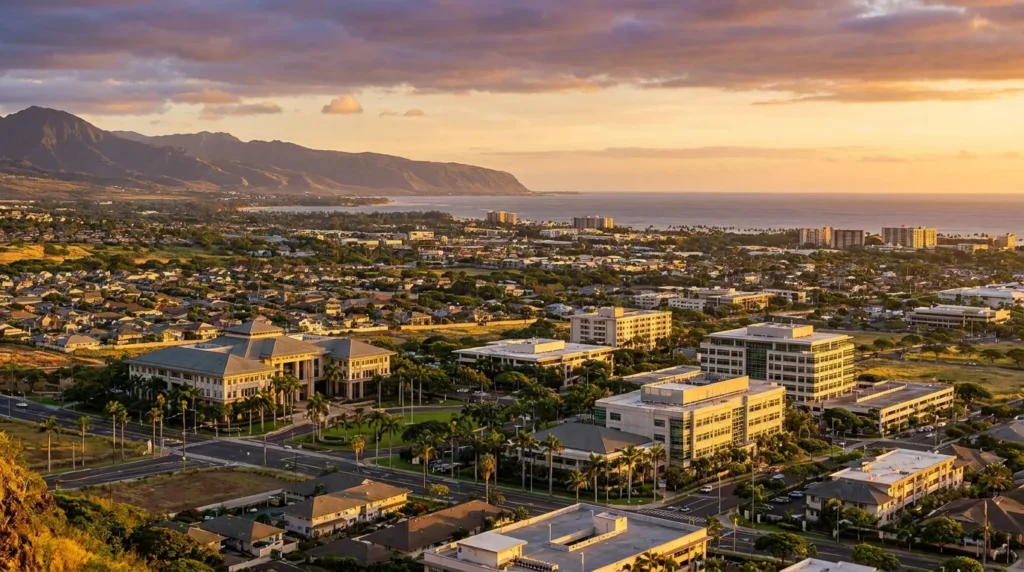
Kapolei brings together Native Hawaiian families, military personnel from across the mainland, and Filipino, Japanese, and Samoan communities, forming one of the most multiethnic profiles in the United States.
Kapolei's population is young and diverse, driven by families with children and the military rotation at Pearl Harbor-Hickam. The demographics mirror Hawaii broadly: no single ethnicity holds an absolute majority, and the mix of Asian, Polynesian, mainland white, and multiracial residents is the norm rather than the exception.
Filipino and Japanese communities have a strong presence, a legacy of immigration to the sugarcane and pineapple plantations of the early twentieth century. Samoans, Tongans, Micronesians, and Marshallese form a significant Pacific Islander layer of the population. Military families bring constant turnover, with reassignments every two to three years.
English is the dominant language, with Hawaiian as the second official language and Hawaiian Pidgin (Hawaiian Creole English) present in everyday life. Tagalog, Ilocano, Japanese, and Samoan are spoken at home by many families, and schools commonly have students who speak three or more languages at home.
- English
- Hawaiian
- Hawaiian Pidgin
- Tagalog
- Ilocano
- +2 more
- Christianity (Catholic and Protestant)
- Buddhism
- Shintoism
- Mormon (LDS)
- No religion