Visto n' Visa
Blog
Notícias e artigos
Destinations
Careers
Immigrants

Want to live and work in Palmer?

Personalized immigration plan with eligible visas, costs, and next steps for your goal!

If you are not eligible, you will know exactly why and what to do to improve your approval chances.

Save up to 12 hours in meetings

No pointless assessments.

Save up to 90%

Save money on vague or unfocused consultations

Avoid Fraud and Mistakes

One mistake can cost you your visa

Total Impartiality

Zero commercial bias

Decide with peace of mind

No toxic urgency

Fast and Accurate

Answers in minutes, no guesswork

Small population, a mix of pioneers, Native peoples, and newcomers

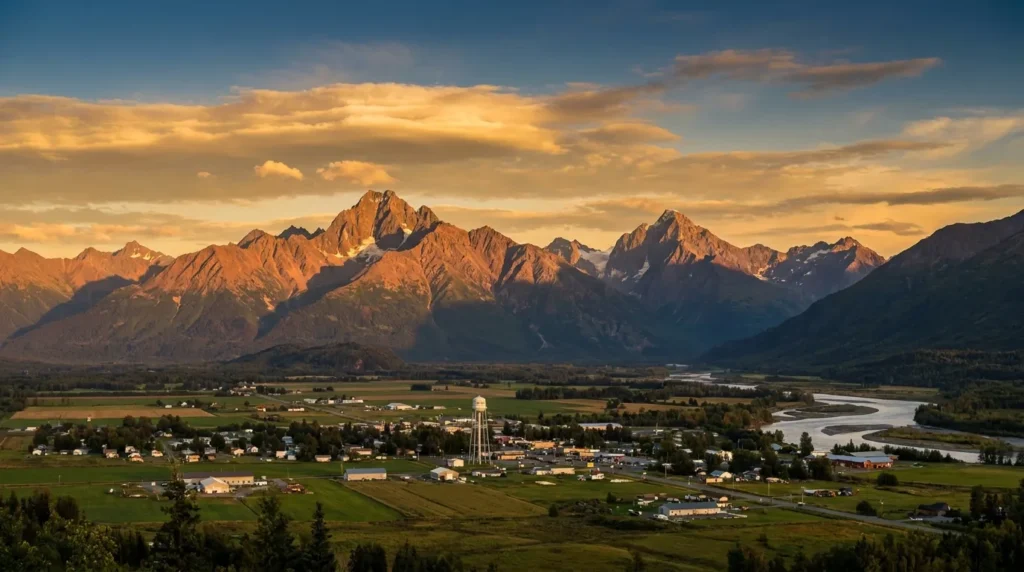
Palmer has around 6,000 residents in the urban core, but the Mat-Su metropolitan area exceeds 110,000. A mix of descendants of 1930s colonists, Athabascan peoples, and a new wave drawn by lower costs than Anchorage.

Most residents identify as white, with a significant presence of Alaska Native peoples, particularly Dena'ina and Ahtna Athabascan. Filipino, Mexican, and Samoan communities have grown over the past two decades, drawn by jobs in agriculture, construction, and services. English predominates, though Tagalog and Spanish are heard in schools and markets.

Religion carries considerable weight. Lutheran, Presbyterian, and Mormon churches founded by the 1930s colonists still operate alongside Catholic parishes and newer evangelical congregations. For many newcomers, church is the first social gathering point.

The median age is higher than in Anchorage. Many families move here when children reach school age, seeking well-regarded public schools and large yards. Retirees also choose Palmer for its quieter pace.

Languages spoken
  • English
  • Tagalog
  • Spanish
  • Athabascan Languages
  • Samoan
Main religions
  • Lutheranism
  • Catholicism
  • Presbyterianism
  • Mormonism (LDS)
  • Evangelical Christianity
  • +1 more

Less expensive than Anchorage, but freight and energy weigh on costs

Palmer is one of the more affordable options in the Anchorage metropolitan area. Rent and real estate cost less, but energy, fuel, and groceries remain above the continental United States average.

Those who work in Anchorage and live in Palmer typically save on rent and home purchase. Houses with large lots appear at prices that would be unthinkable in the capital. The tradeoff is daily spending on gas and road time.

Grocery prices are higher than on the continental United States because nearly everything arrives by ship or plane. Fruits, dairy, and fresh items can cost twice what they do in Seattle. Meat, local fish, and produce from regional farm markets are less expensive in summer.

Electricity and heating are sensitive costs. The long winter requires heating oil or natural gas, and the monthly cost of heating a home can easily exceed the proportional rent. Many residents offset this by cutting firewood or installing wood stoves.

Palmer

Houses with large lots; renting is easier than in Anchorage

A market dominated by single-family homes with ample lots. Rental availability is limited but not impossible, and owner financing is a common path for those who stay.

Palmer's historic downtown concentrates older homes from the 1930s and 40s, some of them landmarked. Surrounding neighborhoods such as Lazy Mountain, Butte, and Knik-Goose Bay offer larger lots, with five thousand square meters or more being common. Those seeking greater isolation find cabins and rural properties toward Sutton.

Rent in Palmer is lower than in Anchorage for comparable square footage, though supply is smaller. Local real estate agencies and Facebook groups are the primary sources. Annual leases are standard, and landlords typically ask for references and proof of income.

For those considering purchase, the USDA Rural Development program finances properties outside the downtown core with a low down payment. Building is also a common alternative, with prefabricated home kits arriving through the port of Anchorage.

Recommended neighborhoods
  • Historic Downtown
  • Lazy Mountain
  • Butte
  • Wasilla-Palmer Highway
  • Knik River area
  • +1 more

Agriculture, borough government, and commuters to Anchorage

Mat-Su Borough, hospital, schools, and family farms are the local employers. Much of the working population drives to Anchorage daily for work in logistics, oil and gas, healthcare, or public administration.

Palmer is the administrative seat of the Matanuska-Susitna Borough, so city hall, courts, public schools, and county services employ hundreds of people. Mat-Su Regional Medical Center, just over the border with Wasilla, is the largest private employer in the region.

Agriculture still exists but remains a niche. Family farms grow potatoes, giant cabbages famous for the valley's loess soils, small-scale dairy, and flowers. The Alaska State Fair drives the rural economy for three weeks in August and September.

Those with technical qualifications generally commute to Anchorage. The Glenn Highway takes 50 to 70 minutes under normal conditions, longer in snowstorms. Petroleum engineering, air transport, healthcare, and military personnel at Joint Base Elmendorf-Richardson absorb much of this workforce.

Dominant sectors
  • Public administration
  • Agriculture
  • Healthcare
  • Education
  • Retail
  • +1 more
Major employers
  • Matanuska-Susitna Borough
  • Mat-Su Regional Medical Center
  • Mat-Su Borough School District
  • Alaska State Fair
  • Matanuska Electric Association
  • +1 more

Mat-Su Borough public schools and a UAA community campus

Mat-Su Borough School District operates the public schools. For higher education, Mat-Su College, affiliated with the University of Alaska Anchorage, offers technical courses and partial bachelor's degrees.

Palmer High School and Colony High School are the main public references, with strong programs in agriculture, vocational training, and sports. Charter schools and homeschooling have a strong presence in Mat-Su, with families choosing home education at a significantly higher rate than the national average.

Mat-Su College, part of the UAA system, is located between Palmer and Wasilla. It offers associate degrees in fields such as nursing, business administration, criminal justice, and diesel mechanics. For complete four-year degrees, most students transfer to the main campus in Anchorage.

University of Alaska Fairbanks extension programs, based at the Matanuska Experiment Farm, focus on agriculture adapted to the subarctic climate. It is a unique resource in North America for those studying food production at high latitudes.

Notable universities
  • Mat-Su College (UAA)
  • Matanuska Experiment Farm (UAF)

Mat-Su Regional covers the basics; complex cases go to Anchorage

Mat-Su Regional Medical Center handles emergency and general care. For specialized treatments, Anchorage hospitals such as Providence and Alaska Native Medical Center are the main references.

Mat-Su Regional Medical Center, between Palmer and Wasilla, is the main hospital in the region. It has a 24-hour emergency room, maternity ward, general surgery, orthopedics, and basic cardiology. For cancer, complex neurology, or major trauma, patients are transferred to Anchorage.

Family clinics and private practices operate in downtown Palmer. Most accept major private insurance plans and Medicare/Medicaid. The shortage of specialist physicians is real, and wait times can stretch to months for rheumatology, dermatology, or psychiatry.

For the Alaska Native community, Southcentral Foundation operates clinics with culturally appropriate care. Alaska Native Medical Center in Anchorage serves indigenous peoples from across the state and provides care at no cost to eligible beneficiaries.

Palmer

A quiet town, but drug and domestic violence problems exist as throughout Mat-Su

Violent crime is low by Alaska standards. Property theft and incidents related to methamphetamine and opioids appear in regular police activity. Residential areas are generally safe.

Palmer is considered one of the safest cities in the Mat-Su Borough in terms of violent crime. Residential neighborhoods are quiet, with close-knit communities and low turnover. Walking downtown at night is generally safe throughout most of the year.

The larger concern is drugs. Methamphetamine and fentanyl are present throughout the valley, and overdose incidents have increased. Domestic violence rates are also statistically high, reflecting a statewide Alaska pattern. Support resources exist but are overstretched.

Awareness of wildlife is part of daily life. Moose appear on residential streets, particularly in winter when they descend from the mountains in search of food. Black bears and grizzlies frequent the outskirts in summer. Familiarity with basic wildlife coexistence guidelines prevents most problems.

Safer neighborhoods
  • Historic Downtown
  • Colony Estates
  • Lazy Mountain
  • Farm Loop
Areas to avoid
  • Isolated stretches of the Glenn Highway at night
  • High-turnover trailer parks outside downtown

A car is essential; the Glenn Highway connects to Anchorage

No meaningful public transportation. The Glenn Highway is the main artery. A small local airport for general aviation and Anchorage as an international hub one hour away.

In Palmer, having a car is not optional. The MASCOT system offers some commuter buses to Anchorage, but frequency is low and internal city coverage is minimal. Cycling works in summer for short distances but becomes impractical with ice from October through April.

Palmer Municipal Airport serves general aviation, pilot training, and private flights. For commercial and international flights, Ted Stevens Anchorage International Airport, one hour via the Glenn Highway, is the main gateway. The road is generally good, but avalanches and snow closures can isolate the city for several hours.

For travel within the state, charter flights from Palmer or Wasilla reach remote communities without road access. The Alaska Railroad passes nearby but has no regular stop in Palmer.

Airports
  • PAQ — Palmer Municipal Airport
  • ANC — Ted Stevens Anchorage International (70 km away)

Climate

Palmer

State Fair, giant cabbages, and pioneer culture

Local culture blends the heritage of 1930s colonists, Athabascan Native traditions, and rural Alaska life. Agricultural fair, rodeo, and outdoor festivals mark the calendar.

The Alaska State Fair, held in Palmer every August and September, is the largest cultural event in the Matanuska Valley. Giant vegetables break world records, including cabbages exceeding 60 kilograms. Shows, rodeo, traditional food, and agricultural exhibitions draw visitors from across the state.

Local food reflects hunting, fishing, and what grows during the short summer. Smoked salmon, moose, fermented cabbage, potatoes, and crowberry pie appear in traditional dishes. Small restaurants downtown serve home-style American food with a Scandinavian influence inherited from the original colonists.

Events such as Colony Days celebrate pioneer history, and the summer Friday Fling closes the main street for a farmers and artisan market. In winter, culture turns inward: bowling leagues, churches, schools, and Vagabond Blues Cafe as a gathering spot.

Notable dishes
  • Alaskan smoked salmon
  • Moose meat
  • Stuffed cabbage
  • Reindeer sausage
  • Crowberry pie
  • +1 more
Annual events
  • Alaska State Fair
  • Colony Days
  • Friday Fling
  • Palmer Midsummer Garden & Art Faire
  • Iditarod Restart (nearby, in Willow)

Matanuska Glacier, Hatcher Pass, and the State Fair

Natural attractions dominate. Matanuska Glacier, Hatcher Pass trails, historic farms, and the State Fair grounds are the most visited spots.

Matanuska Glacier, about one hour from Palmer via the Glenn Highway, is one of the few glaciers in the United States accessible on foot without a helicopter. Local companies offer guided walks on the ice in any season. It is a must-do experience for anyone moving to the region.

Hatcher Pass, north of Palmer, is the favorite local weekend destination. Trails, cross-country skiing, historic mining at Independence Mine, and peaks for technical climbing fill the calendar across all seasons. Reindeer Farm in Butte offers guided tours with reindeer and elk.

In downtown Palmer, Colony House Museum tells the story of the 1930s colonists who founded the city. The Musk Ox Farm raises muskoxen and sells qiviut, an ultra-fine fiber more expensive than cashmere, used in local knitting.

  1. 1Matanuska Glacier
  2. 2Hatcher Pass and Independence Mine
  3. 3Alaska State Fairgrounds
  4. 4Musk Ox Farm
  5. 5Reindeer Farm
  6. 6Colony House Museum
Parks & green spaces
  • Matanuska River Park
  • Lazy Mountain Recreation Area
  • Hatcher Pass Management Area
  • Jim Creek
  • Palmer Hayflats State Game Refuge

Small but diverse: Filipinos, Mexicans, and Samoans as the most visible groups

Despite its size, Palmer has established immigrant communities. Filipinos lead in numbers, followed by Mexicans, Samoans, and refugees of various origins resettled in Anchorage who moved to the valley seeking lower costs.

The Filipino community is the most visible, with a presence in healthcare, services, and small businesses. Stores such as Filipino Asian Mart supply imported products, and Filipino Catholic religious celebrations take place in local parishes. Tagalog is spoken at home by many families.

Mexicans and Central Americans arrived over the past two decades, drawn by agriculture, construction, and services. Latin markets and taquerias serve this community. The Samoan community, connected to LDS churches and Pentecostal congregations, organizes annual cultural celebrations.

Formal support comes from organizations based in Anchorage. Catholic Social Services provides assistance to refugees and new immigrants. For immigration matters, offices are located in Anchorage, and most consular services also require travel to the capital or to Seattle.

450
Foreign-born residents
estimated
Top countries of origin
  • Philippines
  • Mexico
  • Samoa
  • South Korea
  • Canada
  • Russia
  • Thailand
Foreign consulates
  • Honorary Consulate of Japan in Anchorage
  • Honorary Consulate of South Korea in Anchorage
  • Honorary Consulate of Mexico in Anchorage
  • Honorary Consulate of the Philippines in Anchorage
  • Honorary Consulate of Germany in Anchorage
Community organizations
  • Catholic Social Services Alaska
  • Mat-Su Health Foundation
  • Alaska Literacy Program
  • Filipino Community of Anchorage
  • Anchorage Hispanic Affairs Commission

Latest posts

Posts about Alaska

Coverage and updates related to this destination.

Showing content from Alaska, as there is no specific data for Palmer yet.