Visto n' Visa
Blog
Notícias e artigos
Destinations
Careers
Immigrants

Want to live and work in Bethel?

Personalized immigration plan with eligible visas, costs, and next steps for your goal!

If you are not eligible, you will know exactly why and what to do to improve your approval chances.

Save up to 12 hours in meetings

No pointless assessments.

Save up to 90%

Save money on vague or unfocused consultations

Avoid Fraud and Mistakes

One mistake can cost you your visa

Total Impartiality

Zero commercial bias

Decide with peace of mind

No toxic urgency

Fast and Accurate

Answers in minutes, no guesswork

Who Lives in Bethel: Yup'ik Majority and Outside Professionals

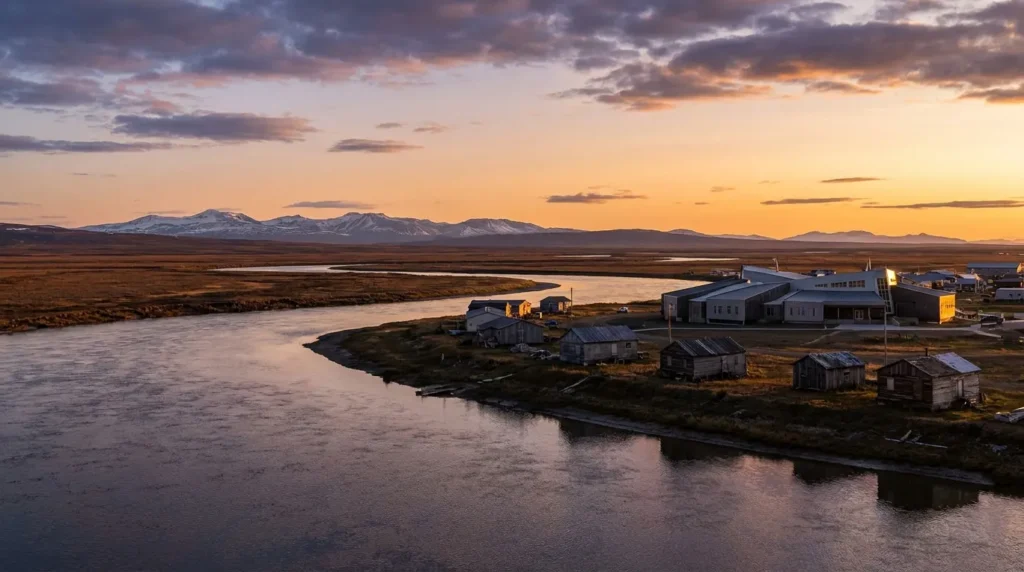
The population is predominantly Yup'ik, one of Alaska's principal native peoples, alongside a layer of non-native professionals who have come to work in healthcare, education, and regional administration.

Bethel has around six to seven thousand residents, with the vast majority of Yup'ik origin. The Central Yup'ik language is still spoken daily by many families, especially older ones, and appears on signs, in schools, and on local radio.

Immigrants and outside professionals tend to be doctors, nurses, teachers, pilots, and government employees. Small but visible communities of Filipinos, Koreans, and South Asians work in commerce, restaurants, and the regional hospital. African-American and Latino families are present in smaller numbers, linked to the public sector and aviation.

The predominant religion is Christianity, with a strong presence of Moravian and Catholic churches, both historically connected to the region's evangelization. Traditional Yup'ik spiritual practices coexist alongside these churches, especially in rites of passage and seasonal celebrations.

Languages spoken
  • English
  • Central Yup'ik
  • Tagalog
  • Spanish
  • Korean
Main religions
  • Moravian Church
  • Catholicism
  • Other Protestant denominations
  • Yup'ik spiritual practices

Cost of Living in Bethel: Among the Highest in the United States

Everything arrives by plane or barge, and that is reflected in the price of food, fuel, and building materials, making Bethel one of the most expensive cities in the country to live in.

Living in Bethel is expensive in ways that can shock those arriving from the continental US. A gallon of milk, a box of cereal, or a bottle of dish soap can cost two to three times more than in Anchorage. Fruits, fresh vegetables, and meat depend on daily flights, and prices fluctuate based on weather conditions.

Heating fuel in winter is the largest fixed expense. Heating oil is costly, and residents plan their supply months in advance. Rent is also high by local standards, with modest homes priced comparably to medium-sized American cities but with far more limited infrastructure.

On the other hand, salaries in healthcare, education, and government typically include remote location supplements and housing benefits. Many who relocate to Bethel can only make the finances work because employers subsidize housing, flights, and fuel.

Bethel

Housing in Bethel: Homes on Permafrost Pilings and Few Options

The rental market is tiny, dominated by wood-frame homes on pilings, and most outside professionals arrive with employer-subsidized housing.

Bethel's housing stock is dominated by single-story wood-frame homes elevated on pilings, a necessity due to permafrost. Plumbing and septic systems require heavy maintenance in winter, and not all homes have running water, relying instead on truck-supplied tanks.

There is no large or active rental market. The best options typically come through referrals or directly from employers, especially the regional hospital (YKHC) and the school district, which maintain institutional housing for outside recruits.

Purchasing property is uncommon for newcomers. Those who truly settle in, usually after years in the city, eventually buy, but financing is complicated by the nature of the terrain and the lack of clear comparable properties for appraisal.

Recommended neighborhoods
  • Area near YKHC hospital
  • Bethel Regional High School area
  • Larson Subdivision
  • Tundra Ridge

Job Market in Bethel: Healthcare, Education, and Tribal Government Dominate

The main opportunities are concentrated in the regional hospital, the school district, tribal and federal agencies, and the aviation sector that connects the villages.

The city's largest employer is the Yukon-Kuskokwim Health Corporation, YKHC, which operates the regional hospital and serves dozens of communities. Doctors, nurses, technicians, interpreters, and administrators make up a large share of the local workforce.

Next come the Lower Kuskokwim School District, with schools in Bethel and neighboring villages, and tribal organizations such as the Association of Village Council Presidents (AVCP) and Calista Corporation. The federal government is also present through the Bureau of Indian Affairs and postal and air services.

Aviation is a strategic sector: companies such as Ravn Alaska, Yute Commuter Service, and smaller operators employ pilots, mechanics, and cargo agents. For those coming from outside, qualified positions pay well, but turnover is high and the isolation takes a toll.

Dominant sectors
  • Healthcare
  • Education
  • Tribal and federal government
  • Regional aviation
  • Public services
Major employers
  • Yukon-Kuskokwim Health Corporation (YKHC)
  • Lower Kuskokwim School District
  • Association of Village Council Presidents (AVCP)
  • Calista Corporation
  • Ravn Alaska
  • +1 more

Education in Bethel: Local Schools and a Small University Campus

The city hosts the regional school district, a large high school, elementary schools, and a University of Alaska campus focused on training professionals for the region.

Basic education is coordinated by the Lower Kuskokwim School District, which operates schools in Bethel and more than twenty delta villages. The main secondary school is Bethel Regional High School, which serves students from the city and boarding students from neighboring communities.

For higher and technical education, the standout is the Kuskokwim Campus of the University of Alaska Fairbanks. The campus offers nursing, education, rural studies, tribal management, and Yup'ik language courses, with in-person and remote classes to reach the entire delta.

Advanced training is often completed remotely, through UAF or UAA in Anchorage. Families seeking a traditional university path for their children often consider relocating to Anchorage or Fairbanks for secondary school.

Notable universities
  • Kuskokwim Campus — University of Alaska Fairbanks
  • Yuut Elitnaurviat (People's Learning Center)

Healthcare in Bethel: Regional Hospital and Medical Flights for Emergencies

The YKHC hospital serves as the reference facility for the entire Yukon-Kuskokwim delta, but complex cases typically require air evacuation to Anchorage.

The center of local healthcare is the Yukon-Kuskokwim Delta Regional Hospital, operated by YKHC. It provides emergency care, inpatient services, maternity, specialized clinics, and dental care, serving Bethel and the surrounding villages.

For serious cases such as trauma, high-risk deliveries, or complex surgeries, the standard is medical evacuation (medevac) to Anchorage, typically to the Alaska Native Medical Center or Providence Alaska Medical Center. These flights can be delayed when weather closes in.

Primary care is reasonably accessible, but specialists in mental health, dermatology, orthopedics, and other fields have long wait times. Telemedicine has expanded significantly in recent years and helps reduce travel for routine specialist consultations.

Bethel

Safety in Bethel: Small Community, Real Social Challenges

The city is small and most residents know each other, but it faces elevated rates of domestic violence and alcohol-related problems common to isolated Alaskan communities.

Bethel is a small community where nearly everyone recognizes each other, and daily life is calm for the most part. Crimes against visitors or newcomers are rare, and the general feeling is that of a cold rural town, not a dangerous urban center.

That said, the delta region faces disproportionately high rates of domestic violence, sexual assault, and alcohol-related problems, partly a legacy of isolation and colonial history. Bethel has implemented beverage sale controls (damp/dry status has changed over time) for this reason.

For those relocating, practical recommendations include avoiding walking alone at night in poorly lit areas, taking extreme cold more seriously than crime (it poses the greater risk), and maintaining regular contact with neighbors and colleagues, especially in winter.

Safer neighborhoods
  • Surroundings of YKHC hospital
  • Schools area and Kuskokwim Campus
  • Larson Subdivision
Areas to avoid
  • Isolated tundra areas at night
  • Riverbanks away from monitored points in winter

Transportation in Bethel: Plane Year-Round, River in Summer, Ice in Winter

With no road connection to the rest of Alaska, Bethel depends entirely on planes for passengers and cargo, with barges in summer and ice roads on the Kuskokwim in winter.

To reach Bethel, travelers fly from Anchorage on a roughly ninety-minute flight to the local airport, which receives daily service from Alaska Airlines and regional operators. There is no highway connecting the city to the rest of the state.

Within Bethel, main streets are paved, but many secondary roads remain dirt or gravel, potholed by the seasonal thaw. The road network is small, and most residents travel by pickup truck, ATV in summer, or snowmobile in winter.

The Kuskokwim River functions as a natural highway. In summer, boats carry people and cargo to neighboring villages. In winter, when the river freezes solidly, it becomes the famous Kuskokwim Ice Road, allowing vehicles to drive over the ice to communities such as Napakiak, Oscarville, and Akiachak.

Airports
  • BET — Bethel Airport

Climate

Bethel

Culture in Bethel: Living Yup'ik Traditions, Dried Fish, and the Kuskokwim 300

Local culture is strongly shaped by Yup'ik traditions, including dances, language, salmon and caribou cuisine, and events such as the Kuskokwim 300 sled dog race.

Cultural life in Bethel centers on Yup'ik identity. Traditional dance festivals, drumming with skin drums, and displays of garments such as the kuspuk take place in schools, the Cultural Center, and community celebrations throughout the year.

Local cuisine is dominated by salmon (especially king and chum), caribou, moose, whitefish, and berries such as salmonberry and blueberry. Dried fish on drying racks is a common summer sight, and community meals such as potlucks typically blend traditional dishes with Filipino, Korean, and American food.

The major sporting event is the Kuskokwim 300, one of Alaska's most prestigious sled dog races, with start and finish in Bethel in January. The Camai Dance Festival brings together native dance groups from across the state and draws visitors from afar.

Notable dishes
  • Dried salmon (sapsuk)
  • Akutaq (Yup'ik ice cream with fat and berries)
  • Roasted caribou
  • Whitefish soup
  • Wild berries with condensed milk
Annual events
  • Kuskokwim 300 Sled Dog Race
  • Camai Dance Festival
  • Cama-i Festival
  • Yuraq dance gatherings
  • Fourth of July on the Kuskokwim waterfront

Attractions in Bethel: Tundra, River, and Native Culture

The main attractions are natural and cultural, connected to the Kuskokwim River, the tundra, arctic wildlife, and Yup'ik cultural centers.

The defining landscape of Bethel is the flat, open tundra, the vast sky, and the Kuskokwim River cutting through the terrain. Short hikes, fishing, migratory bird watching, and boat excursions in summer are common activities for residents and visitors alike.

The Yupiit Piciryarait Cultural Center serves as a museum and stage for Yup'ik cultural events, displaying art, traditional clothing, and everyday objects. Small local galleries and shops sell crafts such as ivory carvings, masks, and skin embroidery.

For those drawn to wide-open nature, the Yukon Delta National Wildlife Refuge, one of the largest wildlife refuges in the United States, surrounds the city. It is home to millions of migratory birds in summer and wildlife such as caribou, moose, and arctic foxes.

  1. 1Yupiit Piciryarait Cultural Center
  2. 2Yukon Delta National Wildlife Refuge
  3. 3Kuskokwim River waterfront
  4. 4Kuskokwim Ice Road (winter)
  5. 5Kuskokwim 300 trail
  6. 6Bethel Cultural Center
Parks & green spaces
  • Tundra surrounding the city
  • Kuskokwim River banks
  • Pinky's Park
  • Informal trails in the surrounding area

Immigrant Communities in Bethel: Filipinos, Koreans, and Global Healthcare Professionals

Immigration in Bethel is small in absolute numbers but includes Filipino and Korean communities and healthcare professionals from various countries, especially those connected to YKHC.

As a small, remote city, Bethel has no large ethnic neighborhoods, but the immigrant presence is visible in commerce and at the hospital. Filipino families operate markets, restaurants, and work in the healthcare network, forming the city's most established foreign community.

Korean, Indian, Pakistani, Nigerian, and other African and Latin American professionals appear mainly at YKHC, hired as doctors, nurses, and technicians. Teachers and administrators from Canada, Mexico, and various other countries are also connected to the school district and the university campus.

There are no consulates in Bethel; all such matters are handled in Anchorage or via Seattle. For practical support, newcomers typically rely on informal networks of coworkers, churches, and regional organizations that serve the delta as a whole.

350
Foreign-born residents
estimated
Top countries of origin
  • Philippines
  • South Korea
  • Mexico
  • India
  • Canada
  • Nigeria
  • Vietnam
Foreign consulates
  • Nearest consulates in Anchorage: Consulate-General of Japan
  • Honorary Consulate of South Korea (Anchorage)
  • Honorary Consulate of Mexico (Anchorage)
  • Honorary Consulate of the Philippines (Anchorage)
  • Honorary Consulate of Germany (Anchorage)
Community organizations
  • Association of Village Council Presidents (AVCP)
  • Calista Corporation
  • Bethel Community Services Foundation
  • Catholic Social Services Alaska (regional service)
  • YKHC Community Wellness

Latest posts

Posts about Alaska

Coverage and updates related to this destination.

Showing content from Alaska, as there is no specific data for Bethel yet.