English
 Português
 Español


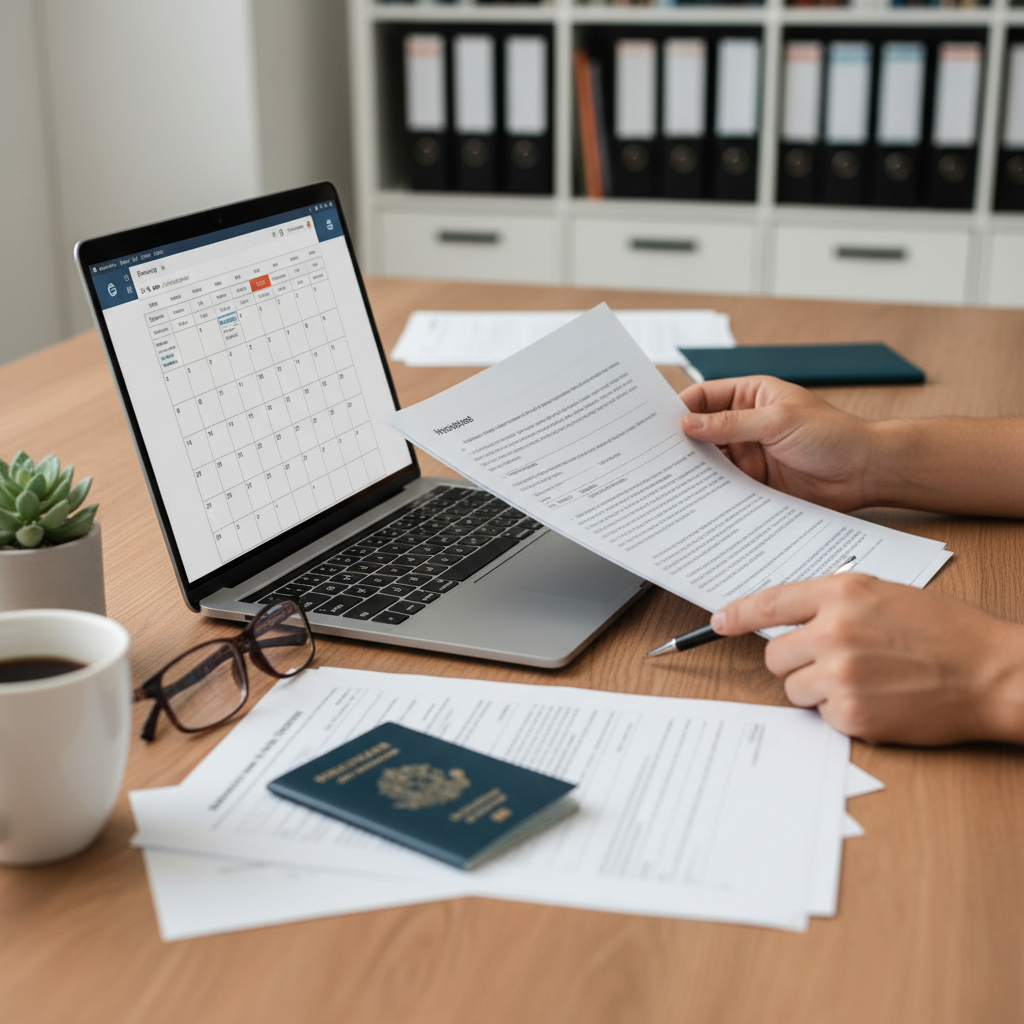
The US consulate interview is the decisive moment of any B-1/B-2 visa application in Brazil. Despite lasting an average of two to five minutes, it is in this short interval that the consular officer forms the conviction that will approve or deny your application. Understanding each step of the process, from scheduling to passport pickup, transforms an intimidating experience into a predictable administrative procedure.
This guide details, based on the 2026 rules of the US Department of State and CASV in Brazil, the entire path the applicant needs to follow. The goal is to eliminate the anxiety that comes from the unknown and give the reader full control over their own process.
Overview of the visa process
The B-1/B-2 visa is the most requested tourism and business visa by Brazilians. It is a nonimmigrant visa, which means the applicant must demonstrate genuine intent to return to their home country after their stay in the United States. The typical validity for Brazilians is ten years with multiple entries, but the duration of each stay is determined by the CBP officer at the port of entry, normally up to six months per visit.
The process follows a strict sequence: completing Form DS-160, paying the consular fee, scheduling the CASV for biometric collection, and finally the interview itself at the consulate. Skipping steps is not possible, and each stage has its own rules that must be followed.
Form DS-160
Everything starts with the DS-160, the electronic nonimmigrant visa application form. It is completed on the Department of State portal and requires detailed information about identity, address, occupation, prior travel, US contacts, and purpose of visit. The confirmation number generated at the end is the document that ties your entire application together.
The most common mistakes on the DS-160 involve inconsistencies between what is on the form and what the applicant says at the interview. Surnames in the wrong order, approximate dates of past trips, or vague descriptions of occupation are points the consular officer cross-references during the conversation. Any relevant discrepancy raises suspicion and can result in denial under Section 214(b) of the INA, which presumes immigrant intent.
MRV consular fee
The B-1/B-2 visa application fee, also called the MRV fee, is US$185 per the current Department of State Schedule of Fees. Payment is made via bank slip in Brazil and is valid for one year from the date of issuance. If the interview is not scheduled within that period, the amount is forfeited and a new payment will be required.
It is important to keep the payment receipt. Without it, the US Visa system will not release the interview scheduling, and consulate staff may question the regularity of the process on the day of the interview.
CASV and consulate scheduling
Scheduling involves two separate appointments: the Visa Application Service Center (CASV) for fingerprint and biometric photo collection, and the consulate for the in-person interview. Both must be booked in the correct order — CASV first, then the consulate — and may take place in different cities.
In 2026, interview wait times at Brazilian consulates vary significantly. Brasília, Recife, and Porto Alegre tend to offer closer dates, while São Paulo and Rio de Janeiro frequently have waits of several months. It is worth checking the US Visa portal to identify the location with the shortest queue and considering traveling to another city if urgency justifies it.
Documents to bring
The consulate requires a concise set of mandatory documents at the interview, but the list of supporting documents can be expanded depending on the applicant’s profile. The mandatory items are:
- Passport valid for at least six months beyond the intended return date
- DS-160 confirmation page with barcode
- Interview appointment confirmation page
- Recent photo in the required format if the system requests one
As supporting documents, it is recommended to bring proof of ties to Brazil. These are not required, but may be requested by the officer if there is doubt about intent to return. The most relevant are recent pay stubs, income tax returns, proof of property ownership, business incorporation documents, or school enrollment letters for students.
Most common interview questions
The interview is conducted in Portuguese at most Brazilian consulates, and the officer seeks to confirm the consistency between the DS-160 and the applicant’s actual circumstances. The most frequent questions revolve around four areas:
Purpose and duration of travel
The officer wants to know why you are going to the United States, how long you plan to stay, and which cities you intend to visit. Vague answers like I’m just going to travel are inadequate. What is expected is a concrete answer: cities, approximate dates, who you are traveling with, where you will be staying.
Ties to Brazil
This is the most decisive question category. The officer needs to be convinced that you have strong reasons to return. Stable employment, family, property, ongoing studies, and your own business are all relevant ties. Single applicants, young people, and the unemployed often face greater scrutiny precisely because their ties are weaker.
Financial situation
The consulate verifies whether you can afford the trip without needing to work in the United States. If you are staying with a friend or family member, say so. If the trip is paid for by a third party, be prepared to explain the relationship. Lying about who is paying for the trip is one of the most common grounds for denial due to willful misrepresentation, with permanent consequences.
Prior travel history
Previous international travel, especially with compliance with visa terms, strengthens your profile. If you have visited the United States before and followed the rules, mention it. The officer views a history of compliance as the best predictor of future behavior.
How to dress and behave
There is no formal dress code for the interview, but the consulate prohibits clearly inappropriate attire such as shorts, tank tops, and flip-flops. The recommendation is smart casual: long pants, a shirt or blouse with sleeves, closed shoes. The goal is not to impress with appearance, but to demonstrate respect for the seriousness of the process.
During the conversation, maintain eye contact, answer in short and direct sentences, and avoid unsolicited explanations. Every additional word increases the officer’s evaluation surface. If you do not understand a question, ask for it to be repeated rather than guessing an answer.
What not to bring to the consulate
Electronic devices such as cell phones, tablets, laptops, headphones, smartwatches, and cameras are prohibited inside the consulate, and there is no official storage facility on the premises. Private storage services exist near Brazilian consulates, but the best strategy is to leave everything at the hotel or with a companion. Large bags and backpacks should also be avoided.
Interview result
The officer communicates the result at the end of the conversation. The three possible outcomes are: approval, denial under Section 214(b), or administrative processing under Section 221(g). In case of approval, the passport is retained for visa placement and returned within up to ten business days. A 214(b) denial means the officer was not convinced of non-immigrant intent — there is no appeal, but it is possible to reapply by paying a new fee. A 221(g) is an administrative pending matter, usually involving additional background verification.
Passport pickup
Once the visa is approved, the passport is delivered via one of two options: in-person pickup at a CASV location indicated at scheduling, at no additional cost, or home delivery for a fee charged by the third-party service, with the amount varying by region. Home delivery is charged per document, so families should calculate the total cost.
Denial under 214(b): what to do
Denial under Section 214(b) of the Immigration and Nationality Act is the most common outcome and stems from the legal presumption that every nonimmigrant visa applicant intends to immigrate, unless proven otherwise. It is not a permanent indicator of ineligibility. The applicant may reapply when they feel capable of presenting stronger evidence of ties to Brazil.
Reapplying immediately without changing the underlying circumstances usually results in another denial. The ideal approach is to wait for a real change in profile — a new job, marriage, completion of a degree, property acquisition — before trying again. Each new application requires a new fee payment and a new DS-160.
Learn more about B-1/B-2
- Duration
- Up to 6 months
- Extension
- Possible (up to 6 months)
- Work
- Not permitted
- Processing
- 2-8 weeks
About the author

Victoria Harper
Editor-in-Chief
As a journalist and lead editor at Visto n’ Visa, Victoria helps ensure that immigration topics are covered in a clear, trustworthy, and easy-to-understand way. Her focus is on delivering useful, human, and relevant content for people exploring new paths abroad.