English
 Português
 Español


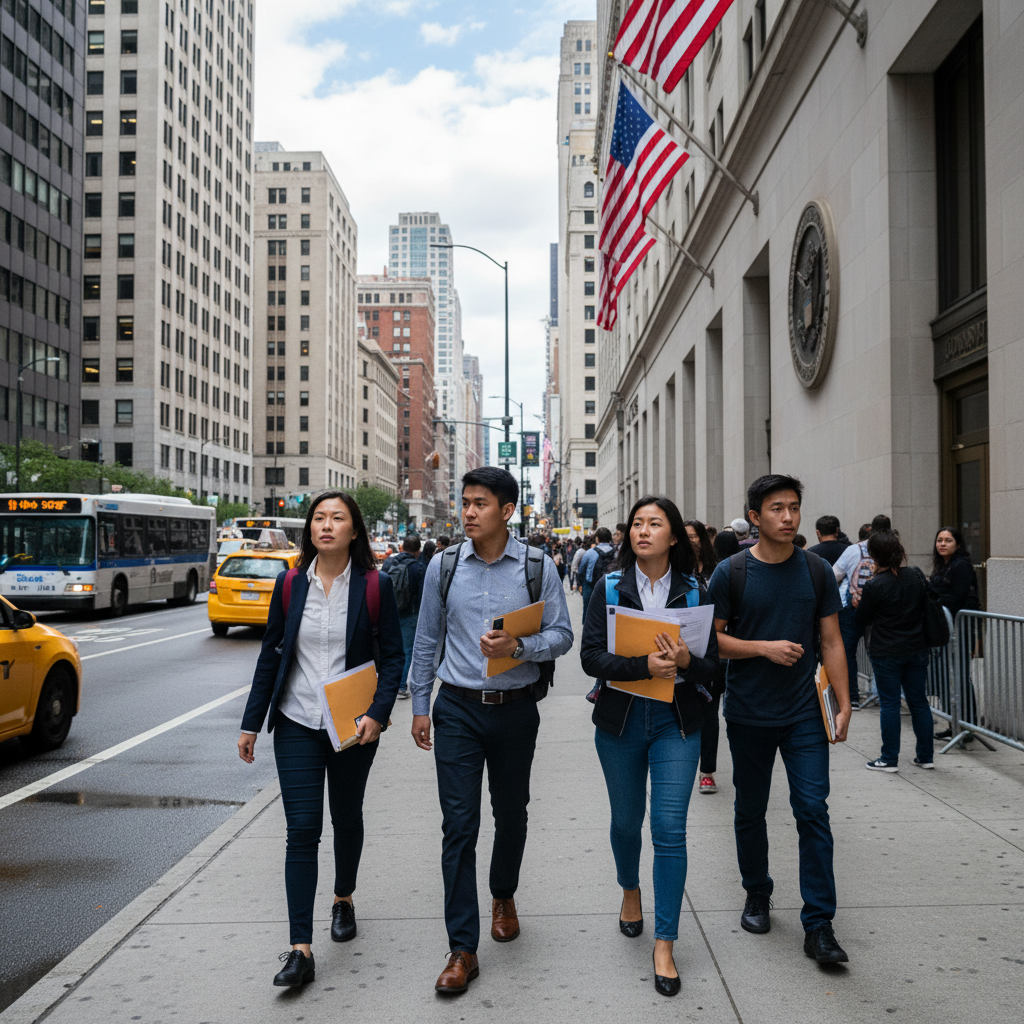
Obtaining a U.S. visa requires more than just filling out forms: it is a structured process that culminates in an in-person interview at the consulate, where a consular officer assesses the applicant’s eligibility and credibility. In embassies and consulates around the world, the procedure follows standardized steps defined by the Department of State. Understanding each phase, from the DS-160 form to the final decision, is essential to maximize the chances of approval and avoid a denial under Section 214(b) of the INA.
What Is the Consular Process
The consular process is the procedure conducted outside the United States by which foreigners apply for nonimmigrant or immigrant visas. It applies to virtually all categories: tourist visas (B-1/B-2), student (F-1), work (H-1B, L-1, O-1), fiancé(e) (K-1), and immigrant visas through family or employment. The process is administered by the U.S. Department of State, and decisions are made by consular officers according to the rules of the INA and 22 CFR.
Unlike adjustment of status (form I-485), which takes place within the U.S., the consular process is mandatory for those applying for a visa while outside the country. In Brazil, consulates are located in São Paulo, Rio de Janeiro, Recife, and Porto Alegre, but the procedure is essentially the same at any U.S. consular post worldwide.
DS-160 Form
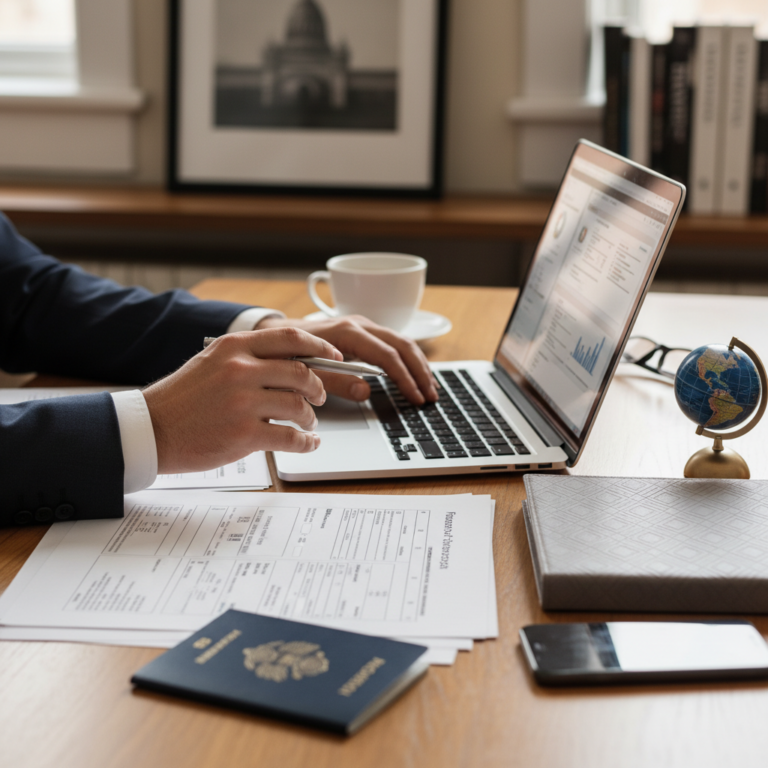
The DS-160 is the mandatory electronic form for all nonimmigrant visas. It collects personal information, professional background, previous travel, family data, and the purpose of the trip. The form is completed online on the Department of State’s portal, and the system generates a confirmation page with a barcode that must be presented at the interview.
Errors or inconsistencies in the DS-160 can raise suspicions during the interview. Discrepancies between the form and verbal answers to the consular officer are treated as potential indicators of fraud or undeclared immigrant intent. Reviewing all information before submission and keeping a copy of the answers for reference is crucial.
Consular Fees in 2026
The visa application fee, known as the MRV fee (Machine Readable Visa), varies by category. In 2026, the amounts are: US$185 for B-1/B-2, F-1, M-1, and J-1 visas; US$205 for temporary work petition-based visas (H, L, O, P, Q, R); US$265 for K visas (fiancé/spouse); and US$315 for E category visas (investor/trader). The fee is non-refundable, regardless of the outcome.
In addition to the MRV fee, approved nonimmigrant visas are subject to a security fee of US$250, charged at the time of issuance. The MRV fee payment receipt is valid for one year, and without it, it is not possible to schedule the consular interview.
Biometric Collection
Before the interview, the applicant goes to the biometric collection center (in Brazil, called CASV), where a digital photograph and fingerprints are taken. There is no interview at this stage, and the procedure is usually quick.
Incorrect documents or arriving outside the scheduled time may result in rescheduling. Although it is an administrative step, failure to attend prevents scheduling the consular interview.
The Consular Interview
The interview is the decisive moment of the process. The consular officer assesses the real intent of the trip, the applicant’s ties to their home country, financial capacity, immigration history, and the consistency between the documents presented and verbal answers. In most cases, the interview lasts between two and five minutes, but it can be extended if the officer identifies points of concern.
The legal principle governing the decision for nonimmigrant visas is Section 214(b) of the INA, which presumes that every applicant intends to immigrate, and it is up to the applicant to prove otherwise. This is the most common legal basis for denials of B-1/B-2 and F-1 visas. The officer looks for evidence of concrete ties: stable employment, property ownership, dependent family, active businesses, and a travel history with proven returns.
Preparing for the Interview
Answers should be clear, objective, and limited to what was asked. Avoid providing unsolicited information, presenting documents the officer did not request, or rehearsing memorized answers. Consistency with the DS-160 is essential, as any discrepancy will be questioned. Demonstrate genuine ties to your home country through objective proof: employment contracts, enrollment in educational institutions, property deeds, and documented family ties.
Common Reasons for Denial
The most frequent causes of refusal include: lack of demonstrable ties to the home country, suspicion of intent to remain illegally, problematic immigration history (such as overstay or previous violations), inconsistencies between documents and answers, and insufficient financial documentation. Young, single applicants with no history of international travel face additional scrutiny under the 214(b) presumption.
A denial under 214(b) does not create a permanent bar. The applicant may reapply at any time with a new fee, but must demonstrate a substantial change in circumstances to obtain a different result. Reapplications without concrete changes tend to receive the same denial.
After the Interview
Three scenarios are possible after the interview. If approved, the passport is retained for visa stamping and returned in a few business days. If denied, the officer informs the legal basis and returns the passport immediately. In administrative processing, provided for under Section 221(g) of the INA, the case is sent for additional review, which may take up to 180 days, according to Department of State guidelines.
It is essential to understand that visa approval does not guarantee entry into the United States. At the port of entry, the CBP (Customs and Border Protection) officer conducts a second independent assessment and may deny admission even with a valid visa. The visa authorizes travel to the port of entry; admission is a separate decision, recorded on the I-94 form.
Learn more about B-1/B-2
- Duration
- Up to 6 months
- Extension
- Possible (up to 6 months)
- Work
- Not permitted
- Processing
- 2-8 weeks
About the author

Victoria Harper
Editor-in-Chief
As a journalist and lead editor at Visto n’ Visa, Victoria helps ensure that immigration topics are covered in a clear, trustworthy, and easy-to-understand way. Her focus is on delivering useful, human, and relevant content for people exploring new paths abroad.