English
 Português
 Español


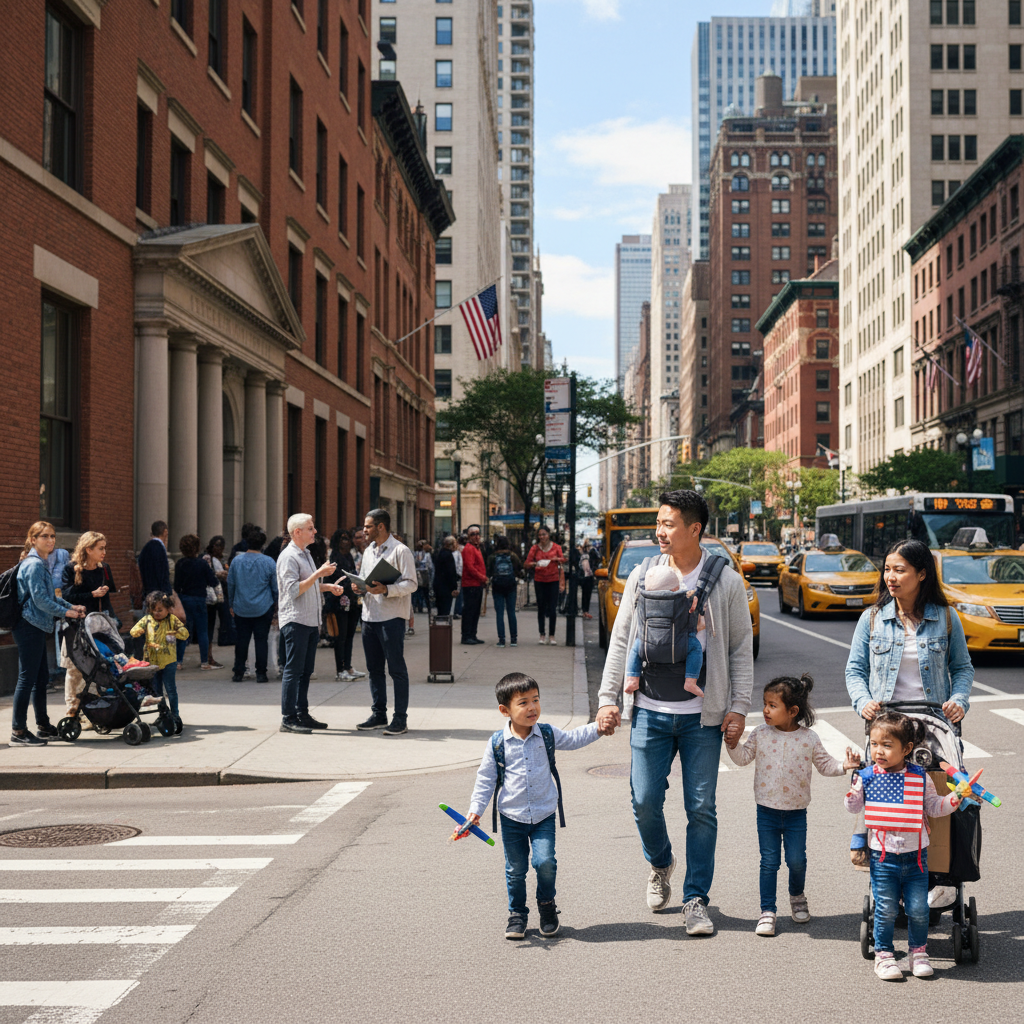
American citizens who have children outside the United States can transmit nationality through the principle of jus sanguinis, but the right is neither automatic nor unconditional. The Immigration and Nationality Act (INA), in sections 301 and 309, precisely defines how long the citizen parent must have lived in the U.S. before the child’s birth, and the American consulate only recognizes citizenship after a rigorous documentary review. Understanding these criteria before the child is born prevents denials, duplicate consular trips, and, in extreme cases, statelessness.
This guide details the legal requirements, the consular process for the Consular Report of Birth Abroad (CRBA), the required documents, and the exceptions applicable to military personnel, diplomats, and international adoptions.
Legal basis: jus soli versus jus sanguinis
Those born on U.S. soil acquire citizenship automatically through the principle of jus soli, guaranteed by the 14th Amendment to the Constitution. Those born abroad, as children of at least one American citizen, depend on jus sanguinis as provided in INA §301 and §309. The difference is that jus sanguinis requires proof that the citizen parent accumulated sufficient physical presence in the U.S. before the child’s birth.
The competent authority to process the recognition is the Department of State, through American embassies and consulates — not USCIS. The document that materializes this recognition is the Consular Report of Birth Abroad, known by the acronym CRBA, equivalent to an American birth certificate issued outside U.S. territory.
Requirements when both parents are U.S. citizens
Under INA §301(c), when both parents are U.S. citizens and are married, it is sufficient that at least one of them has had residence or physical presence in the United States or U.S. territory at some point prior to the child’s birth. There is no minimum time requirement in this scenario, which makes the case simpler from a documentary standpoint.
Requirements when only one parent is a U.S. citizen
This is the most common situation among immigrant families and the one that generates the most questions. INA §301(g) requires that the citizen parent demonstrate five years of physical presence in the United States prior to the child’s birth, with at least two of those years after reaching age 14.
Physical presence is different from residence. The Department of State counts each day the person was physically on American soil, adding together short trips, periods of study, vacations, and continuous residence. School records, federal income tax returns, employment records, lease agreements, and passport stamps are the most accepted forms of evidence.
Unmarried parents: different rules for mothers and fathers
When the parents are not married at the time of birth, INA §309 creates different paths:
- Unmarried U.S. citizen mother: must demonstrate only one continuous year of physical presence in the U.S. at any point prior to the child’s birth. This is the most lenient requirement in the statute.
- Unmarried U.S. citizen father: must meet the same five-year requirement under §301(g) and also satisfy four additional conditions: establish the genetic relationship through DNA or clear evidence, maintain a legal relationship with the child, agree in writing to financially support the child until age 18, and legitimate or formally acknowledge paternity before the child turns 18.
Documentation required by the consulate
The file presented at the consulate must support both the parents’ identity and the citizen parent’s physical presence. The essential items are:
- Foreign birth certificate of the child, with a sworn translation when required by the consular post
- Valid U.S. passport or naturalization certificate of the citizen parent
- Parents’ marriage certificate, if applicable, and any prior divorce certificates
- Evidence of physical presence: school transcripts, W-2 forms or IRS returns, I-94 immigration records, passport entry and exit stamps, employment or lease contracts
- Identity documents of the non-citizen parent
- Completed DS-2029 form (CRBA application)
- DS-11 form (passport) if the family simultaneously requests the child’s U.S. passport
Consular procedure step by step
The standard process requires a prior appointment at the American consulate with jurisdiction over the place of birth. Both parents should appear together whenever possible, bringing the child in person for biometric verification, even in the first months of life.
Step 1: scheduling and completing the forms
The DS-2029 is completed online through the responsible consulate’s portal. The current CRBA fee is USD 100 per application, paid on the day of the interview. When the passport is requested at the same time, the DS-11 fee for minors adds USD 135 (USD 100 application fee plus USD 35 execution fee).
Step 2: interview and documentary review
The consular officer assesses the citizen parent’s physical presence and the authenticity of the foreign birth certificate. Detailed questions may be asked about travel dates, periods of study in the U.S., and the parents’ relationship. If documentation is insufficient, the consulate requests additional evidence before making a decision.
Step 3: issuance of the CRBA and passport
Once the application is approved, the CRBA is generally issued within a few weeks and sent by mail. The child’s U.S. passport, when requested at the same time, follows the same timeline. From that point on, the child is an American citizen in every respect, able to enter and exit the U.S. with their passport.
Special situations provided by law
The American statute covers various scenarios in which the standard requirements are relaxed or replaced:
- Active-duty military and U.S. government employees: time served abroad is counted as physical presence, per INA §301(g).
- Children of employees of international organizations in which the U.S. participates: special rules allow time abroad to be counted as physical presence.
- International adoption: acquisition of citizenship by adopted children follows the Child Citizenship Act of 2000 and requires completion of the adoption, lawful residence in the U.S. with the citizen parent, and the child being under age 18 at the time the process is finalized.
- Risk of statelessness: when the country of birth does not automatically confer citizenship and the physical presence requirements are not fully met, INA §322 allows the child to acquire citizenship through the Application for Certificate of Citizenship (Form N-600K) processed by USCIS after a temporary trip to the U.S.
U.S. citizenship versus permanent residence
It is common to confuse the CRBA process with the green card process for children. These are entirely different legal concepts. Citizenship by descent is acquired at birth, takes effect retroactively from the date of birth, is lifelong, requires no subsequent naturalization, and confers the right to vote, eligibility for public office, and unrestricted consular protection. The Green Card is an immigration status that grants residency and the right to work, but does not replace citizenship or guarantee the right to vote.
When the citizen parent does not meet the physical presence requirements, the remaining path for the child is typically an I-130 petition followed by adjustment of status in the U.S. — a far slower and more bureaucratic process than obtaining a CRBA.
Why you should not delay registration
The ideal time to begin the process is in the first months of the child’s life. Delaying can create three types of problems: increasing difficulty gathering physical presence evidence for the citizen parent as time passes, complications on international travel when the child needs to enter the U.S., and situations where the child reaches adulthood without an American document and loses the simplest window for recognition.
Also registering the birth in the child’s country of origin consolidates dual citizenship and guarantees the child full access to the rights of that country. The two citizenships coexist without legal conflict, and the United States does not require renunciation of other nationalities.
Practical advantages of U.S. citizenship
Once citizenship is recognized through the CRBA, the child gains the right to live and work in the U.S. without restrictions, access public education as a resident in any state, apply for federal grants such as the Pell Grant upon entering college, register with the Selective Service at age 18 when applicable, and receive American consular assistance around the world. In diplomatic, military, and professional settings, U.S. citizenship opens access to opportunities unavailable to permanent residents.
The process is technical but predictable. Parents who assemble complete documentation before the consular interview complete the recognition without major obstacles, securing for their child a right that American law has conferred since the very first moment of life.
About the author

Victoria Harper
Editor-in-Chief
As a journalist and lead editor at Visto n’ Visa, Victoria helps ensure that immigration topics are covered in a clear, trustworthy, and easy-to-understand way. Her focus is on delivering useful, human, and relevant content for people exploring new paths abroad.