English
 Português
 Español


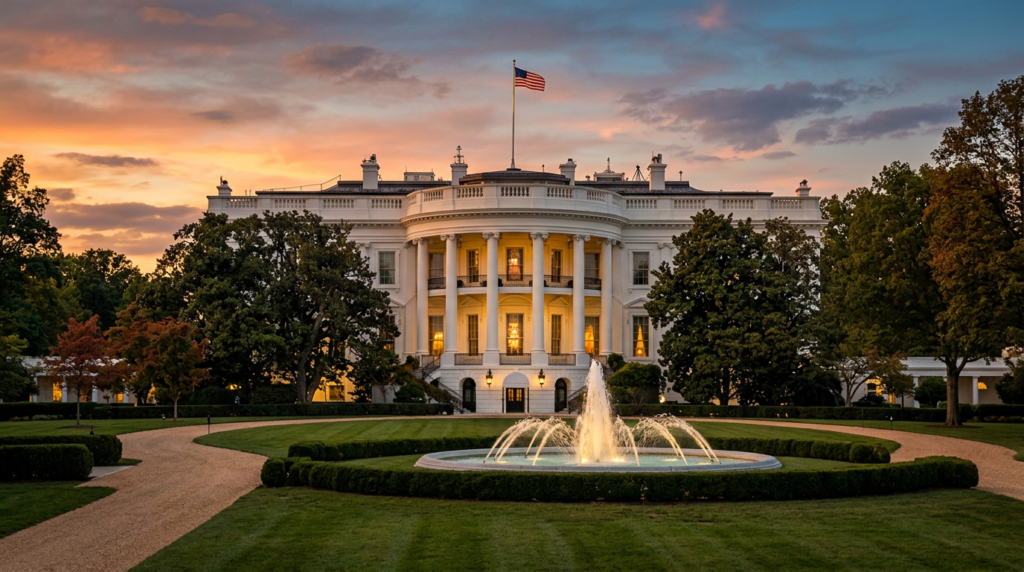
In a scenario of constant changes in U.S. immigration policies, it is essential for those interested to stay well informed about the legacy left by past administrations. During the years following the 2020 election period, the debate between the approaches advocated by Trump and Biden gained new relevance, even after the end of their respective terms. Today, in 2026, reflecting on these differences allows us to understand how structural changes have impacted the path of immigrants, especially Brazilians, who have historically seen the U.S. as a land of opportunity.
The discussion about U.S. immigration policies, historically marked by intense debates, still resonates in current processes and opportunities. Although the topic is often used for electoral purposes, the measures adopted have real consequences in the lives of millions of people. Retrospective analysis shows that, regardless of party differences, the foundations of the U.S. immigration system are based on modernization and the appreciation of professional qualifications.
Political and Historical Scenario
More than five years ago, the United States experienced intense political polarization, especially regarding immigration policies. At that time, the debate often boiled down to the tension between two models: one of tightening immigration rules and another focused on expanding opportunities for legal entry. This dichotomy reflected not only government strategies but also the expectations of immigrants, who hoped for significant changes in access to benefits such as the green card.
Despite the advances and adaptations that occurred in the following years, many of the challenges of the past persist. Debates over the rigidity versus the flexibility of immigration rules continue to influence both the internal dynamics of the U.S. and the structuring of international programs. In 2026, the reforms implemented have shaped an environment that seeks, through digitization and modernization of processes, to offer greater efficiency and predictability for applicants.
Approaches of the Trump and Biden Administrations
Trump Administration
During the Trump administration, the United States adopted an immigration policy marked by strict measures and a stance of greater control. Border security and reducing irregular immigrant entry were prioritized, with intensified checks and restrictions on certain visa categories. These actions, although subject to criticism and polarization, served as a catalyst for the country to rethink its internal processes and the way it attracts foreign talent.
Even with the tightening of rules, the essence of the U.S. immigration system remained focused on attracting qualified professionals, an essential element for the country’s economic competitiveness. The measures adopted during this period stimulated intense debates about the need to modernize bureaucratic practices, initiating a reform process that would seek to balance security and inclusion in the following years.
Biden Administration
In contrast to the previous approach, the Biden administration proposed a paradigm shift by adopting measures aimed at humanization and inclusion. Seeking to repair the restrictive measures of previous periods, actions were implemented to speed up green card processes and simplify visa application reviews. The government emphasized that, to maintain the U.S. as a global power, it was essential to attract highly qualified immigrants with the potential to contribute to the economy.
Although this new strategy required continuous adjustments to reconcile national security with the opening of opportunities, it demonstrated the possibility of achieving a balance between protecting borders and valuing international talent. The attempt to combine a more welcoming stance with strict evaluation criteria for applicants laid the groundwork for future reforms aimed at improving transparency and efficiency in the immigration system.
Impacts for Brazilian Immigrants
For many Brazilians, migrating to the United States has always represented a search for better living conditions and professional opportunities. Historically, the country has been seen as a privileged destination, where the appreciation of qualifications and cultural diversity intertwine to create an environment conducive to personal and professional development. Even in the face of policies that, at times, have been more restrictive, Brazilians continue to bet on the U.S. as the ideal destination for a new life.
During the height of the 2020 discussions, reports indicated that a significant majority of Brazilians chose the United States. Although the exact statistic, often cited as “9 out of 10,” has been revised over the years, the trend of preference remains. The system has gradually come to value highly qualified profiles, requiring proof of technical skills and professional experience, a condition that increasingly defines the approval of applications.
Among the main challenges for Brazilian immigrants are the need to adapt to strict legal processes and overcome historical bureaucratic barriers. In response to these difficulties, guidance initiatives and training programs have been developed, preparing applicants for the requirements of visa and green card systems. This evolution has strengthened the profile of immigrants and encouraged authorities to adopt reforms that make the system fairer and more transparent.
Reforms and Lessons Learned
One of the most significant lessons drawn from the ideological clash between the Trump and Biden administrations is that the U.S. immigration system is rooted in solid structural foundations. Regardless of political variations, the pillars that support the system-such as the emphasis on professional qualification and innovation-continue to guide immigration policies. This continuity reflects an ongoing commitment not only to border security but also to economic competitiveness and cultural diversity.
In recent years, significant reforms have been implemented, such as the complete digitization of processes and the modernization of control systems. These changes have reduced bureaucracy and enabled faster and more transparent tracking of application processes. The experience accumulated during periods of greater polarization contributed to the improvement of evaluation and control mechanisms, making the system more adaptable to the demands of a globalized world.
Among the main changes implemented, the following can be highlighted:
- Digitization of processes: Modernization has enabled greater speed in the analysis and tracking of applications, reducing bureaucratic steps.
- Transparency: New digital platforms have begun to provide detailed information on the progress of applications, making it easier for applicants to access information.
- Qualification-based evaluation: The focus has shifted to immigrants with skills and experience that add value to the U.S. economy.
- Legislative reforms: Adjustments to immigration laws have aligned the system with the demands of an increasingly competitive international market.
These changes have not only simplified procedures but also created a more favorable environment for planning careers and lives abroad. For Brazilian immigrants, this means that personal preparation, with an emphasis on professional development, becomes essential to take advantage of the opportunities that arise in this new context.
Future Perspectives
In 2026, the landscape of U.S. immigration policies reflects a continuous process of transformation, marked by modernization and adaptation to global challenges. The lessons learned from the Trump and Biden periods have helped shape a more robust system, whose emphasis on technology and transparency has provided a more efficient experience for applicants. These advances are fundamental for immigrants to safely and knowledgeably keep up with the changes and opportunities available.
In a global context where competition for talent is intensifying, countries around the world have been reassessing their immigration policies. The need to attract highly skilled professionals is driving reforms that facilitate access for individuals with high qualifications. For Brazilians interested in migrating, the message is clear: the key to success lies in constant updating and seeking reliable information from official sources.
Even amid uncertainties and political adjustments, the U.S. system continues to offer opportunities for those who prepare adequately, combining knowledge with a strategic vision. The consolidation of recent reforms and the trend toward continuous improvement suggest that the focus on qualification and efficiency will continue to guide immigration policies, regardless of the short-term political scenario.
Therefore, immigrants should stay alert to new regulations and invest in their own professional development as a way to ensure a successful immigration process. The importance of being well informed and prepared cannot be underestimated, considering that the system evolves in response to the demands of an increasingly dynamic and interconnected world.
Final Remarks
Although the controversies and disagreements of 2020 marked a period of intense debate, the impacts of the policies implemented at that time continue to offer valuable lessons. For Brazilian immigrants, the challenge goes beyond an immediate choice; it is about building a sustainable and planned path, regardless of political fluctuations. The analysis of the legacies of Trump and Biden reveals that, more than partisan rhetoric, what truly shapes the immigration system is investment in technology, transparency, and qualification.
Thus, the recommendation for those who aspire to a new life in the United States is to prepare continuously, keeping up with updates in immigration laws and processes. Success depends not only on luck or the political moment, but on the ability to adapt and invest in self-improvement. In a constantly changing environment, knowledge and preparation prove to be the greatest allies in the search for opportunities in one of the most sought-after destinations in the world.
In a context marked by innovations and challenges, the journey of immigrants becomes a true story of resilience and overcoming obstacles. The path to achieving dreams involves in-depth study of changes, the search for accurate information, and constant professional updating. In this way, the legacy of past administrations serves as a starting point for reflections that may, in the future, lead to an even fairer and more efficient immigration system for all those who wish to transform their lives.
About the author

Victoria Harper
Editor-in-Chief
As a journalist and lead editor at Visto n’ Visa, Victoria helps ensure that immigration topics are covered in a clear, trustworthy, and easy-to-understand way. Her focus is on delivering useful, human, and relevant content for people exploring new paths abroad.