
 English
 Português
 Español


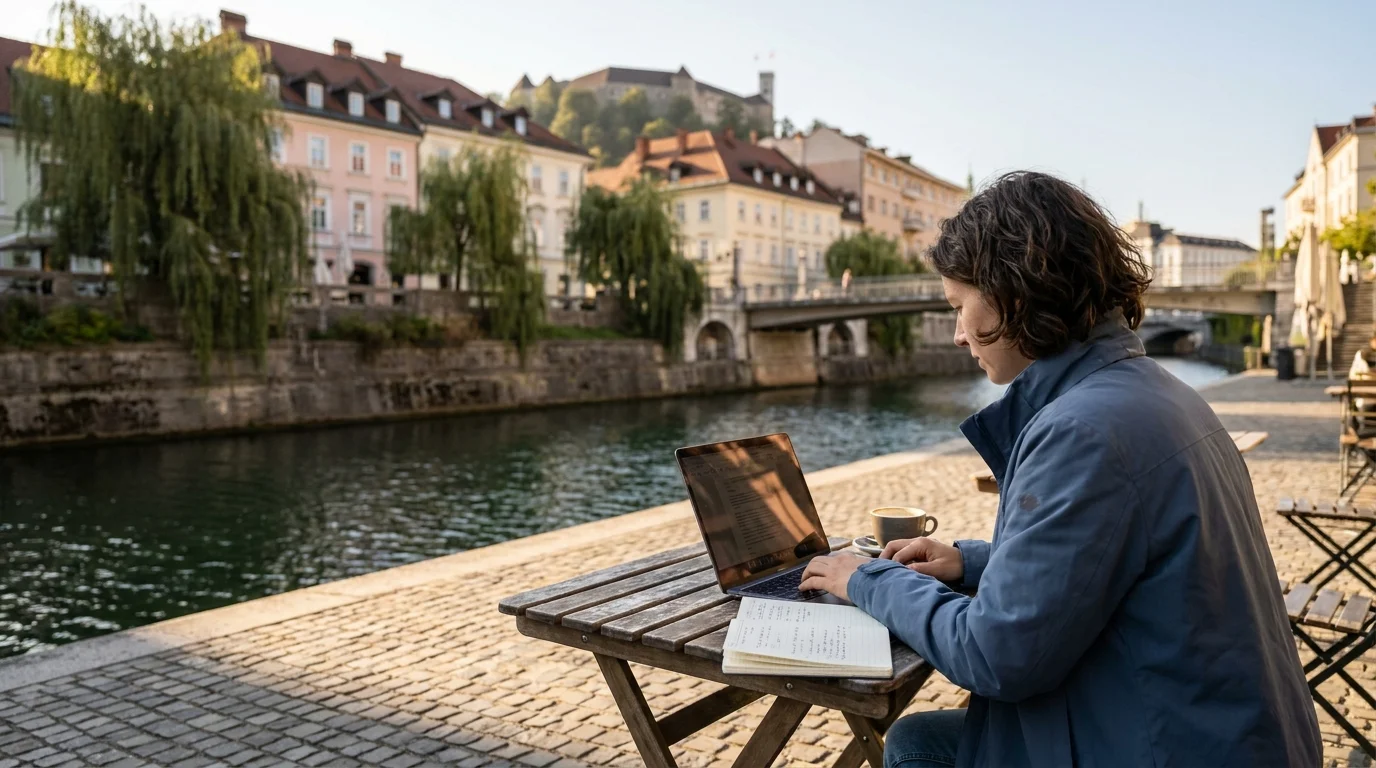
Spain has established itself as one of the top destinations for people who work from anywhere in the world. Quality of life, modern infrastructure, safety, and a strategic position at the heart of Europe have turned the country into a magnet for freelancers, entrepreneurs, and digital professionals of dozens of nationalities. To accommodate this new workforce, the Spanish government created the Digital Nomad Visa, a legal residency pathway designed for those who earn income outside the country.
What the digital nomad visa is
The visa was created for professionals who carry out their work remotely over the internet, serving companies or clients located outside Spain. Unlike traditional work visas, it does not require a Spanish employer: the core requirement is proving that the activity and income are tied to abroad. It covers freelancers, independent consultants, digital entrepreneurs, and remote employees from any country outside the European Union.
Minimum income required in 2026
This is the most decisive requirement, and the one that changes most each year, since it is tied to the Spanish minimum wage (SMI). In 2026 the SMI was set at 1,221 euros per month, paid in 14 installments. The visa requires proving 200% of that amount, which comes to about 2,849 euros per month, or roughly 34,188 gross euros per year for a single applicant.
Those bringing family need to add supplements: about 1,068 euros per month for the first dependent and about 356 euros for each additional member. Since the SMI is paid in 14 installments, the authorities assess annual gross income rather than simply doubling the monthly amount, a detail that often confuses applicants.
There is also a relevant limit: at most 20% of total income can come from Spanish clients; at least 80% must originate abroad.
Essential requirements
Although each case is assessed individually, some documents are essential for approval:
- Proof of remote work and a connection to companies or clients outside Spain
- Monthly income meeting the 200% SMI floor
- Valid health insurance in Spanish territory
- Criminal background certificate
- Proof of professional experience or academic training in the field
- Organized financial documentation, with contracts and proof of billing
A well-structured professional history and clear contracts significantly increase the chances of approval.
There is no closed list of professions
A common question is whether there is an official list of accepted professions. The answer is no: the Spanish government does not define specific occupations, but assesses whether the activity can be performed remotely. In practice, the most common fields among approved applicants are:
Technology
Programmers, web developers, software engineers, artificial intelligence specialists, and data analysts make up the largest group of applicants.
Marketing and content
Social media managers, paid traffic specialists, marketing consultants, copywriters, and content creators fit easily into this category.
Creative fields and consulting
Graphic designers, video editors, photographers, and motion designers, alongside business consultants, coaches, and finance or human resources specialists, round out the typical profile.
Benefits of living in Spain
Beyond legal residency, the visa opens up a range of practical advantages for the international professional:
- Travel within the Schengen Area without new visas
- Efficient, well-connected public transportation system
- Competitive cost of living in many cities, especially outside the capitals
- Pleasant climate most of the year
- An environment favorable to entrepreneurs and remote workers
Many applicants see the visa as a first step in a long-term strategy to settle permanently in Europe.
The most sought-after cities
There are options for every lifestyle, but a few cities draw the bulk of the international community:
Barcelona and Madrid
Barcelona brings together a startup ecosystem and cosmopolitan living; Madrid offers a strong corporate environment and the best opportunities for international networking.
Valencia and Malaga
Valencia is growing thanks to its balance of cost and quality of life, while Malaga is cited by experts as one of the best European cities for remote work.
Alicante and Seville
Increasingly popular alternatives for those seeking a calmer routine and lower costs.
Challenges in the process
Despite the advantages, some steps require extra attention and often delay poorly prepared applications:
- Sworn translations of documents
- Apostille of certificates under the Hague Convention
- Detailed and consistent proof of income
- Complete documentation with no gaps
- Correct interpretation of immigration requirements, which change with every SMI update
That is why advance planning and flawless documentation are what separate a smooth approval from a stalled process. Applicants who organize contracts, proof of income, and health insurance months in advance enter the application process in a far stronger position.
Spain’s Digital Nomad Visa represents a real opportunity to live in Europe without interrupting an international career. With proven income above the 2026 floor, organized documentation, and a clear understanding of the requirements, turning the plan to live in Spain into reality is a perfectly achievable goal for remote professionals of any nationality.
Tags
About the author

Victoria Harper
Editor-in-Chief
As a journalist and lead editor at Visto n’ Visa, Victoria helps ensure that immigration topics are covered in a clear, trustworthy, and easy-to-understand way. Her focus is on delivering useful, human, and relevant content for people exploring new paths abroad.