English
 Português
 Español


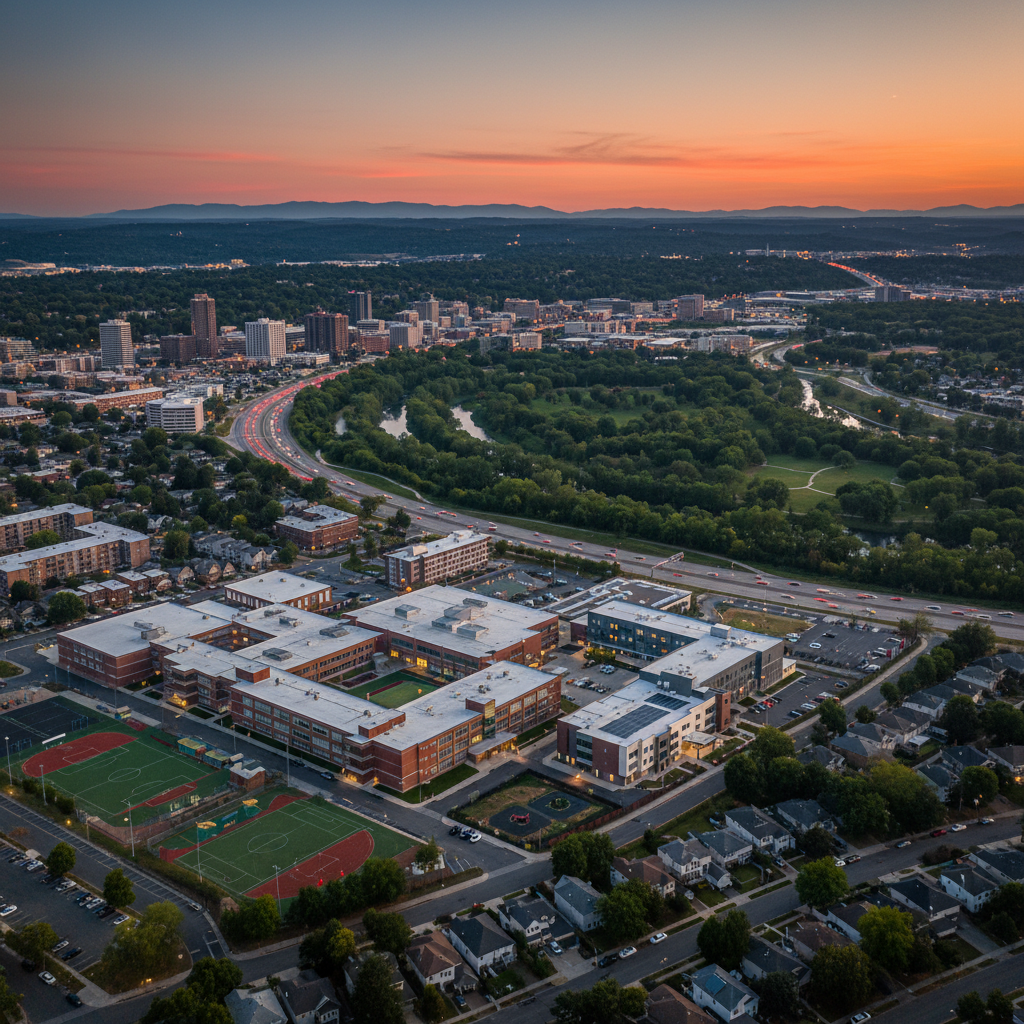
For families planning a move to the United States, choosing their children’s school is one of the most important and, at the same time, most complex decisions in the adaptation process. The American educational system is decentralized and offers various types of schooling, each with its own characteristics, advantages, and limitations. Among the most accessible and popular options are traditional public schools and charter schools-both free, but with significant differences in management, methodology, and structure.
Understanding these differences is essential for immigrant parents to make a choice aligned with their children’s needs and the family’s priorities. Factors such as location, teaching methodology, services offered, and enrollment process vary greatly between the two models. This guide provides a comprehensive overview to support this decision with clear and up-to-date information.
Public schools in the USA
American public schools form the backbone of the country’s educational system. Funded by a combination of local property taxes, state funds, and federal resources, these schools are managed by school districts led by boards elected by the community. Enrollment is determined by the family’s residential area-each address is linked to specific schools within the district.
This model means that the quality of a public school is directly related to the neighborhood where the family lives. School districts in areas with higher property tax revenue tend to have better-equipped schools, with more resources and programs. This is crucial information for immigrant families choosing where to live in the United States.
Characteristics of public schools
- Completely free-no tuition or enrollment fees for district residents
- Standardized curriculum-follows curriculum standards set by the state, such as the Common Core or state equivalent
- Comprehensive services-include school transportation (school bus), subsidized meals (free/reduced lunch), special education programs, and support for students learning English through ESL/ELL programs
- Extracurricular activities-larger schools offer sports, clubs, arts, and other complementary activities
- Certified teaching staff-all teachers must have state-issued certification
Strengths and limitations
Among the strengths are universal access, cultural diversity reflecting the local community, extensive support infrastructure, and ease of community integration. For immigrant families, ESL (English as a Second Language) programs available in most public schools are especially valuable, offering structured support for children still learning English.
On the other hand, larger class sizes may mean less individual attention for each student. Quality varies significantly between school districts, and administrative processes can be more bureaucratic. In districts with lower revenue, resources may be limited, affecting the quality of teaching and available infrastructure.
Charter schools in the USA
Charter schools are a type of public school that operates with greater administrative and pedagogical autonomy. They operate based on a contract (charter) signed with an authorizing entity-which can be the state, the school district, or a university. Although they receive public funding proportional to the number of enrolled students, they are managed by independent organizations, often non-profit.
The concept of charter schools emerged in the 1990s as a way to encourage educational innovation within the public system. Today, there are thousands of charter schools in the United States, serving millions of students. They are present in the vast majority of American states, with higher concentrations in states like California, Texas, Florida, and Arizona.
Characteristics of charter schools
- Lottery-based enrollment-when demand exceeds available spots, selection is done by public lottery, regardless of residential address
- Curricular autonomy-greater freedom to define teaching methods, schedules, and pedagogical approaches
- Thematic focus-many charter schools specialize in areas such as STEM (science, technology, engineering, and mathematics), arts, bilingual education, or college preparation
- Smaller class sizes-student-teacher ratio is generally more favorable than in traditional public schools
- Accountability-must meet academic goals set in the contract, under risk of non-renewal or closure
Strengths and limitations
Charter schools offer innovative methodologies, specialized programs, and more individualized student support. Greater parental involvement in the educational process is another common feature. For families seeking differentiated pedagogical approaches or bilingual programs, charters can be an excellent option.
However, the lack of guaranteed spots is an important limitation-the lottery system can frustrate families wishing to enroll their children in a specific charter school. Additionally, many charters offer fewer support services, such as school transportation and meals, compared to traditional public schools. There is also the risk of school closure if the contract is not renewed, which can cause instability for students.
Key differences
The table below summarizes the main differences between the two models to make it easier for families to compare their options:
| Criteria | Public School | Charter School |
|---|---|---|
| Management | School district (local government) | Independent organization |
| Enrollment | By residential address | By lottery |
| Curriculum | Standardized by the state | Greater pedagogical autonomy |
| Cost to family | Free | Free |
| School transportation | Generally offered | Not always available |
| Class size | Larger | Smaller |
| Continuity | Permanent | Subject to contractual goals |
How to choose the ideal school
For immigrant families, some factors deserve special attention when choosing between public and charter schools. First, evaluate the language support programs-public schools in districts with large immigrant populations tend to have more robust and structured ESL programs. Second, consider transportation logistics-if the family does not yet have their own vehicle, the availability of a school bus can be decisive in daily routines.
Researching school performance ratings is another fundamental step. State department of education websites provide data on academic performance, student-teacher ratios, and parent reviews. Visiting schools in person, talking to other parents in the community, and attending orientation events (open houses) are highly recommended practices before making a decision.
Another relevant aspect for newly arrived families is to check if the school offers welcome programs for international students. Some public and charter schools have specific coordinators to support the transition of foreign students, assisting both with academic adaptation and social integration.
Regardless of the chosen model, the American educational system offers solid learning opportunities for children and teenagers. The most important thing is to find the environment that best meets each child’s specific needs, considering their profile, abilities, and the family’s adaptation stage to the new country. Both public and charter schools can provide enriching educational experiences when the choice is made with proper information and planning.
About the author

Victoria Harper
Editor-in-Chief
As a journalist and lead editor at Visto n’ Visa, Victoria helps ensure that immigration topics are covered in a clear, trustworthy, and easy-to-understand way. Her focus is on delivering useful, human, and relevant content for people exploring new paths abroad.