English
 Português
 Español


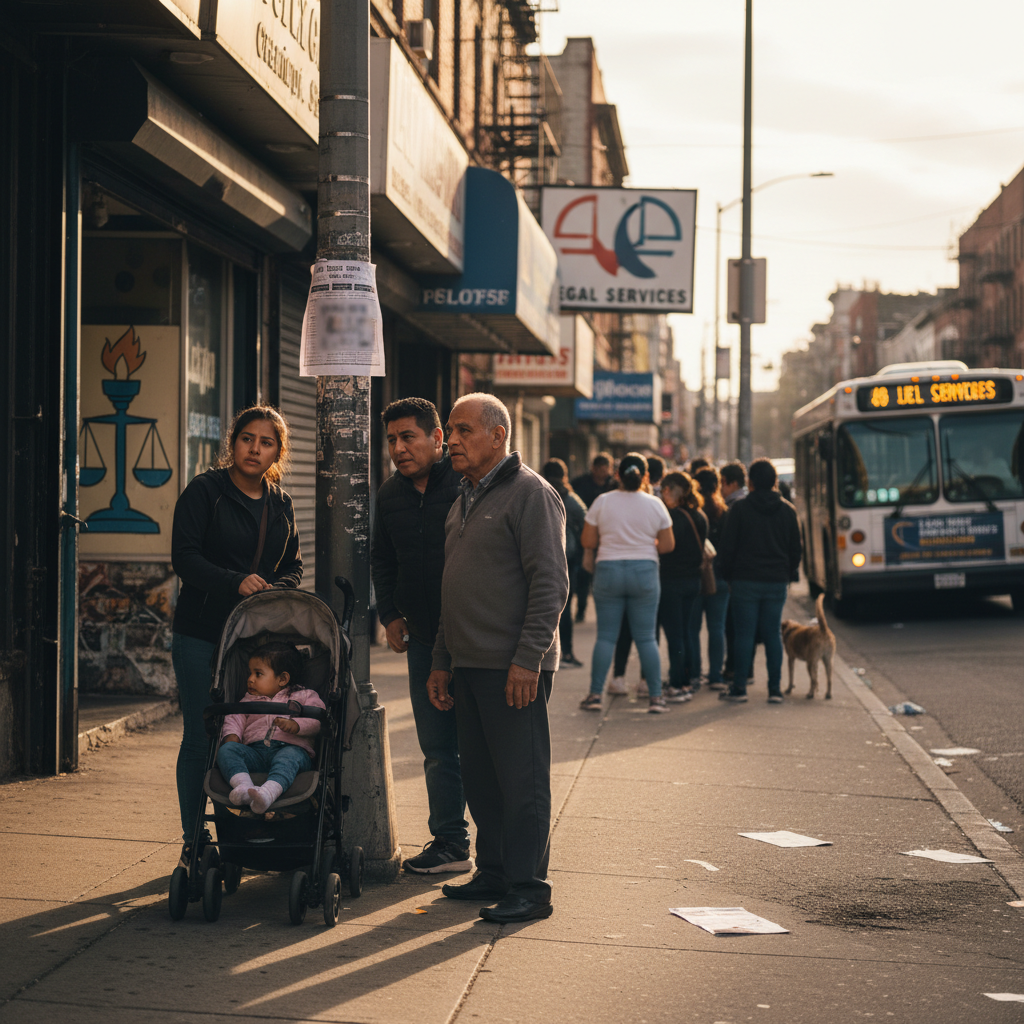
The word "notario" carries a linguistic trap that costs immigrant communities dearly in the United States. In countries with civil law traditions — such as Brazil, Mexico, and most of Latin America — a notario público is a highly qualified legal professional. In the United States, a notary public is simply someone authorized to witness document signatures; they have no legal training, cannot provide legal advice, and under no circumstances may prepare immigration petitions on behalf of a client. The confusion between these two concepts fuels one of the most persistent forms of fraud against Spanish-speaking and Portuguese-speaking immigrants in the country.
The situation has worsened since 2025. With the Trump administration’s removal operations underway and millions of people in precarious immigration status, attorneys and nonprofit organizations report an alarming increase in inquiries from immigrants who handed over thousands of dollars and personal data to fraudulent consultants. Victims often leave the scheme more exposed to deportation than when they started, because poorly drafted petitions alert USCIS to the person’s presence in the country.
Who Can Legally Represent an Immigrant
The federal rule is straightforward and is found in 8 CFR 292. Only two categories of individuals may charge to represent immigrants before USCIS, EOIR, or ICE: licensed attorneys in good standing with their state bar in any U.S. jurisdiction, and accredited representatives through the EOIR’s Office of Legal Access Programs Recognition and Accreditation program. The latter group works exclusively through recognized nonprofit organizations.
Anyone who falls outside these two categories and acts beyond them is engaged in unauthorized practice of immigration law — a crime in many states, a federal violation when it involves filing petitions, and grounds for a civil lawsuit for damages.
How the Scam Works
The typical scheme starts at a community service shop — a translation agency, tax preparer, currency exchange, or phone store. The operator presents themselves as a notario, immigration consultant, or even "abogado" in Spanish-language flyers, and charges between $500 and $5,000 to fill out standard USCIS forms, usually without any eligibility analysis.
In cases reported to the American Immigration Lawyers Association, fraudsters have guided mixed-status families into filing unnecessary petitions that expose undocumented relatives to removal proceedings. Another recent scheme targets small employers: notarios suggest that businesses sponsor undocumented workers via I-140 or H-1B, a legally impossible route for those already in the U.S. without status. The employer pays for the petition, the worker pays the notario, and the case collapses once it reaches USCIS.
Concrete Warning Signs
Some indicators practically guarantee you are dealing with fraud. A promise of a specific outcome — "I’ll get you your Green Card in 90 days" — is impossible; no honest professional can guarantee a USCIS decision. Refusal to provide a state bar license number or EOIR accreditation number is an immediate red flag; both are public and verifiable online. Demanding payment exclusively in cash, with no itemized receipt and no written contract, is standard in fraudulent schemes. Retaining original identity documents as "collateral" constitutes coercion and violates the law in every state.
Verify Before Hiring
Every U.S. state bar maintains a public attorney search tool. The American Bar Association consolidates links at americanbar.org. For accredited representatives, the EOIR publishes the official roster at justice.gov/eoir/recognition-and-accreditation-roster. If the provider’s name does not appear in either database, they are not authorized to represent you in immigration matters — period.
Where to Report
Reporting has multiple layers, and all of them should be activated at once. The Federal Trade Commission accepts complaints at reportfraud.ftc.gov, with forms available in Portuguese and Spanish. USCIS accepts reports of unauthorized practice at uscis.gov/scams-fraud-and-misconduct. State attorneys general — particularly in California, New York, Texas, Florida, and New Jersey — maintain specialized units for fraud against immigrants; in these states, the state complaint typically produces the fastest results because it involves direct criminal enforcement.
Fraud victims have the right to report the crime without that act alone triggering deportation proceedings. The U visa for crime victims (codified at INA 101(a)(15)(U)) explicitly covers victims of serious fraud who cooperate with criminal investigations, and notario fraud can qualify when substantial harm has occurred.
How Legitimate Organizations Operate
There are dozens of EOIR-accredited nonprofit legal clinics that serve immigrants at no cost or minimal cost: the Catholic Legal Immigration Network (CLINIC), the Immigrant Legal Resource Center (ILRC), the American Immigration Council, and local networks in nearly every major city. Those who cannot afford a private attorney have a real, free, and legal alternative — and that alternative is precisely what the scam exploits by positioning itself as a cheaper shortcut.
Knowing the difference between a notary public and a licensed attorney is not a semantic detail. It is the line between building a solid case and handing over your money, personal data, and location to someone who will use them against you.
About the author

Victoria Harper
Editor-in-Chief
As a journalist and lead editor at Visto n’ Visa, Victoria helps ensure that immigration topics are covered in a clear, trustworthy, and easy-to-understand way. Her focus is on delivering useful, human, and relevant content for people exploring new paths abroad.