English
 Português
 Español


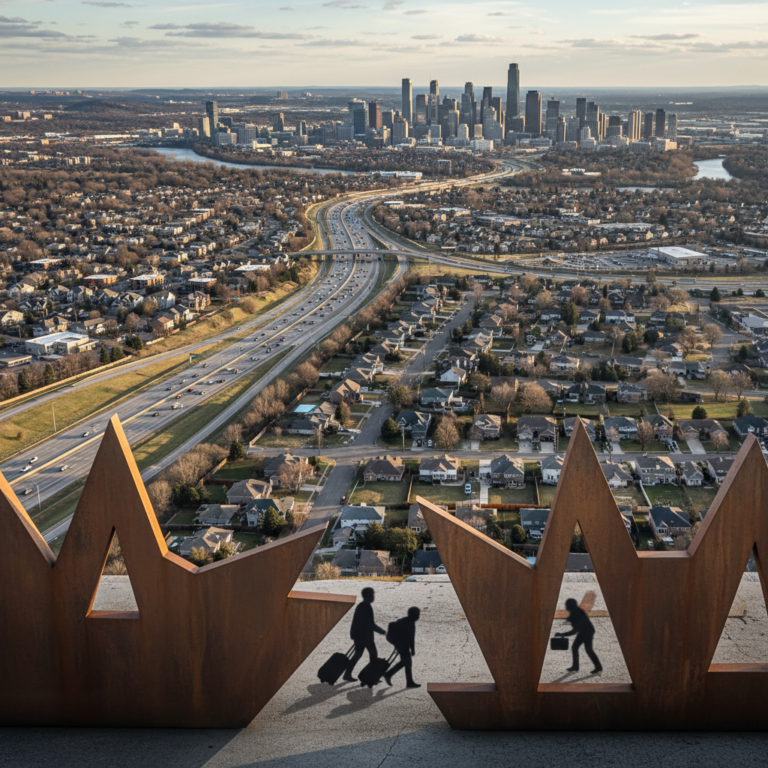
The J-1 visa is one of the most versatile gateways for those who wish to have a temporary experience in the United States focused on cultural and educational exchange. Created under the Mutual Educational and Cultural Exchange Act of 1961 (Fulbright-Hays Act), this non-immigrant visa allows students, interns, au pairs, teachers, researchers, and other professionals to participate in programs sponsored by the U.S. Department of State. As of April 2026, the J-1 remains one of the most sought-after categories by Brazilians seeking international experience without necessarily applying for permanent residency.
What Is the J-1 Visa
The J-1 visa, officially called the Exchange Visitor Visa, is regulated by 22 CFR Part 62 and administered by the Bureau of Educational and Cultural Affairs (ECA) of the U.S. Department of State. Unlike work visas such as the H-1B or L-1, the main goal of the J-1 is to promote the exchange of knowledge and cultural experiences between the United States and other countries. The visa holder participates in a designated program, under the supervision of an authorized sponsor organization that issues the DS-2019 form, an essential document for the application.
The duration of the visa varies according to the program category: from a few weeks for summer programs up to five years for certain research categories. At the end of the program, the participant is expected to return to their home country, except for exceptions provided by law.
Program Categories
The J-1 visa covers 15 distinct categories, each with specific rules, durations, and requirements. The most relevant for Brazilians include:
- Au Pair: work as a child caregiver in an American family, lasting 12 months (extendable by 6, 9, or 12 months). Includes a mandatory educational component of at least 6 academic credits.
- Intern: professional internship for university students or recent graduates (up to 12 months after graduation), with a maximum duration of 12 months.
- Trainee: professional training for those who already have a degree and at least one year of experience in the field, lasting up to 18 months (36 months for agriculture and hospitality).
- Summer Work Travel: temporary work during university vacations, lasting up to 4 months.
- Research Scholar: researchers and university professors invited by American institutions, lasting up to 5 years.
- Professor: faculty invited to teach at American universities, lasting up to 3 years.
- Camp Counselor: counselors at summer camps, lasting up to 4 months.
Requirements and Documentation
The process of obtaining the J-1 visa follows well-defined steps that require organization and advance planning. The first step is to be accepted by a designated sponsor organization, which will issue the DS-2019 form. This organization is responsible for supervising the program and ensuring that the participant complies with the visa conditions.
With the DS-2019 in hand, the applicant must:
- Pay the SEVIS fee (I-901) on the fmjfee.com website, at least three business days before the consular interview.
- Fill out the DS-160 form (Application for Nonimmigrant Visa) online.
- Pay the MRV fee (Machine Readable Visa) of US$ 185.
- Schedule and attend the interview at the U.S. consulate or embassy.
At the interview, the applicant must demonstrate strong ties to Brazil (employment, property, family), prove financial capacity to support themselves during the program, and present clear objectives for their exchange. Documents such as a sponsor letter, proof of income, academic transcripts, and a letter from the current employer strengthen the application.
Current Fees and Costs
As of April 2026, the government fees for the J-1 visa are:
| Fee | Amount (USD) | Note |
|---|---|---|
| SEVIS (I-901) – most categories | US$ 220 | Au Pair, Camp Counselor, and Summer Work Travel pay US$ 35 |
| MRV (DS-160) | US$ 185 | Exempt for government programs (G-1, G-2, G-3, G-7) |
| Minimum total (government) | US$ 405 | Does not include sponsor program fees |
In addition to government fees, sponsor programs charge their own participation fees, which vary significantly: from US$ 500 to US$ 3,000 or more, depending on the category and services included. Au pair programs generally include mandatory health insurance in the package.
Two-Year Rule
One of the most important and often misunderstood aspects of the J-1 visa is the two-year home residency requirement, provided in Section 212(e) of the INA. This rule states that certain J-1 holders must return to their home country and remain there for at least two years before applying for H, L, K visas or permanent residency in the U.S.
The rule applies when the participant fits at least one of the following situations:
- Received funding from the government of the home country or the U.S. government.
- Their field of work is listed on the Department of State’s Skills List as in short supply in the home country.
- Participated in a medical graduate program sponsored by the ECFMG.
It is possible to apply for a waiver of the two-year rule through the DS-3035 form, based on five grounds: persecution in the home country, exceptional hardship to a U.S. citizen spouse or child, request from an interested government agency, no objection letter from the home country, or request from a designated government agency. The waiver process can take from 4 to 12 months.
Dependents on the J-2 Visa
Spouses and unmarried children under 21 of the J-1 holder may accompany them to the U.S. with the J-2 visa. Unlike many dependent visas, the J-2 allows the spouse to apply for work authorization through the I-765 form with USCIS, with an estimated processing time of 2 to 5 months as of April 2026.
The J-2 work authorization is granted until the DS-2019 expiration date or for up to 4 years, whichever is shorter. An important condition: the J-2’s work income cannot be used to support the J-1 holder. School-age children may attend American public schools during their stay.
Common Mistakes
Consular experience and Department of State data reveal recurring patterns of mistakes that compromise J-1 visa applications:
- Insufficient ties to Brazil: not presenting concrete evidence of return (guaranteed employment, property, business) is the most common reason for refusal under Section 214(b) of the INA.
- Unauthorized sponsor: using agencies not listed on the official ECA Designated Sponsors list results in an invalid DS-2019 and automatic refusal.
- Unawareness of the 212(e) rule: many participants discover too late that they are subject to the two-year requirement, making plans to change status in the U.S. unfeasible.
- Incompatible category: applying as an Intern when you already have years of professional experience (should be Trainee) or vice versa creates inconsistencies that raise suspicions.
- Weak financial documentation: inconsistent bank statements or a financial sponsorship letter without details may result in a request for additional documentation or refusal.
- Late SEVIS payment: payment must be made at least 3 business days before the interview. Paying on the same day or the day before may not be processed in time, causing postponement.
The J-1 visa represents a concrete opportunity for Brazilians seeking international experience at a relatively affordable cost compared to traditional work visas. The key lies in early planning, careful selection of the program and sponsor, and full understanding of post-program obligations, especially the two-year rule, which can significantly impact future immigration plans.
Learn more about H-1B
- Initial validity
- 3 years
- Extension
- Up to 6 years total
- Annual cap
- 85,000 visas
- Processing
- 6-12 months
About the author

Victoria Harper
Editor-in-Chief
As a journalist and lead editor at Visto n’ Visa, Victoria helps ensure that immigration topics are covered in a clear, trustworthy, and easy-to-understand way. Her focus is on delivering useful, human, and relevant content for people exploring new paths abroad.