English
 Português
 Español


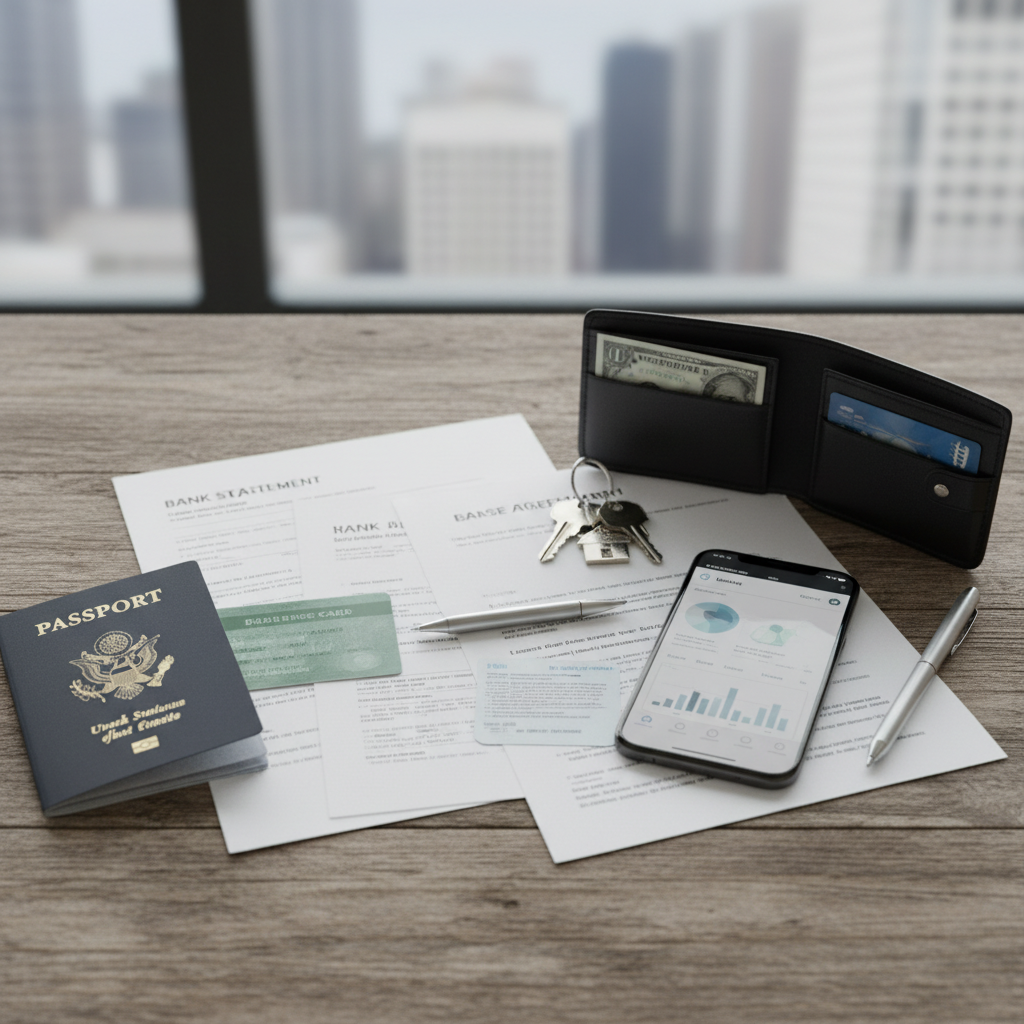
Having an account at an American bank is one of the first practical steps for anyone moving to the United States or planning business in the country. Without it, essential tasks such as receiving a salary, paying rent, obtaining insurance, and building a credit history become significantly more complex. The account opening process varies according to the applicant’s immigration status, and understanding these differences helps avoid wasting time and unnecessary frustrations.
Major American banks such as Chase, Bank of America, Wells Fargo, and PNC accept non-resident clients and new immigrants, although documentation requirements and processes vary between institutions. This guide details the two main scenarios, the types of accounts available, and the steps that go beyond opening the account for complete financial integration in the United States.
Non-resident vs. new resident
The requirements for opening a bank account in the US change significantly depending on immigration status. The main difference lies in the accepted identification documents and whether or not a US tax identification number is required.
Account as a non-resident
Tourists, business visitors, and people who do not yet have a residence visa can open a bank account in the United States, but the process generally requires a personal visit to a branch. Most American banks’ online account opening systems are not prepared to process applications without a Social Security Number (SSN). The documents typically requested include:
- Valid and current passport
- Second photo ID (such as a driver’s license from the country of origin)
- Proof of address in the country of residence (utility bill or bank statement)
- Initial deposit (amounts range from US$25 to US$100, depending on the bank)
Not all branches of the same bank offer this service, so it is advisable to call ahead to confirm availability and specific requirements. In cities with a large international presence, such as Miami, New York, and Los Angeles, the process tends to be faster and staff are more familiar with foreign documentation.
Account as a new resident
For those arriving in the US with a work visa (H-1B, L-1, O-1, among others) or as a Green Card holder, the process is significantly simpler and similar to that of an American citizen. The documents generally requested are:
- Passport with work visa or I-551 stamp (proof of permanent residence)
- Social Security Number (SSN) or, alternatively, ITIN
- Proof of address in the US (rental contract, utility bill, or employer letter)
With this documentation, it is possible to open an account at most major American banks, both in person and, in many cases, through the bank’s digital platform. Some banks, such as Bank of America and Chase, have specific programs for new international professionals that make the process easier.
Types of bank accounts
The American banking system offers two main types of accounts for individuals, and understanding the function of each is essential for organizing your financial life in the United States.
The checking account is used for day-to-day operations: receiving salary via direct deposit, payments with debit card, transfers, and withdrawals. Most banks offer checking accounts with no monthly fee when direct deposit is set up or when the minimum balance is maintained. The savings account is intended for financial reserves and offers interest earnings, with digital banks like Ally Bank and Marcus by Goldman Sachs offering rates significantly higher than traditional banks.
Many banks offer packages that combine checking and savings with integrated benefits, such as automatic transfers between accounts and waiver of monthly fees. Comparing offers between different institutions can generate significant savings over time.
ITIN: what it is
The ITIN (Individual Taxpayer Identification Number) is a tax processing number issued by the IRS for people who need to file taxes in the US but are not eligible for an SSN. It is obtained via Form W-7, sent to the IRS along with a federal income tax return and identification documentation. The process is free (the IRS does not charge a fee), and the processing time is approximately 7 weeks in normal periods, and can reach up to 11 weeks between January and April (tax peak season).
Although it does not replace the SSN for all purposes, the ITIN is accepted by major banks as tax identification for opening an account. Some community banks and credit unions accept opening accounts even without an SSN or ITIN, but these are exceptions. It is important to apply for the ITIN as soon as possible after arriving in the US, as it will also be necessary for federal tax returns.
Building credit history
Opening a bank account is just the first step of financial integration in the United States. The next challenge is building a credit history, essential for renting property, financing vehicles, obtaining credit cards with better conditions, and eventually buying a house. Immigrants arrive in the US with a zero credit score, regardless of their financial history in their country of origin.
Proven strategies to start building credit include: applying for a secured credit card (a credit card secured by a deposit), which is approved regardless of history; making payments on time and using less than 30% of the available limit; and considering services like Experian Boost, which allows you to add utility payments to your credit report. After 6 to 12 months of responsible use of a secured card, it is generally possible to migrate to traditional credit cards.
International tax obligations
Immigrants who maintain bank accounts outside the United States must be aware of two reporting obligations. The FBAR (Foreign Bank Account Report) is mandatory for those who have foreign accounts with an aggregate balance exceeding US$10,000 at any time during the year. The FATCA (Foreign Account Tax Compliance Act) requires reporting of foreign financial assets above certain limits to the IRS.
Failure to comply with these obligations can result in significant fines. US tax residents, including green card holders, must declare worldwide income to the IRS, even if they already pay taxes in their country of origin. Consulting an accountant specialized in international taxation is highly recommended in the first years after moving.
Frequently asked questions
Can I open an account from Brazil?
The vast majority of American banks require physical presence at a branch for document verification, especially for non-residents. There are exceptions in fintechs and digital banks aimed at the international public, but for traditional accounts at major banks, an in-person visit remains the norm in 2026.
Does Brazilian credit count in the US?
No. Credit history is not transferable between countries. American credit bureaus (Experian, Equifax, TransUnion) operate independently from foreign bureaus. Some services, such as the Nova Credit program, allow immigrants from certain countries to share part of their international history, but building local credit is inevitable for most.
Which bank should I choose?
It depends on location, needs, and profile. Chase and Bank of America have the largest branch networks and programs for new residents. PNC and TD Bank are known for more flexible policies for non-residents. Local credit unions often offer lower fees and personalized service. Compare monthly fees, minimum balance requirements, and availability of service in Portuguese or Spanish in your region.
Learn more about H-1B
- Initial validity
- 3 years
- Extension
- Up to 6 years total
- Annual cap
- 85,000 visas
- Processing
- 6-12 months
About the author

Victoria Harper
Editor-in-Chief
As a journalist and lead editor at Visto n’ Visa, Victoria helps ensure that immigration topics are covered in a clear, trustworthy, and easy-to-understand way. Her focus is on delivering useful, human, and relevant content for people exploring new paths abroad.