English
 Português
 Español


H visas represent a strategic opportunity for foreign professionals who wish to work temporarily in the United States. Created to meet the demand for specialized labor, these visas enable American companies to access talent that is not available locally. In a scenario of constant changes in immigration policies, understanding the requirements and the application process is essential for those seeking new career opportunities.
This updated guide for 2026 presents a detailed analysis of the main subcategories of H visas and the necessary steps for application, serving as a reference for professionals and companies interested in the American market. Below, the fundamental concepts and bureaucratic process are addressed, with an emphasis on the importance of keeping documentation updated and in accordance with official requirements.
Overview of H Visas
H visas were established by the United States to allow the temporary entry of professionals with specific qualifications, contributing to market development and the integration of international technical knowledge. In this context, American companies can turn to foreign candidates when there are no local workers with the appropriate qualifications to meet the established demand. Thus, this mechanism has fostered the exchange of expertise and the strengthening of commercial relations between countries.
The first requirement to start the process is the involvement of an American employer, who must demonstrate the need for hiring and prove that there are no native professionals available to fill the position. This requirement is generally validated through a certificate issued by the U.S. Department of Labor, which attests to the lack of qualified workers in the local market.
H Visa Subcategories
In 2026, the main subcategories of H visas remain fundamental for the entry of foreign talent, each with specific requirements and purposes:
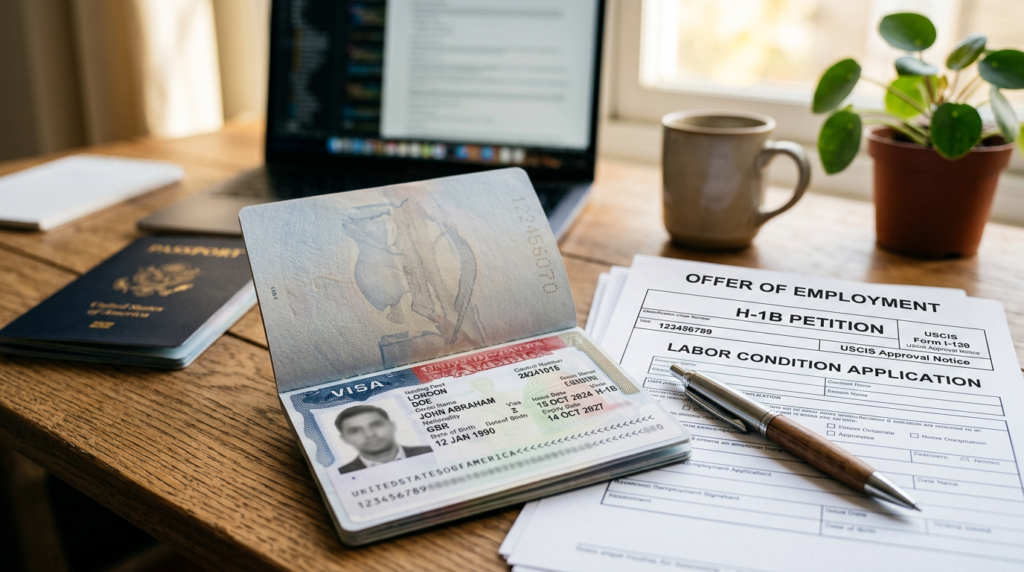
- H-1B: Intended for specialized professionals who have at least a four-year college degree or equivalent qualification. This visa is widely used in areas such as technology, engineering, medicine, and sciences, where there is a demand for advanced technical knowledge.
- H-2: Aimed at temporary workers in sectors where the supply of American labor is insufficient. It is generally used in agricultural activities, construction, and hospitality services, where there is a seasonal or temporary need for foreign workers.
- H-3: Intended for candidates seeking training or internships in American companies. This visa has an educational character, allowing the beneficiary to acquire specific knowledge that can later be applied in their country of origin.
- H-4: Focused on dependents of H visa holders, allowing spouses and children to accompany the professional during their stay in the United States. In certain circumstances, H-4 visa holders may have access to work authorizations or study, but such benefits are subject to specific criteria established by USCIS.
Application Process
The path to obtaining H visas involves steps that require the joint action of the employer and the candidate. Initially, the employer must demonstrate that the position in question cannot be filled by an American worker, which requires obtaining a certificate from the Department of Labor. This document is essential to prove the need to hire a foreign professional.
After this verification, the employer must file a petition with the United States Citizenship and Immigration Services (USCIS) using Form I-129. Approval of this petition is a crucial step, as it confirms the candidate’s eligibility to proceed with the visa application. Next, USCIS issues Form I-797, which serves as a notice of action and confirms that the initial procedures have been successfully completed.
Required Documentation and Form Completion
The application process requires careful preparation and the submission of various documents that prove the candidate’s qualifications and the need for hiring. Among the essential items are:
- Department of Labor Certificate: Document that attests there are no American workers available to perform the proposed duties.
- Work Petition (Form I-129): Submitted by the employer, this petition must be approved by USCIS for the process to move forward.
- Notice of Action (Form I-797): Issued by USCIS, confirms the approval of the petition and guides the next steps of the process.
- Form DS-160: Used in the visa application, this form requires accurate and updated personal information, ensuring the consistency of the data presented.
- Personal Documentation: Includes a valid passport, proof of professional experience, diplomas, qualification certificates, resumes, as well as financial documents such as bank statements, income tax returns, and possible proof of ties to the country of origin.
On the day of the consular interview, it is essential that the candidate brings all supporting documents, such as the receipt of the approved petition, passport, and recent photographs, as well as proof of payment of the required visa processing fees.
Tips and Important Considerations
Due to frequent updates in U.S. immigration policies, candidates should be alert to possible changes in procedures and requirements. In 2026, it is advisable to periodically check the information provided by the official websites of the Department of Labor, USCIS, and American consulates. This practice is essential to ensure that the process is being conducted according to current regulations.
Proper preparation for the consular interview is another key aspect. Organizing all documents, carefully reviewing the forms, and being prepared to answer questions about qualifications and ties to the country of origin can significantly increase the chances of success in obtaining the visa. Clarity in presenting information and compliance with established requirements are decisive for the approval of the application.
Guidance for a Secure Process
This guide aims to offer an educational and practical overview of H visas, emphasizing each step of the application process. It is important for interested parties to understand that immigration rules are subject to change and that consulting official sources is indispensable for the safety and effectiveness of the procedure. Adopting a proactive approach in verifying information and constantly monitoring the guidelines issued by the competent authorities are recommended actions to avoid surprises during the process.
Professionals and companies wishing to take advantage of the opportunities offered by H visas should adopt a careful approach, from obtaining the necessary certification to organizing documents for the interview. Transparency and accuracy in conducting each step help minimize risks and ensure that the process proceeds according to established requirements.
Future Perspectives
The H visa landscape remains in constant transformation, following the needs of the global market and the dynamics of international relations. In 2026, the demand for highly qualified professionals continues to grow, and the flexibility of immigration processes may favor the entry of talent from various parts of the world. U.S. immigration policies may undergo adjustments that make the procedure more agile or, on the other hand, more rigorous, depending on government priorities and internal market conditions.
This evolution requires candidates to continuously monitor updates and be willing to adapt their processes according to new requirements. The experience accumulated over the years and access to reliable sources of information are relevant differentiators for those embarking on the journey toward obtaining an H visa.
Final Considerations
In summary, H visas are a valuable alternative for foreign professionals seeking integration into the U.S. job market. This updated guide for 2026 presents in detail the subcategories, requirements, and step-by-step application process, highlighting the importance of keeping documentation and information in compliance with official guidelines. Each stage of the process, from obtaining the Department of Labor certificate to the consular interview, must be conducted with attention and rigor.
Understanding the procedures and constantly updating information are fundamental to avoid unforeseen events and ensure success in obtaining the visa. This content serves as an educational reference, encouraging professionals to prepare adequately and seek the necessary guidance through official channels. The dynamic nature of the immigration landscape reinforces the importance of always being alert to changes and adopting an informed and proactive approach in the search for new opportunities.
Learn more about H-1B
- Initial validity
- 3 years
- Extension
- Up to 6 years total
- Annual cap
- 85,000 visas
- Processing
- 6-12 months
About the author

Victoria Harper
Editor-in-Chief
As a journalist and lead editor at Visto n’ Visa, Victoria helps ensure that immigration topics are covered in a clear, trustworthy, and easy-to-understand way. Her focus is on delivering useful, human, and relevant content for people exploring new paths abroad.