English
 Português
 Español


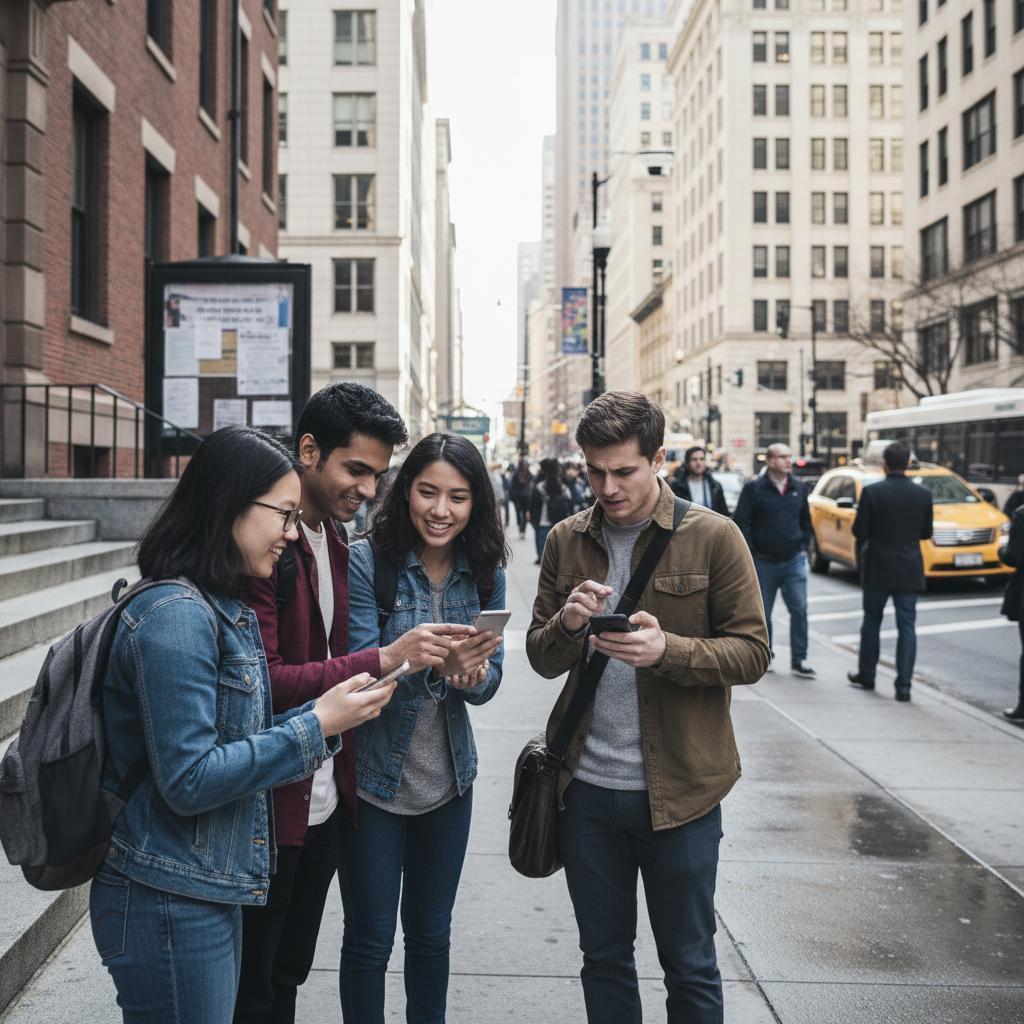
The United States Department of State consolidated in 2025 and 2026 an expanded screening regime for student and exchange visas that permanently changed the relationship between social media and consular eligibility. More than 300 visas were revoked in the first months of Trump’s second term after analysis of public profiles of applicants and exchange visitors, and the pace of review remained elevated in the months that followed. Those preparing to study in the U.S. today need to understand that the consular interview is just one of many evaluation layers.
What Changed in Consular Screening
The diplomatic cable that directed consulates starting March 28, 2025 expanded the scope of Section 214(b) of the Immigration and Nationality Act (INA). The classic rule requires a nonimmigrant visa applicant to demonstrate sufficient ties to their home country and intent consistent with the requested category. The new guidance added a behavioral analysis layer: the consular officer must assess whether there are indications that the student intends to use their presence on U.S. soil for activities incompatible with their status, including activism that could be characterized as support for a foreign terrorist organization under INA Section 212(a)(3)(B).
In 2026, the State Department maintains the requirement to disclose social media identifiers since the DS-160 update in 2019. The difference is that this data, previously processed mostly through automated systems, became subject to systematic manual review for certain categories. At many consulates, F-1, M-1, and J-1 applicants are instructed to keep public profiles visible throughout the entire process and to open private accounts if requested by the officer.
Who Is in the Crosshairs
The original directive called for enhanced review for three groups. The first includes applicants with prior indications of support for a group designated by the U.S. government as a foreign terrorist organization — a list maintained by the State Department that includes Hamas, Hezbollah, and Tehrik-i-Taliban Pakistan, among others. The second covers foreign nationals who were in U.S. territory under F-1, M-1, or J-1 status between October 7, 2023, and August 31, 2024, a sensitive period because it coincides with university protests linked to the conflict in Gaza. The third includes students whose SEVIS record was terminated after October 7, 2023, even if the termination was administrative in origin.
In 2026, this list has been effectively expanded in consular practice. Students linked to university publications that covered protests, signatories of open letters, and occasional participants in campus demonstrations report flags in the DS-160 even without any direct involvement with extremist groups. The line between legitimate political criticism and expression deemed hostile to the U.S. has become a subject of dispute in federal courts, with contradictory preliminary decisions in the First Circuit and Ninth Circuit.
How Social Media Review Works
The process begins before the interview. When submitting the DS-160, the applicant lists all social media identifiers used in the past five years. The State Department system cross-references these identifiers against internal databases, and when a flag is triggered, it refers the case for expanded consular review. The officer captures screenshots of public profiles and archives them in the applicant’s file. These records can be referenced in future decisions, including subsequent applications for other visa categories.
Elements analyzed include the applicant’s own posts, shared content, lists of people followed, comments on third-party publications, and membership in public groups. Private messages in end-to-end encrypted apps like Signal and WhatsApp are not within scope, but platforms with open publishing — such as X, Instagram, TikTok, Facebook, LinkedIn, YouTube, Telegram, and Reddit — are systematically examined.
Legal Grounds for Denial
Section 214(b) is the broadest ground for denial. The consular officer only needs to conclude that the applicant failed to demonstrate sufficient ties to their home country or that the stated purpose is inconsistent with the visa category. A 214(b) denial carries no administrative appeal; the path forward is to reapply with new evidence.
Section 212(a)(3)(B) is more serious. It addresses inadmissibility based on terrorist activities and covers everything from direct involvement to material support and promotion. Once applied, this clause can block future visa categories and even green card applications, with only limited waivers available. Section 237(a)(4)(C) allows the Secretary of State to determine that the presence of a specific foreign national in the U.S. has adverse consequences for U.S. foreign policy — a ground already invoked in 2025 for summary deportations of exchange visitors holding valid visas.
Protocol Before the Interview
Anyone applying for F-1, M-1, or J-1 in 2026 should assume that their entire public digital presence will be examined. The first step is to conduct an honest inventory of every account used in the past five years, including inactive ones. The list on the DS-160 must be complete: deliberately omitting an account is grounds for denial on material misrepresentation — a far more serious issue than any controversial post.
The second step is to review publications that could be interpreted out of context. Screenshots of protests, retweets of foreign political leaders, sarcastic comments about American institutions — items that seem harmless can be flagged. Deleting content on the eve of the interview does not help; archives such as the Wayback Machine and private intelligence databases retain copies. The most defensible strategy is to prepare a coherent narrative explaining any publications that might raise questions, acknowledging their context and intent.
Revocation Inside the United States
Revocation of a visa belonging to someone already inside the U.S. is the exclusive prerogative of the State Department and is communicated by email to the address registered in the DS-160. Revocation does not automatically cancel status; it prevents re-entry after a departure. Students who receive notice should keep SEVIS active, avoid international travel, and immediately consult an immigration attorney to evaluate a change of status petition or other alternatives.
SEVIS termination, common in 2025 and 2026, is more serious: it breaks legal status and can trigger unlawful presence accrual, with severe consequences for future applications. In some cases, the termination turned out to be an administrative error that could be reopened through the SEVP Response Center; in others, it stemmed from a substantive review that required legal action in federal courts.
The Road Ahead
The current regime reflects the interpretation that nonimmigrant visas are discretionary privileges, not rights. Federal courts have begun to define limits when social media review encroaches on speech protected by the First Amendment of U.S. citizens who interact with foreign nationals, but the jurisprudential consensus on purely consular revocations remains restrictive. International students, academic advisors, and university career centers are investing in preventive counseling on digital presence, and this appears to be the new normal for the F-1, M-1, and J-1 cycle in the years ahead.
Learn more about F-1
- Duration
- Duration of studies
- OPT (STEM)
- Up to 3 years of work
- CPT
- Work during studies
- Processing
- 2-8 weeks
About the author

Victoria Harper
Editor-in-Chief
As a journalist and lead editor at Visto n’ Visa, Victoria helps ensure that immigration topics are covered in a clear, trustworthy, and easy-to-understand way. Her focus is on delivering useful, human, and relevant content for people exploring new paths abroad.