English
 Português
 Español


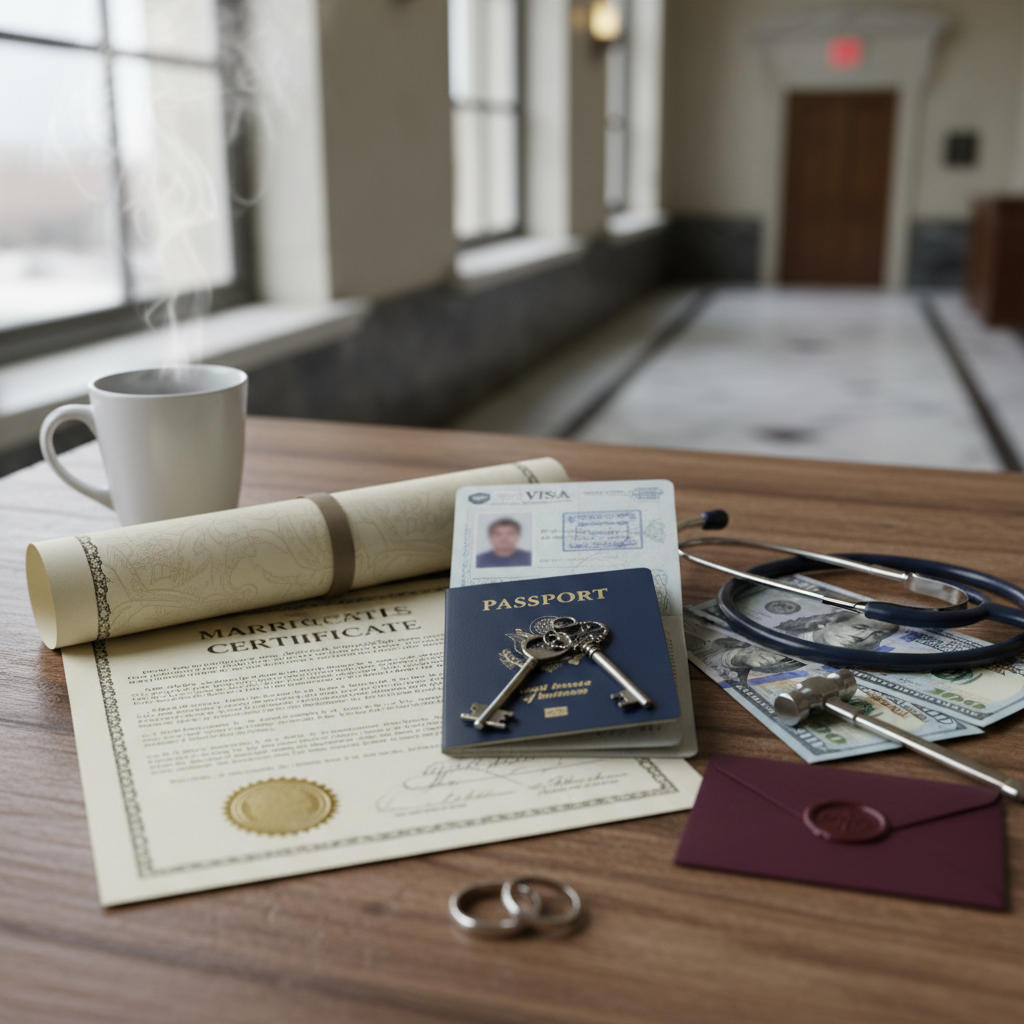
A civil ceremony performed at a courthouse — also known as a civil wedding or city hall ceremony — is the most straightforward way to legally establish a marriage in the United States. For binational couples, it is often the concrete starting point for marriage-based immigration, as it produces the official marriage certificate required by USCIS to file petitions such as Form I-130 or to adjust status based on a spousal relationship. Understanding the process, required documents, jurisdictional timelines, and immigration implications is essential to avoid mistakes that cost time and eligibility.
This guide explains how a courthouse ceremony works in the United States, what variations exist across states and counties, how the process connects to the immigration strategy for those on a K-1 visa or planning a marriage-based green card, and what practical considerations must be addressed before the ceremony date.
What Is a Courthouse Ceremony
A courthouse wedding is a civil, non-religious ceremony officiated by a judge, county clerk, or authorized municipal official. It takes place in a public building — typically the county courthouse or city hall — and results in a marriage certificate, the official document recognized in all states and by the federal government. Compared to a religious or ceremonial wedding, it stands out for its simplicity, lower cost, and streamlined process, while retaining full legal validity.
Why This Format Matters for Immigration
Binational couples choose courthouse weddings for three main reasons. The first is to meet the 90-day deadline imposed by the K-1 (fiancé) visa. The second is to quickly obtain the marriage certificate required to begin a marriage-based green card application, avoiding months of waiting for a religious or social ceremony. The third is cost control: while the average traditional wedding in the United States exceeded $35,000 in 2025, a courthouse ceremony rarely costs more than a few hundred dollars when license fees and minimal expenses are combined.
The K-1 Visa Deadline
The K-1 visa is issued to the foreign fiancé or fiancée of a U.S. citizen based on a petition filed through Form I-129F. After entering the United States, federal regulations (8 CFR 214.2(k)) require that the marriage take place within 90 days. If the ceremony does not occur within that window, the foreign national loses status and must leave the country. A courthouse wedding is, in many cases, the only realistic way to meet this deadline, with a religious or celebratory ceremony left for a later date — at that point carrying solely social significance, with no additional legal effect.
Marriage License and Marriage Certificate
Two essential documents must be distinguished. The marriage license is the authorization issued by the county clerk before the ceremony, based on a joint application from the couple. The marriage certificate is the document issued after the ceremony, confirming that the act was performed and recorded. For immigration purposes, the document required by USCIS is the marriage certificate, typically in a certified version bearing the county seal.
Step-by-Step Guide to a Courthouse Ceremony
Choosing the County
The first step is determining in which county the marriage will take place. Each state regulates its own process, but in general a license issued in one county may be used for any ceremony within the same state. Changing states between the license application and the ceremony may invalidate the document.
Checking the Waiting Period
Several states impose a minimum waiting period between the issuance of the license and the ceremony. Florida requires three days for local residents, with a waiver available upon completion of a four-hour premarital preparation course. Wisconsin requires six days. Other states, such as Nevada and New York for couples with a locally issued license more than 24 hours old, allow for a near-immediate ceremony. Confirming this window with the county clerk prevents surprises.
Required Documents
- Government-issued photo ID (passport, driver’s license, certificate of naturalization).
- Proof of termination of prior marriages, if applicable: divorce decree, annulment, or death certificate of a former spouse.
- Birth certificate, in some counties.
- Proof of residence, when required.
- Witnesses, as required by county rules (generally one to two).
- Appointment confirmation, when the courthouse does not accept walk-ins.
Paying the Fees
License fees vary by state and county, generally under $100. In states such as Florida, the standard fee is around $86 and is reduced by half when the couple presents a valid premarital preparation course certificate completed within the prior 12 months. The courthouse ceremony fee is separate and typically ranges from $25 to $100. Confirm acceptable payment methods in advance, as many county clerks still require cash or money orders.
Scheduling and the Ceremony</h3
Book your license appointment and ceremony slot well in advance. In high-traffic counties, courthouse appointment slots can fill up weeks out. The ceremony itself lasts about 20 minutes, with the reading of standard vows and signatures from the judge, couple, and witnesses. The marriage certificate is issued shortly afterward and may be picked up at the counter or mailed within a few business days.
What to Do with the Marriage Certificate for Immigration Purposes
With the certificate in hand, the couple can immediately begin the marriage-based green card process. The central steps include filing Form I-130 (Petition for Alien Relative), Form I-485 when the foreign national is in the United States in a status compatible with adjustment of status, Form I-864 (Affidavit of Support), Form I-693 (medical examination), and ancillary forms such as I-765 (employment authorization) and I-131 (advance parole). Couples who begin the process within the first two years of marriage initially receive a two-year conditional green card, which must be converted to a permanent one using Form I-751 between the 21st and 24th month of validity.
Marriages Abroad and Validity in the United States
For couples who married outside the United States, USCIS recognizes the union as long as it was valid under the laws of the place where it was performed. The Department of State maintains the Reciprocity Tables, which list, by country, the availability and characteristics of marriage certificates. Validity may be excluded in specific situations: marriage of a minor outside legal limits, marriage in which one spouse was still legally married to a third party, marriage between close blood relatives, or a marriage performed solely for immigration purposes.
Proxy Marriage
A proxy marriage occurs when a third party stands in for one of the spouses at the ceremony. For U.S. immigration purposes, the marriage is recognized only if it is subsequently consummated with the physical presence of both spouses, as required by immigration law. Without this consummation, the union cannot support an I-130 petition or a K-3 visa application.
Additional Documentation for the Green Card Interview
The courthouse wedding is the legal act, but USCIS requires, at the adjustment of status interview, evidence of a bona fide marriage. This includes joint bank accounts, a lease or deed in both names, insurance policies naming the spouse as beneficiary, photos of the couple over time, records of shared travel, and statements from friends and family members. The simplicity of the ceremony does not lower the evidentiary standard for the marriage; it only changes how the union was celebrated.
Practical Considerations Before the Ceremony
- Confirm whether your state requires a premarital course or waiting period, and plan your K-1 or I-130 filing timeline accordingly.
- Have certified copies of prior divorces translated and, when required, apostilled under the Hague Convention.
- Request multiple certified copies of the marriage certificate; the original is typically required at different stages (USCIS, name change, banking).
- Schedule the ceremony well before the license expiration date and, for K-1 holders, well before the 90-day regulatory deadline.
- Document the event with photos and, whenever possible, with credible witnesses who can confirm the presence and intent of both spouses at a potential future interview.
When a Courthouse Wedding Is the Best Choice
This format is especially suited for couples who need to quickly establish a legal marital bond for immigration reasons, for those who want to control costs without sacrificing legal validity, and for those who prefer to reserve a festive celebration for a later date without tying it to a regulatory calendar. In the world of global mobility, it is one of the most efficient tools for starting the path to permanent U.S. residency based on marriage — provided the couple takes seriously both the civil step itself and the body of relationship evidence that will support their petition before USCIS.
Learn more about K-1
- Purpose
- Fiancé(e) of U.S. citizen
- Duration
- 90 days
- Marriage
- Required within 90 days
- Processing
- 6-12 months
About the author

Victoria Harper
Editor-in-Chief
As a journalist and lead editor at Visto n’ Visa, Victoria helps ensure that immigration topics are covered in a clear, trustworthy, and easy-to-understand way. Her focus is on delivering useful, human, and relevant content for people exploring new paths abroad.