English
 Português
 Español


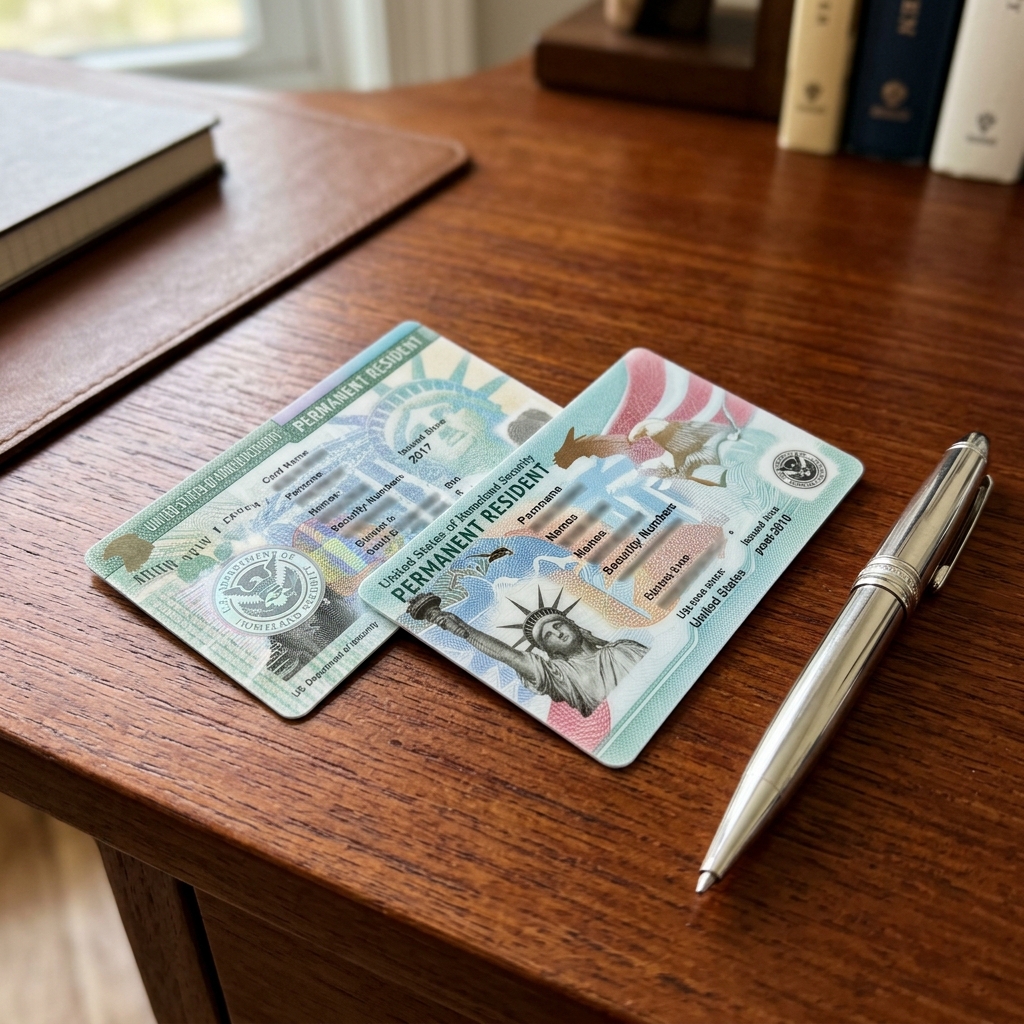
Those who obtain permanent residence in the United States do not always receive the same type of document. Depending on the immigration category and the length of the marriage at the time of approval, the Green Card may be issued as conditional (valid for two years) or permanent (valid for ten years). The difference is not merely bureaucratic: it affects deadlines, forms, costs, and even the risk of losing immigration status if the holder does not meet specific obligations within narrow windows.
Understanding this distinction is the first step to navigating the process safely. This article details who receives each type of card, which forms to fill out, how much it costs, and what happens if the deadline is missed.
The Conditional Green Card
The conditional Green Card is issued with a validity of only two years. It grants the same rights to work, travel, and reside as the permanent card, but imposes an additional obligation: the holder must apply for removal of conditions before the document expires. The legal basis is in Section 216 of the Immigration and Nationality Act (INA), which establishes the rules for conditional residents.
There are two situations that lead to the issuance of a conditional Green Card. The first and most common involves marriage: when the beneficiary obtains residence based on a marriage that was less than two years old at the time of approval, USCIS grants conditional residence. The second involves investors in the EB-5 category, who receive the conditional Green Card until they prove that the investment met the job creation requirements.
Removal by Marriage (I-751)
For conditional residents by marriage, removal of conditions is done through Form I-751 (Petition to Remove Conditions on Residence). The application must be filed during the 90-day window before the expiration of the conditional Green Card. Filing outside this window may result in loss of status and initiation of removal proceedings.
The I-751 filing fee is US$ 750 (paper form) or US$ 700 (online filing), plus US$ 85 for biometrics in most cases. The median processing time in 2026 is approximately 21 months, and may reach up to 24 months. Upon filing the I-751, the applicant receives a receipt notice that automatically extends the validity of the conditional Green Card for 48 months beyond the original expiration date.
The I-751 generally requires joint filing with the spouse who is a citizen or permanent resident. However, there are waivers for joint filing in specific situations: divorce or annulment, death of the spouse, domestic violence or abuse, or proof that denial would cause extreme hardship. In waiver cases, the filing fee is waived.
Removal for EB-5 Investors
Investors who received the conditional Green Card through the EB-5 category must file Form I-829 (Petition by Investor to Remove Conditions on Permanent Resident Status). The deadline is the same: a 90-day window before expiration. The I-829 requires proof that the investment was maintained and that the required jobs were actually created.
The I-829 fee is US$ 3,750, plus US$ 85 for biometrics. In 2024, a court decision suspended additional increases proposed by USCIS for EB-5 category forms, and the current amounts reflect this decision.
The Permanent Green Card
After approval of the I-751 or I-829, the resident receives the permanent Green Card (also called unconditional), valid for ten years. This card can be renewed indefinitely through Form I-90, whose fee in 2026 is US$ 415 (online) or US$ 465 (paper).
It is important to understand that permanent refers to the resident status, not the physical card. The plastic card expires every ten years, but the permanent resident status has no expiration date, as long as the holder does not abandon it due to prolonged absence or lose it due to a serious criminal conviction.
Permanent residents have rights almost identical to those of American citizens: they can work for any employer, open businesses, travel freely, access social benefits, and attend public schools. The main exceptions are the right to vote in federal elections, eligibility for elected public office, and possession of a U.S. passport.
From Residence to Citizenship
Permanent residents may apply for American naturalization through Form N-400. The minimum residency period is five years as a permanent resident, reduced to three years when residence was obtained through marriage to a U.S. citizen and the couple remains married. The conditional period (the initial two years) counts toward this calculation.
The naturalization process includes an English and civics test, background check, and in-person interview at a USCIS office. Approval results in the oath ceremony and issuance of the naturalization certificate, which grants all rights of a citizen, including voting and a passport.
Risks of Missing the Deadline
Missing the 90-day window to file the I-751 or I-829 is one of the most serious mistakes in the immigration process. After the conditional Green Card expires without a removal request, the holder automatically loses legal resident status and may be placed in removal proceedings. In some cases, it is possible to file late and present a reasonable justification, but approval is not guaranteed and requires convincing evidence.
To avoid this risk, it is best to mark the exact date 90 days before expiration on your calendar and gather all documentation in advance. In the case of the I-751, this includes proof of a bona fide marital relationship: joint accounts, joint lease or mortgage contracts, children’s birth certificates, photographs of the couple on different occasions, and joint income tax returns (Form 1040 with married filing jointly status).
Learn more about EB-5
- Type
- Investment Green Card
- Min. investment
- US$ 800,000
- Jobs created
- Minimum 10 (full-time)
- Processing
- 24-48 months
About the author

Victoria Harper
Editor-in-Chief
As a journalist and lead editor at Visto n’ Visa, Victoria helps ensure that immigration topics are covered in a clear, trustworthy, and easy-to-understand way. Her focus is on delivering useful, human, and relevant content for people exploring new paths abroad.