Visto n' Visa
Blog
Notícias e artigos
Destinations
Careers
Immigrants

Want to live and work in Notre-Dame-de-Grace?

Personalized immigration plan with eligible visas, costs, and next steps for your goal!

If you are not eligible, you will know exactly why and what to do to improve your approval chances.

Save up to 12 hours in meetings

No pointless assessments.

Save up to 90%

Save money on vague or unfocused consultations

Avoid Fraud and Mistakes

One mistake can cost you your visa

Total Impartiality

Zero commercial bias

Decide with peace of mind

No toxic urgency

Fast and Accurate

Answers in minutes, no guesswork

Mosaic of immigrant communities on tree-lined streets

NDG is home to roughly 68,000 residents with strong Filipino, Caribbean, Maghrebi, Jewish, Latin American, and South Asian communities, with approximately half the population born outside Canada or with immigrant parents.

NDG's demographics are among the most diverse in Montreal. Anglophone Caribbean communities, particularly Jamaican and Haitian, have been established in the neighborhood for decades, primarily in the southern sector. To the west, along Somerled and Monkland, there is a strong Filipino presence visible in bakeries, salons, and specialty supermarkets.

The northern sector, near Côte-Saint-Luc, has a historic Jewish community with synagogues and denominational schools. More recent immigrants come from Lebanon, Syria, Morocco, Algeria, Tunisia, Sri Lanka, India, Pakistan, and Bangladesh, along with Chinese, Vietnamese, Mexican, Colombian, Venezuelan, and other Latin American residents spread throughout the neighborhood.

Religiously, NDG is pluralistic: Roman Catholics represent the nominal majority due to Quebec's heritage and the presence of Latin American and Filipino immigrants, but there are growing Muslim communities, Orthodox and Conservative Jewish congregations, Anglo and Caribbean Protestant churches, Hindus, and Buddhists. French and English are the dominant languages on the streets, with Arabic, Tagalog, Spanish, and Creole strongly present in commercial settings.

Languages spoken
  • French
  • English
  • Arabic
  • Tagalog
  • Spanish
  • +2 more
Main religions
  • Catholicism
  • Islam
  • Judaism
  • Protestantism
  • Hinduism
  • +1 more

More affordable than the Plateau, pricier than Verdun or Saint-Michel

NDG sits in an intermediate cost range within Montreal: rents have risen considerably since 2020, but it remains accessible by Canadian standards, with affordable ethnic markets and predictable basic utility costs.

Rent is the largest expense, and pressure has increased significantly in recent years. A typical 4.5-room apartment (two bedrooms) in an older brick building varies considerably depending on the street and the property's condition, generally more expensive near Monkland and more affordable near Décarie and the Vendôme metro. Studios and 3.5-room units are in demand among Concordia Loyola students.

Groceries can be managed on a tight budget when shopping at markets such as Adonis (Lebanese), Akhavan (Iranian), PA Supermarché, and the Filipino and Caribbean shops along Somerled and Sherbrooke. Hydro-Québec keeps electricity costs among the lowest in North America, though heating from November through March adds considerably to monthly expenses.

A monthly STM transit pass has a fixed cost, and most residents do not need a car. Restaurants on Monkland tend toward the higher end, but the rest of the neighborhood offers good food at reasonable prices. Provincial and federal income taxes in Quebec are high, meaning net take-home pay is lower than in Ontario for the same gross salary bracket.

Brick duplexes, walk-ups, and Montreal's classic exterior staircase

The housing stock is dominated by early-twentieth-century brick duplexes and triplexes, four-story walk-up buildings, and a handful of detached homes. Renting is the norm, and buying has become increasingly difficult.

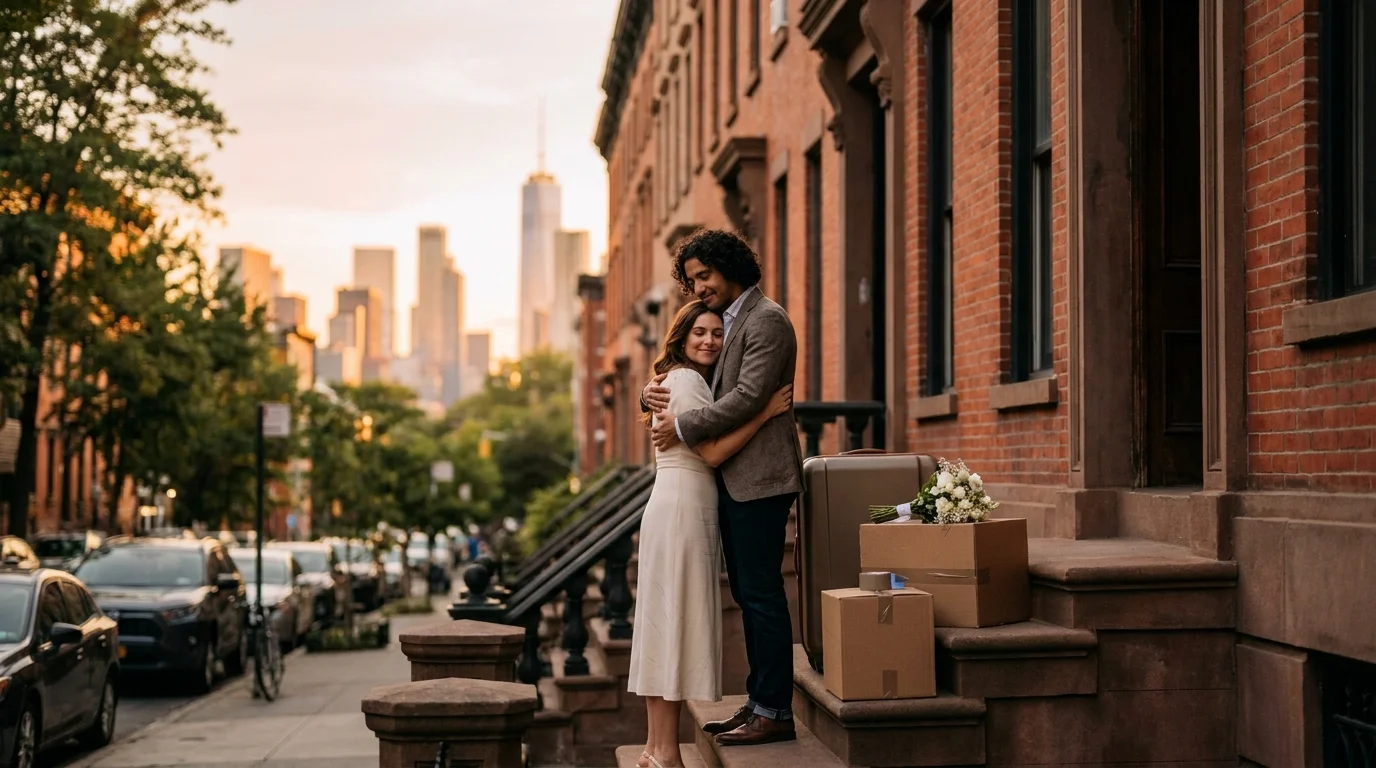
NDG contains some of Montreal's most attractive residential blocks: streets like Hampton, Marlowe, Beaconsfield, and Old Orchard are continuous rows of red-brick duplexes with the spiral exterior staircase that has become a symbol of the city. Most properties are between 80 and 110 years old, with high ceilings, hardwood floors, and stained-glass windows.

For rentals, the main cycle runs to July 1, the traditional moving day in Quebec. Searching typically begins in March or April. Sites like Kijiji, Marketplace, and PadMapper concentrate listings, and many landlords still advertise with a sign in the window. Leases are standardized by the TAL (Tribunal administratif du logement), and tenants have strong legal protections.

Purchasing property in NDG has become expensive: condos and duplexes now compete with Westmount and Outremont. Those looking to buy generally focus on the southern sectors of the neighborhood or on blocks farther from the metro. Families often start by renting and later move to Côte-Saint-Luc or LaSalle when they want a home with a backyard.

Recommended neighborhoods
  • Monkland Village
  • Somerled
  • Upper NDG (north of Sherbrooke)
  • Lower NDG (south of Sherbrooke)
  • Loyola

Residential neighborhood connected to Montreal's healthcare and service economy

NDG itself is not an industrial employment hub, but it is a short metro ride from downtown Montreal and university campuses, with a high concentration of hospitals and educational institutions nearby.

Most NDG residents work elsewhere in the city. The Vendôme orange metro line connects to downtown in roughly 15 minutes, and the station also serves the McGill University Health Centre (MUHC), the neighborhood's largest hospital complex and one of the region's top employers. Concordia's Loyola Campus is located within the neighborhood itself.

The sectors employing the most NDG residents are healthcare, education, retail, hospitality, professional services (IT, media, design), and public administration. The neighborhood's bakeries, cafes, restaurants, and small businesses provide entry-level positions for newcomers, especially along Sherbrooke Ouest and Somerled.

Most customer-facing roles require French. Quebec mandates proficiency through Francisation Québec, a free program for immigrants. In healthcare, IT, and academia there are still positions where English suffices initially, but career advancement without French is limited. Average salaries in Montreal are lower than in Toronto, partly offset by a lower cost of living.

Dominant sectors
  • Healthcare
  • Education
  • Neighborhood retail
  • Hospitality
  • Professional services
Major employers
  • McGill University Health Centre (MUHC)
  • Concordia University (Loyola Campus)
  • CIUSSS du Centre-Ouest-de-l'Île-de-Montréal
  • Hôpital de Lachine
  • EMSB and CSSDM school boards

From Loyola Campus to bilingual public schools

NDG contains Concordia's Loyola Campus within the neighborhood, Francophone and Anglophone public schools, Jewish and Catholic denominational schools, and free French courses for adult immigrants.

Concordia University operates the historic Loyola Campus on Sherbrooke Ouest, the heir of the Jesuit Loyola College founded in 1896. Programs in science, communication, and journalism are based there. McGill University is just to the east in downtown, and McGill's medical campus sits adjacent to the neighborhood through the MUHC.

Public schools are divided between the Commission scolaire de Montréal (CSSDM) in French and the English Montreal School Board (EMSB) in English. Bill 101 requires children of new immigrants to attend Francophone schools for elementary and secondary education. Private denominational schools also operate in the area, including Akiva School (Jewish) and Loyola High School (Jesuit, all-male).

For newly arrived adults, Francisation Québec offers free French courses with a financial stipend, and the neighborhood YMCA runs community programs for literacy, integration, and conversation clubs. Public libraries also offer free language classes. Education is free through secondary school for permanent residents in public schools, and Quebec universities are the most affordable in Canada.

Notable universities
  • Concordia University (Loyola Campus)
  • McGill University (Faculty of Medicine and MUHC, adjacent)
  • Vanier College (nearby Anglophone CEGEP)
  • Marianopolis College (adjacent private CEGEP)

Covered by the MUHC and a dense network of CLSCs and community clinics

Permanent residents are enrolled in RAMQ, Quebec's public health system. NDG sits next to the largest Anglophone hospital complex in Quebec, the McGill University Health Centre.

Access to public healthcare in Quebec is provided through the Régie de l'assurance maladie du Québec (RAMQ). For immigrants with permanent residence, the health card is issued after a mandatory three-month waiting period, during which private insurance is advisable. International students are covered by their university's health plan.

The Montreal Children's Hospital (Hôpital de Montréal pour enfants) and the Royal Victoria Hospital are part of the MUHC and are located immediately adjacent to NDG near Vendôme station. The neighborhood is also served by the CLSC de Notre-Dame-de-Grâce, a public primary care center offering family medicine, nursing, vaccination, prenatal care, and social services.

Finding a family doctor through the Guichet d'accès à un médecin de famille (GAMF) can take months, so in the interim most residents use walk-in clinics (sans rendez-vous) or super-clinics (GMF-Réseau). Pharmacies such as Jean Coutu and Pharmaprix are on nearly every corner, and pharmacists can prescribe for minor conditions. Care in English is widely available, an important distinction from most of Quebec.

A safe neighborhood by North American standards, with differences between sectors

NDG is generally a safe neighborhood. Bicycle theft and car break-ins occur, but serious violence is rare. The southern sector has historically seen more incidents than the northern sector.

Montreal ranks among the safest large cities in Canada, and NDG follows that pattern. The most common concerns are minor theft (locked bicycles, packages left at the door) and occasional vehicle break-ins. Walking at night along Monkland, Sherbrooke, and Somerled is comfortable for those familiar with the area.

The southern sector, around Walkley and Cavendish near Loyola, and some blocks along Décarie have historically recorded higher incident counts, though nowhere near the levels seen in American cities. The SPVM (Montreal police) operates Poste de quartier 11, dedicated to NDG.

Women walking alone at night generally feel comfortable on the main commercial streets. The combination of late-closing businesses, reasonable lighting, and pedestrian traffic contributes to that sense of safety. Emergency services are reached at 911 (English and French). Childhood vaccination, food safety, and sanitary inspection standards follow rigorous Canadian norms.

Safer neighborhoods
  • Monkland Village
  • Upper NDG (north of Sherbrooke)
  • Loyola Campus surroundings
  • Somerled corridor
Areas to avoid
  • Isolated areas under Décarie overpasses at night
  • Poorly lit blocks near Walkley and Cavendish late at night

Metro, frequent buses, and the REM reshaping the west end

NDG is well served by the orange line at Vendôme and buses along Sherbrooke, Côte-des-Neiges, and Décarie. The REM, a new light rail line, connects the West Island to downtown via Vendôme station.

The Vendôme metro station (orange line) sits on the eastern edge of the neighborhood and is the main transit hub, now also serving as a terminal for the REM (Réseau express métropolitain), the automated light rail system that began phased operations between 2023 and 2025. From here, the REM connects to Trudeau Airport (YUL station) and to the western suburbs.

STM buses cross the neighborhood throughout the day: the 105 along Sherbrooke, the 165 along Côte-des-Neiges, the 51 along Édouard-Montpetit, the 138 along Notre-Dame-de-Grâce, and the 162 along Lachine. Most residents manage without a car. Cyclists have access to the Sherbrooke bike path and connections to Montreal's cycling lane network, and BIXI (the public bike-share system) has several stations throughout the area.

Those who own a car can find on-street parking with residential SRRR permits. Autoroute Décarie cuts through the neighborhood north-south, connecting to routes 20 and 40. Winter requires snow tires, mandatory between December and March. The Opération Déneigement (snow removal operation) requires cars to be moved several times per winter.

Airports
  • YUL — Montreal-Trudeau International Airport (16 km from the neighborhood, accessible via the REM)
  • Bike infrastructure

Independent cinemas, block festivals, and the best Filipino food in Montreal

NDG's culture plays out on the street: cafes, libraries, neighborhood cinemas, festivals like the Monkland Street Festival, and the free interplay of Caribbean, Jewish, Maghrebi, and Filipino traditions.

Monkland Village is the heart of the local cultural scene: cinemas such as Cinéma du Parc (on the Côte-des-Neiges axis) and the historic Cinéma Beaubien are nearby, and the annual NDG Arts Week brings together galleries, readings, and music shows throughout the neighborhood. Bibliothèque Benny and Bibliothèque Notre-Dame-de-Grâce serve as community gathering points with children's programming and free French classes.

Food is where the diversity shines most visibly. Maghrebi cuisine (couscous, tagine), Caribbean (jerk chicken, roti, Jamaican patties), Filipino (lechon, pancit, sisig), Lebanese (shawarma, manakish), Italian (neighborhood trattorias like Cucina), Vietnamese (pho, bánh mì), and traditional Québécois (poutine, tourtière) all coexist within three or four blocks.

Sports facilities include the Concordia Loyola stadium and the Centre sportif NDG. Live music appears in bars along Sherbrooke and the neighboring Plateau. Montreal's annual cultural calendar, including the Jazz Festival, Just for Laughs, Osheaga, and Mural, takes place downtown, a 15-minute metro ride away.

Notable dishes
  • Poutine
  • Tourtière
  • Montreal smoked meat
  • Montreal bagel
  • Pâté chinois
  • +2 more
Annual events
  • NDG Arts Week
  • Monkland Village Street Festival
  • Festival NDG (Loyola Park)
  • Caribbean Festival de Côte-des-Neiges
  • Somerled neighborhood festival

Spacious parks, Monkland Village, and the western green belt

NDG combines generous parks (Loyola, NDG, Trenholme) with the street life of Monkland and Sherbrooke. The city's main attractions, including Mont-Royal and downtown Montreal, are a short distance away.

Within the neighborhood, Parc Notre-Dame-de-Grâce is the green hub, featuring sports courts, a playground, and the most popular public pool in summer. Loyola Park, on Concordia's campus, has a running track and open fields. Monkland Village, along Monkland Avenue between Décarie and Girouard, concentrates cafes, restaurants, artisanal ice cream shops, and the historic cinema.

A short drive or metro ride away are the city's major landmarks: Mont-Royal (the park designed by Frederick Law Olmsted), Old Montreal and the Old Port, Plateau Mont-Royal, Mile End, Marché Atwater, the Montreal Museum of Fine Arts, and the Notre-Dame Basilica of Montreal. The Olympic Stadium and Botanical Garden are in the east end.

In winter, ice skating on neighborhood rinks and cross-country skiing on Mont-Royal are popular activities. In summer, cycling paths lead to the Lachine Canal. The neighborhood's international food scene is itself a destination: hosting visitors in NDG means walking along Sherbrooke Ouest for Caribbean, Filipino, and Moroccan food in a single evening.

  1. 1Monkland Village
  2. 2Concordia's Loyola Campus
  3. 3Parc Notre-Dame-de-Grâce
  4. 4Sherbrooke bike path
  5. 5Cinéma du Parc (nearby)
  6. 6Marché Adonis Sherbrooke
Parks & green spaces
  • Parc Notre-Dame-de-Grâce
  • Parc Loyola
  • Parc Trenholme
  • Parc Macdonald
  • Parc Girouard
  • +1 more

One of Canada's most cosmopolitan neighborhoods

Roughly half of NDG's residents were born outside Canada or have immigrant parents. Filipino, Caribbean, Maghrebi, Lebanese, South Asian, Jewish, Latin American, and African communities make up the demographic fabric.

NDG is one of Montreal's historic immigrant entry points, alongside Côte-des-Neiges and Parc-Extension. Anglophone Caribbean communities (Jamaican, Trinidadian, Guyanese, Haitian) established themselves in the postwar era, drawn by Anglican parishes, English-language schools, and ties to Concordia. Filipino residents arrived in waves from the 1970s onward and today have a strong commercial presence on Somerled.

Maghrebi residents (Moroccan, Algerian, Tunisian) and Lebanese residents grew in numbers from the 1990s, attracted by Quebec's French language environment. Historic Ashkenazi Jewish communities share the neighborhood with Francophone Sephardic Jews from North Africa. South Asians (India, Pakistan, Sri Lanka, Bangladesh), Chinese, Vietnamese, and Cambodian residents complete the Asian demographic component.

Integration support comes from the YMCA NDG, Centre communautaire NDG, Multi-Caf (food bank and community meals), and the local CLSC. Organizations such as Centre Génération Emploi and La Maisonnée help newcomers with credential recognition, job searching, and French language learning. Consulates are mostly located downtown, a 15-minute trip away.

25,000
Foreign-born residents
estimated
Top countries of origin
  • Philippines
  • Haiti
  • Algeria
  • Morocco
  • Lebanon
  • India
  • China
  • Jamaica
Foreign consulates
  • Consulate-General of France in Montreal
  • Consulate-General of the United States in Montreal
  • Consulate-General of Mexico in Montreal
  • Consulate-General of Brazil in Montreal
  • Consulate-General of Morocco in Montreal
  • +3 more
Community organizations
  • YMCA NDG
  • Centre communautaire NDG
  • Multi-Caf
  • La Maisonnée
  • Centre Génération Emploi
  • Table de quartier NDG

Latest posts

Straight from the blog

There are no posts specifically about Notre-Dame-de-Grace yet. In the meantime, check out our latest posts.