Visto n' Visa
Blog
Notícias e artigos
Destinations
Careers
Immigrants

Want to live and work in Truro?

Personalized immigration plan with eligible visas, costs, and next steps for your goal!

If you are not eligible, you will know exactly why and what to do to improve your approval chances.

Save up to 12 hours in meetings

No pointless assessments.

Save up to 90%

Save money on vague or unfocused consultations

Avoid Fraud and Mistakes

One mistake can cost you your visa

Total Impartiality

Zero commercial bias

Decide with peace of mind

No toxic urgency

Fast and Accurate

Answers in minutes, no guesswork

A small city, mostly white, with a growing European presence

Truro is mostly white British, but it concentrates Cornwall's greatest diversity thanks to the hospital, the college, and the service sector.

Truro's population stands at around twenty-three thousand in the urban area and rises to nearly seventy thousand when nearby parishes are included. The profile is mostly white British, in proportions typical of inland southwest England, but the city concentrates Cornwall's greatest diversity. Healthcare professionals, nurses, and doctors trained outside the United Kingdom are a visible presence at the Royal Cornwall Hospital.

The age distribution is balanced, with a strong presence of retirees who chose Cornwall for quality of life, but also young people working in retail, hospitality, and public institutions. English is the dominant language in nearly every context. Cornish, revitalised in recent decades, appears in bilingual signage and in schools that offer optional classes.

In terms of religion, the Church of England retains historical weight, with the cathedral as a regional landmark, though actual attendance is low, in line with the rest of the country. There are also traditional Methodist communities throughout Cornwall, a Catholic chapel, small evangelical congregations, and a non-religious minority, now the majority among younger people.

Languages spoken
  • English
  • Cornish (Kernewek)
  • Polish
  • Romanian
  • Portuguese
Main religions
  • Anglican Christianity
  • Methodism
  • Roman Catholicism
  • No religion
  • Other Christian minorities

Cheaper than London, pricier than expected for its size

Truro has a cost of living below southeastern England, but tourist pressure and housing scarcity push rent and shopping above other towns of the same size.

Compared to London, Bristol, or Bath, Truro is clearly cheaper. Rent, groceries, and energy bills sit below the southern England average. For those working remotely on a London salary in pounds, the equation is favourable, and this inflow has pushed prices up in recent years. For those relying on local wages, the picture changes considerably.

Rent is the most sensitive item. Two-bedroom terraced houses near the centre cost considerably more than in same-sized cities in northern England, and supply is tight because part of the stock becomes second homes or holiday rentals. Groceries, transport, and basic services follow British standards, with supermarkets such as Tesco, Sainsbury's, Waitrose, and Lidl covering all budget ranges.

Dining out and frequenting pubs and beaches are part of the lifestyle, and prices align with touristy Cornwall, meaning higher than in working-class inland towns. Newcomers should plan a financial cushion for the first months, especially for the upfront rental deposit, which usually requires five weeks paid in advance.

Truro

A small, contested market dominated by Victorian terraced houses

Those seeking to live in Truro find plenty of Victorian brick houses, few flats, and strong competition with second homes and relocated professionals.

Truro's housing stock is dominated by two- and three-storey terraced houses, many Victorian, and by newer suburban developments on the outskirts. Flats exist but in limited number, concentrated in conversions of older buildings in the centre. Overall supply is short of demand, especially for long-term rentals, because a significant share of the stock has been converted into holiday lets.

Neighbourhoods such as Tregolls, Highertown, and Trelander offer a good balance between price, walking distance to the centre, and hospital access. Areas like Malabar and Truro Heights have newer family-oriented homes. For those working at the Royal Cornwall Hospital, living in Treliske or nearby removes the need for daily driving.

The rental process almost always goes through local agencies such as Lillicrap Chilcott, Miller Countrywide, and Goundrys, with guarantors, income verification, and references. For purchases, the market is competitive, with traditional mortgages and a conveyancing process that usually takes two to three months. Those arriving without a UK credit history generally need a larger deposit or a guarantor.

Recommended neighborhoods
  • Highertown
  • Tregolls
  • Trelander
  • Malabar
  • Truro Heights
  • +2 more

Healthcare, public sector, and services anchor employment

Truro lives off the Royal Cornwall Hospital, local government, retail, education, and tourism; a small market with little industry and opportunities concentrated in services.

Truro's single largest employer is the Royal Cornwall Hospital in Treliske, linked to the NHS. It drives demand for nursing, medicine, hospital administration, cleaning, catering, and logistics. Cornwall Council, headquartered in Truro, is another major employer for planning, social work, public finance, and IT.

The private sector concentrates on independent retail, hospitality, law firms, accountancy, architecture, legal services, and local media such as the West Briton newspaper. There is also a small creative scene with agencies, studios, and cultural institutions linked to the cathedral and the museum. Falmouth University runs some programmes and internships in the region, and Truro and Penwith College trains technicians for the local market.

For immigrants, the most common path runs through healthcare roles, seasonal agriculture nearby, hospitality, and elderly home care. Positions require professional registration and, depending on the role, a specific work visa. The average wage in Cornwall is below the British national average, and competition for skilled posts is high because many people want to live in the region for lifestyle reasons.

Dominant sectors
  • Public healthcare (NHS)
  • Public administration
  • Independent retail
  • Hospitality and tourism
  • Education
  • +1 more
Major employers
  • Royal Cornwall Hospitals NHS Trust
  • Cornwall Council
  • Truro and Penwith College
  • Lillicrap Chilcott
  • Stephens Scown LLP
  • +1 more

Good state schools and a regional college, no university of its own

Truro has well-rated state schools and Cornwall's largest college, but those seeking a university degree must look to Falmouth, Plymouth, or Exeter.

The school system follows the British model of state primary and secondary schools, with some of the best-rated schools in Cornwall. Richard Lander School and Penair School are the main state options for secondary education, both well rated by Ofsted. Truro School, founded in the nineteenth century, is the leading independent school in the region, with boarding and strong traditions in music, sports, and sciences.

Truro and Penwith College is the largest post-secondary institution in Cornwall, offering A-levels, BTEC vocational courses, apprenticeships, and some university-level programmes. For immigrants with school-age children, the county council handles allocation based on proximity and availability, and the process is usually straightforward if done in advance.

For full university degrees, the closest destination is Falmouth, with Falmouth University and the University of Exeter Penryn Campus, both about half an hour by train. Plymouth and Exeter expand the offering with traditional courses in medicine, law, and engineering. The Open University has a regional centre in Truro for those who prefer to study at a distance while working.

Notable universities
  • Truro and Penwith College
  • Falmouth University (nearby campus in Penryn)
  • University of Exeter Penryn Campus
  • Open University (regional centre)

Royal Cornwall Hospital serves all of Cornwall

Truro hosts Cornwall's main hospital, with an emergency department, maternity, and specialties; city residents have convenient access to public healthcare and private clinics.

The Royal Cornwall Hospital in Treliske is the largest in the county and offers a twenty-four-hour emergency department, maternity, cardiology, oncology, and general surgery. For highly specialised cases, patients may be transferred to Plymouth or Bristol, but most needs are handled locally. The Royal Cornwall Children's Hospital is integrated into the same campus.

Access to public healthcare through the NHS is free at the point of use for residents registered with a local GP. The city has several GP practices, such as Lander Medical Practice and Penryn Surgery, covering much of the resident population. Registration should be done as soon as a person moves to Truro and has a fixed address, presenting proof of residence and a passport.

Those who prefer or need faster service can find private alternatives, with hospitals such as the Duchy Hospital in Truro offering consultations, exams, and elective surgeries. International coverage and private insurance such as Bupa and AXA are accepted. Pharmacies operate during business hours, with on-call rotations coordinated by the NHS.

Truro

A safe city by British standards, with occasional nightlife issues

Truro is considered one of the safest cities in the United Kingdom, with low crime and incidents mostly tied to alcohol in the centre on weekends.

Compared to British cities of similar size, Truro has below-average crime rates. Shoplifting, minor burglaries, and antisocial behaviour linked to alcohol are the most common incidents, and they tend to concentrate in the centre on Friday and Saturday nights, when pubs and clubs are busy.

Residential areas such as Highertown, Kenwyn, Truro Heights, and Malabar have a quiet reputation, with active neighbourhood communities and little movement at night. Areas near Lemon Quay and Boscawen Street call for normal city-centre awareness at night, with basic care not to display phones or open bags. There are no neighbourhoods considered dangerous in the way they exist in major capitals.

The local police, Devon and Cornwall Police, maintain a visible presence, and there is CCTV covering the centre. For emergencies, the number is 999, and for non-urgent matters, 101. In general, women walk alone with reasonable safety, public transport is calm, and newcomers from other countries are often pleasantly surprised by the everyday sense of security.

Safer neighborhoods
  • Highertown
  • Kenwyn
  • Truro Heights
  • Malabar
  • Tregolls
Areas to avoid
  • Around Lemon Quay late at night on weekends
  • Isolated car parks near the station after midnight

Direct train to London, car for the rest of Cornwall

Truro has a station on the Great Western line and regional buses, but life outside the centre relies heavily on a private car.

Truro station sits on the Great Western Railway main line, with direct connections to Plymouth, Exeter, Bristol, and London Paddington, a journey of four to five hours. The Maritime Line branch, locally known as the Falmouth Line, departs from Truro and links the city to Penryn and Falmouth in half an hour, one of the most popular alternatives for avoiding a car on the coastal route.

On the road network, the A30 and A39 cross the surrounding area and connect Truro to Plymouth, Bodmin, Newquay, and western Cornwall. Companies such as First Kernow and Go Cornwall run regional bus lines, with unified fares and the Ride Cornwall pass. For short distances within the city, it is perfectly feasible to walk between the station, the centre, the hospital, and most residential neighbourhoods.

For international flights, the most useful airport is Cornwall Airport Newquay, about half an hour by car, with domestic flights and some seasonal European routes. Bristol and Exeter are the alternatives for broader destinations. Dedicated cycle paths are limited within the city, but there are safe trails along the estuary and toward Falmouth, and cycling infrastructure is gradually growing.

Airports
  • NQY — Cornwall Airport Newquay
  • EXT — Exeter Airport
  • BRS — Bristol Airport
  • Bike infrastructure

Climate

Truro

Cathedral, maritime festivals, and Cornish identity

Truro is Cornwall's cultural heart, with a cathedral, a regional museum, seasonal festivals, and a strong Cornish identity in music, language, and food.

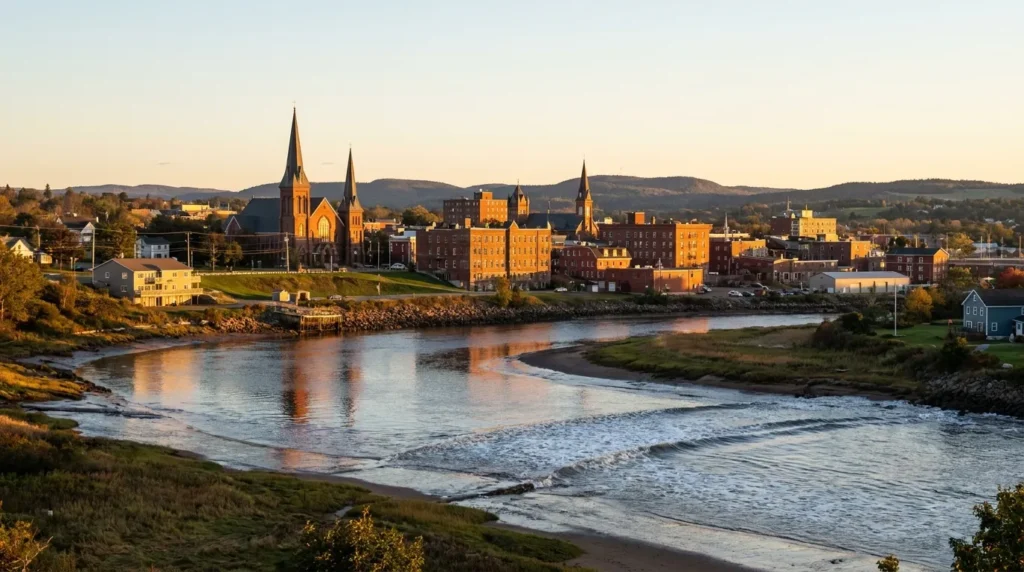
Truro Cathedral, with its three Gothic towers, dominates the skyline and serves as a venue for concerts, seasonal events, and Christmas celebrations that fill the city in December. The Royal Cornwall Museum on River Street holds Cornwall's largest collection of art and archaeology, including mineralogy, Celtic artefacts, and modern art linked to St Ives artists.

The food scene reflects regional pride. The Cornish pasty, originally a miner's food, is everywhere in bakeries such as Warrens, Rowe's, and Philps. Cream tea with Cornish clotted cream, fresh fish from Newlyn harbour, seafood chowders, and craft beer from local microbreweries are part of everyday life. In pubs such as The Old Ale House and The Old Grammar School, the atmosphere is relaxed and family-friendly.

Annual events such as the City of Lights in November, with paper lanterns parading through the centre, and the Truro Festival, with music and theatre, anchor the calendar. Cornish identity also shows in celebrations such as St Piran's Day in March and in traditional male choirs singing in pubs on weekends. There are no UNESCO sites within the city, but the nearby Cornish mining belt is part of the list.

Notable dishes
  • Cornish pasty
  • Cream tea with scones and clotted cream
  • Stargazy pie
  • Saffron bun
  • Hevva cake
  • +1 more
Annual events
  • City of Lights
  • Truro Festival
  • St Piran's Day
  • Truro Cathedral Christmas Markets
  • Murdoch Day

Cathedral, museum, covered market, and estuary walks

Truro offers historic heritage in the centre, nature along the estuary, and easy access to famous Cornish beaches and gardens just minutes by car.

Truro Cathedral is the main landmark, with free admission, regular concerts, and notable stained glass. Right next door, the Royal Cornwall Museum brings together archaeology, art, and natural history in a free space. The Pannier Market and Lemon Quay concentrate independent retail, charity shops, vintage stores, and cafes, serving as the local gathering spot on weekends.

The Truro river estuary offers boat trips to Falmouth and to the subtropical Trelissick garden, a National Trust property with views over the Fal river. Boscawen Park and Victoria Gardens are urban parks for quiet walks. The Hall for Cornwall, recently refurbished, hosts plays, musicals, and national tours.

For those who want to explore Cornwall from Truro, half an hour by car reaches beaches such as Perranporth, Porthtowan, and Carbis Bay, the Eden Project in Bodelva, the Lost Gardens of Heligan, and the artistic town of St Ives. Falmouth, with the National Maritime Museum, is twenty minutes away by train. It is an ideal base to use weekends to discover the region.

  1. 1Truro Cathedral
  2. 2Royal Cornwall Museum
  3. 3Hall for Cornwall
  4. 4Pannier Market
  5. 5Lemon Quay
  6. 6Trelissick Garden
Parks & green spaces
  • Victoria Gardens
  • Boscawen Park
  • Coosebean Wood
  • Idless Woods
  • Daubuz Moors Nature Reserve

A small community, with healthcare professionals and Eastern Europeans

Truro has one of the smallest migrant populations in the United Kingdom in absolute terms, mostly healthcare professionals and Eastern European workers in hospitality and agriculture.

The migrant presence in Truro is proportionally small compared to Bristol, London, or Manchester, but it is the largest in Cornwall. The Royal Cornwall Hospital attracts doctors, nurses, and technicians trained in countries such as the Philippines, India, Nigeria, Spain, Portugal, and Italy, some of them through NHS international recruitment routes.

In the surroundings, parishes and farms depend heavily on seasonal workers from countries such as Poland, Romania, Bulgaria, and, more recently, Ukraine, especially for tulip and daffodil harvests and dairy production. In hospitality, it is common to find Central and Eastern European staff in hotels, restaurants, and cafes in the city and along the nearby coast.

As an administrative hub, Truro also concentrates the region's main honorary consulates and migrant support services. Organisations focus more on general welcome, school integration, language, and refugee support than on specific nationalities, and they work in partnership with the county council and religious institutions that have historically supported newcomers.

1,800
Foreign-born residents
estimated
Top countries of origin
  • Poland
  • Romania
  • Philippines
  • India
  • Portugal
  • Spain
  • Bulgaria
  • South Africa
Foreign consulates
  • Honorary Consulate of Germany in Plymouth
  • Honorary Consulate of France in Plymouth
  • Honorary Consulate of the Netherlands in Plymouth
  • Honorary Consulate of Italy in Bristol
  • Consulate-General of Poland in London (jurisdiction)
Community organizations
  • Cornwall Refugee Resettlement
  • Citizens Advice Cornwall
  • Cornwall Council Migrant Support
  • Truro Foodbank
  • Cornwall Hospitals Welcome Team

Latest posts

Straight from the blog

There are no posts specifically about Truro yet. In the meantime, check out our latest posts.