Visto n' Visa
Blog
Notícias e artigos
Destinations
Careers
Immigrants

Want to live and work in Glace Bay?

Personalized immigration plan with eligible visas, costs, and next steps for your goal!

If you are not eligible, you will know exactly why and what to do to improve your approval chances.

Save up to 12 hours in meetings

No pointless assessments.

Save up to 90%

Save money on vague or unfocused consultations

Avoid Fraud and Mistakes

One mistake can cost you your visa

Total Impartiality

Zero commercial bias

Decide with peace of mind

No toxic urgency

Fast and Accurate

Answers in minutes, no guesswork

Small population, Celtic roots, and new waves of immigrants

About 17,000 residents, mostly anglophone, with strong Scottish and Irish heritage and a growing presence of Filipinos, Indians, and Ukrainians.

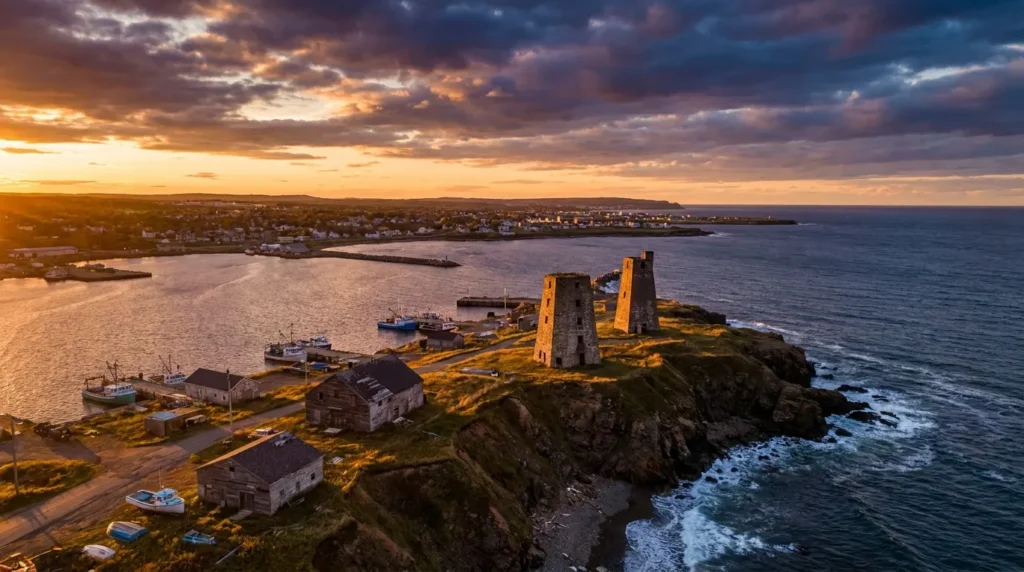
Glace Bay has around 17,000 residents and belongs to a metropolitan region (CBRM) of about 94,000. The population is mostly white, of Scottish, Irish, and English descent, reflecting the miners who arrived in the late 19th century to open the undersea pits. The Celtic identity is still alive in tartan flags, surnames like MacDonald and MacNeil, and folk music.

In recent years, provincial immigration programs have brought Filipino families working in healthcare, hospitality, and elder care, along with Indians tied to Cape Breton University and Ukrainian refugees welcomed by the local diocese. A historic Mi'kmaq community also lives in the region, with the Membertou reserve close to Sydney.

English is the everyday language, with a strong Cape Breton accent. Scottish Gaelic survives in festivals, classes at the Highland Village, and some bilingual signs. Most of the population is Christian, split between Roman Catholics and Protestants of the United and Anglican churches, with small Sikh, Hindu, and Muslim communities in greater Sydney.

Languages spoken
  • English
  • Scottish Gaelic (cultural)
  • Mi'kmaq
  • French
  • Tagalog
  • +1 more
Main religions
  • Roman Catholicism
  • United Church of Canada
  • Anglicanism
  • Presbyterianism
  • No religion
  • +2 more

One of the cheapest places to live in Canada

Rents and home prices cost a fraction of what is paid in Halifax or Toronto, but electricity and fuel weigh on the budget.

Glace Bay is today one of the most affordable corners of Canada to rent or buy. Whole two- or three-bedroom houses still appear at prices that in Toronto or Vancouver would not even cover the down payment. Simple downtown apartments go for modest prices, and many immigrants buy instead of renting in their first year.

The flip side is energy cost: winter is long, oil or electric heating weighs on the bill, and Nova Scotia Power charges high rates compared with other provinces. Gasoline, car insurance, and groceries cost more than in Halifax, because everything must cross the Canso Causeway to reach the island.

Fresh food, fish, and local seafood are cheap straight from fishermen or at the Cape Breton Farmers Market. Restaurants are few and inexpensive, public transit is minimal, and expensive leisure barely exists, which helps keep a family's monthly budget in check.

Glace Bay

Century-old wooden houses at out-of-the-curve prices

The stock is dominated by miners' single-family homes, on tree-lined streets near the sea; formal rentals are scarce, but buying is cheap.

Glace Bay's housing stock was built to shelter miners and their families, so the landscape is dominated by one- and two-story wooden houses, semi-detached or detached, many a century old and well maintained. Buying one of these homes is often simpler than finding a rental, because the rental market is small and moves slowly.

Neighborhoods like Table Head, Caledonia, and the area around Senator's Corner hold much of the renovated stock, quiet streets, and proximity to downtown. Those who prefer a sea view look toward New Aberdeen and Donkin, on the east side, where the beach is a few minutes' walk away.

Newcomers often combine two strategies: short-term renting in Sydney while searching, then buying in Glace Bay with financing. Roof, stone foundation, and heating system inspections are essential, because salt air and Atlantic wind wear everything down faster than inland.

Recommended neighborhoods
  • Table Head
  • Caledonia
  • New Aberdeen
  • Donkin
  • Bridgeport
  • +2 more

Healthcare, public service, and fishing anchor the local economy

The steadiest openings are in hospitals, nursing homes, schools, and municipal offices; the private sector is thin and many commute to Sydney.

After the coal mines closed in the 2000s, Glace Bay rebuilt employment around public services and healthcare. The Glace Bay Health Care Complex, nursing homes such as Taigh Na Mara, and the Cape Breton-Victoria Regional Centre for Education are among the largest local employers, with constant openings in nursing, technicians, and support roles.

Fishing remains important in the spring and fall seasons, with lobster, snow crab, and herring landed at the piers of Glace Bay and Big Glace Bay. Small call centers and tech firms in Sydney absorb part of the younger workforce, and many residents commute daily 20 minutes along Highway 4.

For immigrants, the most realistic paths run through credentialing in healthcare, transportation, construction, and tourism, supported by the Nova Scotia Provincial Nominee Program and the Atlantic Immigration Program. Those arriving with a self-employed profession must count on clients across the CBRM, because Glace Bay alone rarely sustains a business.

Dominant sectors
  • Healthcare and social assistance
  • Public education
  • Municipal administration
  • Fishing and seafood processing
  • Retail
  • +1 more
Major employers
  • Nova Scotia Health (Glace Bay Health Care Complex)
  • Cape Breton-Victoria Regional Centre for Education
  • Cape Breton Regional Municipality (CBRM)
  • Taigh Na Mara Nursing Home
  • Sobeys
  • +2 more

Public schools nearby and a university 20 minutes away

Glace Bay has public elementary and secondary schools; higher education sits at Cape Breton University and the NSCC Marconi Campus.

Basic education in Glace Bay is run by the Cape Breton-Victoria Regional Centre for Education. Families rely on elementary schools such as Bridgeport, Glace Bay Elementary, and Khoury, along with Glace Bay High School, which serves the entire eastern CBRM. Enrollment is free, even for newly arrived permanent residents.

For English as a second language, newcomers access LINC programs through the YMCA of Cape Breton and the Cape Breton Local Immigration Partnership, with classes for adults and support for children in schools. The follow-up matters because the system is small and personalized, an advantage for those arriving with kids.

Higher education is concentrated in Sydney, 15 to 20 minutes away. Cape Breton University (CBU) draws thousands of international students, especially from India, and offers programs in business, nursing, and engineering. The NSCC Marconi Campus, part of the community college system, is the fastest route to certifications in trades, healthcare, and technology.

Notable universities
  • Cape Breton University (CBU, in Sydney)
  • Nova Scotia Community College, Marconi Campus (Sydney)
  • Université Sainte-Anne (regional francophone campus)

Mid-sized local hospital within the public system

The Glace Bay Health Care Complex handles emergencies and admissions; complex cases are referred to the Cape Breton Regional Hospital in Sydney.

Healthcare in Glace Bay is public, funded by Nova Scotia Health. The Glace Bay Health Care Complex, on Quarry Street, runs 24 hours with an emergency room, inpatient beds, basic maternity, dialysis, and outpatient clinics. It is the gateway for emergencies in eastern Cape Breton and serves the whole community regardless of nationality, with an MSI card.

For specialized procedures, major surgeries, oncology, and the neonatal ICU, patients are transferred to the Cape Breton Regional Hospital in Sydney, the regional referral hospital, or to Halifax. The system suffers from a shortage of family doctors, a chronic problem in the province, and many residents stay on the Need a Family Practice Registry waiting list.

Newcomers register for MSI as soon as they receive permanent resident status or a valid visa. Walk-in clinics, the 811 phone line (Health Link), and pharmacies with nurse practitioners help bridge the family-doctor gap. Mental health and dentistry remain areas with limited access and long wait times.

Glace Bay

Quiet town with occasional drug-related incidents

Violent crime is low compared with large Canadian centers, but there are thefts, opioid issues, and some more rundown blocks.

Glace Bay is a small town, and the day-to-day sense of safety is high. Kids ride bikes through the streets, neighbors know each other, and violent incidents tend to concentrate in domestic situations or isolated conflicts among acquaintances, not attacks on strangers. The Cape Breton Regional Police keeps an active detachment in town.

As in many post-industrial communities of Atlantic Canada, there are signs of social distress: opioids, vandalism in abandoned buildings, and opportunistic thefts from garages and unlocked cars. Some stretches near the old Senator's Corner and streets with empty houses deserve attention at night, but they are not no-go zones.

For immigrants, the practical caution is straightforward: lock the car and house, do not leave valuables in sight, and check a property's history before buying. Open hostility toward newcomers is rare, and the neighborhood is generally welcoming, especially when the new resident gets involved in churches, sports, or volunteering.

Safer neighborhoods
  • Table Head
  • Caledonia
  • Bridgeport
  • Donkin
  • Reserve Mines
Areas to avoid
  • Isolated stretches of Senator's Corner at night
  • Areas with abandoned houses in New Aberdeen
  • Empty downtown parking lots after midnight

A car is nearly essential, buses exist but are limited

Transit Cape Breton connects Glace Bay to Sydney; the regional airport is 30 minutes away and the nearest international one is Halifax.

In Glace Bay, a car solves almost everything. Streets see little traffic, parking is easy and free, and the drive to Sydney along Highway 4 or Grand Lake Road rarely takes more than 25 minutes. In winter, snow tires are provincial law and help handle blizzards and ice on the seaside hills.

Transit Cape Breton operates local bus lines linking Glace Bay to Sydney, New Waterford, and Reserve Mines, with spaced schedules and few weekend runs. For non-drivers, the service covers the basics but requires planning; ride-sharing apps and taxis fill gaps in emergencies.

JA Douglas McCurdy Sydney/Cape Breton Airport (YQY), half an hour away, has daily flights to Halifax and Toronto operated by Air Canada and PAL Airlines. International flights depart from Halifax Stanfield (YHZ), about 4 hours 30 minutes by car along TCH 105 and the Canso Causeway, with a ferry to Newfoundland in North Sydney.

Airports
  • YQY, JA Douglas McCurdy Sydney/Cape Breton Airport (regional, 30 min)
  • YHZ, Halifax Stanfield International (international, ~4h30 by car)

Climate

Glace Bay

Celtic music, fiddle, and the miners' tradition

The cultural scene revolves around the traditional music of Cape Breton, community gatherings, churches, and the memory of the old coal mines.

Glace Bay breathes the Celtic culture of Cape Breton. Pubs and community halls host ceilidhs with fiddle, piano, and step-dancing, and island names like Ashley MacIsaac and Natalie MacMaster have roots in the region. The Savoy Theatre, a historic 1920 venue, hosts concerts, plays, and the annual Celtic Colours International Festival in the fall.

The memory of the mines is central. The Cape Breton Miners' Museum, in Quarry Point, takes visitors into a real gallery under the sea and showcases life in the company towns. Catholic and Protestant churches still organize fish and brewis dinners, lobster suppers, and bake sales that anchor the social calendar.

Local cuisine blends British, Scottish, and seafaring traditions. Visitors find fresh-pulled lobster rolls, oat cakes, creamy chowders, and the iconic Cape Breton pizza with sweet sauce and brick cheese, the signature of downtown's old pizzerias. In summer, street festivals and fireworks over the harbor bring entire families together.

Notable dishes
  • Cape Breton pizza (sweet sauce and brick cheese)
  • Lobster roll
  • Seafood chowder
  • Oat cakes
  • Fish and brewis
  • +2 more
Annual events
  • Celtic Colours International Festival (October, across Cape Breton)
  • Davis Day / Miners' Memorial Day (June)
  • Glace Bay Heritage Days
  • Action Week in Sydney
  • Cape Breton Summertime Revue

Sea, mining, and music on a short driving route

Attractions include the miners' museum, the Savoy Theatre, Big Glace Bay beaches, and the Marconi station where transatlantic radiotelegraphy was born.

The postcard of Glace Bay is the Cape Breton Miners' Museum, in Quarry Point, with the Ocean Deeps Colliery open for guided tours by former miners and the Men of the Deeps choir singing coal anthems. The Savoy Theatre, downtown, is the island's most beloved venue and a stage for Celtic Colours.

Nature is right around the corner. Big Glace Bay Beach offers sand, dunes, and seaside walks, while Renwick Brook Park and the Cape Breton Highlands Link trails work for short outings. A few kilometers away, in Table Head, are the Marconi National Historic Site, where Guglielmo Marconi set up the first official transatlantic radio station in 1902, and lookouts over the Atlantic.

Those with a free weekend drive the Cabot Trail, one of the most famous scenic roads in the world, or catch the ferry in North Sydney to Newfoundland. Nearby Sydney adds Membertou Heritage Park, the harbor with the World's Largest Fiddle, and traditional music shows at the Doryman Pub.

  1. 1Cape Breton Miners' Museum and Ocean Deeps Colliery
  2. 2Savoy Theatre
  3. 3Marconi National Historic Site (Table Head)
  4. 4Big Glace Bay Beach
  5. 5Donkin Lighthouse
  6. 6Glace Bay Heritage Museum (former post office)
Parks & green spaces
  • Renwick Brook Park
  • Big Glace Bay Beach
  • Centennial Park
  • South Street Park
  • Donkin Provincial Park (nearby)

Small but growing community, driven by the Atlantic Immigration Program

Filipinos, Indians, Ukrainians, Jamaicans, and Nigerians form the recent immigrant core; support comes from the YMCA of Cape Breton and the CBLIP.

Glace Bay is not a traditional immigration destination, but the picture shifted in the last decade with the Atlantic Immigration Program and the Nova Scotia Provincial Nominee Program. The largest recent wave is Filipino, filling positions in nursing homes, hospitals, and Tim Hortons. There is also a growing presence of Indians tied to Cape Breton University and Ukrainian families welcomed through CUAET after 2022.

Nigerian and Jamaican healthcare professionals arrived to fill nursing roles, and small groups of Sri Lankans, Syrians, and Venezuelans round out the landscape. The community is compact enough that everyone knows each other, which makes it easy to build a support network for housing, work, and babysitting, but requires patience with limited variety in restaurants, temples, and ethnic markets compared with Halifax.

Institutional support comes mainly from the YMCA of Cape Breton (settlement services), the Cape Breton Local Immigration Partnership (CBLIP), and the Cape Breton Multicultural Society. Consulates are in Halifax or in Montreal and Toronto for most countries, so consular paperwork usually requires travel or mail service.

1,200
Foreign-born residents
estimated
Top countries of origin
  • Philippines
  • India
  • Ukraine
  • United Kingdom
  • United States
  • Jamaica
  • Nigeria
  • Sri Lanka
Foreign consulates
  • Honorary British Consulate in Halifax
  • Consulate of the United States in Halifax
  • Honorary Consulate of the Philippines in Halifax
  • Honorary Consulate of India in Halifax
  • Consulate General of Ukraine in Toronto (jurisdiction)
  • +1 more
Community organizations
  • YMCA of Cape Breton, Settlement Services
  • Cape Breton Local Immigration Partnership (CBLIP)
  • Cape Breton Multicultural Society
  • New Dawn Enterprises
  • Catholic Charities Diocese of Antigonish
  • Ukrainian Canadian Congress, Cape Breton Branch

Latest posts

Straight from the blog

There are no posts specifically about Glace Bay yet. In the meantime, check out our latest posts.