Visto n' Visa
Blog
Notícias e artigos
Destinations
Careers
Immigrants

Want to live and work in Flin Flon?

Personalized immigration plan with eligible visas, costs, and next steps for your goal!

If you are not eligible, you will know exactly why and what to do to improve your approval chances.

Save up to 12 hours in meetings

No pointless assessments.

Save up to 90%

Save money on vague or unfocused consultations

Avoid Fraud and Mistakes

One mistake can cost you your visa

Total Impartiality

Zero commercial bias

Decide with peace of mind

No toxic urgency

Fast and Accurate

Answers in minutes, no guesswork

A small community blending workers, Indigenous people, and newcomers

Around 5,000 residents, with a strong Cree and Métis presence, European descendants, and a recent influx of Filipinos drawn by mining work.

Flin Flon has roughly 5,000 residents when counting the Manitoba side and the village of Creighton in Saskatchewan. The population is mostly white, with Ukrainian, Polish, Scottish, and Scandinavian roots, descendants of the immigrants who came to work the mine in the early 20th century. The Cree and Métis presence is strong, reflecting the city's location on traditional Treaty 6 territory.

Over the past 15 years, a sizable Filipino community has arrived, recruited to work at Hudbay and in the service sector. There are also recent Ukrainians who came after 2022, and South Asian families in medical and retail positions. English is dominant, with Cree spoken in nearby Indigenous communities.

Catholicism and Protestantism (Anglican, United Church, Ukrainian Orthodox) shape the calendar. The population is aging: young people migrate to Winnipeg, Saskatoon, or Vancouver in search of education and opportunity, while temporary workers and recent immigrants sustain growth.

Languages spoken
  • English
  • Cree
  • Tagalog
  • Ukrainian
Main religions
  • Catholicism
  • United Church of Canada
  • Anglicanism
  • Ukrainian Orthodox
  • No religion

Low housing costs, but groceries and energy weigh heavy

Rent is cheap compared with large Canadian cities, but supermarkets are pricey due to remote shipping, and heating bills run high through winter.

Flin Flon is one of the most affordable Canadian cities to live in. Rent for two-bedroom houses runs between 800 and 1,200 Canadian dollars a month, and buying a family home costs between 100,000 and 200,000 dollars, figures that are unthinkable in Toronto or Vancouver. Anyone working at Hudbay or in a skilled position can build equity fast.

The expensive side is daily living. Extra Foods and the Co-op charge well above southern Canadian prices because of the logistical isolation: milk, fresh fruit, and meat can cost 30 to 50 percent more. Fuel is also pricier. Home heating in winter easily eats 200 to 400 dollars a month between natural gas and Manitoba Hydro electricity.

Health services are covered by Manitoba Health, but flights to Winnipeg for emergencies or specialist appointments come out of pocket without supplemental coverage. For a middle-class family working in mining, a typical monthly budget lands between 4,500 and 6,000 dollars.

Flin Flon

Cheap houses, but old stock and geological challenges

An affordable housing market built around 1950s-1970s homes, many resting on exposed bedrock, demanding unusual upkeep and careful attention to foundations.

Flin Flon's housing stock is peculiar. Most homes date from the 1940s to the 1970s, built at the peak of mining. Many sit on wooden beams or steel piers because the Canadian Shield rock prevents traditional basement excavation. That means exposed plumbing in winter, critical insulation needs, and frozen pipes as a real problem.

Neighborhoods like Uptown and Willowvale concentrate 2-3 bedroom family homes. The Channing and Birchview offer newer options. Apartments are scarce, concentrated in small downtown buildings. Newcomers arriving for a Hudbay job typically rent first and buy later, since homes sell within weeks.

Heating, roofing, and insulation dominate maintenance. Pre-purchase inspections are essential, especially to check the foundation, septic system (in areas not connected to municipal sewer), and the structure resting on rock. There are no gated communities or luxury rentals: it is a simple, direct market, often negotiated by word of mouth.

Recommended neighborhoods
  • Uptown
  • Willowvale
  • Birchview
  • The Channing
  • Creighton (Saskatchewan)
  • +1 more

Mining still drives the economy, with healthcare and services filling in

Hudbay Minerals employs hundreds, complemented by the hospital, schools, and local trade; strong openings in skilled mining and nursing.

Hudbay Minerals has been the economic heart of Flin Flon and the surrounding region for nearly a century. Although the main local operation has shifted in scale since the smelter closed in 2022, the company still employs hundreds in underground mining, processing, transport, and administration. Skilled workers earn over 80,000 dollars a year with solid benefits.

Beyond mining, Flin Flon General Hospital, the Northern Regional Health Authority, and Hapnot Collegiate are the largest employers. There is chronic demand for nurses, doctors, teachers, and lab technicians. Local retail (Co-op, Walmart, restaurants) and services (mechanics, construction, transport) absorb the rest. Sport fishing tourism creates seasonal jobs.

For skilled immigrants, opportunities concentrate in healthcare, mining engineering, welding, industrial mechanics, and heavy equipment operation. The Manitoba Provincial Nominee Program has specific routes for the north, and the region is considered a priority for retaining professionals. Those who accept the isolation gain rare stability.

Dominant sectors
  • Zinc and copper mining
  • Public health
  • Education
  • Retail trade
  • Sport fishing tourism
  • +1 more
Major employers
  • Hudbay Minerals
  • Flin Flon General Hospital
  • Northern Regional Health Authority
  • Hapnot Collegiate
  • Co-op Flin Flon
  • +1 more

Local public schools and a regional college for technical training

A K-12 system serves the whole city, with University College of the North offering technical programs and partnerships with Manitoba universities for distance learning.

Basic education in Flin Flon is run by the Flin Flon School Division. Hapnot Collegiate is the main secondary school, serving students from Flin Flon, Creighton, and Channing. There are elementary schools such as Many Faces, Ruth Betts, and École McIsaac (with a French immersion program). The teaching standard is solid for a small city.

For higher education, University College of the North (UCN) keeps a campus in Flin Flon offering technical programs in practical nursing, administration, early childhood education, and trades. Anyone pursuing a traditional university degree usually studies online through the University of Manitoba or Athabasca University, or relocates to Winnipeg, Brandon, or Saskatoon.

Industrial apprenticeship programs (welding, mechanics, electrical) are offered in partnership with Hudbay and the Manitoba Institute of Trades and Technology. For children from immigrant families, ESL support is available in schools, along with integration programs through the Flin Flon Aboriginal Friendship Centre.

Notable universities
  • University College of the North — Flin Flon Campus
  • Manitoba Institute of Trades and Technology (partnership)
  • Hapnot Collegiate (high school)

A regional hospital covers the basics, specialists are in Winnipeg

Flin Flon General Hospital handles emergencies and general care; complex cases are flown out to Winnipeg or Saskatoon.

Flin Flon General Hospital is the region's medical center, operated by the Northern Regional Health Authority. It offers 24-hour emergency, maternity, general surgery, lab, imaging (X-ray, ultrasound, CT scan), and dialysis. It has about 30 beds and serves not only Flin Flon but Indigenous communities and small villages within a radius of hundreds of kilometers.

Primary care runs through local clinics, with a chronic shortage of general practitioners, a common issue in northern Canadian cities. Manitoba Health covers all permanent residents. Physical therapy, mental health, and addiction services are available, though with waiting lists. Dentists and optometrists operate from private offices downtown.

For specialized treatment (oncology, complex cardiology, neurosurgery, high-risk births), patients are transferred to the Health Sciences Centre in Winnipeg via Lifeflight or Calm Air. Immigrants need a provincial health card; the initial waiting period may require temporary private insurance.

Flin Flon

A quiet city, with occasional substance-related issues

Violent crime is rare, but theft, vandalism, and drug-use issues affect some downtown areas; quiet nightlife and a tight community help.

Flin Flon is generally a safe city by Canadian standards. Violent crime is rare, and the local RCMP knows the community. Walking downtown at night is fine most of the year. The small-town sense of community, where everyone recognizes each other, contributes to informal social control.

The real problems are home and vehicle theft, occasional vandalism, and issues tied to alcohol and drug use, especially methamphetamine, a phenomenon affecting many northern cities. Some areas near downtown and the cargo port have a visible presence of people experiencing homelessness and addiction. Vandalism in vacant properties also occurs.

For families with children, residential neighborhoods such as Willowvale, Birchview, and the Creighton side are quiet. The biggest safety threat is usually nature: black bears in summer, thin ice on lakes in winter, slippery roads, and extreme cold that can kill the unprepared. Learning to live with the climate is part of safety here.

Safer neighborhoods
  • Willowvale
  • Birchview
  • Creighton
  • Residential Uptown
  • Hapnot
Areas to avoid
  • Areas near the old industrial port
  • Isolated stretches of Main Street at night
  • Abandoned properties around the old smelter zone

A car is required, daily flights link to the south

A car-dependent town, with a regional airport flying to Winnipeg and a long highway as the only ground link to the rest of Canada.

Flin Flon is a driving town. Distances within downtown are short, but extreme cold and steep topography make winter walking impractical. There is no regular public transit, only school vans. Anyone arriving without a car needs to get one fast, usually a pickup or SUV with four-wheel drive to handle ice and snow.

Flin Flon Airport (YFO) operates daily Calm Air flights to Winnipeg, around 90 minutes long. It is the practical way south. By road, PTH 10 connects to The Pas and continues to Winnipeg, an 8 to 9 hour drive. Greyhound has stopped operating; only occasional private vans and charter services remain.

There are no formal bike lanes or subway system. Hudson Bay Railway freight trains pass through the region, but without passenger service. For serious medical emergencies, air transfers to Winnipeg are standard, operated by Lifeflight Manitoba.

Airports
  • YFO — Flin Flon Airport

Climate

Flin Flon

Working-class culture, summer festivals, and local pride

A strong identity tied to mining, with the Trout Festival celebrating fishing, hockey as religion, and a small but vibrant cultural scene in the short summer.

Flin Flon's culture is genuinely small northern town. Pride in mining roots is palpable: the statue of Josiah Flintabbatey Flonatin, the fictional character the city is named after, stands at the entrance and has become a symbol. Hockey is practically a religion, with the Flin Flon Bombers of the SJHL filling arenas through winter.

The Trout Festival, in June or July, is the biggest annual event: parade, concerts, fishing tournament, fireworks over the lake. The Northern Manitoba Trappers' Festival celebrates trapper and Indigenous roots. The Flin Flon Arts Council keeps a community theater scene alive, and Johnny's Social Club preserves Ukrainian memory.

Local food reflects working-class and northern heritage: whitefish and walleye pulled from the lakes, Ukrainian pierogis at community gatherings, fried perch at the Orange Toad, burgers at the Victoria Inn. Indigenous cuisine (bannock, moose meat) shows up at regional powwow events. Do not expect fine dining: it is hearty, practical, tasty food.

Notable dishes
  • Grilled whitefish
  • Fried walleye
  • Ukrainian pierogis
  • Indigenous bannock
  • Victoria Inn burger
  • +1 more
Annual events
  • Flin Flon Trout Festival
  • Northern Manitoba Trappers' Festival
  • Flin Flon Bombers Hockey Season
  • Culture Days at Johnny's Social Club
  • Winterfest

Lakes, mining history, and nature on the Canadian Shield

Attractions are almost all outdoors: fishing in crystal-clear lakes, trails, the mining museum, and the iconic Flintabbatey Flonatin statue.

Flin Flon's attractions are almost all outdoors. Phantom Lake, north of the city, is a destination for swimming, kayaking, and summer barbecues. Bakers Narrows Provincial Park, 20 minutes away, offers beach, camping, and trails. Walleye, pike, and trout fishing in the region's lakes draws visitors from across Canada and the United States.

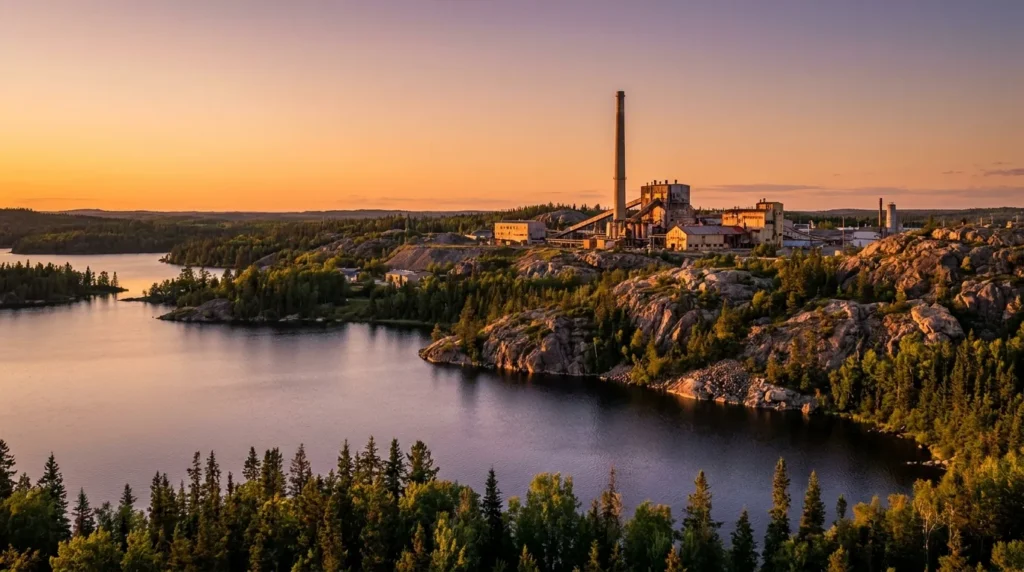
Downtown, the statue of Josiah Flintabbatey Flonatin designed by Al Capp is a mandatory stop. The Flin Flon Station Museum tells the story of mining and the railway. The NorVa Centre trail connects local art galleries. The old smelter stack, 251 meters tall, still dominates the skyline even though it is decommissioned.

Trails on the Canadian Shield include Ross Lake and the Trans Canada Trail heading north. In winter, snowmobiling is local culture: marked trails connect Flin Flon to Cranberry Portage and beyond. The Northern Lights are visible on clear nights, and the lack of light pollution makes the starry sky spectacular.

  1. 1Flintabbatey Flonatin Statue
  2. 2Flin Flon Station Museum
  3. 3Phantom Lake
  4. 4Bakers Narrows Provincial Park
  5. 5NorVa Centre
  6. 6Hudbay Historic Smelter Stack
Parks & green spaces
  • Phantom Lake Park
  • Bakers Narrows Provincial Park
  • Ross Lake Trail
  • Trout Festival Park
  • Pioneer Square

A small immigrant community, with Filipinos leading recent arrivals

Recent immigration is modest, dominated by Filipinos in mining and services, with renewed Ukrainian presence and South Asian healthcare professionals.

Flin Flon has never been a destination for mass immigration, but it sees a steady and meaningful flow for its size. The Filipino community is now the largest among newcomers, with several hundred people working at Hudbay Minerals, the hospital, restaurants, and retail chains. Many arrived through the Manitoba Provincial Nominee Program and brought their families.

South Asian healthcare professionals (from India, Pakistan, the Philippines) fill nursing and medical positions on rotation. After 2022, Ukrainian families arrived through federal humanitarian programs, reinforcing a century-old Ukrainian community in the city. There are also smaller numbers of immigrants from African, Latin American, and European countries.

Institutional support is limited by the city's size. There are no consulates in Flin Flon: everything has to be handled in Winnipeg, 800 km away. Churches, the Flin Flon Aboriginal Friendship Centre, and Ukrainian and Filipino community groups serve as informal support networks, helping with housing, jobs, and adapting to the extreme climate.

450
Foreign-born residents
estimated
Top countries of origin
  • Philippines
  • Ukraine
  • India
  • China
  • United Kingdom
  • Pakistan
  • South Africa
Foreign consulates
  • Consulate General of the Philippines in Winnipeg
  • Consulate General of Ukraine in Winnipeg
  • Consulate General of India in Winnipeg
  • Consulate of the United States in Winnipeg
  • Consulate General of Mexico in Winnipeg
Community organizations
  • Flin Flon Aboriginal Friendship Centre
  • Ukrainian Catholic Parish of Flin Flon
  • Filipino Association of Flin Flon
  • Flin Flon Neighbourhood Revitalization Corporation
  • Northern Manitoba Sector Council

Latest posts

Straight from the blog

There are no posts specifically about Flin Flon yet. In the meantime, check out our latest posts.