
 English
 Português
 Español
F-1
Articles
No content available at this time.
Posts

How to Schedule a US Visa Interview: Step-by-Step Guide 2026
Complete guide to scheduling your US visa interview on the official portal: account creation, MRV fee payment of US$ 185, and biometric center appointment before the consulate interview.

SEVIS I-901 Fee: Complete Payment Guide for F-1 Visa Applicants
Step-by-step guide to paying the SEVIS I-901 fee at fmjfee.com, with updated 2026 amounts, deadlines before the consular interview, and common mistakes to avoid.
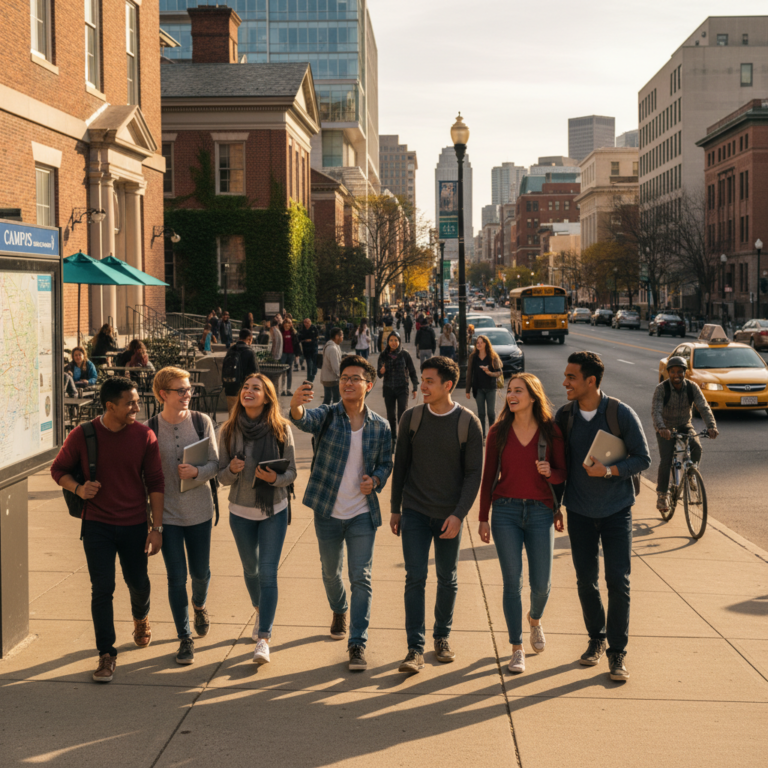
F-1 Visa in 2026: The Complete Guide to the U.S. Student Visa
Step-by-step guide to the F-1 visa in 2026: who can apply, Form I-20, SEVIS and MRV fees, documents for the interview, and on-campus work rules.

Student Visa Revocations: The 2026 Updated Guide
Expanded travel ban, social media screening, the end of broad Interview Waiver Program eligibility, and a $100,000 H-1B surcharge: here's what changed in U.S. consular policy.

How Much Does a US Visa Cost in 2026: Updated Official Fee Schedule
Complete table of U.S. non-immigrant visa consular fees for 2026: MRV, SEVIS, passport delivery, and the current status of the $250 Visa Integrity Fee.

DS-160 Step by Step: Complete Guide to the U.S. Visa Application Form
Complete DS-160 manual section by section: what to prepare, how to fill out each field, mistakes that lead to denial, and what happens after you submit the form.
FAQ
Is there priority for F-1 visas during peak season? ▼
When we talk about F-1 visas, which are intended for international students who wish to pursue studies in the United States, it is common to wonder whether there is any special priority during peak periods. In practice, there is no official priority treatment for F-1 visas when demand increases. This means that the processing order and scheduling follow the regular procedures established by embassies and consulates.
During times of high demand, it is common to experience a higher volume of applications, which may result in long waiting periods for interview scheduling. Each consular post manages its own calendar, and availability may vary according to location and other organizational factors.
It is important to emphasize that unless your situation fits into an exceptional case that allows you to request an emergency appointment – and these cases are usually based on unforeseen or urgent circumstances defined by consular authorities – all applicants are treated according to the order of previously established appointments.
Organizing your documentation carefully, monitoring scheduling calendar updates, and planning ahead are essential measures to better handle peak season periods. Always remember the importance of strictly following United States immigration laws and seeking reliable information. Be cautious with miraculous promises of quick or guaranteed results, as such campaigns can be misleading.
It is advisable to rely on official sources and, when necessary, consult recognized companies or specialists on the subject, but without expecting guarantees of approval, since the process is regulated and subject to impartial analysis by consular authorities.
In summary, during peak season, the flow of applications tends to increase, but there is no special priority for F-1 visas. Planning ahead and following official guidelines is always the best path for those who wish to study in the United States.
Can I work as a freelance consultant? ▼
The F visa was created for students who come to the United States with the primary purpose of attending an approved educational institution. Because of this, the activities that can be performed by those holding this visa are quite limited, and any type of work without proper authorization can jeopardize your immigration status.
Specifically regarding freelance consulting, it is very likely that this activity would be considered unauthorized work for F visa holders. This is because, in general, the F visa does not allow employment activities that are not directly related to the academic program or that are not expressly authorized (for example, certain situations involving Optional Practical Training – OPT – or Curricular Practical Training – CPT – that are already approved and related to the field of study).
Freelance consulting typically characterizes self-employment and, therefore, a paid service provision that does not fit within the standard permissions granted to international students. Thus, it is essential that F visa holders strictly follow U.S. immigration rules. Engaging in activities outside the authorized limits can lead to serious consequences, including visa revocation and future difficulties obtaining other immigration benefits.
For this reason, if there is any doubt about what can or cannot be performed with your student status, it is best to seek advice from professionals specialized in immigration. Also, be cautious of offers promising quick or miraculous solutions, as these campaigns often can be misleading. Always remember the importance of obtaining information from reliable and official sources and following immigration laws to avoid complications.
Each case has particularities, so seeking a detailed analysis may be the best way to ensure all your actions comply with current legislation.
If I fail subjects, do I need to renew my visa? ▼
It”s important to remember that, in the United States, maintaining F-1 student visa status involves meeting certain academic and administrative requirements, such as enrolling in a minimum course load and demonstrating satisfactory progress in your study program.
Thus, the situation of failing subjects should be analyzed in light of these criteria. Failing one or more courses does not automatically trigger the need to renew your visa. The main focus is that you continue meeting the requirements of your student status, which includes maintaining an adequate course load and making academic progress.
If your grades are below expectations, it is essential to talk to your Designated School Official (DSO) to discuss alternatives, such as a possible probation period or creating a plan to improve performance. If failing courses significantly compromises your academic progress, you may need to take steps to restore your regular status, such as requesting an extension or adjusting your study program.
These measures may require issuing new documents or updating information with SEVIS (Student and Exchange Visitor Information System), but do not necessarily involve renewing the F-1 visa itself. It is crucial to follow your DSO”s guidelines and pay attention to any communications from your study program or immigration authorities.
Always remember the importance of acting in accordance with United States immigration laws, seeking guidance from reliable sources-whether recognized specialists or qualified professionals in the field. Avoid any offers or guaranteed promises that may appear in dubious marketing campaigns, as each case has particularities that need careful evaluation.
Staying informed and compliant with immigration rules is the best way to avoid complications and preserve your legal status while pursuing your academic goals.
Does the F-1 require proof of English fluency? ▼
The F-1 visa is intended for international students seeking to enroll in academic institutions in the United States. In this context, many questions arise about the need to prove English fluency, and it is important to understand how this requirement applies.
In general, proving proficiency in English is not a requirement directly imposed by the F-1 visa itself. What usually happens is that educational institutions, such as universities, colleges, or language schools, require candidates to reach a certain level of English to follow the course. This proof is done through standard tests, such as the TOEFL or IELTS, and the criteria vary according to the academic requirements of each institution.
Thus, if you are accepted by a school or university in the United States, it is likely that they will request proof of your knowledge of the English language, ensuring that you can follow your classes and participate effectively in the academic environment.
On the other hand, the F-1 visa application process itself depends on submitting an acceptance letter issued by the certified institution and demonstrating your intention to study, without a direct determination of fluency being required by immigration authorities.
It is essential to follow the rules and procedures of United States immigration law and verify directly with the educational institution what specific proficiency criteria are required. This way, you avoid surprises and ensure that all necessary documents and tests are properly organized.
We emphasize the importance of seeking information from reliable sources and consulting specialized professionals, avoiding scams or marketing campaigns that promise miraculous solutions. Remember: staying informed and strictly following the rules established by immigration authorities and the educational institution is fundamental for a smooth and successful journey in the United States.
Is there a refund of fees if I cancel the trip before using the F-1? ▼
The F-1 visa, intended for international students, involves several fees during the application process. Many of these fees, such as the SEVIS fee and the visa application fee, are usually non-refundable. This means that if you decide not to use the visa or cancel your trip, you will typically not be entitled to receive your money back.
The rationale behind these charges is that the fees cover administrative and processing costs of the systems and services that support the visa program. Although this may vary in exceptional situations, the general rule is that once payments are made, the amount cannot be recovered, even if the cancellation occurs before using the F-1 visa.
It is essential to emphasize that compliance with the United States immigration laws and regulations is crucial throughout the process. Always seek information from official sources or immigration specialists to avoid conflicting information or misleading promises. Many marketing campaigns may try to offer guarantees that do not reflect the reality of the processes with U.S. authorities.
If you are considering changes to your travel plans or want to clarify specific questions about cancellations and possible refunds, a detailed consultation with experts in the field can help you better understand your situation and the legal implications involved. Remember that each case is unique, and transparency in the process is indispensable to maintain compliance with United States immigration laws.
If the institution is ”religious-based,” can I refuse theology classes? ▼
When it comes to academic programs with a religious orientation, especially under the F visa, doubts often arise about the mandatory nature of subjects like theology. In general terms, what will determine whether you can refuse these classes or not is the institution”s current academic regulations and the requirements of your course.
If the institution is ”religious-based” and includes theology as part of the curriculum, it is likely that participation in this subject will be required to complete your course. In other words, there may be an academic obligation to complete all the required subjects, regardless of your personal area of interest.
Thus, refusing classes without first seeking guidance may result in setbacks in your course progress. However, some institutions may offer the option to choose elective or alternative subjects that better suit your academic and professional interests, without compromising the course requirements.
It is worth talking to the responsible department or an academic advisor about the possibility of flexibilizing the curriculum, especially if theology is not within your area of expertise.
It is important to remember that, regardless of academic choices, meeting the course requirements can positively influence the maintenance of your student status in the country. Respecting the United States immigration laws is essential; therefore, always check official guidelines and, if necessary, consult reliable sources that can properly guide you.
Being attentive to quality information also helps to avoid scams and marketing campaigns that promise miraculous results without proper legal backing.
In summary, if theology is a mandatory curricular part of your course at that institution, refusing it may not be an option without academic consequences. Therefore, the best approach is to get detailed information about your program”s requirements and seek internal guidance at your institution to find the most appropriate solution.
Immigration Law Firms
No content available at this time.
Testimonials
No content available at this time.
Reviews
No content available at this time.
Events
No content available at this time.
Ebooks
No content available at this time.