English
 Português
 Español
Demographic composition and ethnic diversity in Brooklyn Park
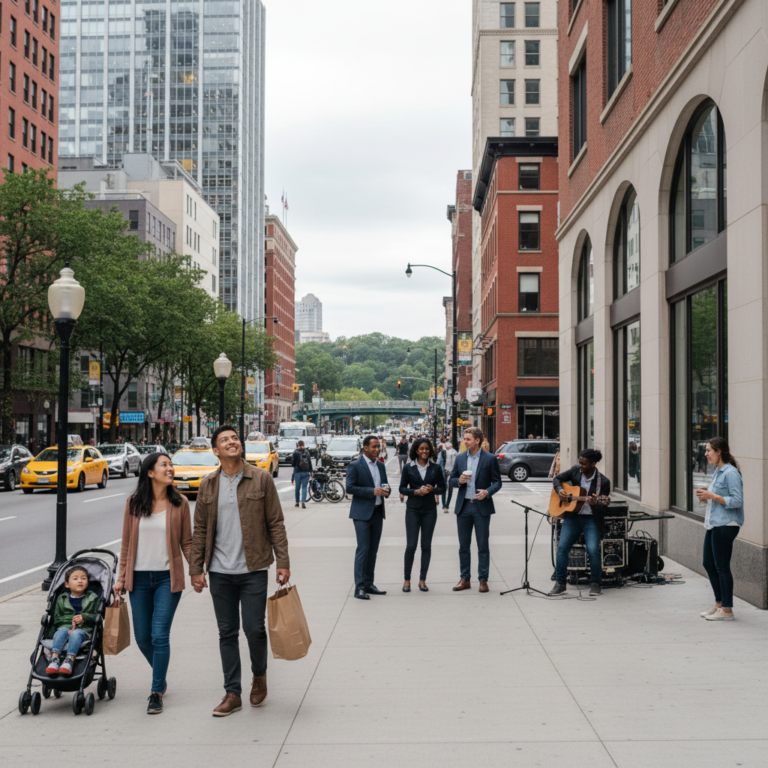
One of Minnesota's most diverse cities. Home to the largest Liberian community in the United States, with a strong Somali, Hmong, Mexican Hispanic, and West African presence. Roughly half the population is non-white.
Through the 1990s, Brooklyn Park was a typical white Twin Cities suburb with Scandinavian and German roots. Over the following two decades, the city transformed completely, becoming a destination for African, Asian, and Latino immigrants seeking more affordable rents than Minneapolis and drawn by the potential of older apartment complexes.
Brooklyn Park's Liberian community is now the largest in the United States, with active churches, restaurants, markets such as Universal Foods, and community organizations. Somalis are concentrated in complexes in the southern part of the city, with their own mosques and businesses. Hmong residents moved from east Minneapolis and maintain a strong presence in central neighborhoods. Mexican Latinos are a growing force in construction and service industries.
Brazilian residents are few and dispersed. Smaller communities of Ethiopians, Nigerians, Ghanaians, Vietnamese, Indians, and Russians are also present. The age profile skews younger than the Minnesota average because immigrant families tend to have more children, and Osseo Area Schools reflects this diversity throughout its enrollment.
- English
- Somali
- Spanish
- Hmong
- Liberian Pidgin English
- +2 more
- Evangelical Protestantism
- Roman Catholicism
- Sunni Islam
- African Pentecostal Church
- Hmong Animism
- +1 more