English
 Português
 Español


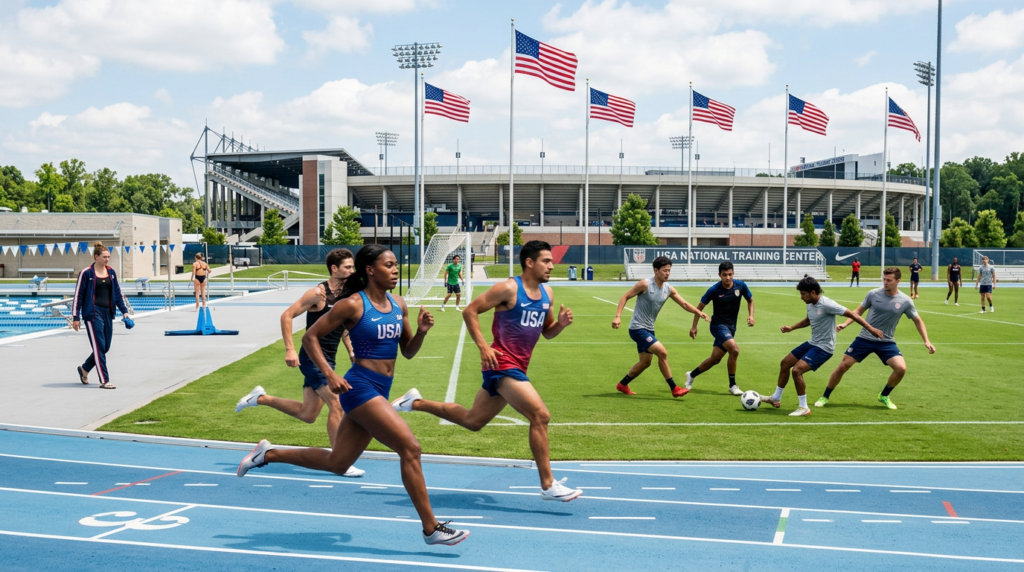
The United States remains a coveted destination for international athletes seeking improvement, high-level training, and opportunities in the professional sports scene. The country’s robust sports infrastructure and incentive programs attract talent from various disciplines, fostering an environment of high competitiveness and development. However, access to this world depends on careful planning, as immigration to the US involves understanding the different visa options and the legal requirements demanded by the authorities.
In a dynamic global context, immigration processes for athletes have proven fundamental for professionalization and international recognition. In 2026, the possibilities for entering the United States go beyond occasional opportunities, representing consolidated strategies for those who wish to both compete and advance their sports careers. This article presents a detailed analysis of the main types of visas available, their challenges, and the essential requirements for athletes to turn opportunities into real achievements.
Although the procedures may seem complex at first glance, mastering the legal language and organizing a robust dossier are crucial for success in the process. Below, we explore the most commonly used alternatives, highlighting both the benefits and the peculiarities of each type of visa for athletes who aim to live and train in the US.
Types of visas for athletes
EB-1A Visa: Intended for athletes with nationally or internationally recognized extraordinary abilities, the EB-1A visa requires the submission of consistent evidence of significant achievements and awards in their field. One of the main attractions of this visa type is the possibility of being granted without the need for a formal job offer from an American employer, allowing the athlete to enter the country with greater autonomy. Demonstrating a solid track record and obtaining outstanding certifications are fundamental to meeting the eligibility criteria.
P1 Visa: The P1 visa is another viable option for athletes who compete at elite levels and regularly participate in international competitions. This visa is usually associated with temporary work contracts and can be issued for up to five years, renewable depending on continued performance and compliance with contractual terms. Athletes choosing this option must clearly demonstrate their importance to the team or sports organization hiring them, evidencing their relevance in the competitive arena.
B1/B2 Visa: For short stays, such as participation in competitions or tournaments, the business and tourism visa – B1/B2 – can be used. This visa allows stays of less than six months and is suitable for professionals who receive compensation only through prizes or incentives directly related to the events. It is important to note that, under this category, the athlete cannot engage in activities that constitute formal employment, which imposes clear limits regarding the nature of activities performed during the stay.
Requirements and challenges
Obtaining visas for athletes requires assembling a robust set of documents that prove sporting excellence and the professional’s impact in their field. Among the main requirements are the presentation of certificates, trophies, participation in international competitions, and, in many cases, publications or media coverage attesting to the athlete’s recognition. Additionally, letters of recommendation and historical evidence of performance can be decisive for immigration officers’ evaluation.
An additional challenge is dealing with the constant updates to the United States Citizenship and Immigration Services (USCIS) immigration policies. The rules can change in short periods, affecting everything from processing times to the conditions for visa renewal. Therefore, staying informed through official and up-to-date sources is essential for athletes to avoid surprises and adapt their dossier to new requirements.
The complexity of the procedures often requires meticulous document organization, where the coherence and clarity of the information presented are as important as the sporting merit itself. Thus, each document must be prepared carefully, ensuring that the data provides a complete and convincing view of the athlete’s history and potential.
Sports infrastructure in the US
The United States stands out in the sports scene not only for the quality of competitions but also for the excellence of its facilities and training programs. High-performance centers, sophisticated gyms, and a network of world-renowned sports clubs form the foundation that supports the development of both local and international talent. This robust infrastructure is one of the main attractions for athletes seeking to improve their skills.
The promotion of exchange programs and the existence of partnerships between American institutions and international sports organizations expand opportunities for professional growth. This synergy between different sports cultures not only enriches the competitive scene but also fosters a continuous learning environment, where the sharing of techniques and strategies is constant.
Moreover, the diversity of disciplines and the existence of major events reinforce the US’s role as a true catalyst for sports evolution. For many athletes, entering this market means not only competing at a high level but also gaining access to a network of contacts and an ecosystem that values performance and sports innovation.
Strategies and recommendations
For athletes wishing to explore immigration opportunities in the United States, strategic planning is essential. Preparing a complete and consistent dossier, including certificates, awards, competition history, and letters of recommendation, is the first step toward success in the visa application process. Meticulous organization of documents can facilitate and expedite the review by the competent authorities.
Additionally, it is advisable for interested parties to regularly follow updates in immigration policies. Official sources, such as the USCIS website, as well as specialized events and seminars, offer valuable information that can positively influence the necessary preparation for the process. Staying up to date is crucial to avoid mistakes and align the dossier with current requirements.
Another vital point is clarity in defining the visa objective. While the EB-1A and P1 visas allow for a longer stay and are associated with professional recognition, the B1/B2 visa is intended only for temporary visits. Understanding these differences allows the athlete to choose the alternative that best fits their profile and career needs.
Preparation also involves a careful evaluation of documentation that proves the athlete’s competitive edge. Evidence such as participation in international events, outstanding results, and recognition by sports entities are fundamental to demonstrate the professional’s relevance and impact in their field.
Final considerations
Immigration opportunities for athletes in the United States are available in various forms, each with its own particularities and specific requirements. In a constantly changing scenario, in-depth knowledge of the available visa types – such as EB-1A, P1, and B1/B2 – becomes an indispensable strategic tool for professionals aiming to establish their careers on American soil.
The analysis of the requirements and challenges involved in the process shows that, despite bureaucracy and constant legal updates, dedication in preparing the dossier and seeking updated information can turn the immigration journey into a gateway to major sporting achievements. Athletes who invest in consistent document organization and closely monitor changes in immigration policies have a greater chance of obtaining visa approval and, consequently, taking full advantage of the opportunities offered by the US sports environment.
Thus, the path to international success depends as much on talent on the field as on the ability to navigate the administrative complexities of the immigration process. Strategic planning, combined with a proactive approach in seeking updates and preparing documents, can be decisive in turning challenges into real opportunities.
As regulations continue to evolve, sports professionals must view the immigration process as an integral part of their career development. By aligning their goals with legal requirements and taking advantage of the United States’ advanced infrastructure, athletes not only expand their growth opportunities but also contribute to the enrichment of the global sports scene.
Learn more about B-1/B-2
- Duration
- Up to 6 months
- Extension
- Possible (up to 6 months)
- Work
- Not permitted
- Processing
- 2-8 weeks
About the author

Victoria Harper
Editor-in-Chief
As a journalist and lead editor at Visto n’ Visa, Victoria helps ensure that immigration topics are covered in a clear, trustworthy, and easy-to-understand way. Her focus is on delivering useful, human, and relevant content for people exploring new paths abroad.