English
 Português
 Español


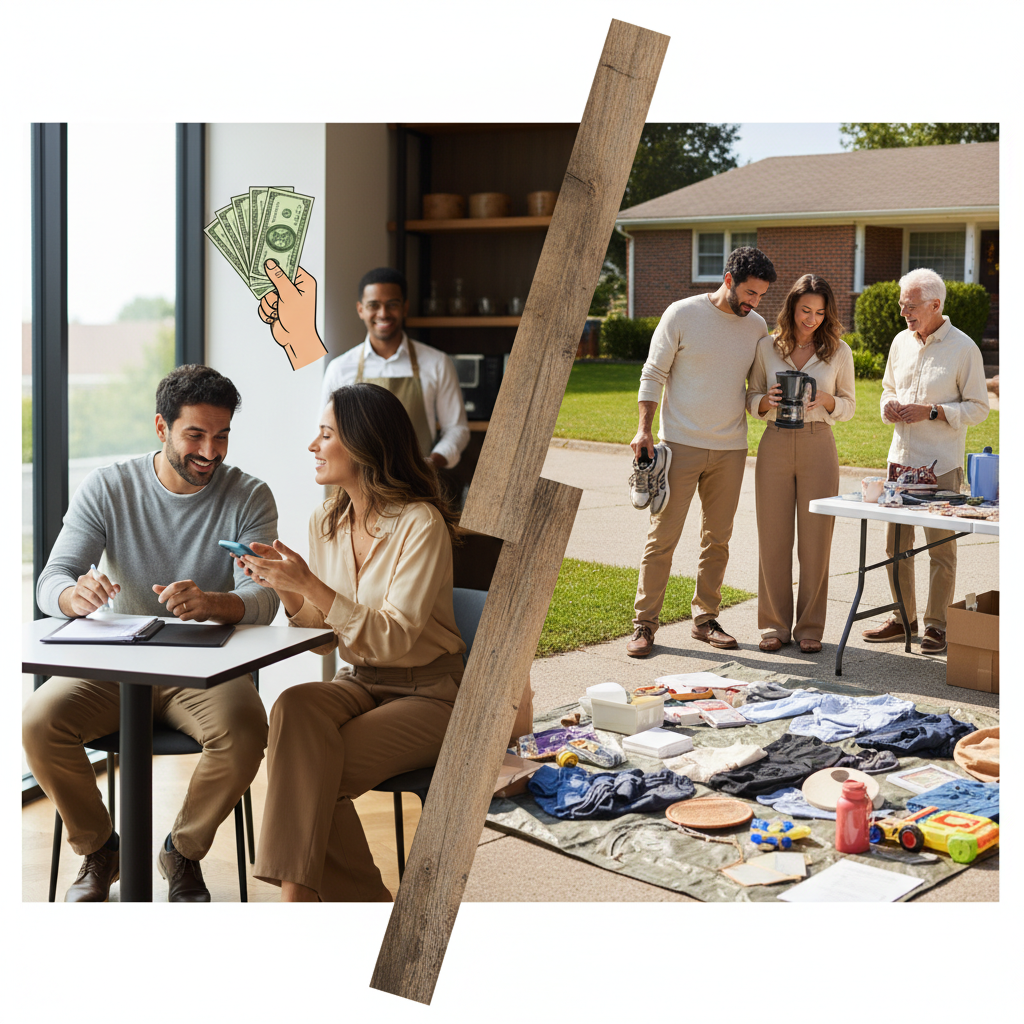
Adapting to life in the United States goes far beyond dealing with bureaucratic and immigration issues. Customs that seem simple to Americans can cause confusion and even embarrassment for newcomers from other countries. Two classic examples of this cultural difference are the tipping culture and garage sales, practices deeply rooted in American daily life that every immigrant should know before settling in.
Understanding these social dynamics is not just a matter of etiquette. In the case of tipping, it is a social obligation with a direct impact on workers’ income. Garage sales, on the other hand, offer real opportunities for savings for those setting up a home or adjusting their budget in the first few months. This guide details how these two customs work and how to make the most of them.
The Tipping Culture
In the United States, tipping is not an optional gesture of gratitude-it is a fundamental part of the compensation for millions of service sector workers. Unlike Brazil, where the 10% service charge is suggested and optional, in the US tipping is socially mandatory in various situations. Not leaving a tip or offering a low amount can be interpreted as serious dissatisfaction with the service.
This practice exists because many American professionals receive a reduced base salary, often below the standard minimum wage, with the expectation that tips will supplement their income. The federal minimum wage for tipped workers is only $2.13 per hour, although some states set significantly higher amounts. This wage structure makes tipping not a bonus, but a necessity for these professionals to achieve a viable income.
Amounts by Situation
In restaurants and bars, the standard is to leave between 15% and 20% of the bill amount before taxes. Exceptional service may justify 25% or more, while the socially acceptable minimum is 15%, even when the service is just reasonable. For large groups, many establishments automatically add a tip of 18% to 20%.
For beauty and wellness services, such as hairdressers, manicurists, estheticians, and massage therapists, the range is also 15% to 20% of the service value. It is important to remember that the tip should be given directly to the professional, even when payment is made at the register.
For transportation and deliveries, app drivers and food delivery workers usually receive between 15% and 20% of the ride or order value. In bars, the common practice is to leave between $1 and $2 per drink served.
In accommodation, bellhops generally receive $1 to $5 per bag carried. For housekeeping staff, it is recommended to leave between $2 and $5 per night on the bedside table or in a labeled envelope.
When Not to Tip
Not every service interaction requires a tip. Fast food establishments, coffee chains with counter service, and retail stores generally do not have this expectation, although more and more payment machines present tipping options even in these contexts. In these cases, the contribution is genuinely optional. In restaurants that include the note gratuity included on the bill, the tip is already included and there is no need to add more.
Garage Sales in the US
Garage sales are an American tradition that goes beyond simply selling used items. Families organize sales in their garage, yard, or driveway to get rid of objects they no longer use, offering prices significantly below market value. For newly arrived immigrants, especially those setting up a home from scratch, these sales represent an exceptional opportunity to acquire essential items at very low costs.
What to Find
The variety of items available at garage sales is surprising. Furniture, household utensils, clothes, books, toys, tools, electronics, and decorative objects are the most common. It is not uncommon to find items in excellent condition-many American families frequently renew their belongings, offering gently used products for a fraction of the original price. Items such as vacuum cleaners, kitchen appliances, and even complete sets of dishes can be found for just a few dollars.
How to Participate
Garage sales take place mainly on weekends, especially on Saturday mornings, and are more frequent in spring and summer. Residents advertise their sales with colorful signs on neighborhood streets, in local social media groups, and on online classified platforms.
Some practical tips to make the most of it:
- Arrive early to have access to the best items, as the most sought-after pieces are usually sold in the first hours
- Bring small bills, as most sellers do not accept cards
- Negotiate prices-bargaining is expected and welcome, especially at the end of the day when the seller is more willing to lower prices to clear out stock
- Inspect items carefully before buying, as sales are final and there is no exchange or return policy
Cultural Difference with Brazil
In Brazil, the disposal of used items usually happens through donations, charity bazaars, or digital sales platforms. The experience of walking through the streets of an American neighborhood hunting for bargains at garage sales is a striking cultural feature of the United States. Besides saving money, garage sales serve as points of interaction with neighbors-a way to meet local residents and integrate into the community in a natural and relaxed way.
Both the tipping culture and garage sales are part of a set of everyday practices that make the experience of living in the United States unique. Mastering them from the very first days makes adaptation easier, avoids embarrassing situations, and helps build more harmonious relationships in the new country.
About the author

Victoria Harper
Editor-in-Chief
As a journalist and lead editor at Visto n’ Visa, Victoria helps ensure that immigration topics are covered in a clear, trustworthy, and easy-to-understand way. Her focus is on delivering useful, human, and relevant content for people exploring new paths abroad.