English
 Português
 Español


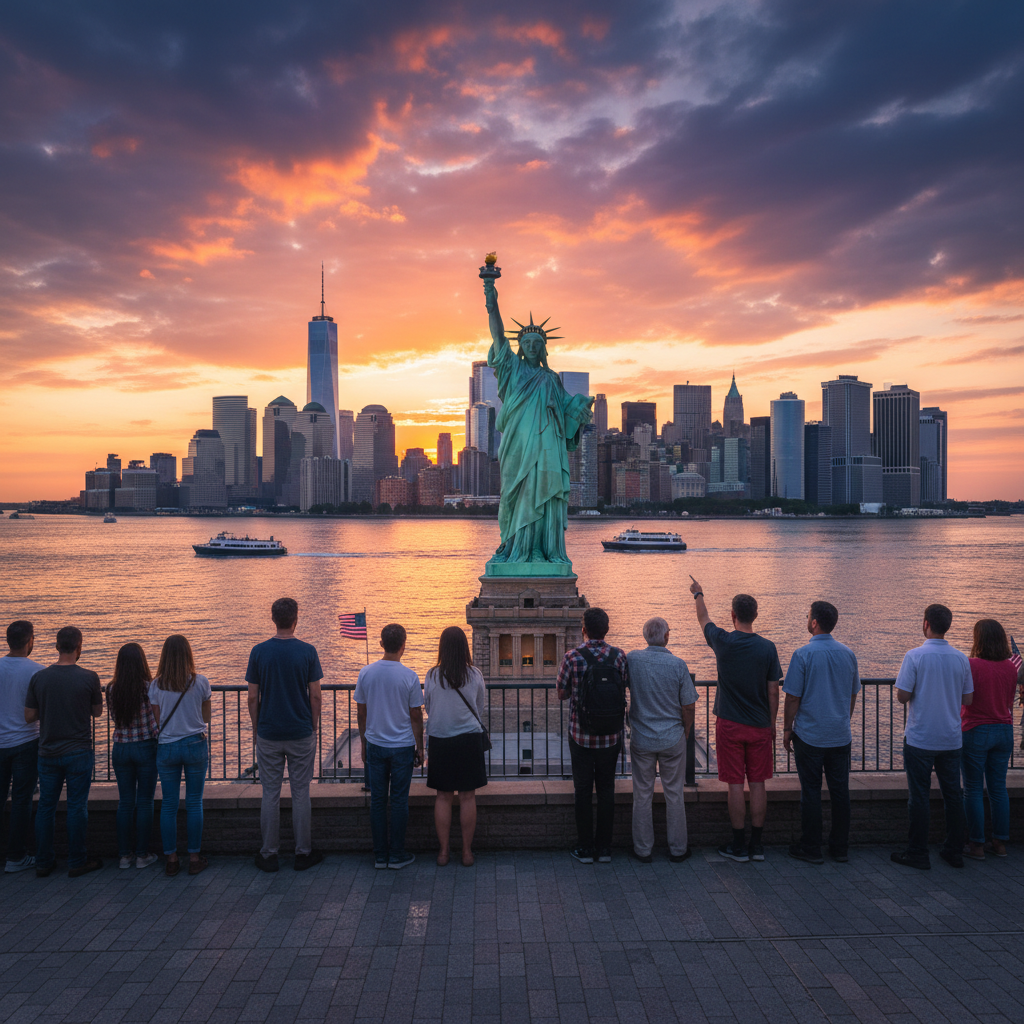
Naturalization in the United States transfers the full set of political rights to the new citizen, with voting at the center of that transition. For those who have completed the steps of green card, continuous residency, civics exam, and oath of allegiance, exercising the right to vote is both a symbol and a concrete tool for participation. Understanding how the system works – and which rules vary by state – helps avoid logistical mistakes that still trip up experienced voters every election cycle.
The U.S. electoral system is decentralized by design. The federal Constitution defines general principles, but each state operates its own electoral legislation, identification requirements, registration deadlines, and ballot formats. The result is a patchwork in which the naturalized voter needs to know not only the national rules, but those of the state where they reside.
How Voting Is Structured in the U.S.
There are three levels of elections that overlap throughout the calendar: federal, state, and local. Federal elections choose the president, vice president, senators, and House representatives. State elections decide governors, state legislatures, attorneys general, and secretaries of state. Local elections choose mayors, judges, sheriffs, school boards, and municipal ballot measures. On a single Election Day, held on the first Tuesday after the first Monday in November, a voter can simultaneously cast ballots for dozens of offices and measures.
The Electoral College in Presidential Elections
The presidency is not decided by direct popular vote. Voters cast ballots for slates of state delegates that make up the Electoral College, an institution with 538 members. Each state receives a number of delegates equal to the sum of its senators and federal representatives; a presidential win requires at least 270 electoral votes. Nearly all states follow a winner-take-all rule, in which the winner of the state popular vote receives all of that state’s delegates – Maine and Nebraska are the exceptions, with proportional distribution by congressional district.
Legislative and Senate Elections
The 435 House representatives are elected every two years by direct vote in congressional districts. The 100 senators serve six-year terms, with approximately one-third renewed in a staggered fashion each cycle. House and Senate races are decided by simple majority in the state or district, without delegate intermediation.
Who Can Vote in the United States
The right to vote in federal elections is restricted to U.S. citizens aged 18 or older. Citizenship can be obtained by birth on U.S. soil, through a citizen parent, or by naturalization – and this last path grants exactly the same political rights as the other forms, with one constitutional exception: only natural-born citizens may run for President or Vice President.
Permanent residents (green card holders), holders of any nonimmigrant visa, and persons in temporary status cannot vote in federal elections. Attempting to vote before naturalization is considered a false claim of U.S. citizenship and can result in removal, future inadmissibility, and loss of eligibility for naturalization itself. Some rare municipal elections (such as in San Francisco for school boards or Takoma Park, Maryland) allow noncitizen voting in strictly local races – checking local ordinances is essential before registering for any election outside the federal scope.
Voter Registration: The Decisive Step
Unlike in Brazil, voter registration in the U.S. is not automatic. Voters must actively enroll on their county or state rolls, and the process varies in method and deadline. Most states accept online registration through the state portal; some accept only in-person or mail registration. Twenty-two states and the District of Columbia offer same-day registration, allowing registration on Election Day itself with proof of residency.
Required Documents and Proof
To register, the naturalized citizen must present proof of citizenship (Certificate of Naturalization N-550 or U.S. passport), proof of state residency, and valid identification. A Social Security number is requested in nearly all states, though usually only the last four digits are required. The voter registration card, when issued, is free and mailed to the voter.
Identification on Election Day
Voter ID rules vary widely between states. About 35 states require some form of identification at the polling place; eight of them accept only photo ID. States such as Texas, Georgia, Indiana, and Tennessee enforce strict rules, while California, New York, and Pennsylvania typically require identification only in specific situations. Checking your state’s rules weeks before the election prevents ballot rejection.
Available Voting Methods
In-person voting on Election Day remains the traditional method, but two alternatives have gained prominence in recent election cycles.
Early Voting
Forty-six states and the District of Columbia offer some form of early voting, with windows ranging from four to 45 days before Election Day. Early voting locations generally have shorter lines and extended hours.
Mail-in / Absentee Voting
All states allow mail-in voting under some condition. Eight states (California, Colorado, Hawaii, Nevada, Oregon, Utah, Vermont, and Washington) and the District of Columbia conduct universal vote-by-mail elections, automatically sending ballots to all registered voters. Other states require advance requests and, in some cases, a stated reason (no-excuse vs. excuse-required absentee). Submission and receipt deadlines are strict: ballots that arrive after the state deadline are discarded even if postmarked on time, in many states.
Election Calendar in Federal Cycles
Presidential elections occur every four years, with the next scheduled for November 3, 2026 – though the 2024 cycle was the most recent for the White House. Midterm elections renew the entire House and approximately one-third of the Senate every two years. In odd-numbered years, state and municipal elections take place in various states, along with ballot measures on fiscal, judicial, and regulatory issues.
Common Mistakes by Newly Naturalized Voters
Three mistakes account for most votes lost by Brazilians who have just become naturalized citizens. The first is waiting until the last minute to register; many states close their registration window 15 to 30 days before Election Day. The second is failing to update an address change – those who have moved to a new state must register in the new jurisdiction, and moves within the same state require an updated registration. The third is ignoring local identification rules and arriving at the polling place with insufficient documents.
Where to Find Official Information
Each state maintains an electoral portal run by the Secretary of State or the state election commission. The federal portal vote.gov directs users to the correct site by state. The Election Assistance Commission (eac.gov) consolidates national data, and the Federal Voting Assistance Program supports voters living abroad. Information on social media, especially in an election year, frequently contains inaccurate data about deadlines and rules – relying only on official sources is an indispensable practice.
Voting as Full Citizenship in Practice
Becoming a U.S. citizen involves five years of permanent residence (three for spouses of citizens), a 100-question civics exam, an English test, a solemn oath, and the current filing fee of $760 for Form N-400. The right to vote is a structural part of that compact: it is not merely one privilege among others, but the instrument through which the naturalized citizen gains the ability to influence policies that shape public education, healthcare, immigration regulation, and the very functioning of the institutions that welcomed them.
For those in the final stages of naturalization or who have already obtained citizenship, spending an afternoon to register, check the polling location, and study the state ballot is what transforms a formal right into effective participation.
About the author

Victoria Harper
Editor-in-Chief
As a journalist and lead editor at Visto n’ Visa, Victoria helps ensure that immigration topics are covered in a clear, trustworthy, and easy-to-understand way. Her focus is on delivering useful, human, and relevant content for people exploring new paths abroad.