English
 Português
 Español


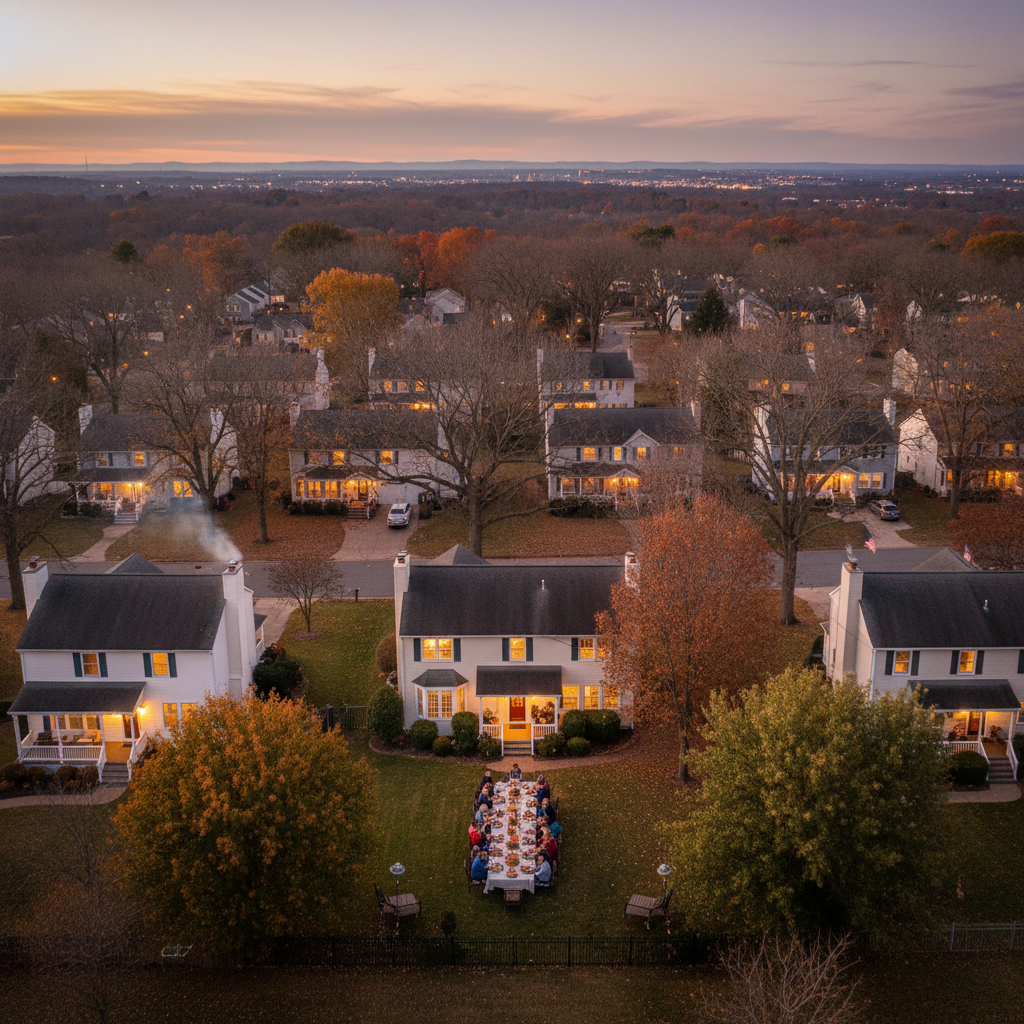
Thanksgiving occupies a singular place on the American calendar that few holidays can rival. Celebrated on the fourth Thursday of November, it officially launches the end-of-year holiday season and drives more domestic travel than any other date in the United States. For those who have moved or are planning to move to the country, understanding Thanksgiving goes beyond knowing that turkey is served. It is a gateway into the way Americans think about family, community, and gratitude.
Historical origins
The official Thanksgiving narrative traces back to 1621, when English colonists newly arrived at Plymouth Colony, in present-day Massachusetts, organized a three-day feast to celebrate their first successful harvest in the New World. The event brought together roughly 50 colonists (the Pilgrims) and 90 members of the Wampanoag tribe, who had taught the settlers techniques for growing corn, squash, and beans. More recent historiography acknowledges that the original gathering was a one-time event and by no means the start of a continuous tradition, and that the subsequent relationship between colonists and Native peoples was marked by deep conflict.
The national holiday as we know it was born more than two centuries later. In 1863, at the height of the Civil War, President Abraham Lincoln proclaimed the last Thursday of November as National Thanksgiving Day. The initiative came from Sarah Josepha Hale, an editor and activist who spent decades writing letters to presidents requesting official recognition. Congress fixed the date as the fourth Thursday of November in 1941, a format that has remained ever since.
The dinner as the heart of the celebration
Unlike Christmas, where each family assembles its own choreography of traditions, Thanksgiving follows a fairly standardized menu across the country. Roast turkey is the nearly universal centerpiece, typically served with bread-and-herb stuffing, mashed potatoes with gravy, roasted sweet potatoes, green bean casserole topped with crispy onions, and cranberry sauce to balance the richness of the main course.
Traditional desserts include pumpkin pie, pecan pie, and, in some Southern regions, sweet potato pie. Apple cider is the classic drink, served warm in cold weather, though wines and craft beers are equally common. Some families preserve recipes passed down through generations, while others embrace variations rooted in their cultural background: a Latin-spiced turkey, an Asian-inspired stuffing, or vegetarian dishes that replace the turkey without causing domestic conflict.
The gratitude ritual
Before dinner, many families go around the table asking each person to share one or two things they are grateful for that year. The practice is informal but socially expected, and skipping it can be read as a lack of engagement. For those still building vocabulary and confidence in English, it is worth preparing a brief response beforehand. Something simple, such as a mention of family health or the opportunity to be in the US, works at any table.
The concept of Friendsgiving
Friendsgiving has emerged as an informal variation among young adults who live far from family or simply want to celebrate with their social circle. It typically takes place the weekend before or after the official Thanksgiving, in a potluck format where each person brings a dish. For recently arrived immigrants in their first years in the US, Friendsgiving is often the first point of entry into the celebration, before eventual invitations to family dinners from colleagues or partners.
Traditions alongside the dinner
The Macy’s Parade, organized in New York City since 1924, broadcasts live throughout the morning with giant balloons, floats, and musical performances. The arrival of Santa Claus closes the parade and symbolically marks the beginning of the Christmas season. The tradition is so deeply rooted that many families leave the parade on television as background while they prepare dinner.
NFL football games fill the rest of the day. The Detroit Lions and Dallas Cowboys traditionally play on Thanksgiving Thursday, and since 2006 a third primetime game was added to the schedule. For many families, the game is the rhythm of the afternoon: some watch, others talk, others doze on the couch after the meal.
In a ceremony that spans administrations, the US president pardons one or two turkeys at the White House, sparing them from the traditional fate. The modern version was formalized in 1989, though accounts trace it back to the Lincoln era. The pardoned turkeys are subsequently sent to university farms.
Black Friday and the transition to Christmas
The day after Thanksgiving is Black Friday, officially the start of the Christmas shopping season. Brick-and-mortar stores open before dawn, some even on Thursday night itself, with aggressive promotions on electronics, appliances, and toys. In recent years, digital retail has shifted a significant share of volume to Cyber Monday, the following Monday, but Black Friday still concentrates the peak of in-person traffic at shopping centers.
Volunteering and community action
Many Americans dedicate part of the holiday to community initiatives: serving meals at shelters, distributing baskets at food banks, or donating financially to organizations that combat food insecurity. For those looking to integrate more deeply into local life, volunteering at a food pantry during Thanksgiving week is often one of the most meaningful cultural experiences available, and it frequently creates personal connections that formal dinners do not.
The meaning for those who arrived from abroad
Latinos, Europeans, Asians, Africans: every immigrant community builds its own way of incorporating Thanksgiving. Some adopt the holiday fully, others treat it as an extra family lunch with turkey alongside dishes from their home country. There is no wrong approach. What makes Thanksgiving distinctive is the shared social expectation of pause, gathering, and acknowledgment, three elements that, at the pace of American work life, are rare the rest of the year.
For those who arrived recently, a few practical guidelines are worth knowing. Domestic flights on the Wednesday before the holiday and the following Sunday are the most expensive and crowded of the year; planning weeks in advance is advisable. Supermarkets are packed in Thanksgiving week and close early on Thursday itself. Restaurants that open on the holiday offer fixed menus at elevated prices, with reservations nearly mandatory.
About the author

Victoria Harper
Editor-in-Chief
As a journalist and lead editor at Visto n’ Visa, Victoria helps ensure that immigration topics are covered in a clear, trustworthy, and easy-to-understand way. Her focus is on delivering useful, human, and relevant content for people exploring new paths abroad.