English
 Português
 Español


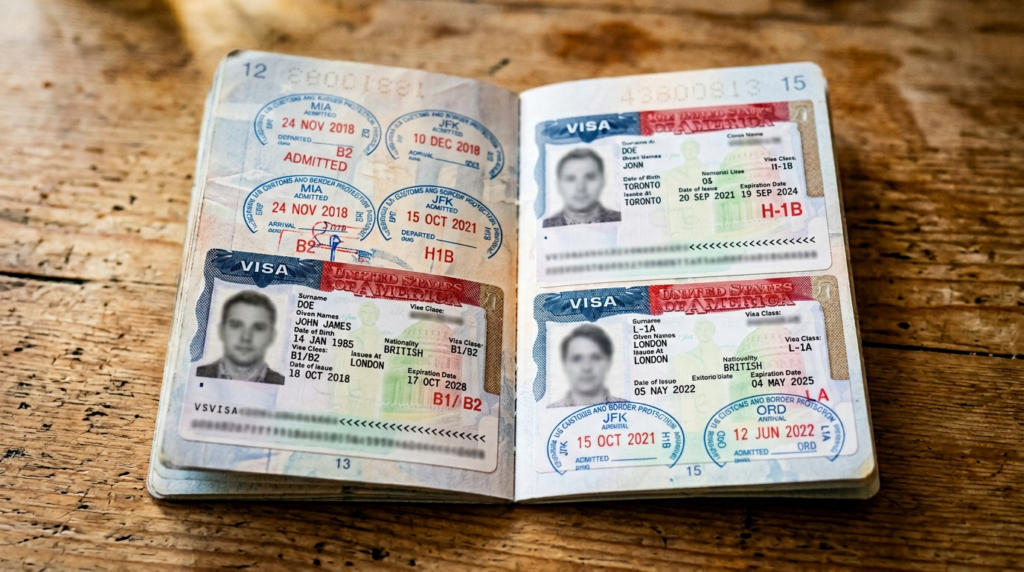
Temporary visas for the United States represent an important pathway for visitors who wish to stay in the country for specific periods, whether for tourism, studies, work, cultural exchange, or specific events. These visas do not guarantee the right to permanent immigration, but they allow legal entry with a well-defined purpose. In March 2026, understanding the requirements and updates to the processes is essential to avoid surprises and speed up the application.
This article presents an updated overview of the main types of temporary visas, detailing the requirements, procedures, and essential tips for each category. The following information has been revised to reflect the policies in effect in 2026, always emphasizing the importance of consulting official sources before starting the process.
When preparing to apply for a temporary visa, it is essential to gather all necessary documentation and pay attention to new requirements imposed by the United States government. Below, the most relevant categories are explored, explaining their specific requirements and providing practical guidance to help applicants organize themselves appropriately.
Overview
Temporary visas allow entry into the United States for a limited period, always with the aim of fulfilling specific objectives, such as tourism, studies, business, or cultural exchange. In 2026, application processes have been modernized, with the digitization of forms and a greater emphasis on proving ties to the country of origin. Each category has particularities that must be carefully observed by the applicant.
B1/B2: Tourism and Business
The B1/B2 visa is intended for people who wish to visit the United States for tourism or to carry out short-term business activities. The process requires proof of strong ties to the country of origin and a clear intention to return at the end of the trip. In 2026, applicants must schedule an interview at the consulate, where documents proving both financial situation and existing professional or personal ties in their country of origin will be requested.
F1: Student Visa
The F1 visa is aimed at international students who intend to enroll in language courses, undergraduate, or postgraduate programs at educational institutions in the United States. One of the central requirements is the issuance of the I-20 form by the educational institution, which confirms the student’s acceptance and program details. In addition, proof of financial resources to cover living and study expenses is essential, as well as the intention to return to the home country after completing the course.
H1B: Skilled Workers
The H1B visa is intended for professionals with specialized qualifications who have a job offer in the United States. The employer must petition for the hire by submitting the I-129 form, justifying the need for a foreign professional for the position. This process is highly competitive, requiring the candidate to demonstrate experience and academic background compatible with the field of work. In 2026, despite constant regulatory updates, the H1B remains an important route for professionals in high-demand areas.
I: Press Professionals
The I visa is intended for journalists and media professionals who need to travel to the United States to report and cover events. To obtain this visa, it is essential to present documentation demonstrating affiliation with a media organization or a recognized press credential. The process aims to ensure that the coverage activity aligns with professional objectives, guaranteeing that the professional fulfills the role of informing with integrity and responsibility.
J1: Cultural and Educational Exchange
The J1 visa covers a wide variety of exchange programs, including summer work, traineeships, research, and cultural exchange. To participate in these programs, applicants must have the DS-2019 form issued by the sponsoring entity, confirming the beneficiary’s inclusion in the exchange. An advantage of the J1 visa is the possibility of including dependents, such as spouses and children under 21, through the J2 visa, allowing the experience to be shared as a family.
L-1: International Transfer
The L-1 visa is aimed at employees of multinational companies who will be transferred to a branch, subsidiary, or partner company in the United States. This category is divided into L1A, for managers and executives, and L1B, for professionals with specialized knowledge. It is necessary to prove the relationship between the companies and demonstrate the worker’s experience, with process modernization facilitating the verification of these ties.
O: Extraordinary Ability
The O visa is intended for individuals with international recognition and extraordinary abilities in fields such as science, arts, education, sports, or business. To obtain this visa, the applicant must present concrete evidence of their achievements, such as awards, contracts, or invitations to high-level events. This category is used to attract extraordinary talent, allowing the United States to maintain its global competitiveness.
P: Athletes and Artists
The P visas are aimed at professional athletes and artists who intend to participate in competitions, performances, or cultural events in the United States. The application requires documentation proving the temporary nature of the trip, such as contracts and detailed itineraries. Professionals working as coaches or support team members may also qualify under this category, reinforcing the importance of cultural and sports exchange.
R-1: Religious Workers
The R-1 visa is intended for religious workers who wish to work temporarily in nonprofit or tax-exempt organizations in the United States. To obtain this visa, it is necessary to prove affiliation and qualification to perform religious activities, presenting documentation that validates the authenticity and necessity of the work in the area. In 2026, the R-1 continues to serve religious groups seeking to collaborate with projects and cultural activities in the USA.
General Considerations
It is essential for those interested in any of these visas to stay updated on immigration policies, as requirements and procedures may change over time. Consulting official sources, such as embassy websites and the US Department of State, is indispensable to avoid unforeseen issues during the application process. In 2026, the modernization of systems and digitization of forms have contributed to a more efficient and transparent review of applications.
Meticulous preparation of documents and proof of strong ties to the country of origin are crucial points for visa approval. Organizing certificates, contracts, and acceptance letters from educational institutions or hiring companies can make all the difference in consular analysis. Additionally, being prepared to answer questions during the interview is an important strategy to demonstrate the intention to return to the country of origin.
When seeking a visa, it is advisable for the applicant to become familiar with the entire process and take a proactive approach in organizing the necessary documents. Thus, even in the face of the complexities and requirements of different visa types, the chance of a successful application increases significantly.
Challenges and Practical Tips
During the application process, some common challenges include the need to prove that the stay in the United States will truly be temporary and the organization of extensive documentation required for each visa category. In the case of the B1/B2 visa, for example, it is essential to demonstrate strong ties to the country of origin through proof of employment, property, or family connections.
For visas that involve sponsorship, such as the H1B and L-1, active collaboration with the sponsoring institution or company is fundamental. Maintaining clear communication and ensuring that all forms are correctly filled out can prevent delays and issues in the review process.
Another important tip is to anticipate gathering documents and preparing for the consular interview. Simulating questions and answers can help reduce anxiety and ensure the interview goes smoothly, increasing the chances of a favorable decision.
Regulatory Updates
Since 2020, temporary visa application processes have undergone several changes, and in 2026 the changes continue to reflect new security and immigration control demands. The digitization of procedures, combined with the modernization of document review systems, has allowed for a more detailed and accurate evaluation of applicants.
Consular authorities have continuously updated the criteria for granting visas, requiring increasingly detailed and rigorous proof of both ties to the country of origin and the specific purposes of the trip. This dynamic makes it essential for applicants to stay in constant contact with official information to adapt their processes to current realities.
Furthermore, the technological changes implemented in recent times have sped up the review and validation of documents, but also require applicants to pay greater attention to detail and the correct entry of information in digitized forms.
Final Thoughts
Temporary visas for the United States offer significant alternatives for those who wish to explore opportunities in tourism, education, work, and cultural exchange. Each category, whether B1/B2, F1, H1B, I, J1, L-1, O, P, or R-1, has specific criteria that require thorough preparation and the gathering of supporting documents.
The constant updating of processes in 2026 reinforces the importance of staying informed through official sources and the need for detailed organization to meet the strict consular criteria. Preparing for the interview, gathering authentic documentation, and proving strong ties to the country of origin are fundamental aspects to ensure visa approval.
In a scenario of constant changes in immigration policies, investing time in preparation and updating information is the best strategy to minimize risks and avoid unforeseen issues. In this way, applicants can take advantage of the opportunities that temporary visas offer, contributing to the strengthening of cultural, educational, and professional ties between countries.
Finally, it is worth noting that the information presented here may be modified as new guidelines are implemented by US authorities. Thus, regular consultation of official sources and seeking specialized guidance are prudent measures to ensure a smooth and successful application process.
Learn more about L-1
- Type
- Intracompany transfer
- Duration
- 1-3 years
- Extension
- Up to 5-7 years
- Processing
- 2-5 months
About the author

Victoria Harper
Editor-in-Chief
As a journalist and lead editor at Visto n’ Visa, Victoria helps ensure that immigration topics are covered in a clear, trustworthy, and easy-to-understand way. Her focus is on delivering useful, human, and relevant content for people exploring new paths abroad.