English
 Português
 Español


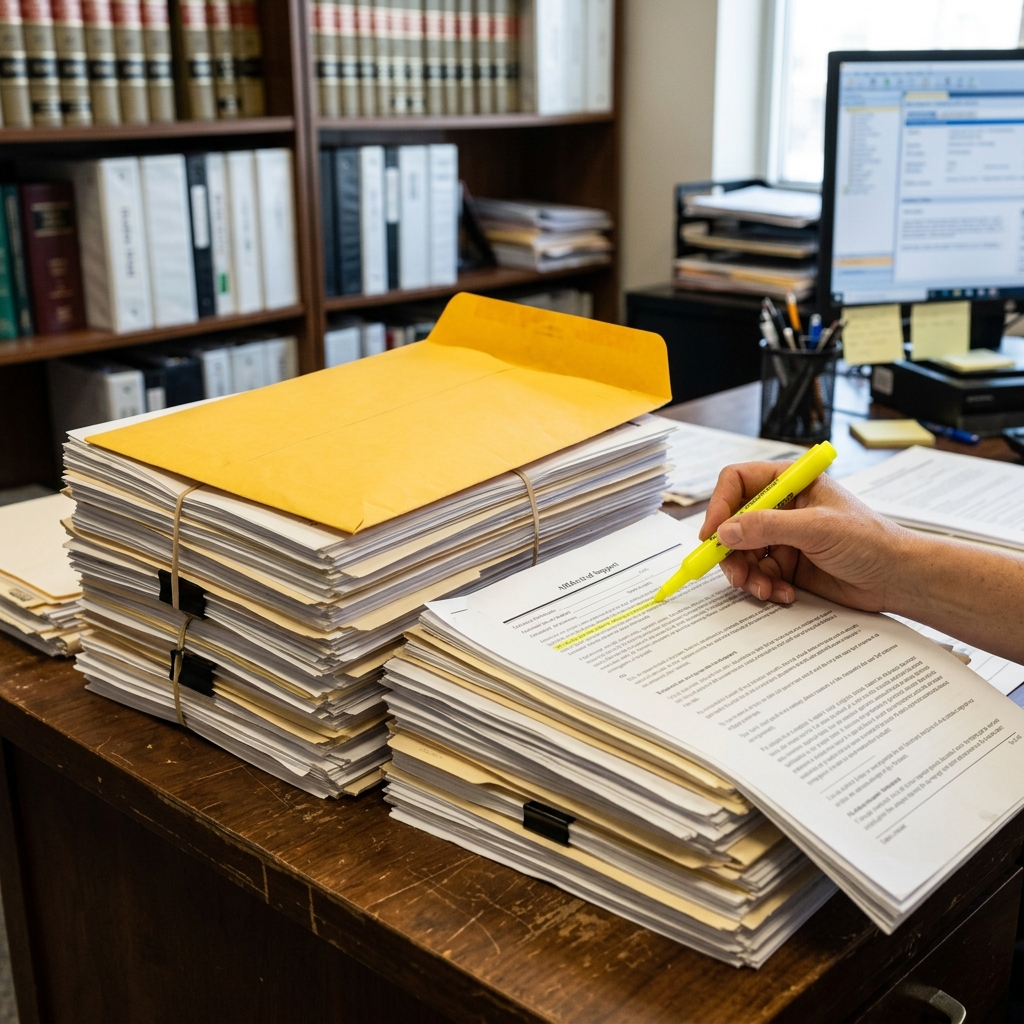
Anyone in the process of applying for a visa or green card in the United States may come across an acronym that often causes apprehension: RFE, or Request for Evidence. This is a formal notice issued by USCIS (U.S. Citizenship and Immigration Services) requesting additional documentation or evidence to complete the review of a case. Receiving an RFE does not mean the petition will be denied. It means the officer needs more information before making a decision.
The RFE is a routine mechanism in the American immigration system. In fiscal year 2024, approximately 8% of all completed H-1B petitions received an RFE, and the approval rate after response was 84.9%. These numbers show that, in most cases, a well-prepared response results in approval.
This article details how the RFE works, the most common reasons for issuance, legal deadlines, and the best strategies for responding successfully.
What Is an RFE
The Request for Evidence is an official communication from USCIS sent when the initial documentation submitted is not sufficient to prove the applicant’s eligibility, but the officer believes there is still a possibility to fill the gaps. According to the USCIS Policy Manual, the agency can only issue an RFE when there is potential for approval upon submission of additional evidence.
The RFE document is detailed and specific: it indicates which legal requirements have not been met, which evidence is missing, and what types of documentation are accepted as proof. Each item listed must be answered individually, clearly, and with supporting evidence.
The RFE is not a partial denial nor a penalty. It is a formal opportunity to supplement the case before the final decision. Ignoring it or responding incompletely, however, may result in automatic denial of the petition.
Most Common Reasons
USCIS issues RFEs in various visa categories, but some situations are particularly recurrent. In employment-based petitions such as H-1B, L-1, and O-1, the most frequent reasons include:
- Specialty occupation: USCIS questions whether the position truly requires a bachelor’s degree or equivalent in a specific field, especially when the job description is vague or generic
- Wage level: petitions with Level 1 (entry-level) wages face increasing scrutiny in 2026, as USCIS may argue that a basic salary contradicts the claim of a specialty position
- Employer-employee relationship: in consulting or third-party placement cases, USCIS requires proof of direct control over the beneficiary’s work
- Beneficiary qualifications: degree, professional experience, and credentials may be questioned when they do not directly match the position’s requirements
For permanent employment-based visas such as EB-2, EB-3, and EB-1, RFEs often involve proof of extraordinary ability, validation of a permanent job offer, or documentation regarding the labor certification process (PERM). In investor petitions (E-2, EB-5), the RFE may request additional evidence regarding the lawful source of funds or the viability of the business plan.
Response Deadlines
The standard deadline to respond to an RFE is 87 calendar days from the date printed on the notice, not the date of receipt. This period consists of 84 regular days plus 3 additional days to compensate for postal delivery time. USCIS does not grant extensions for RFE responses under any circumstances.
Some specific categories have shorter deadlines. I-601A requests (unlawful presence waiver) and asylum cases may receive deadlines of only 30 days. It is essential to check the deadline indicated on the actual notice received.
Since 2020, USCIS accepts responses submitted electronically via the myUSCIS platform, which eliminates the risk of postal delays. For mail submissions, USCIS considers the date of receipt (not the postmark date) as the reference, making it crucial to send the response at least five to seven business days in advance.
How to Respond Successfully
The response to an RFE should be treated as the most important part of the case. These practices significantly increase the chances of approval:
- Respond to every item: each point listed in the RFE must receive a specific response with supporting documentation. Ignored items may be treated as unresolved deficiencies.
- Organize in the same order: follow the sequence of items listed in the RFE, making it easier for the officer to review and demonstrating attention to the process.
- Submit everything at once: USCIS recommends that all evidence be submitted in a single package. Partial or supplemental submissions later are not guaranteed to be considered.
- Certified translations: any document in a foreign language must be accompanied by a certified English translation, with a statement from the translator attesting to accuracy and language proficiency.
- Detailed cover letter: include a letter summarizing each piece of evidence presented and explaining how it meets the specific requirement requested.
The quality of the response is more important than the volume of documents. Redundant or irrelevant evidence can weaken the case by distracting the officer from the central points of the petition.
Statistics and Outlook
Official USCIS data shows that most RFEs result in approval when responded to properly. In fiscal year 2024, the overall approval rate for H-1B petitions was 97.7%, and among cases that received an RFE, 84.9% were approved after response. In fiscal year 2025, these numbers improved slightly: overall rate of 97.9% and post-RFE approval of 85.4%.
In 2026, the outlook points to an increase in the volume of RFEs, especially in employment-based petitions. USCIS has intensified scrutiny of specialty occupations, wage levels, and employment relationships, reflecting a stricter stance in adjudicating work visas.
This increase should not be seen as an insurmountable barrier. Historical data consistently show that well-documented petitions overcome the RFE stage with success rates above 80%. The determining factor is preparation: gathering all necessary documentation from the outset and, if you receive an RFE, responding completely, in an organized manner, and within the established deadline.
Learn more about E-2
- Type
- Non-immigrant
- Initial validity
- 2-5 years
- Extension
- Unlimited (2 years each)
- Processing
- 1-4 months
About the author

Victoria Harper
Editor-in-Chief
As a journalist and lead editor at Visto n’ Visa, Victoria helps ensure that immigration topics are covered in a clear, trustworthy, and easy-to-understand way. Her focus is on delivering useful, human, and relevant content for people exploring new paths abroad.